


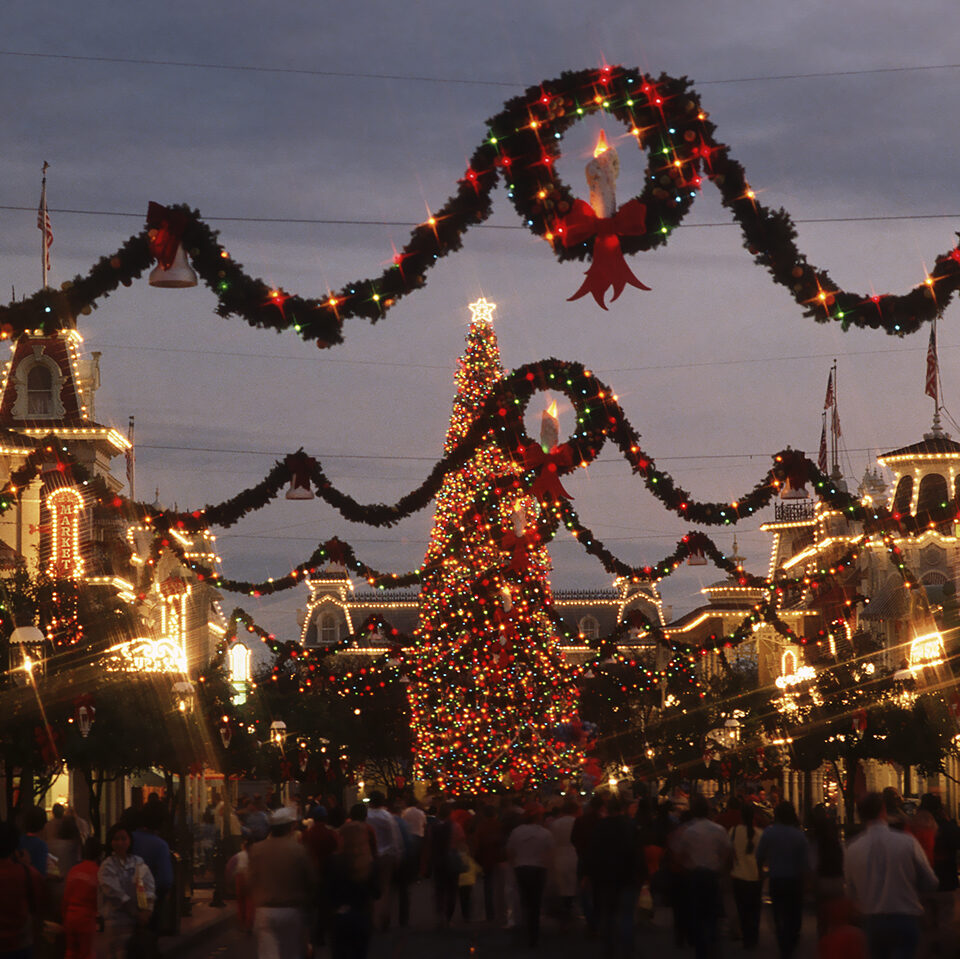
The full audio experience of Disney Parks is awe-inspiring. Every area has extensive soundscapes for guests to encounter. Here’s a trip through how some are preserving the holiday versions of these immersive pieces.
This article has been written by Joshua L Harris. On occasion we enjoy bringing in guest writers to help us out in areas of passion — we hope you enjoy Mr. Harris’ contributions and follow him on Twitter! Article compiled and edited by WDW Pro.
Similar to their motion picture predecessors, the effort and expense of creating or compiling theme park music accounts for less far less than 1% of the overall costs and yet comprises nearly 50% of the experience. Fortunately these soundscapes are also the easiest to recreate and can even live on long after their accompanying environments have been erased or replaced. And for a couple decades now, I devoted a considerable amount of my time to preserving, restoring and (most importantly) showcasing this element of Disney’s parks.
Want to experience the holiday atmosphere of the Magic Kingdom without a reservation or Lightning Lanes?
Enjoy
A MAIN STREET CHRISTMAS
In High-Fidelity Stereophonic Sound!https://t.co/YmLGcEjzWLNow enhanced with various vintage views of Main Street at its Most Merriest! pic.twitter.com/arduQ5v5na
— Joshua L Harris (@JLHomni) November 27, 2022
You might be surprised to learn that the parks did not start life with wall-to-wall musical underscores, for many years of its early life the only time you heard music outside of an attraction at Disneyland was when it was performed by its many live bands and performers. Even when the PA system was used on Main Street, shocking it mostly played Top 40 Hits of the time. 1 So when you see those wonderfully vintage photos of Main Street their musical accompaniment was probably the groovy beats of “The Jackson 5” instead of the period appropriate ragtime we hear today.
Background Music (or BGM) for the parks was actually invented for The Magic Kingdom’s debut in 1971 with NeedleDrop2 compilations created by Jack Wagner (aka “The Voice of Disneyland) at his home using only his vast collection of vinyl records. 3 One year after creating this innovative new level of immersion Jack returned to Main Street to compile Christmas Loop we all cherish today.
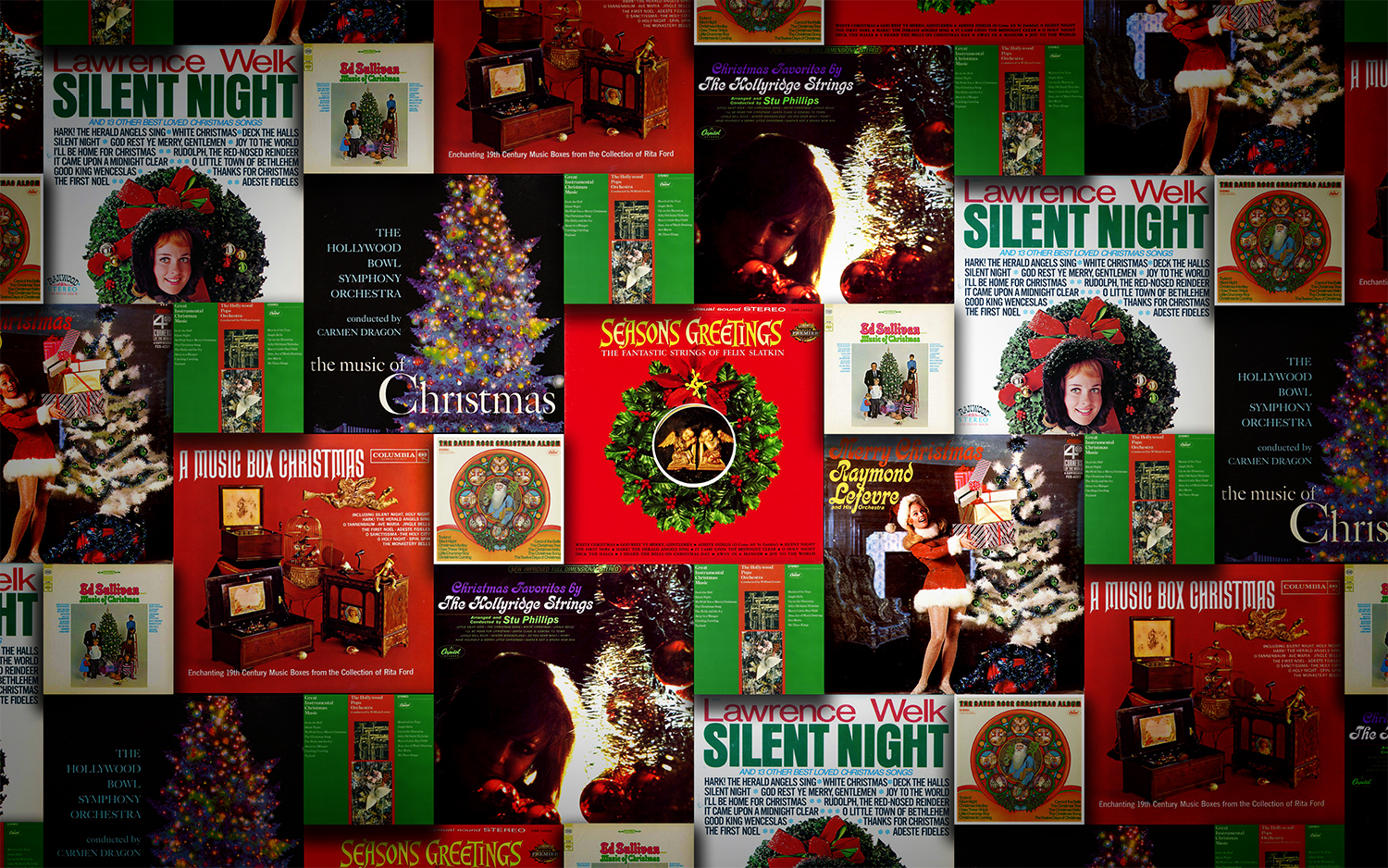
Al Lutz has already written a comprehensive dissection of the compilation’s sources here. The only thing I could add to this commentary is how remarkably modern it was for 1972. The albums used range from 1958 to 1969, making the oldest songs only fourteen years-old and the youngest barely three. By modern comparison if this loop was being created today Mariah Carey’s incessant song (that shall not be named) would be TWICE as old as any on the loop!
The Restoration
As previously stated, I’ve been producing theme park soundtracks and compilations for at least a decade and as the 2018 Holiday season rolled around the Main Street’s Christmas loop went back into my rotation and (I don’t know why but) I was suddenly horrified at the low quality of the mono source recording that’s been common place on the internet since the turn of the century.
With speakers often ten feet above, and (at times) forty feet from your head, with all the cacophony of sounds created by thousands of guests and cast members you might not notice all the imperfections of the untouched loop originally constructed with well-worn LPs, but in isolation, a modern set of earbuds will pick up every pop, crack and all the white noise of (now) antiquated audio recordings. Finally, while the monaural sound is perfectly acceptable in the parks not exactly palatable at home.
After doing some light research, I had discovered nearly all of the source albums Jack Wagner used had independently received their own restorations and reissues over the many decades since their first releases and all of them have been preserved in their original stereophonic state. It was then I decided to reconstruct and remaster the entire atmosphere for 21st century ears.
But merely recombining the existing material wasn’t going to meet the quality standard now expected from my efforts. In this case, I complete restored all nine source albums by using Spectral Analysis to scrutinizing every millisecond for imperfections from manually removing every pop and click to erasing the intake breaths and bow taps of the musicians. Afterwards I, very carefully, removed all noise from the background while making sure not to degrade any of the details from the originals. And finally, the amplitude of all tracks were adjusted manually to insure the smoothest transitions possible from song to song.
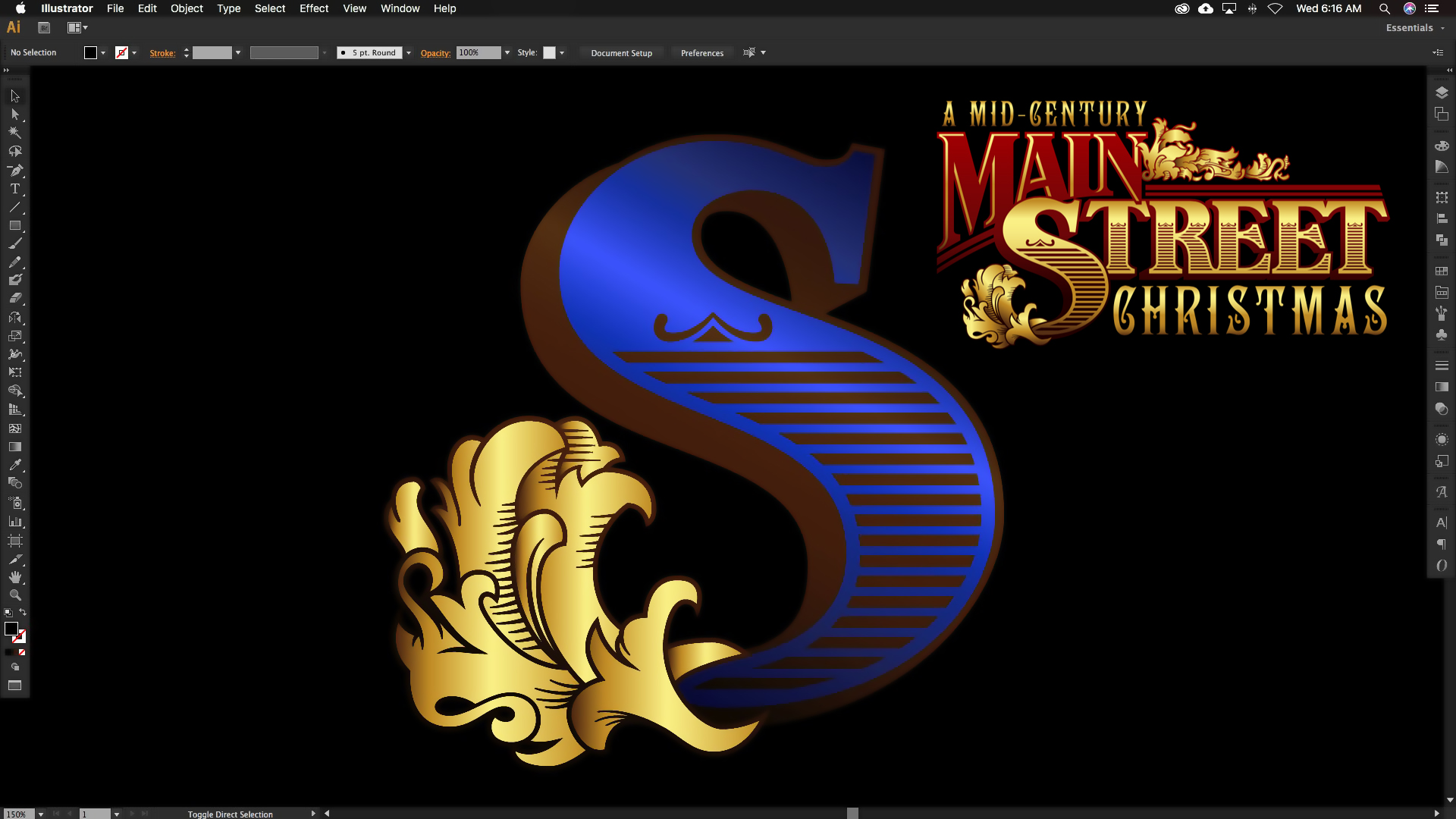
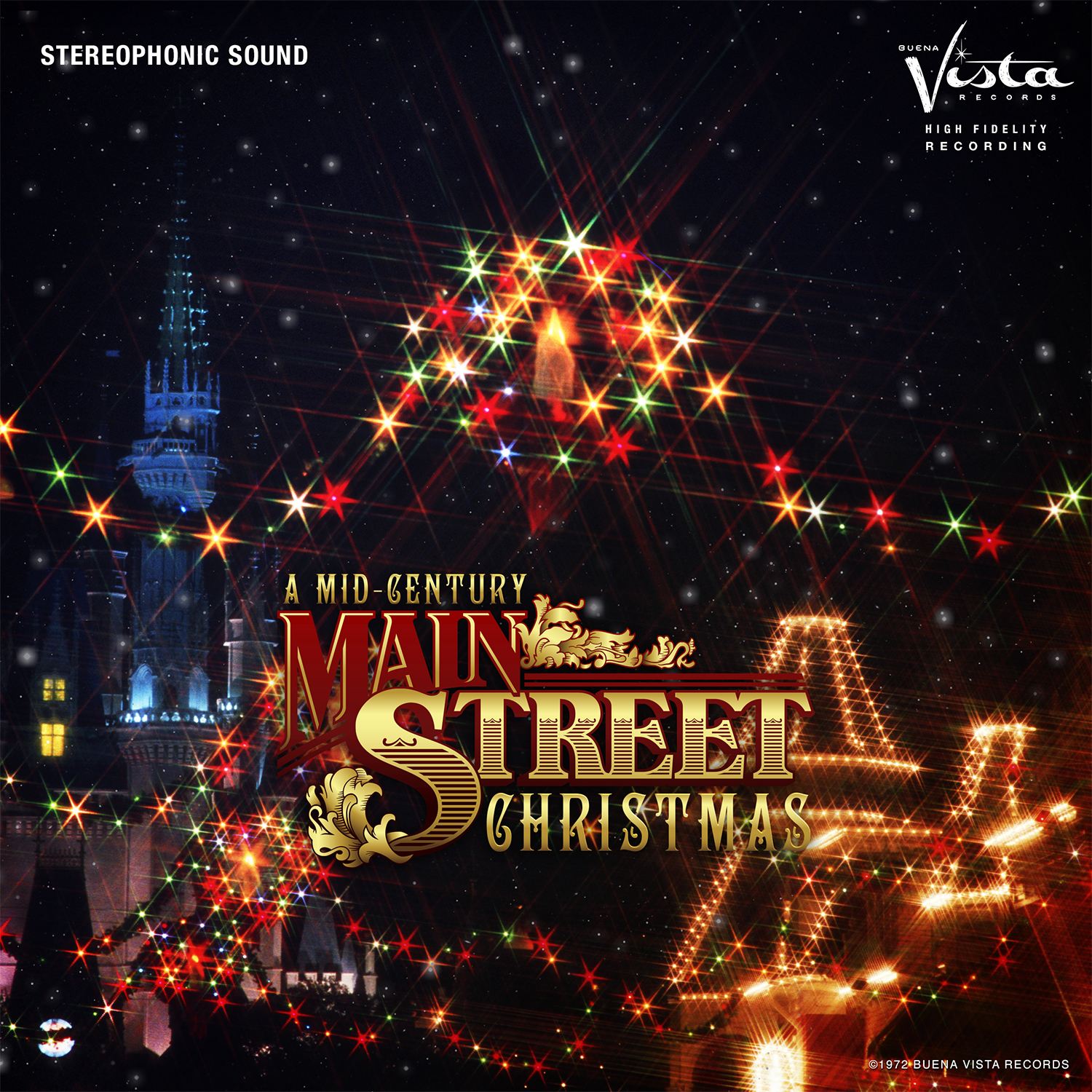
Audio Engineering is just an avocation. My actual profession is Graphic Design and long with the audio, I was (perhaps) more excited to design the cover art. The design intend was to appear as if the compilation was produced in 1972 and thus the original Buena Vista Records logo was (for the time) translated into vector art as well as the elaborate Main Street logo primarily created for the Disneyland & Magic Kingdom guidebooks in the early 80’s. Complete with a 1989 vintage view of Main Street with characteristic Star Flares. As a finishing touch, I added the (then) all-important “Stereophonic Sound” and “High-Fidelity Recording” verbage in period typefaces no self-respecting vinyl studio album could live without.
I don’t know if anyone would notice this, but as both a historian and Christmas music connoisseur it appears as if (with few exceptions) the best arrangements of carols were done in the early 1960s. During this time it seems the Hollywood sound of Steiner & Korngold had intersected with Holiday music in rare form. While restoring all of the albums for the Main Street Christmas Loop I was particularly struck by the sophistication of the simply named “Season’s Greetings” by Felix Slatkin in which Jack Wagner only used two of its twelve almost ethereal arrangements.
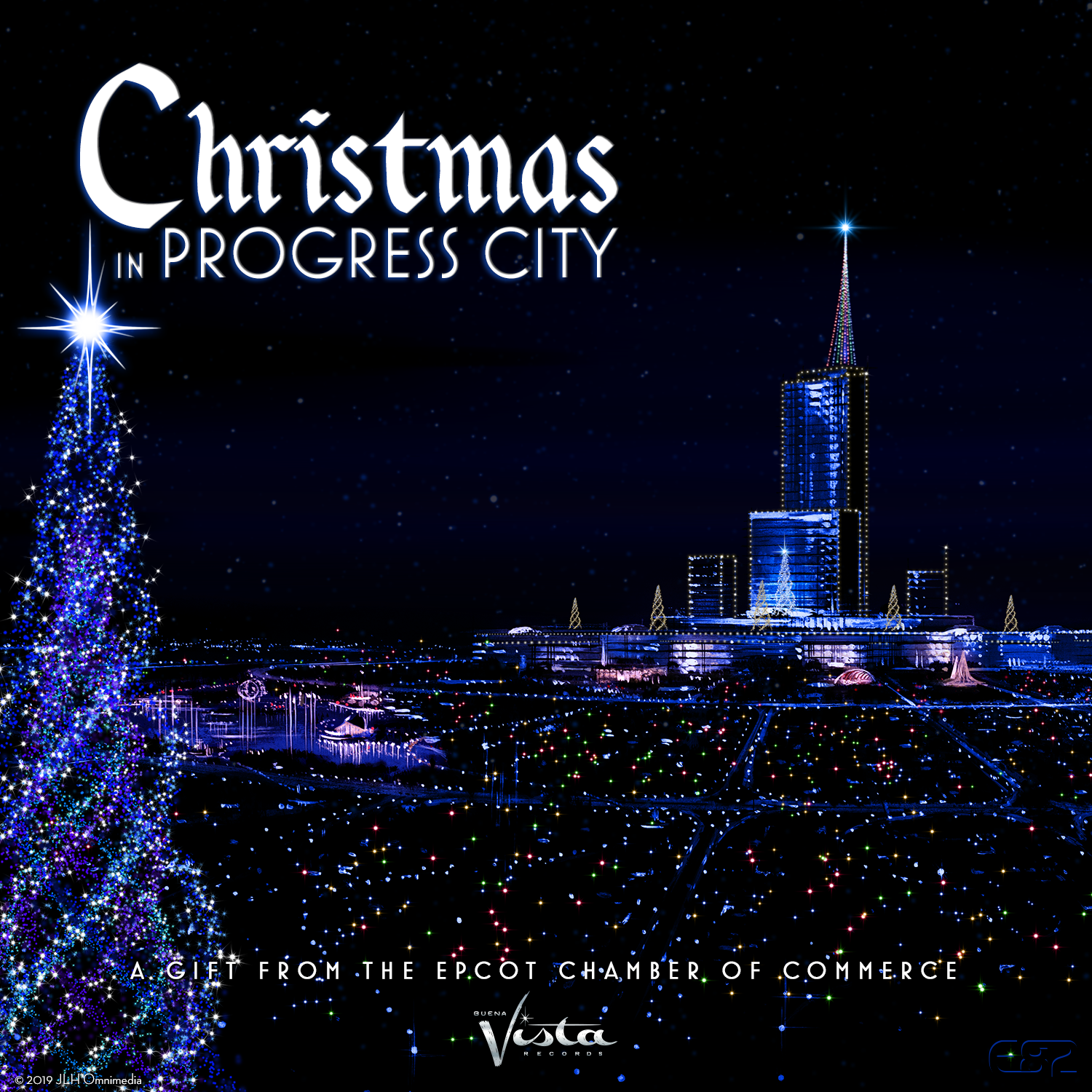
Concurrently I also became enamored with the similar vintage album “WINTER” (1957) by Disney composer Tutti Camarata (part of his Seasons Series). In particular I noticed how the orchestral arrangements of both albums were remarkably similar to Buddy Baker’s score for the Carousel of Progress where (in the 1967 Disneyland version) the show concluded with “Mother & Father” celebrating the Holidays in their elegantly Mid-Century Modern home on the outskirts of “Progress City” (aka Walt’s vision for E.P.C.O.T.). Thus, a year after Main Street, “Christmas in Progress City” was created under premise of what it would sound like to be at a sophisticated Christmas cocktail party in Walt’s EPCOT.
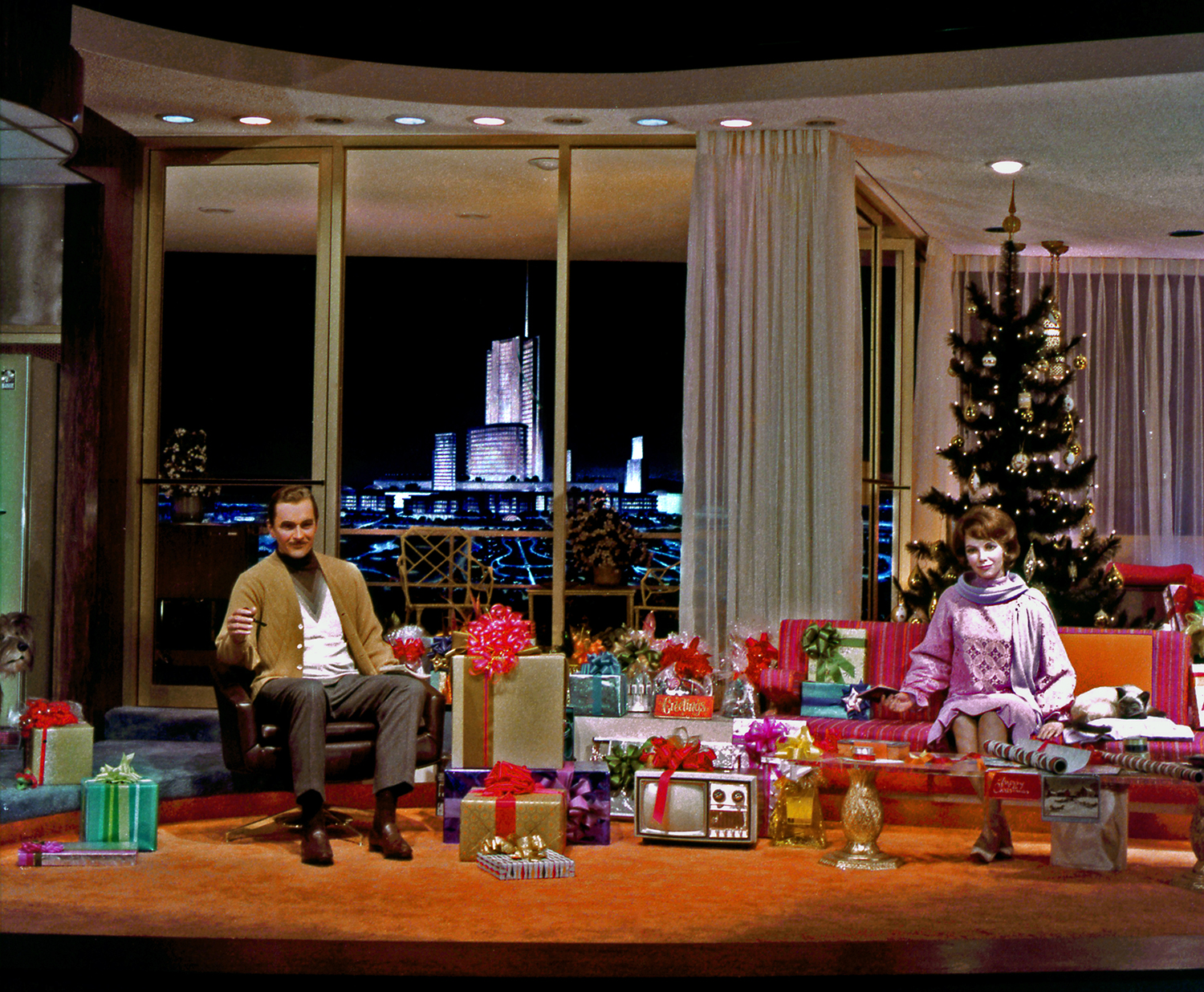
I’ve actually had several people tell me that it’s their favorite Christmas album now! And had so many requested for the album art I eventually had to offer it as a standalone background for all your electronic devices.
Post note:
In writing this I noticed that it’s 2022 which means it’s the 50th year for Main Street’s Christmas Atmosphere, making it the longest running music loop in theme park history! And with all the chaotic changes happening to our parks let’s hope it’s always there.
Although, if they just get rid of the Lawrence Welk tracks, I’m okay with that :)
Footnotes
1. Source: From conservations with Imagineer Tom K Morris.
2. NeedleDrop: The more modern term for this would be a mixtape or even more contemporary a streaming playlist. The etymology of is that one would “Drop the Needle” of record player and see what you get.
3. BGMs were also implemented at Disneyland during and after the opening of The Magic Kingdom.
4. He calls it “Disneyland’s Main Street Christmas loop” but considering debuted at The Magic Kingdom simultaneously I don’t ether resort can claim it.
5. You can listen to that original 1972 loop here.
6. Although it should be self-evident, (with very few exceptions) all BGMs are broadcasted in MONO as the very concept of Right and Left channels don’t exist while you’re traversing the park.
7. This is standard procedure for all my albums :)
For all the latest news that should be fun, keep reading That Park Place. As always, drop a comment down below and let us know your thoughts!
