


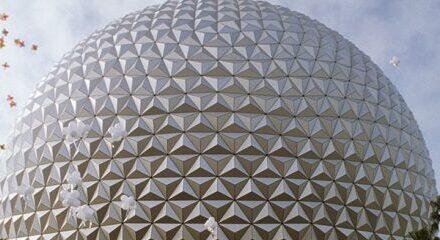
Once upon a time, a visionary named Walt came up with an idea to put a revolutionary city in the middle of Florida. But after his passing, his executives changed course and set forth a problem that we are only now seeing fully blow up in the faces of The Walt Disney Company.
The Experimental Prototype Community of Tomorrow, better known as EPCOT, was Walt Disney’s vision for a futuristic utopian city. Walt Disney was an innovative entrepreneur and a mastermind in the entertainment industry, and he had a strong desire to create a city that would be an example of how people could live in harmony with technology. Disney’s original plan was to build a fully functional city with the latest technology and innovations, designed to showcase the possibilities of the future.
The concept of EPCOT began to take shape in the mid-1960s when Walt Disney became increasingly interested in urban planning and community design. Disney believed that the city of the future could be designed to be a model of efficiency and comfort, a place where people could live, work, and play in an environment that fostered creativity, productivity, and innovation. His vision was a self-sustaining city that would be run by a private corporation rather than a government.
Disney’s vision for EPCOT was inspired by a number of different sources, including the World’s Fair, the space program, and the modernist movement in architecture and design. He believed that the city of the future would be built around the latest technology and innovation, and that it would be a showcase for the best and brightest minds in science and engineering.
The original plan for EPCOT was ambitious and far-reaching. The city would be built on a vast tract of land in central Florida, with a population of around 20,000 residents. The city would be divided into distinct neighborhoods, each with its own theme and design, and would include a wide range of amenities and services, including schools, shopping centers, medical facilities, and recreation areas.
The city would be built around a central hub, known as the “core,” which would house the city’s main administrative and commercial functions. The core would be designed to be an architectural masterpiece, with towering skyscrapers and state-of-the-art infrastructure that would be powered by the latest technology.
The original plan for EPCOT was met with great enthusiasm from the public, and Disney worked tirelessly to promote the concept to investors and government officials. However, as the project began to take shape, it became clear that the costs of building a fully functional city were simply too high.
In the end, Disney was forced to scale back his plans for EPCOT. Rather than building a full-scale city, they decided to focus on building a theme park that would showcase the same technologies and innovations that he had envisioned for the city. The park would be called EPCOT Center and would feature a number of different “pavilions” that would showcase different aspects of technology and innovation.
EPCOT Center opened in 1982 and quickly became one of the most popular theme parks in the world. The park continued to evolve over the years, with new attractions and pavilions being added to reflect the latest developments in technology and innovation.
But while EPCOT was being “reimagined,” its legal legacy set into motion by the Florida legislature back when it believed a real city was coming was still in place for Disney to exploit…
Lake Buena Vista and Bay Lake are two cities in Florida that are primarily known for being the location of Walt Disney World Resort. While they may be considered “cities,” their histories and governance differ significantly from traditional cities in the United States.
Lake Buena Vista was incorporated in 1967 and covers an area of only 0.7 square miles. Its name comes from the nearby Lake Buena Vista, which translates to “good view” in Spanish. The city was created by Disney as a way to have more control over the development around their theme park. Disney officials believed that incorporating a city would allow them to circumvent the various zoning and land use regulations that traditional cities were subject to. Lake Buena Vista was also designed to be a residential community for Disney employees.
Bay Lake was incorporated the same year as Lake Buena Vista and covers an area of 22.8 square miles. It was named after the lake on which Disney’s Magic Kingdom theme park is located. Like Lake Buena Vista, Bay Lake was created by Disney to have more control over the area surrounding their theme park. In fact, Bay Lake encompasses the entire Walt Disney World Resort and has a population of only two people, both of whom are Disney employees.
Both Lake Buena Vista and Bay Lake were part of the Reedy Creek Improvement District (RCID), which was established by the Florida legislature in 1967 at the request of Disney. The RCID was created as a way to give Disney even more control over the land and development around their theme park, although it was supposed to be controlled by real cities. At least, that’s what Florida legislators were led to believe. The district had its own government, which was overseen by a board of supervisors appointed by Disney.
The relationship between Lake Buena Vista, Bay Lake, and the RCID is unusual in that the cities had very little autonomy. The RCID had the power to levy taxes, issue bonds, and regulate land use within its boundaries. The cities themselves have very limited powers and essentially exist to provide basic services like law enforcement and trash collection. And, by any definition of what constitutes a city, neither would qualify anywhere in the country. I can’t say that they’re fraudulent municipalities, but I can say they’re unlike any other cities in the world.
In conclusion, while Lake Buena Vista and Bay Lake may be considered “cities” in the technical sense, their histories and governance make them unique. They were created by Disney as a way to have more control over the area surrounding their theme park and are essentially governed by the Reedy Creek Improvement District. As a result, they do not function like traditional cities and have very limited powers. Now that they’re under scrutiny, along with the RCID municipal bonds that were issues, there may be very real reason for Disney execs to sweat a little bit. There could be major vulnerabilities for the company here.
For all the latest news that should be fun, keep reading That Park Place. As always, drop a comment down below.
