


About a year ago I wrote a piece on how copyright holders were changing the contents of their books for modern sensitivities. Now they’re just taking your stuff because you never owned it in the first place.

All original versions of each PlayStation console as of the PS5, including the PlayStation, PlayStation 2, PlayStation 3, PlayStation 4, PlayStation 5, PlayStation Portable, and PlayStation Vita. Photo Credit: JDC808, CC BY-SA 4.0 <https://creativecommons.org/licenses/by-sa/4.0>, via Wikimedia Commons
Because of an end to the distribution agreement between Discovery and The PlayStation Store over a thousand titles will be removed from the platform. Titles come and go all the time from streaming services, and this is really nothing new, but for some serendipitous reason this story is breaking through to get more attention. When these things happen it is not just that the content will not be available for purchase to new buyers, but former purchasers who thought they owned a copy will see it removed from their libraries. I have yet to see if that means copies downloaded to a purchaser’s hard drive will be removed or inaccessible. That would be yet another reason why “always online” requirements for consoles are a bad idea for consumers.
You may have also seen this play out on your phone. You download some game, find it mildly diverting and remove it when you need space. Maybe later you go back to look for it in the App Store and it’s gone. Sort of a little nuisance unless the game was your toddler’s then all the sudden there’s a freakout in the backseat on I-55 when all you’re trying to do is get to Grandma’s house in peace.
You literally own none of the modern apps, music, videos, audiobook, eBooks that you’ve paid to access through major platforms.
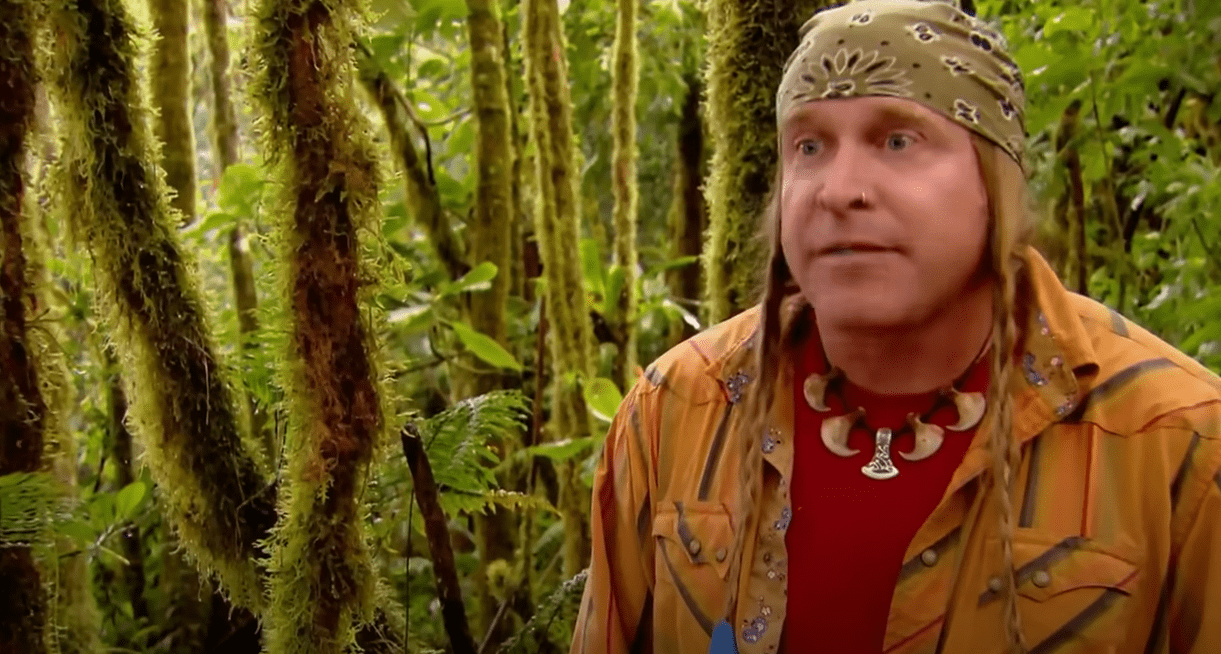
Cody Lundin in Dual Survival via Discovery Australia YouTube
Did you know that in at least a few iterations of the Apple User Agreement you agreed to not use Apple products to make atomic weapons? Of course not, because you have too much to do to read pages and pages of legalese, when all you want to do is make a phone call or visit thatparkplace.com for all the news that should be fun.
Once, when I got a job at a Fortune 100 company, I read through the entire employment contract online because I’m a writer and I didn’t want to accidently transfer ownership over my work. I’m not a slow reader, but I couldn’t get through everything without the page timing out several times. We are simply not meant to understand or even read these things!
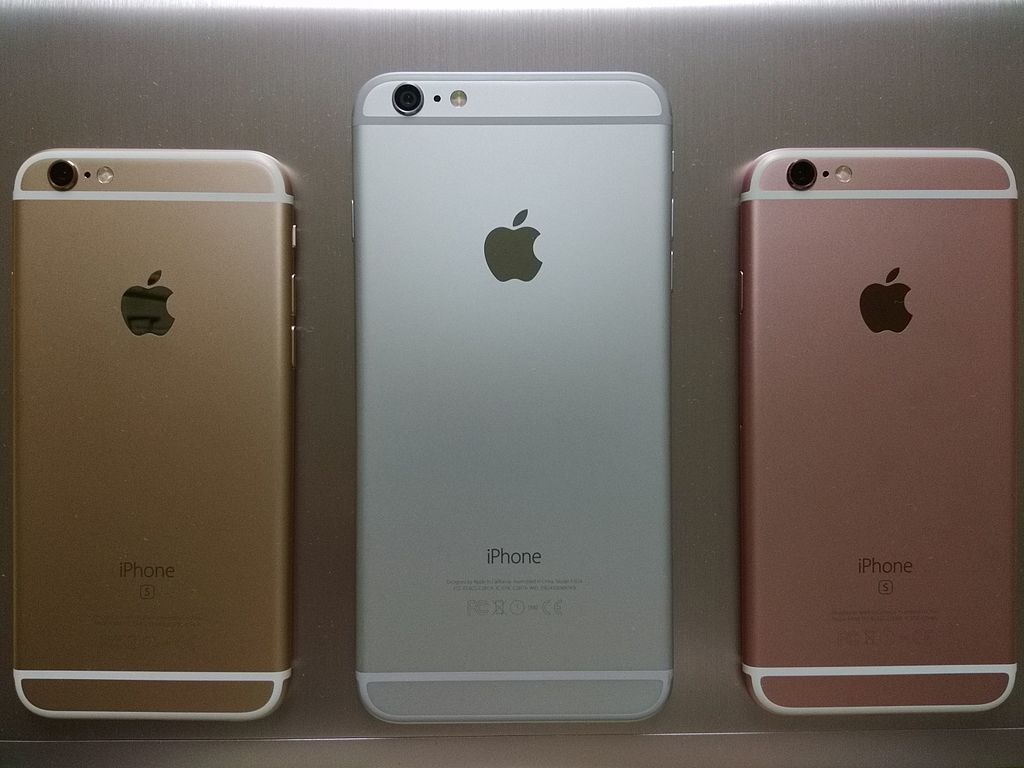
Apple iPhones. Photo Credit: Pang Kakit, CC BY-SA 4.0 <https://creativecommons.org/licenses/by-sa/4.0>, via Wikimedia Commons
Let me tell you about a student from Thailand who came to the United States for college. He discovered that the same textbooks were available to Thai students at a fraction of the cost. That’s not a localized version of the textbooks. These were the same English language books that he was using in his US college. So, he started a small business selling textbooks on eBay. The copyright holders tried to shut him down alleging that he had no right to distribute their materials. Eventually US courts upheld the long legal tradition you and I have the right to sell our own stuff when we’re done with it. Had the case been decided the other way then the entire secondhand book market would have been dramatically affected (and Amazon might have had something to say about that). Given its broadest construction such a ruling against the reseller would have even meant that you couldn’t sell your Mom’s old Destiny’s Child CDs at the garage sale.
Universal Studios and The Walt Disney Company once sued Sony because the BetaMax system available in 1976 could record live television. In the end the Stevens Court ruled that the motion picture studios should mind their business and let people record Charlie’s Angels to watch it at a more convenient time in the privacy of their own home. It also forced the court to reaffirm the principle that just because a technology can be used to commit a crime doesn’t mean the technology should be illegal, or that the producers of that technology should be punished for the ensuing criminal behavior (i.e. if Ted missed an episode of Happy Days and you sold him the copy you made last night then Sony is not responsible for your prodigious polyestered piracy).
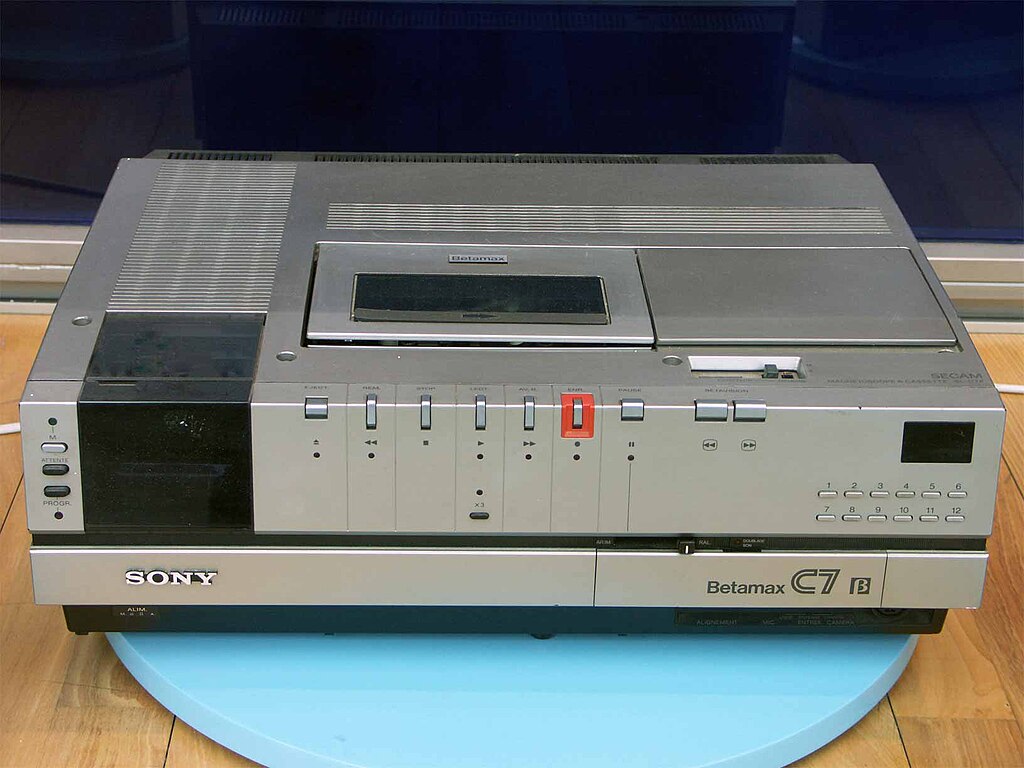
Sony Betamax C7 Videorecorder. Photo Credit: Bettenburg at de.wikipedia, Public domain, via Wikimedia Commons
The consumer doesn’t always win in these things. In the early 2010’s a few streaming alternatives popped up that challenged the way the big streaming platforms and MPAA had structured their business dealings. One of them was Zediva, who would let you rent one of their DVDs and DVD players to watch a movie streamed to you over the internet. You would never be in physical contact with the equipment, but you would control it and view it through the internet.
The legal theory goes something like this, the courts have ruled that you can rent equipment and a video, Zediva is just letting you use those legally recognized rentals from anywhere in the world without shipping. It is theoretically as private a display as renting a VHS tape from Blockbuster and watching it in your living room. The 9th Circuit Court of Appeals ended up shutting that service down on the grounds that it violated the streaming licensing fees agreed upon by the MPAA. But, neither you nor I have an agreement with the MPAA, or Sony, or Disney, or Universal. So why do we have to put up with their nonsense?

A scene from Deadliest Catch via Discovery YouTube
There was an economist and political philosopher named Dr. Walter E. Williams who proposed an ownership test for any given asset. Can you sell it? If not, then you don’t own it.
We have built for ourselves a marvelous information age where knowledge and entertainment can be sent around the world while it’s still being made. And we’re letting a cartel of copyright holders and service providers control it and us.
NEXT: Why Burn Books When You Can Change Them? Dahl, Twain, God and Copyrights
