



In an age where the lines between entertainment and the real world increasingly blur, the call for a return to the core essence of storytelling has never been louder or more critical. It’s particularly true in an election year where the United States (and the western world) is more divided than in the past century.
Aficionados of good fiction all over the planet have a plea for escapism, for stories that transport us beyond the boundaries of our current realities, politics, and the ever-pervasive hot topics that dominate our daily lives. The argument here isn’t for ignorance of societal issues but for the preservation of fiction and entertainment as sanctuaries for the human spirit.
As Mark Kern — who has been heavily featured as of late in the Sweet Baby Inc. pushback — has said: entertainment should be the watering hole where all species hold an unspoken truce so that we might all be preserved elsewhere.
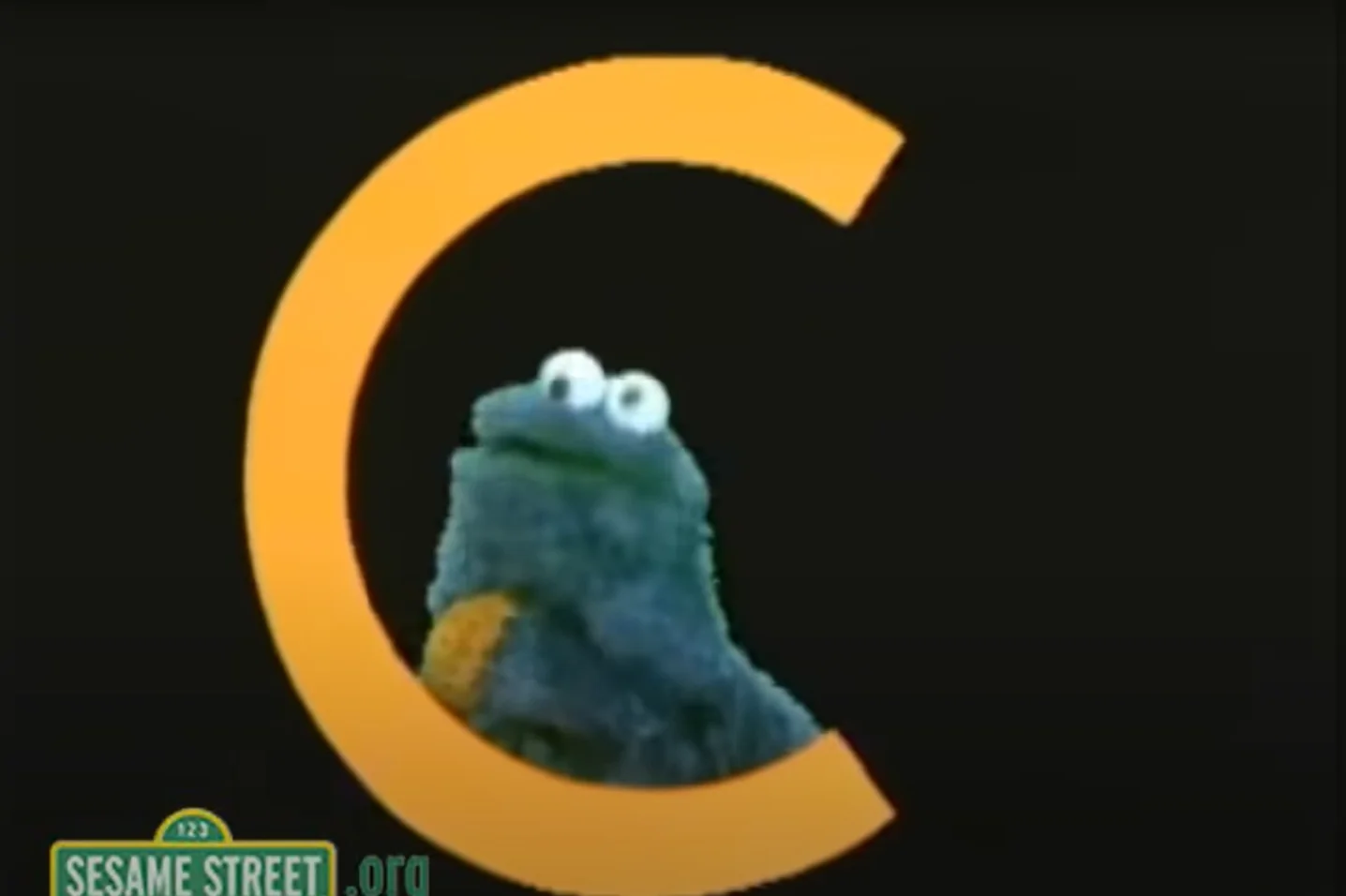
Cookie Monster via Sesame Street YouTube
READ: Sweet Baby Inc. CEO And Co-Founder Kim Belair Compares White Male Gamers To Picky Babies
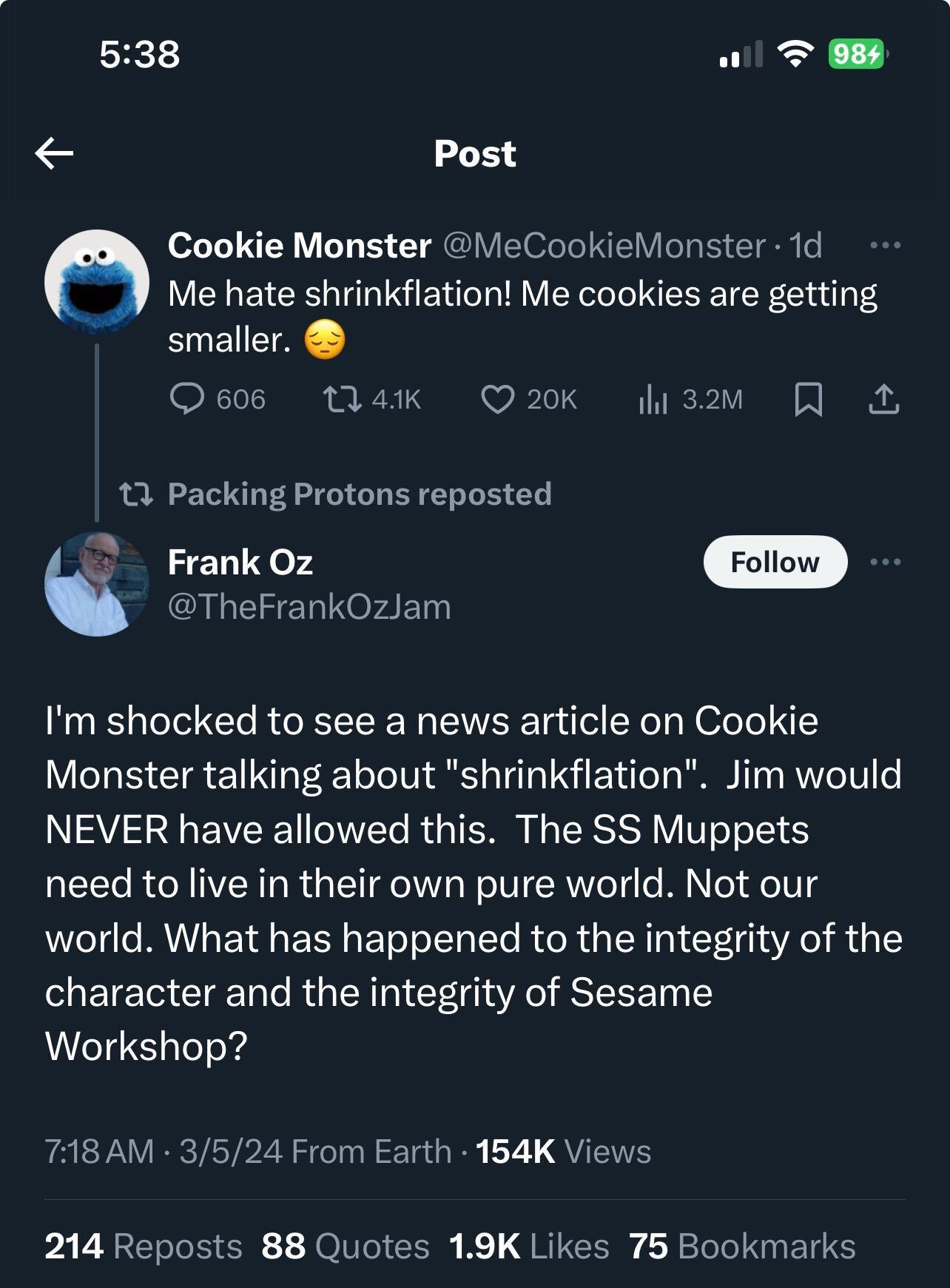
Perhaps that is why it is so lovely to see Frank Oz in the screenshot below finally declaring what we all should have known was true. For Oz is no Republican, no fan of Donald Trump. Oz is simply a puppeteer who, in his better moments, realizes that children’s puppets belong in teaching the alphabet, not in postulating about politics.
Oz responded to a post from Cookie Monster writing, “Me hate shrinkflation! Me cookies are getting smaller.”
He wrote, “I’m shocked to see a news article on Cookie Monster talking about ‘shrinkflation’. Jim would NEVER have allowed this. The SS Muppets need to live in their own pure world. Not our world. What has happened to the integrity of the character and the integrity of Sesame Workshop?”
Throughout human history, stories have served as a vital escape from the trials and tribulations of everyday life. From the ancient epics that spoke of gods and monsters to the fairy tales that hinted at deeper truths through allegory, storytelling has always offered a departure from reality.
These narratives provided not just entertainment but a space for reflection, learning, and mental rest, allowing individuals to explore the depths of their imagination and the breadth of human experience without the constraints of their immediate surroundings.
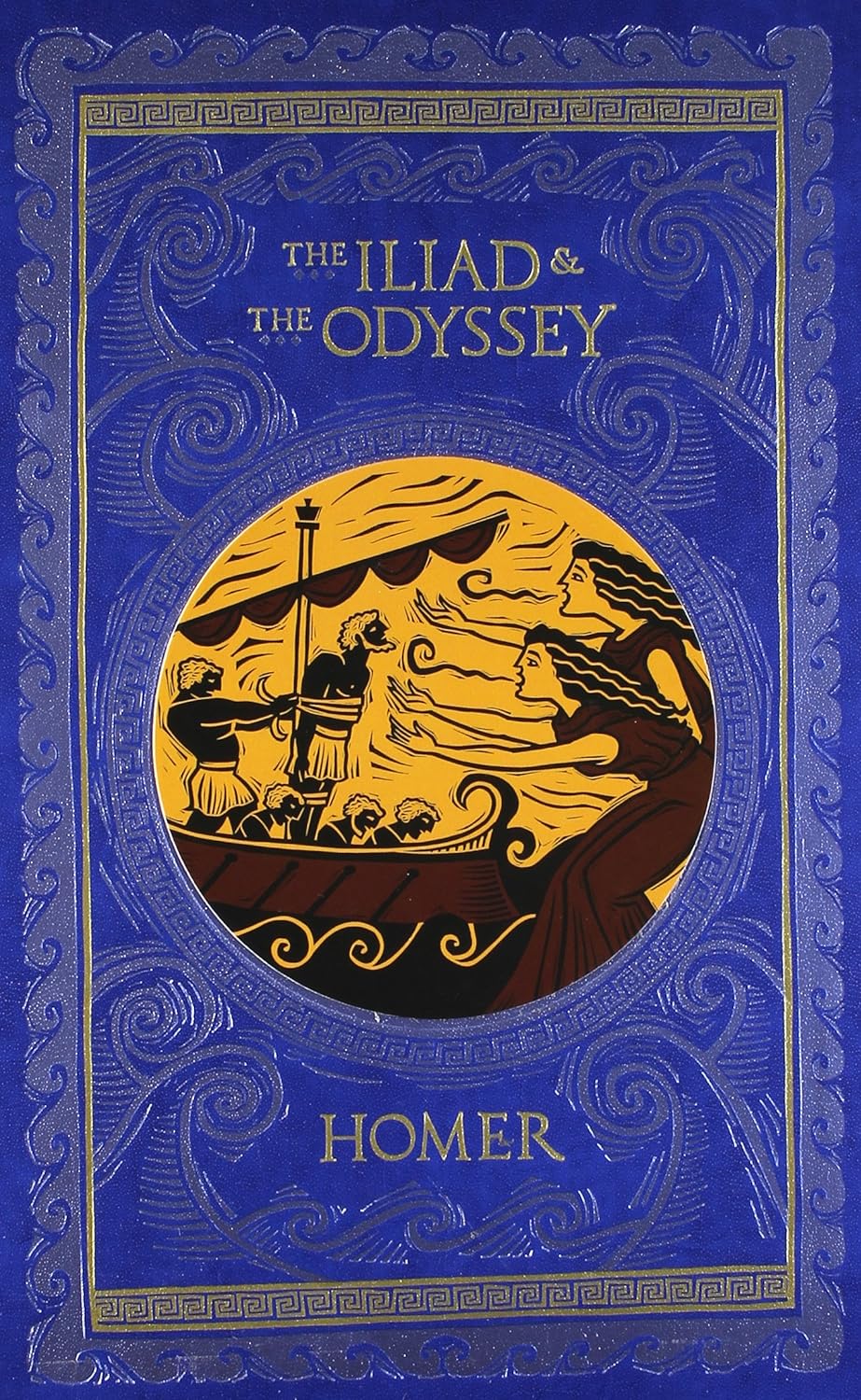
The Iliad & The Odyssey (2010), Barnes & Noble
In recent times, however, there has been a noticeable shift. The infiltration of modern politics and current affairs into the realm of entertainment and fiction has muddied the waters of escapism. While art has always been a reflection of society, the scale and intensity of contemporary issues’ integration into our escapades into fiction have reached a point where the line between reality and fantasy is perilously thin.
This shift has not only limited the scope of creative exploration but also burdened audiences with the very realities they seek to escape, however briefly.
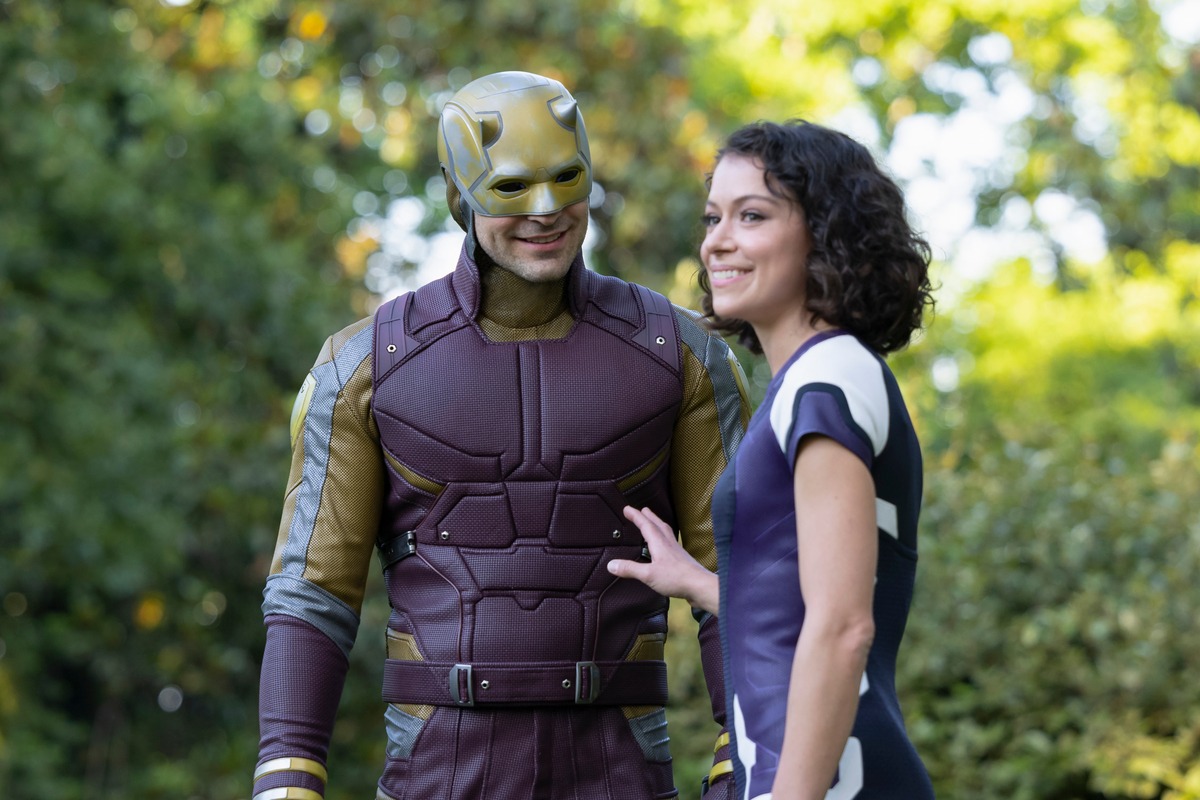 (L-R): Charlie Cox as Daredevil/Matt Murdock and Tatiana Maslany as She-Hulk/Jennifer “Jen” Walters in Marvel Studios‘ She-Hulk: Attorney At Law, exclusively on Disney+. Photo by Chuck Zlotnick. ©.75px”>READ: Ubisoft’s ‘Star Wars Outlaws’ Accused Of Assassinating Game’s Female Protagonist And Turning Her Into A “Chestless Karen”
The call for a distinction between entertainment and the real world is not a call for ignorance. It is, instead, a plea for balance and space. The human psyche needs respite, a sanctuary where it can rejuvenate and explore without the weight of the world’s problems on its shoulders.
By ensuring that entertainment and fiction remain distinct from modern politics and the hot topics of the real world, we allow for a mental break, a crucial pause in the relentless stream of information and opinion that characterizes contemporary life.
 Ian McKellen as Gandalf in The Lord of the Rings: The Fellowship of the Ring (2001), New Line Cinema
At its heart, the argument for the separation of entertainment from contemporary politics is a call for a return to the core of storytelling. It is a reminder of the power of narratives to offer escape, to inspire, to heal, and to connect us on a level that transcends the immediate concerns of our time.
In doing so, we do not deny the importance of engaging with the world around us but affirm the necessity of also having the space to step away from it.
 (L-R): Hera Syndulla (Mary Elizabeth Winstead) and First Officer Vic Hawkins (Nican Robinson) with New Republic Security Guards in Lucasfilm’s STAR WARS: AHSOKA, exclusively on Disney+. ©.
It happened to Star Wars. It happened to Marvel. It happened to our video games. But maybe it’s beginning to turn around. Who knew it would take Oz to give us hope.
