


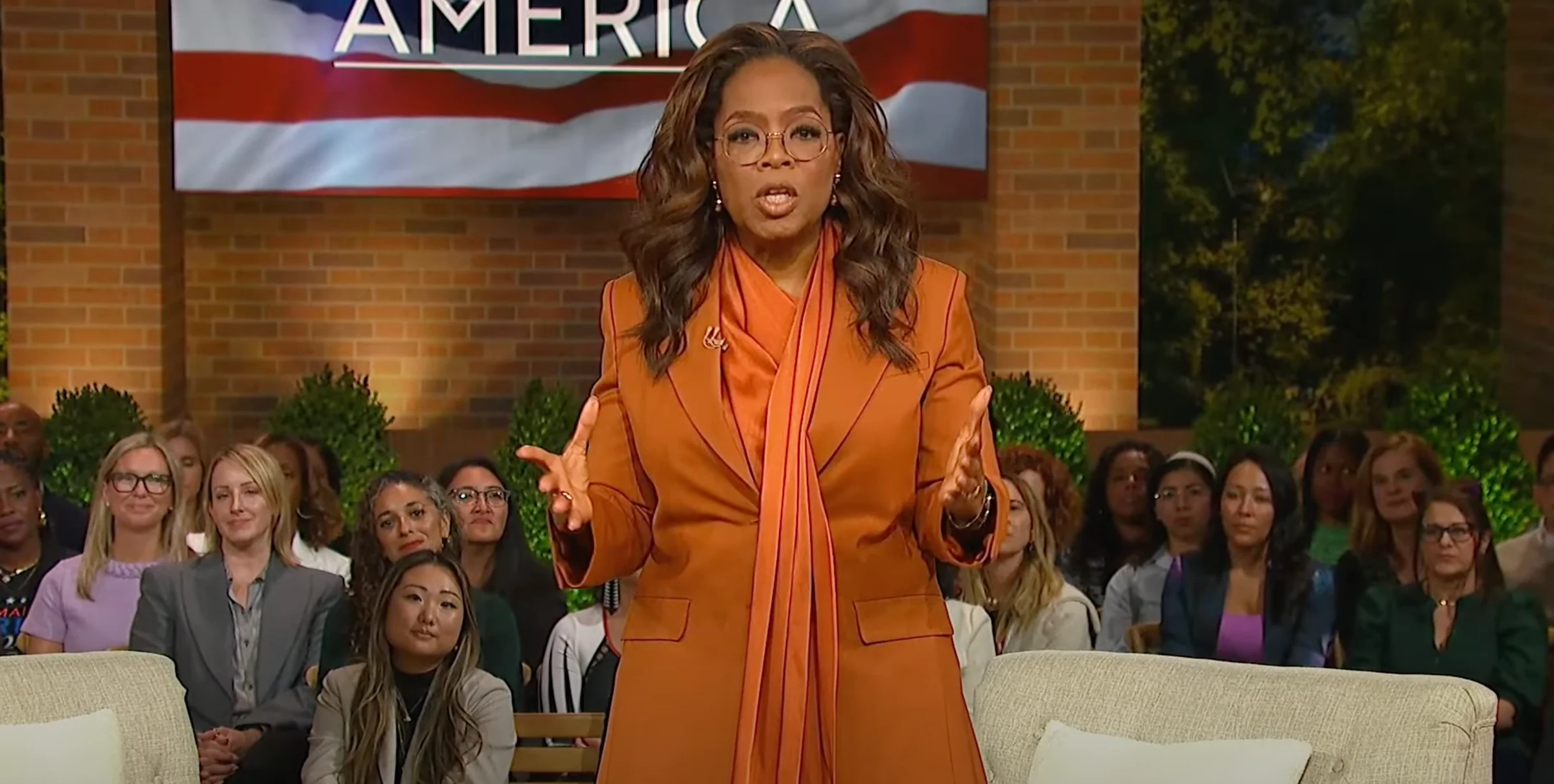
Celebrity endorsements have long been a staple of political campaigns, with high-profile figures lending their influence to rally support for candidates and causes. Yet recent evidence suggests that these endorsements may do more harm than good, both for the celebrities themselves and for the campaigns they aim to bolster. High-profile examples, from Taylor Swift’s endorsement of Kamala Harris in the 2024 presidential election to Sarah Silverman’s candid reflections on her reduced activism, highlight why politicians and political parties might want to rethink their reliance on celebrity advocacy.
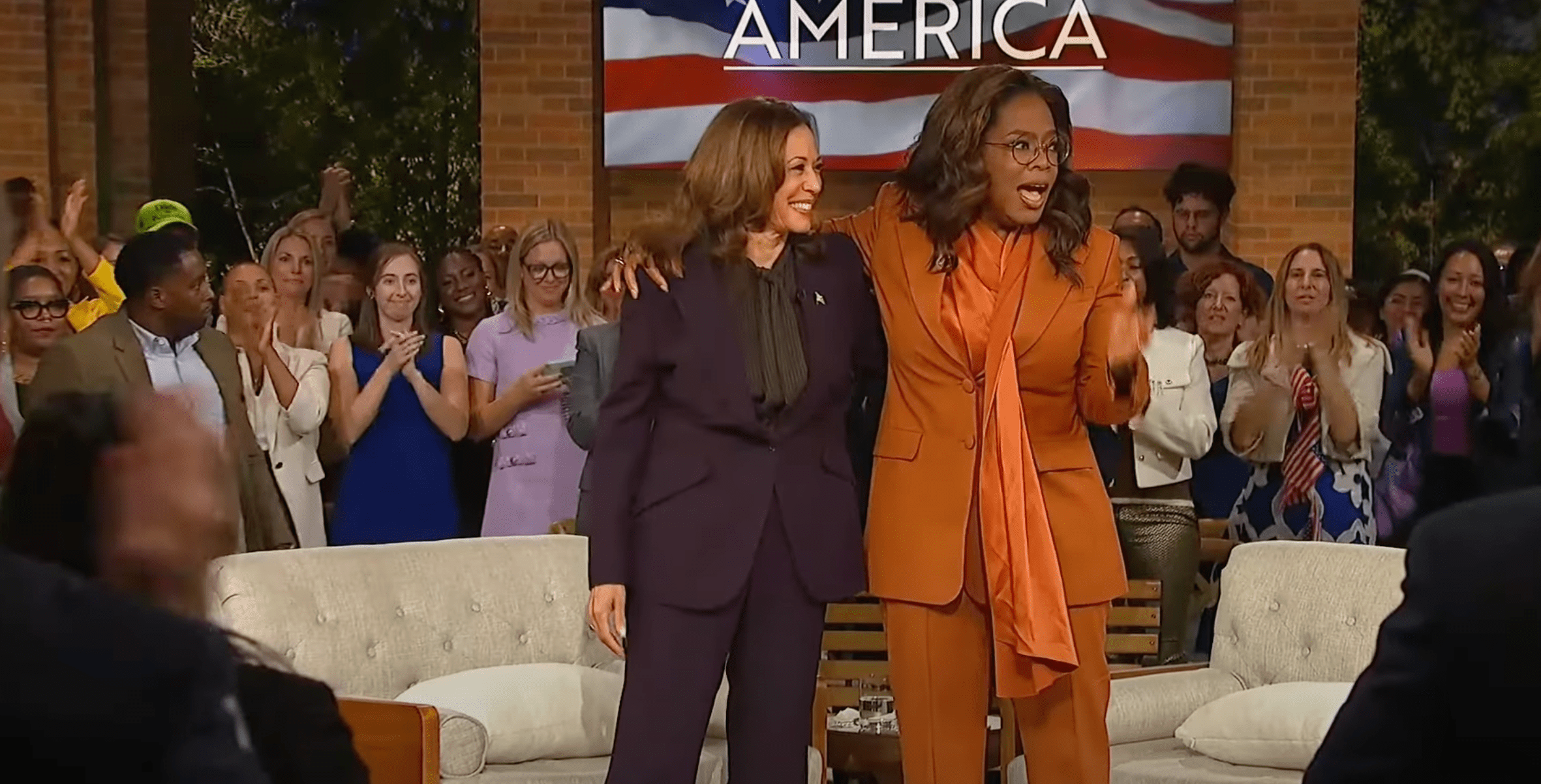
A screenshot of Oprah Winfrey and Kamala Harris from the Harris Campaign Town Call – YouTube, Kamala Harris
While celebrities can bring immense visibility to political issues, their impact on voters remains limited. A recent YouGov survey found that only 11% of Americans have reconsidered their stance on a political issue due to a celebrity’s influence, and just 7% have supported a candidate because of an endorsement. These numbers suggest that celebrity endorsements rarely sway voter behavior in meaningful ways. Instead, they often generate backlash. Over half of Americans (51%) say that learning about a celebrity’s political position has caused them to think less of that celebrity.
This disconnect underscores a critical issue: while celebrities may energize their fan bases, they risk alienating broader audiences. Sarah Silverman acknowledged this reality in a recent interview with the Minnesota Star Tribune. Once a prominent activist who actively campaigned for President Obama and spoke at the 2016 Democratic National Convention, Silverman admitted that she refrained from campaigning during the most recent election cycle. Her reasoning? She felt voters had grown weary of celebrity political opinions. “My feeling was that no one wanted to hear from celebrities right now,” she said, a sentiment validated by YouGov’s findings.
Sarah Silverman says she’s become less political because ‘no one’ wants to hear from celebrities anymore https://t.co/Isdmqv0Fr4
— Fox News (@FoxNews) December 4, 2024
Even when celebrities’ endorsements don’t backfire on their careers, they can create challenges for political campaigns. The Harris campaign’s $10 million investment in star-studded events, featuring icons like Eminem, Bruce Springsteen, and Julia Roberts, came under scrutiny after her defeat to President-elect Trump. Critics argued that the campaign’s emphasis on celebrity appeal reflected misplaced priorities in its $1.5 billion spending strategy.
The high cost of securing celebrity involvement—in terms of both financial investment and potential public backlash—raises questions about its overall efficacy. Campaigns may gain temporary media attention through these endorsements, but they risk alienating undecided voters who view such tactics as out of touch with everyday concerns. Additionally, the reliance on celebrities can distract from substantive policy discussions, further diminishing the campaign’s credibility.
“Lizzo endorsed Kamala!” “Eminem endorsed her!” “Usher, Taylor Swift!!” WHO CARES. Seriously.
NONE of these affluent celebrities will be impacted by her fiscal policies. They have no skin in the game except relevancy.
— Brett Cooper (@imbrettcooper) October 23, 2024
For celebrities themselves, political endorsements often come at a personal and professional cost. According to the YouGov survey, 32% of Americans believe that speaking out on politics generally hurts a celebrity’s career, compared to only 10% who think it helps. This trend is especially pronounced among older Americans and Republicans, who are more likely to view celebrity activism negatively.
Sarah Silverman reflected on this phenomenon, noting that while her past activism garnered attention, it also placed her in the crosshairs of critics. She shared her regret at not replicating her 2008 “Great Schlep” initiative, which encouraged young Jewish voters to pressure their grandparents to support Obama. However, she ultimately concluded that such efforts might not have made a significant difference this time around, further emphasizing the limited impact of celebrity-driven campaigns.
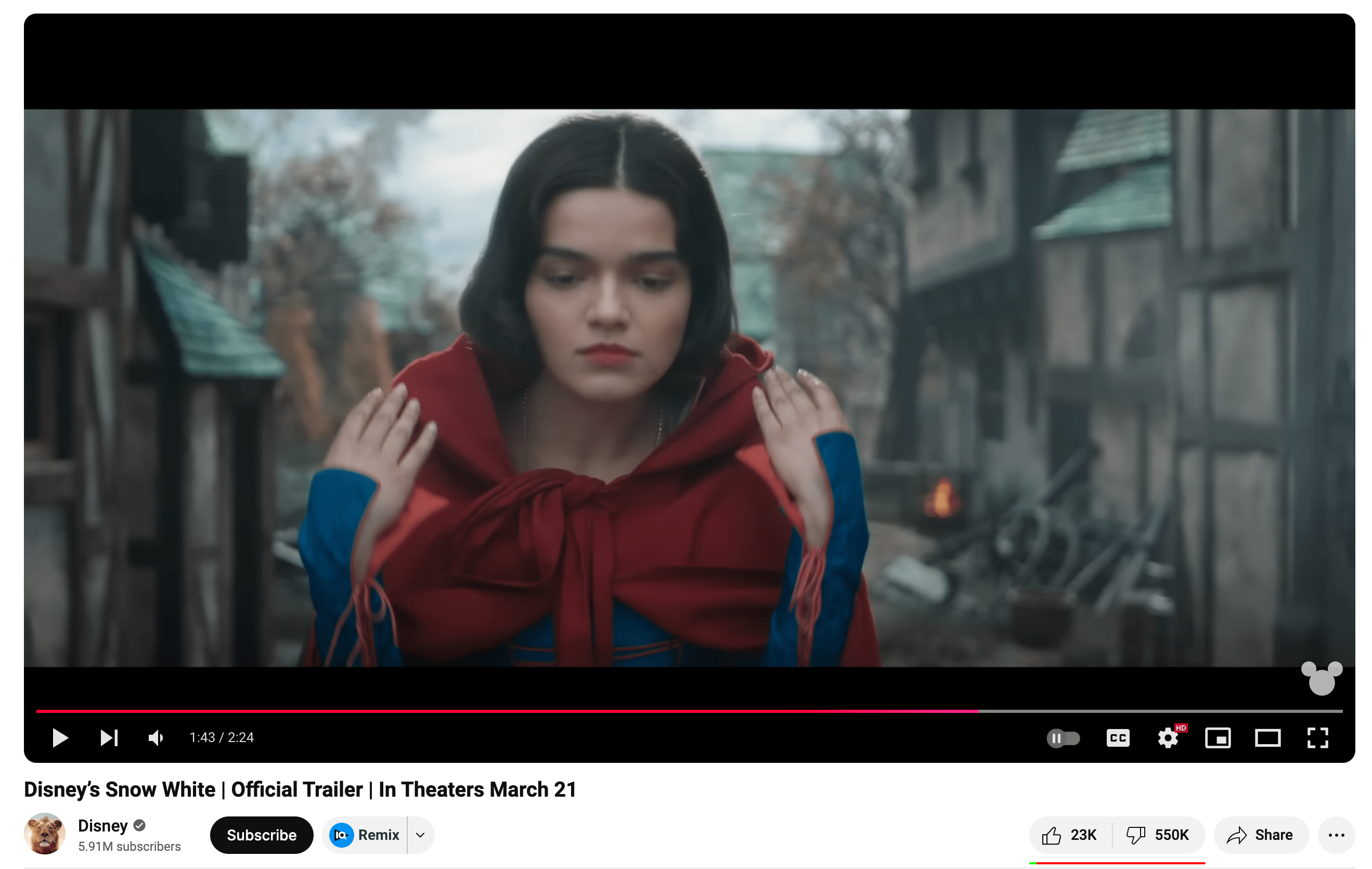
The Dislike Ratio for the Snow White Trailer as of December 5, 2024 – YouTube, Disney
The findings suggest that politicians and political parties should carefully evaluate the role of celebrity endorsements in future elections. While celebrities can amplify a campaign’s visibility, they risk alienating key voter demographics and diverting resources from grassroots efforts. Campaigns may be better served by focusing on authentic connections with voters, policy-driven messaging, and engaging local communities rather than relying on star power.
For celebrities, the calculus is equally complex. While some may genuinely wish to use their platforms for political activism, the risks to their public image and career longevity cannot be ignored. Both parties—campaigns and celebrities—stand to benefit from a more measured approach to political endorsements, one that prioritizes substance over spectacle.
As Sarah Silverman aptly put it, “Maybe I was wrong,” reflecting on her decision to stay silent during the election season. However, the data suggests she was likely right: fewer celebrity endorsements might lead to more focused, impactful political campaigns, unburdened by the noise of celebrity controversies.
