


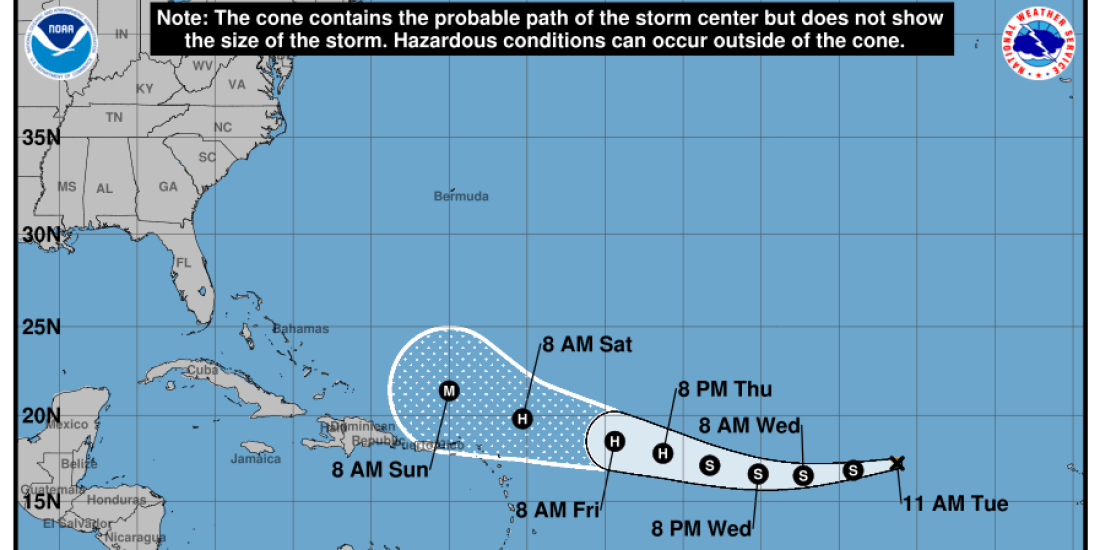
Tropical Storm Erin, the fifth named storm of the 2025 Atlantic hurricane season, is gaining strength as it moves westward across the eastern Atlantic. As of August 13th, Erin was located east of the Leeward Islands and moving westward towards the Florida coast, traveling at about 17–20 mph with significant wind production. Forecasters expect it to intensify into the first hurricane of the season by late Thursday or Friday, with the possibility of strengthening into a major hurricane (Category 3 or higher) by the weekend.
Current forecast models indicate that Erin will likely veer northward after passing the northern Leeward Islands, Puerto Rico, and the Virgin Islands, thereby keeping a direct Florida landfall unlikely. Nonetheless, early next week, Florida’s east coast may experience increased wave activity and dangerous rip currents even if the storm remains offshore. For this reason, it may be wise for tourists planning to visit locations like Daytona Beach and/or St. Augustine to consider Plan B options if beachgoing is not a wise idea. Additionally, tourists planning to take cruises or seafaring journeys going up the East Coast of the United States may want to call their cruise line companies to verify everything is smooth sailing.

Cinderella Castle at the Magic Kingdom in a storm – Photo Credit: Ron Bradley
Even without a direct hit, the mere approach of Erin can ripple across Florida’s tourism sector. Coastal beaches may close due to unsafe surf and currents, potentially prompting cancellations or shifts in travel plans. As noted, “a storm warning can lead to cancellations and lost revenue,” with visitor confidence highly sensitive to weather threats.
Central Florida’s theme parks—including Walt Disney World and Universal Orlando—are closely monitoring the situation. Historical precedent shows that even storms that don’t make landfall can disrupt park operations significantly. However, in this case it is highly unlikely we will see a path that would result in significant impacts for Walt Disney World or Universal Orlando, even considering heavy rain as a potential effect. Things can change with big storms, however, and updated paths will be monitored should they occur for Erin. When hurricanes do pass over Central Florida, it’s a big deal for theme parks and their operations. For example, during Hurricane Milton and Helene last year, Disney closed its parks, cancelled events, and incurred an estimated $120 million in losses.
🚨 BREAKING: Walt Disney World Theme Parks Announce Closure Due to Hurricane Milton!! 🚨
🌀⛈️💨🌀⛈️💨🌀⛈️💨🌀#HurricaneMilton #Disney #DisneyParks pic.twitter.com/W46FrHT9Ul— Disney for Foodies (@disney_foodies) October 8, 2024
Disney’s well-established hurricane protocols include full park closures, suspension of transportation services, and sheltering guests indoors with modified activities. Guests are typically allowed to reschedule or cancel packages without penalty when a hurricane warning is issued for the Orlando region. Again, at this time, we do not believe those protocols will be needed at any of the theme parks for Erin.
Over the next week, continued monitoring of Erin’s trajectory will be critical. As its path becomes clearer, tourism stakeholders—from airlines and hotels to theme parks—may need to enact contingency plans. Even in the absence of a direct strike, heightened weather vigilance can alter park attendance, ride availability, and visitor behavior within Florida’s tourism ecosystem. As always, a storm that moves northward and misses Florida can land in places up the East Coast. We’re crossing fingers and toes that Erin will simply scoot out to the northeast, away from land, and find nice, cool ocean water to break up its otherwise damaging power.
