


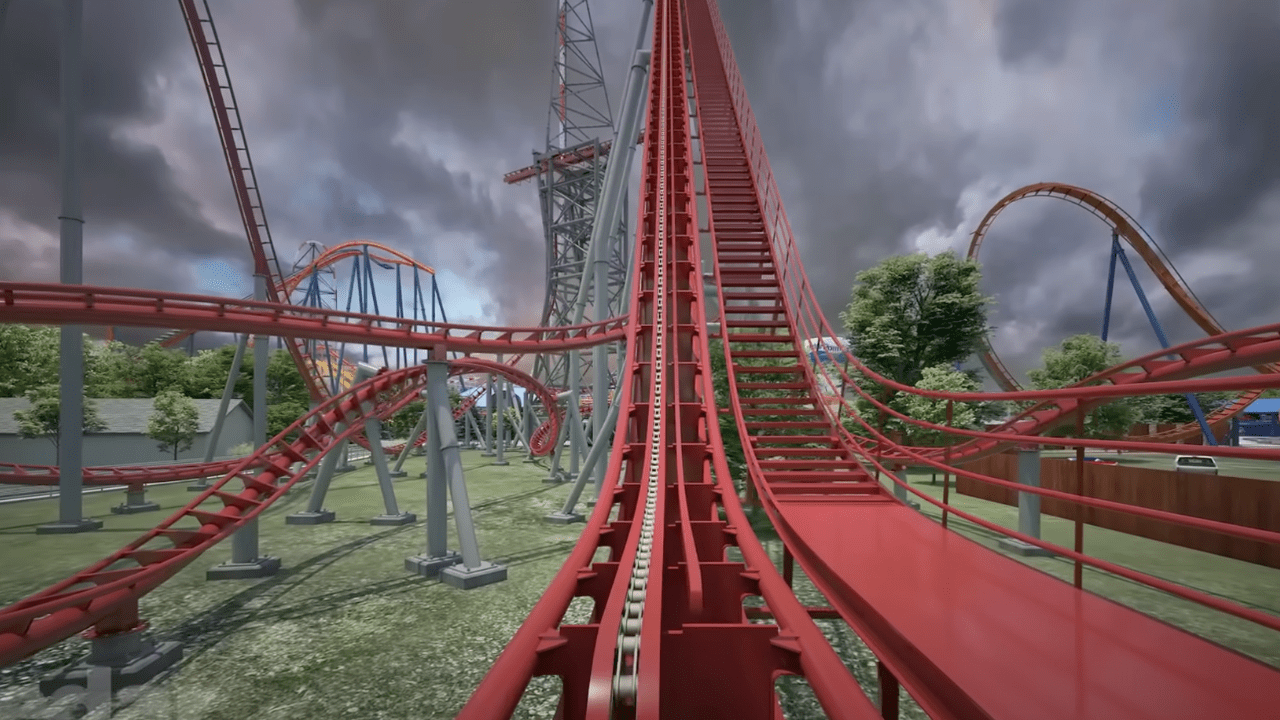
A bill introduced last month by State Representative Sean Patrick Brennan (D-Parma) would require Ohio amusement parks to provide real-time notifications of ride closures. Brennan says the Real-Time Ride Status Notification Act is intended to protect consumers and improve transparency at theme parks, particularly Cedar Point and Kings Island, the state’s largest amusement venues.
Under the proposed law, parks would be required to display up-to-date ride status on digital signage within the park and through their official websites or mobile apps. Operators would need to update ride availability within five minutes of a ride closing or reopening.
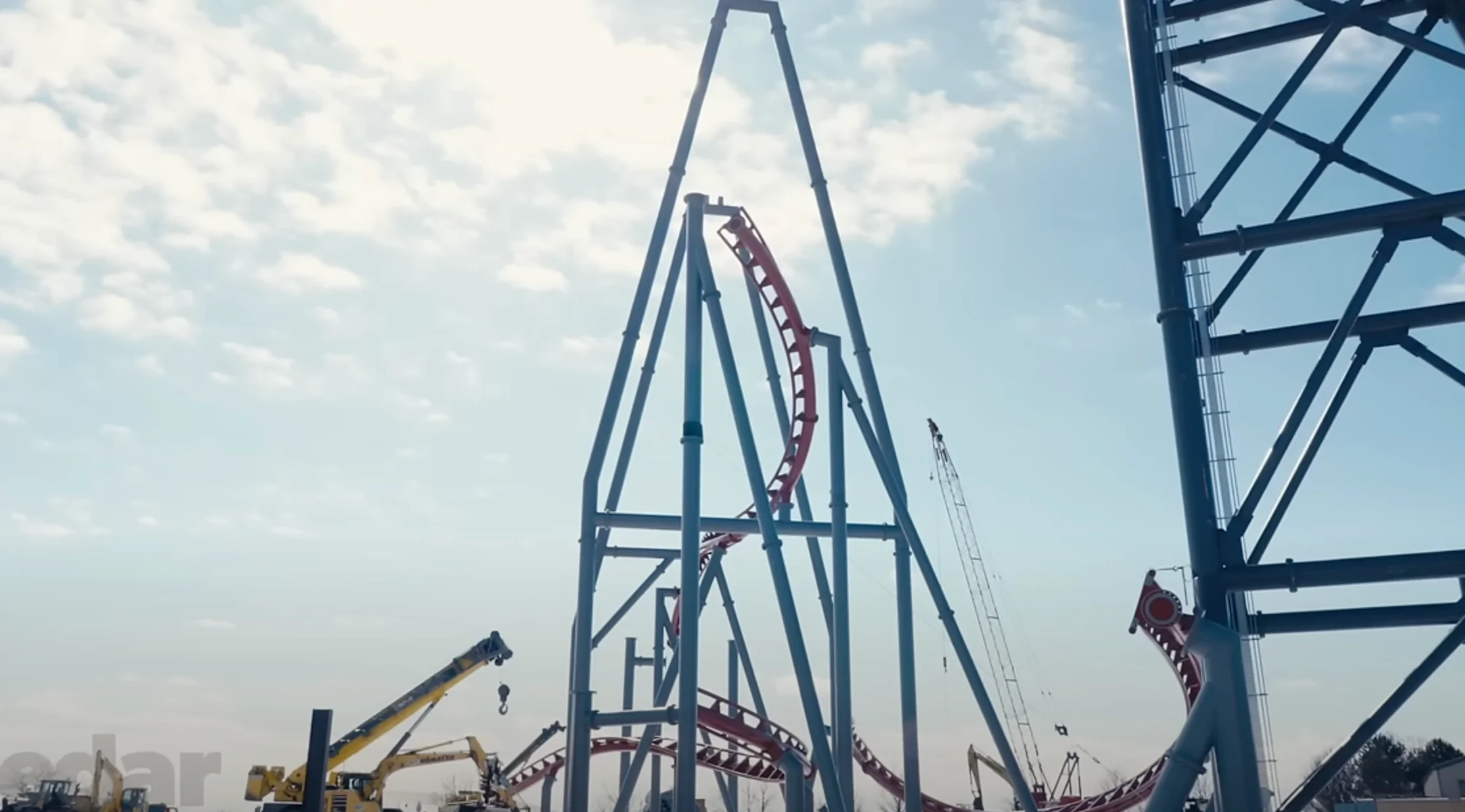
The construction of the Siren’s Curse roller coaster – YouTube, Cedar Point
In a public statement, Brennan emphasized that the bill is about fairness and consumer rights. “Families spend hundreds of dollars, travel hours across the state, and often wait in long lines. They deserve accurate, real-time information to help plan their day and avoid disappointment,” he said.
This Bill and Prior Legislation
The legislation was formally filed on August 13th. Enforcement, if the bill becomes law, would fall under the Ohio Department of Agriculture, the same agency that regulates ride safety inspections in the state. Parks failing to comply could face civil fines, although the bill does not currently define the amounts.
Brennan said the idea for the legislation was inspired by recent visitor complaints and social media posts about unexpected ride shutdowns at Cedar Point. While temporary ride closures are often due to weather or maintenance, the lack of real-time public notices can lead to long walks and wasted time for park guests.
Coaster enthusiasts scream while riding Crazanity at Six Flags Magic Mountain – YouTube, National Coasters
The proposal differs from previous amusement-ride legislation in the state. In 2019, lawmakers passed Tyler’s Law, following the 2017 Fireball ride accident at the Ohio State Fair that killed 18-year-old Tyler Jarrell. That law required additional inspections, professional engineering reviews for certain rides, and more detailed inspection records.
While Tyler’s Law focused on mechanical safety and structural integrity, Brennan’s Ohio theme park bill targets transparency and consumer convenience.
“We expect real-time updates from airports and public transit systems,” Brennan said. “It’s reasonable to expect the same from parks where people make significant financial and time commitments.”
Recent Ride Closures at Cedar Point and King’s Island
Ohio has seen multiple high-profile ride breakdowns at its top amusement parks in 2025, fueling momentum for the proposed Real‑Time Ride Status Notification Act. Most notably, Cedar Point’s new coaster, Siren’s Curse, stalled at least twice in a vertical position shortly after it opened on June 28th. In one incident, passengers remained suspended for approximately 10 minutes before being safely evacuated—prompting widespread attention.
The troubles did not stop there. Siren’s Curse malfunctioned again on July 2nd, getting stuck horizontally on the lift hill and requiring evacuation when the ride could not be restarted. Park officials described these issues as safety systems performing as designed, akin to a “check engine light” halting the coaster.
Meanwhile, Kings Island faced significant disruptions following a power outage in June that interrupted operations of several rides, though none of the shutdowns were connected to structural failure.
Earlier in the summer, Cedar Point’s iconic Magnum XL‑200 experienced a mechanical stoppage that left riders stranded on the track for as long as an hour before being evacuated on foot down a steep stairway. The park characterized the stoppage as a routine safety check, triggered by a sensor alert.
Response
Amusement park operators have not yet commented publicly on the legislation. If passed, the law could require parks to invest in technology upgrades to ensure real-time reporting capabilities.
Supporters of the bill argue that transparency builds trust and improves visitor experience. Critics may raise concerns about implementation costs and whether the five-minute requirement is practical during peak operational times.
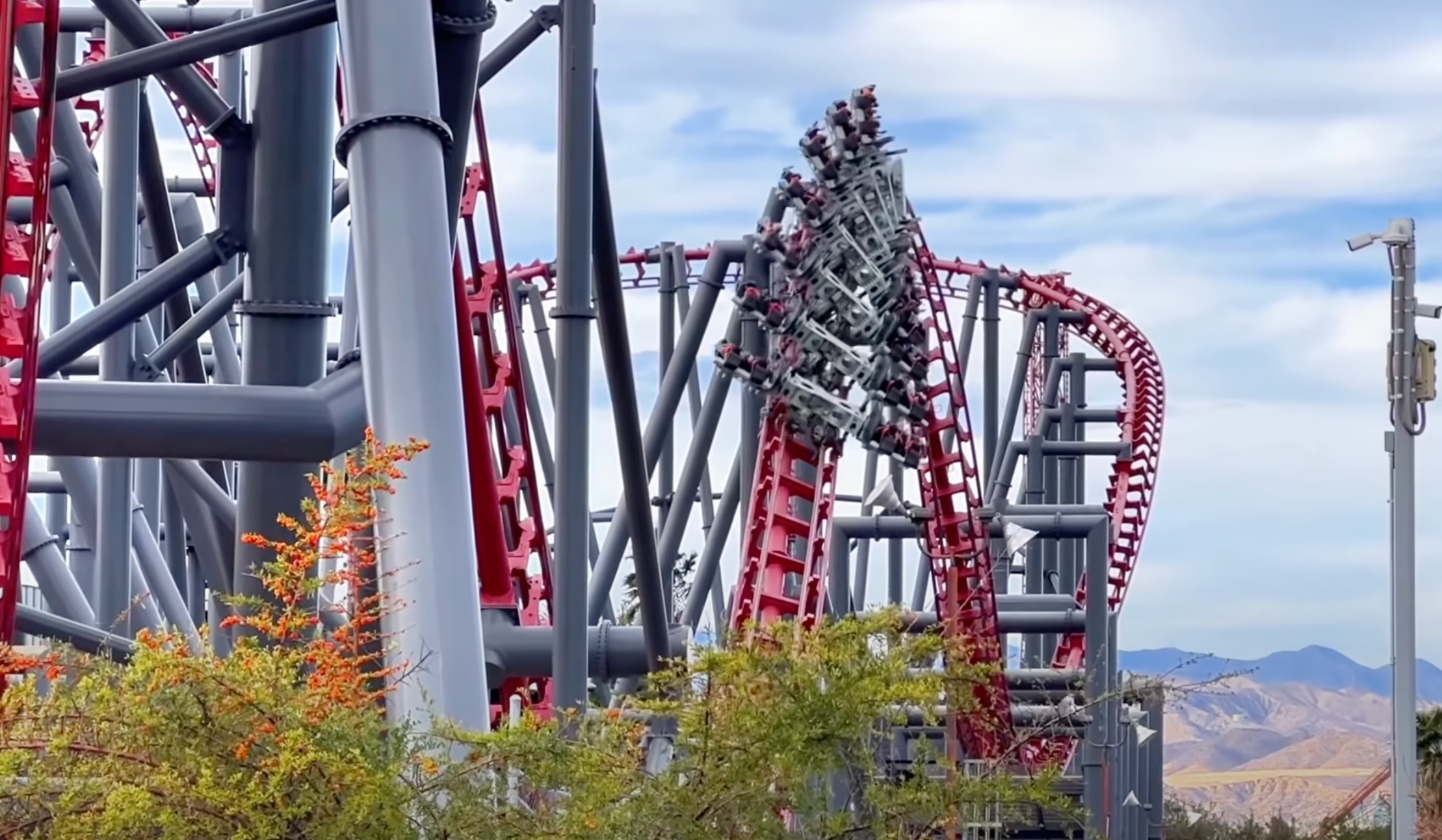
A roller coaster at Six Flags Magic Mountain – YouTube, National Coasters
Brennan said he is open to amendments that improve the bill but emphasized the core goal is to empower Ohio families with timely and accurate information.
What do you think of the Ohio theme park bill? Is it important for consumers? Is five minutes enough time for parks to respond with an update? Let us know your thoughts in the comments!
