

The video game industry has always been volatile, but the latest wave of layoffs has revealed just how much one state dominates the downturn. According to new reporting, more than 50% of all job cuts in the global gaming industry layoffs have taken place in California.

A screenshot from Ghost of Yōtei (2025), Sucker Punch
For a sector that has boasted record revenues in recent years, the numbers tell a troubling story — one that some popular voices are framing as a cultural correction.
California at the Center of the Cuts
Amir Satvat, a Tencent executive who runs a high-profile job support network for laid-off developers, told The Game Business that California has become “the epicenter of the difficulty” when it comes to job losses. Satvat has tracked tens of thousands of applicants across thousands of studios, and his data paints a clear picture:
- Over 70% of layoffs in some years have occurred in North America.
- Historically, North America accounted for 30–40% of open roles; that figure is now just 25%.
- Within North America, California alone accounts for more than half of the global job losses.

A screenshot from Horizon Zero Dawn (2017), Guerilla Games
Put simply, California AAA studios — home to industry giants like Electronic Arts, Activision Blizzard, and Sony Interactive Entertainment — have been cutting deeper and faster than almost anywhere else. Meanwhile, studios in Asia are actually expanding, highlighting just how regionalized the crisis has become.
Why California Studios Are Hurting
The reasons for California’s outsize pain are complex, but a few themes keep resurfacing:
- Overhiring during lockdowns: Big publishers expanded headcounts on the assumption that surging demand would last. When blockbuster projects underperformed, cuts followed.
- Ballooning budgets: With AAA development costs regularly surpassing $200 million, a single flop can sink a studio division.
- Live-service gambles: Games like Concord collapsed almost immediately, leaving little to show for massive investments.
- Unionization tensions: Blizzard, Activision, and other studios face mounting pressure from workers organizing in the wake of repeated cuts.

A screenshot from Concord (2024), Firewalk Studios
Together, these factors have made California’s largest studios especially vulnerable to contraction.
Layoffs as a Cultural Reckoning
Not everyone is mourning these California gaming layofs. Popular YouTube commentator Vara Dark recently reacted to the data, arguing that California’s crisis is less about economics and more about ideology. In her view, companies loaded up on “activists” more concerned with pushing politics than making fun, player-focused games.
“Over 50% of the job cuts in video games are in California,” Vara noted, calling it a purge of developers who “aren’t making games that people want” but instead “pieces of propaganda.” She pointed to Concord’s two-week lifespan as emblematic of an industry ignoring fan feedback while indies like Hollow Knight: Silksong and Expedition 33 thrive.

A screenshot from the trailer to Clair Obscur: Expedition 33 – YouTube, IGN
For Vara and many others, the layoffs represent gamers finally being heard: a correction against an industry culture that dismissed player criticism as toxic. Gamers are voting with their wallets against what Vara calls “AAA slop” loaded with identity politcs and the Western gaming industry is feeling the ramifications of its choice to go down the ideological path.
Indies Rising, AAA Struggling
Her point resonates with many fans. While massive AAA projects like Concord and Dragon Age: The Veilguard struggle to justify their costs, indie titles — some built by tiny teams — are flourishing. Games like Repo and Schedule One cost just a few dollars but deliver hours of entertainment, while creative mid-tier projects like Expedition 33 generate more excitement than heavily marketed AAA releases.
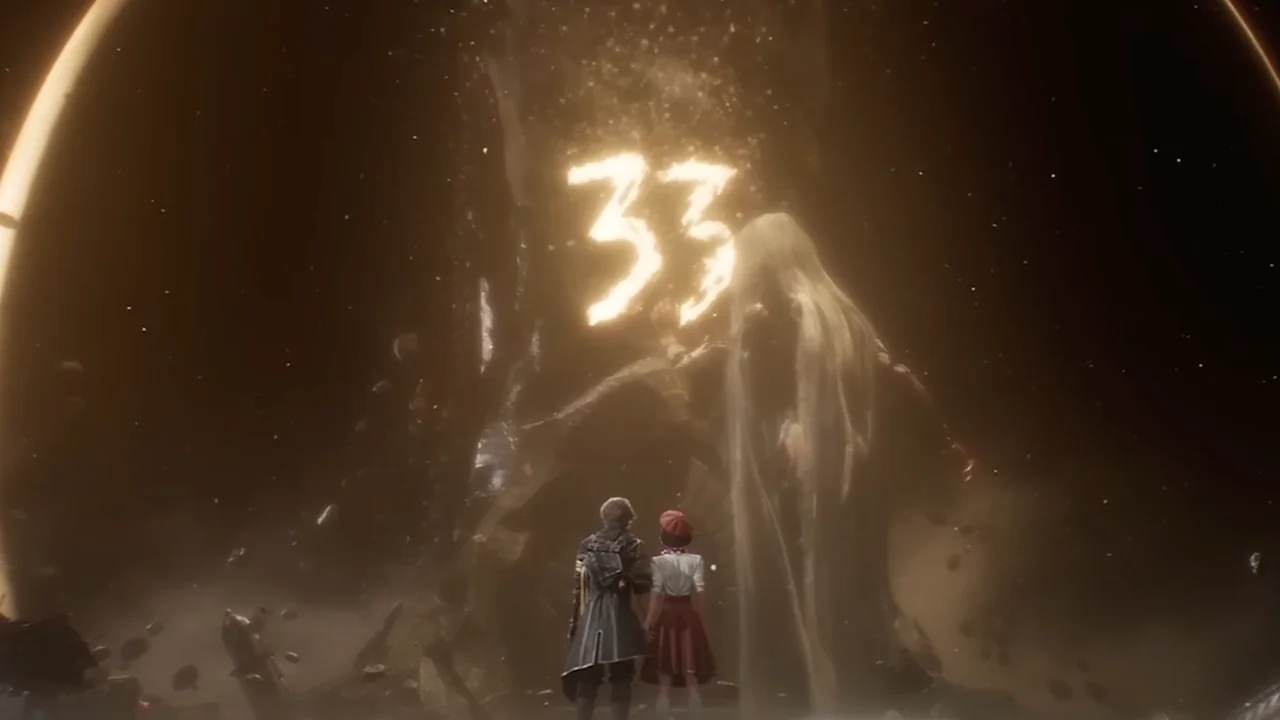
A screenshot from the trailer to Clair Obscur: Expedition 33 – YouTube, IGN
The contrast has made it easier for some players to view the gaming layoffs in California not just as business miscalculations, but as a failure of an entire cultural approach to gaming.
Final Thoughts
The hard numbers don’t lie: California accounts for more than half of global gaming layoffs. The state’s reliance on bloated AAA studios has left it exposed, while Asia and indie developers thrive.

A screenshot from South of Midnight (TBA), Compulsion Games
Where gamers split is in how to interpret the trend. Some see it as an unfortunate but necessary correction in an overheated market. Others, like Vara Dark, argue it’s a long-overdue backlash against an activist-driven culture that ignored the players it was supposed to serve.
Either way, one thing is clear: California’s dominance of the games industry no longer looks like a strength.
Do you think these California gaming layoffs have anything to do with ideology? Sound off in the comments and let us know!
UP NEXT: The Fate of Jordan Peele’s New Movie Hangs in the Balance as it Experiences Multiple Delays


I don’t think this has as much to do with purging activists as it does greater economic realities in California and elsewhere. The state’s a mess, run into the ground by progressive politics and leaders with such severe TDS they do the exact opposite of anything Trump says no matter how harmful it is to them. Their business regulations are increasingly driving out existing businesses and scaring off new ones while the culture is also driving out the wealthy who help *create* jobs. Then there’s their disastrous minimum wage law that acted as the spark for the current wealth drain, one set to get worse if they pass their $30-per-hour law.
Cali already had the highest prices of any state in the Union. Now businesses that remain are struggling to continue making money. Thus they have to make drastic cuts to stay profitable. Woke game devs who’ve never made anything profitable are at the top of any list of “acceptable losses.”
It’s also not just companies in California. Microsoft, based out of Seattle, is going through identical purges and for many of the same reasons. Activision, though based in Cali, is one of their subsidiaries now. As is Bugthesda out of Maryland. Neither has seen a ROI on what MS paid to acquire them because they’ve repeatedly released mostly failures.
Bethesda lost more of the staff in Texas (Austin and outside of Dallas) than the proportion of people they lost from Maryland. Arcane and the ESO + new MMO both had a lot of assets in that area.
Frankly, Microsoft has never met an MMO it didn’t like. They’ve half-assed or punted on every MMO they ever had come under their roof, so it doesn’t surprise me to see them take the knife to ESO and totally ditch the new MMO.
it is too bad, for game development, that CA represents the largest concentration of dev hubs. I wonder if we’d be hearing about all this if there were more studios or publishers operating out of Fargo, ND. Or Casper, WI.
AAA gaming went woke. And now it’s going broke.
DEI is a disease. It absolutely destroys industry, both hardware and software. (Along with Unionisation and other left wing suicidal tendencies).
Western corporations still think that wokery is a good idea, they keep doing it. Like that woke, clueless Karen at Cracker Barrel. FAFO.
Neither Veilguard nor Concord were made in CA and don’t really contribute to the thesis of “CA = 70% of job losses” theme. Not that I don’t revel in their failure, but the most woke of those people have since gone on to infect other studios. Instead of snuffing the virus in the original host, it has now spread. Now, have the people at HQ themselves learned a lesson about buying or hiring wokies into ANY of their geographically spread empire? No. If they were that worried about it they’d be founding or buying studios in the mid-west or northern states.
Will you get more “activist” employees in CA than other video game dev hub locations? I’d wager “No”. Almost all North American game development is located in liberal leaning hotspots with similar regulation and business expenses. Seattle, WA. Austin, TX. Vancouver, BC. Montreal. Quebec. San Francisco. Albany, NY. Boston, MA.
The fact that CA is over-represented is due to one simple factor: the business environment in CA. Because of laws, taxes, and regulation in CA salaries and overall operating expenses tend to be far higher than elsewhere so when the Execs need to see blackline-go-up-better-than-last-time that is the natural place to shed jobs.
If you look at other game dev losses, you’ll see the companies with HQ in those liberal hubs come close to matching CA in operational costs. Look for any game dev hub and scratch the surface to see what the business environment is like. Chances are, if it shares traits with these NA hubs, they have also seen layoffs. UK, Germany, France, Sweden. But you rarely hear about the sweeping massive layoffs from the eastern side of the EU where they have less friction on business.
This is what is leading the charge in the great shift to SE Asia and the evolving focus on the Visegrád region as more than a place to outsource for cheap labor.
I am interested to see how the unionization effort progresses. Clearly it hasn’t helped much since folks who belonged to the unions at various Xbox studios got the axe in this last round of layoffs.
Regarding “Final thoughts” Honestly it depends on which Asian and indie games we’re talking about, because if I think about Japanese companies now almost all have become “American” and therefore consequently Woke and/or create and develop garbage games like Capcom, and many indie and AA companies want to be like AAA companies and they also contribute more than you think to the creation of Woke and DEI games.
As for everything else, I’ve been hearing for a year and a half now about purges or companies deciding to cut DEI ideologies from their studies, but I don’t see any results. In fact, I see companies injecting more and more Woke ideologies into their games, despite losing billions of dollars. So I’ll believe these changes when they actually happen, not just in words.