



If there were any remaining doubts that the Public Investment Fund of Saudi Arabia (PIF) was looking to make inroads into global entertainment, they have been effectively removed. New details of the $55 billion private buyout of the video game company Electronic Arts (EA) first announced in September reveal that Saudi Arabia will own 93.4% of EA.

A screenshot from Dragon Age: The Veilguard (2024), BioWare
The Wall Street Journal broke down the deal in an exclusive report, noting that it was originally pitched as a consortium purchase among three parties: Jared Kushner’s Affinity Partners, PIF, and Silver Lake. At the time, it was unclear how much each party was planning to invest. Now, with confirmation that PIF is the majority stakeholder by a large margin, it now appears that the involvement of Affinity Partners and Silver Lake is minimal.
The Numbers
According to WSJ, the the consortium’s purchase breakdown gives Affinity Partners a 1.1% stake in EA. The American global private equity firm Silver Lake, which focuses on technology investments, will own 5.5%. However, it should also be noted that PIF has also invested in Affinity Partners and Silver Lake to facilitate the EA purchase.
This means Saudi Arabia has contributed $29 billion to EA purchase.
Saudi Arabia will own EA completely. pic.twitter.com/CrcUgcHvDK
— Grummz (@Grummz) December 3, 2025
If the buyout passes the requisite regulatory and shareholder hurdles, it could reshape the video gaming landscape.
EA’s Company Values
EA — long a powerhouse video game company — has increasingly come under fire for incorporating social issues into its games. In 2022, Battlefield 2042 introduced a nonbinary character. Other games, including Apex Legends and even The Sims have included Price-centric characters. EA’s sports titles have also incorporated those themes. And the WWII military shooter Battlefield V also revised historical accuracy by featuring female soldiers.
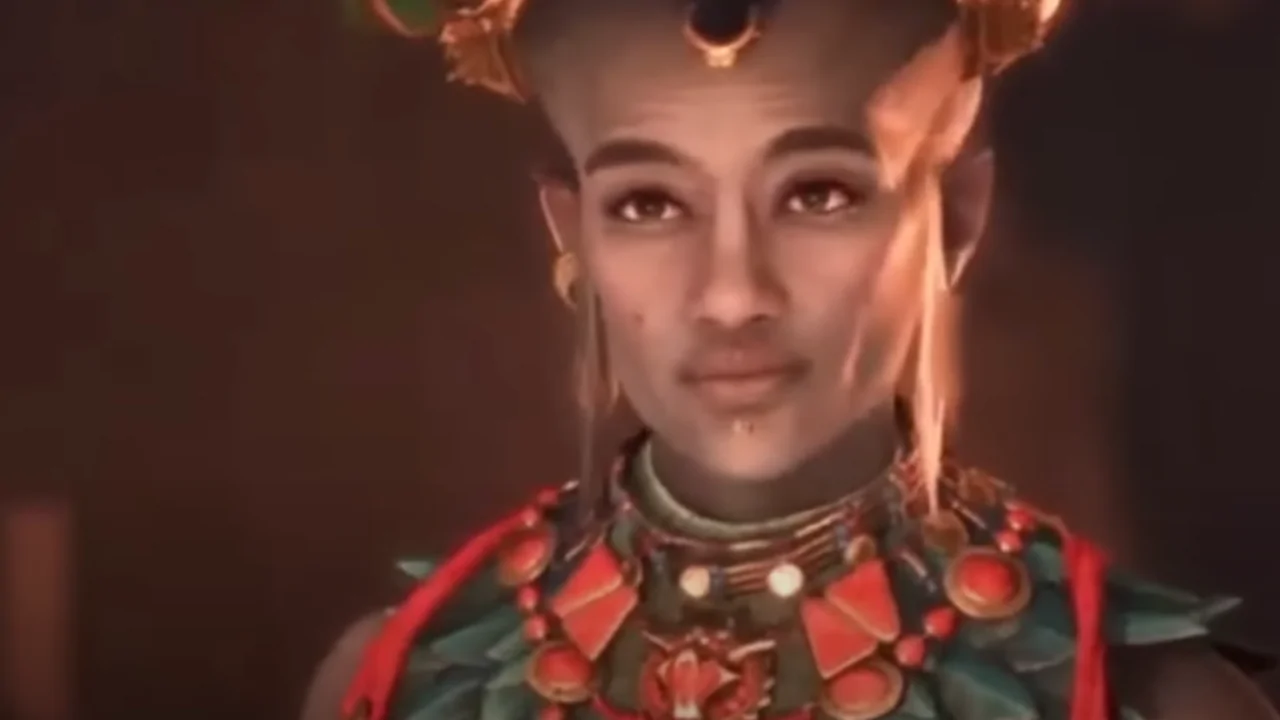
A screenshot from Dragon Age: The Veilguard (2024), BioWare
EA CEO Andrew Wilson said in October, that the “values and our [EA’s] commitment to players and fans around the world remain unchanged.” Those progressive values may have been acceptable to U.S. shareholders. However, if the purchase goes through, EA will be a privately owned company — primarily owned by a kingdom where same-sex relationships are punishable by law.
Still, EA leadership is reportedly reassuring staff that creative control would remain unchanged. It’s a promise that many in the gaming community doubt the company will be able to keep.
EA PROMISES “CREATIVE CONTROL” DESPITE SAUDI-BACKED BUYOUT! 😳
In a massive internal memo, EA is trying to reassure its staff amid the proposed $55 BILLION acquisition that includes Saudi Arabia’s PIF.
The Statement:
”EA will maintain creative control, and our track record… pic.twitter.com/Jq8Slr0peC— Pulp Culture (@pulpculture323) November 6, 2025
Some online are celebrating the possibility that the DEI initiatives which have increasingly come to define EA games may be removed. Others — particularly within the Sims gaming community — are concerned that the LGBTQ inclusion will be removed.
A designer for The Sims says that the series’ diversity is “critical, especially at times like now”, in the face of ongoing reactionary cycles.
EA has recently been acquired by Saudi Arabia, a country in which same-sex relationships are illegal:https://t.co/UAXOVCTMDe pic.twitter.com/XeUxH7EiqE
— Ryan T. Brown 🎮🩷 (@Toadsanime) November 3, 2025
All this comes as rumors persist that PIF is also interested in the U.S. film industry.
Conclusion
As the entertainment space becomes more global, gamers and filmgoers alike may notice a change in what is produced. What is celebrated in one country is illegal in another, and inclusion can be a one-way street.

A screenshot from EA Sports FC 24 (2023), EA Canada & EA Romania
How differing values can coexist in this complex ecosystem — if it’s even possible — remains to be seen.
How do you feel about Saudi Arabia owning EA? Let us know in the comments!
UP NEXT: Zootopia 2 Box Office Stampedes Toward $1 Billion as Asian Markets Hold Strong
