


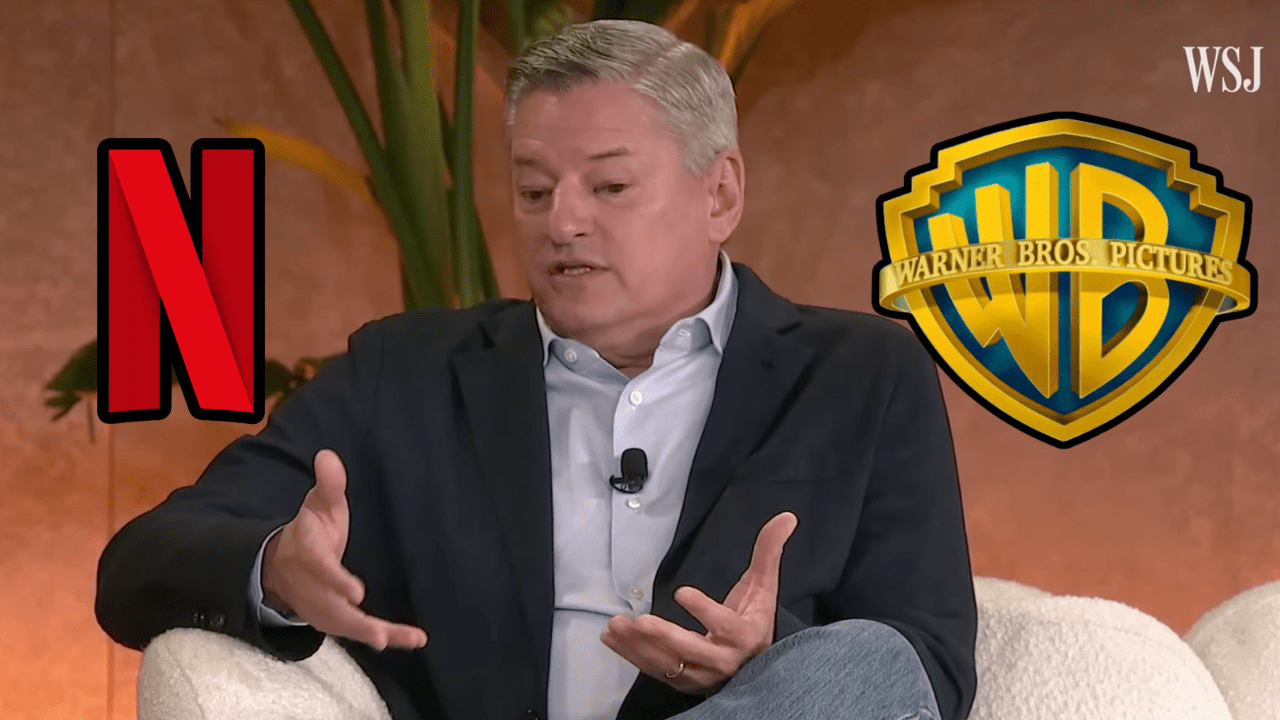
Netflix has spent the past week insisting that nothing will change for Warner Bros. films once the acquisition goes through — but comments on a recent investor call raise a new red flag. And it’s a big one. In fact, it touches directly on the top fear critics have repeatedly raised: WB theatrical windows under Netflix may become shorter, faster, and far less traditional.
This is precisely what opponents of the deal warned regulators about. And now Netflix appears to be saying the quiet part out loud.
Sarandos Says the Quiet Part Out Loud
During a Friday call with investors, Netflix co-CEO Ted Sarandos tried to reassure everyone that the streamer isn’t anti-theater. He pointed out that Netflix released around 30 films in cinemas this year, though most had extremely brief runs — far shorter than what legacy studios traditionally allow.
A graphic showing the Netflix and Warner Bros. Logos – Netflix
Sarandos then emphasized that Netflix plans to keep Warner Bros.’ current cycle intact for now, including theatrical-first releases for major films. But almost immediately after making that promise, he pivoted to something far more telling: the “windows” between theatrical release and streaming may “evolve” in ways that Netflix claims favor the “consumer.”
“I wouldn’t look at this as a change in approach for Netflix movies or for Warner movies,” Sarandos said. “I think, over time, the windows will evolve to be much more consumer friendly, to be able to meet the audience where they are quicker…I’d say right now, you should count on everything that is planned on going to the theater through Warner Bros. will continue to go to the theaters through Warner Bros., and Netflix movies will take the same strides they have, which is, some of them do have a short run in the theater beforehand. But our primary goal is to bring first-run movies to our members, because that’s what they’re looking for.”
Warner Bros Discovery Logo
When Netflix says “consumer friendly,” Hollywood hears something different: shorter theatrical windows, quicker streaming availability, and a continued erosion of box office momentum.
That sounds an awful lot like the shift many feared when this acquisition was first rumored.
Why This Comment Sets Off Alarm Bells
For months, theater owners, analysts, and even competing studios have warned that Netflix — a company built entirely on the idea of immediate at-home access — would inevitably change the theatrical model at Warner Bros.
Netflix now appears to be laying the groundwork for exactly that.

Superman beaten down in the trailer for James Gunn’s Superman – YouTube, DC
Even while insisting it will honor Warner Bros.’ contracts, the company is openly suggesting that windows between release stages will shorten over time.
That means:
-
Films spend fewer days in theaters before moving to Netflix
-
Exhibitors lose leverage
-
Box office drops become more rapid
-
Traditional release cycles erode in favor of streaming
And for Warner Bros., a studio whose biggest franchises (The Batman, Dune, Harry Potter, DC) rely heavily on theatrical success, that shift could reshape everything.
Hollywood Has Seen This Pattern Before
Netflix has always approached theatrical releases as marketing, not as a revenue pillar. Films like Frankenstein and Jay Kelly received tiny theatrical footprints before quickly moving to streaming — usually under the guise of “consumer choice.”
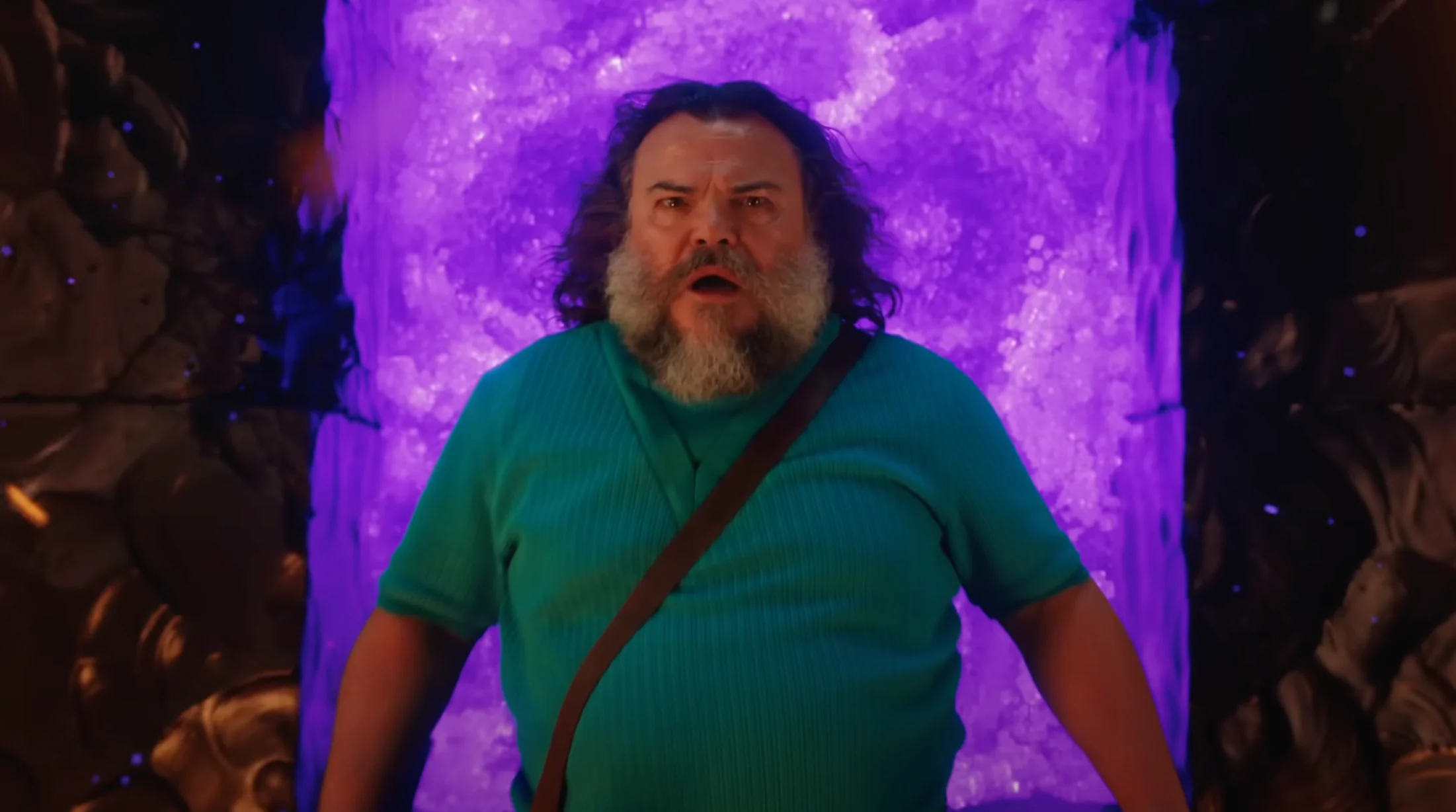
A screenshot from A Minecraft Movie – YouTube, Warner Bros.
Warner Bros., however, is historically a theatrical powerhouse.
Pairing these two philosophies was always going to cause tension.
And now that Netflix is suggesting “evolving” theatrical windows, the fear is simple: Warner Bros. movies will receive drastically shorter exclusive runs, undermining the box office model that keeps theaters alive.
The Logo for Netflix – Netflix
The reaction has already been strong. Exhibitor groups have voiced skepticism, citing Netflix’s long history of deprioritizing cinemas. One major trade association even warned that the acquisition poses a serious threat to global theatrical business models.
That was before Netflix hinted at shrinking the window further.
Why Regulators Should Pay Attention
One of the biggest questions facing antitrust officials is whether Netflix will use its new ownership to tilt the entire theatrical ecosystem toward streaming dominance.
Sarandos’ statements may unintentionally reinforce exactly those concerns.
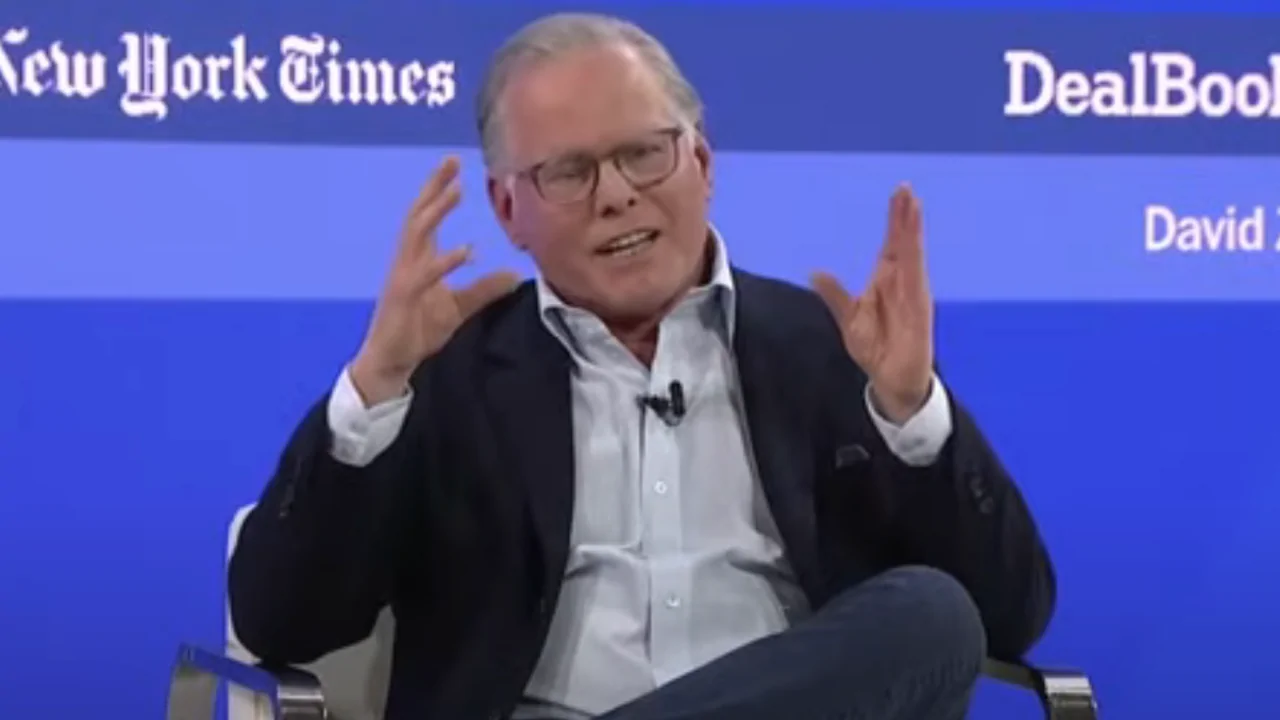
WBD CEO David Zaslav Speaks at a New York Times event – YouTube, New York Times Events
If Netflix:
-
Controls Warner Bros.
-
Controls HBO Max
-
Controls its own worldwide streaming service
-
And shortens theatrical windows for one of Hollywood’s oldest studios…
…then regulators will absolutely view this as consolidation that harms both competitors and exhibitors.
And Netflix just handed them fresh ammunition.
Final Thoughts
The more Netflix talks, the clearer the picture becomes. Despite assurances that Warner Bros. films will remain in theaters, the company is signaling an inevitable shift toward shorter Netflix theatrical windows — the very issue that critics warned would undermine cinemas and destabilize release strategies across the industry.
Source Photo Credits: Netflix, Warner Bros.
If this acquisition goes through, the theater landscape may not collapse overnight. But the writing is already on the wall, and Netflix seems to be holding the marker.
Do you think Netflix will shorten WB theatrical windows? Sound off in the comments and let us know!
