



For more than a year, Sweet Baby Inc. has attempted to frame backlash from critics against the company as bad-faith outrage driven by prejudice rather than legitimate criticism of its role in game development. A recent podcast appearance has only reinforced that perception—this time, not through outside interpretation, but through the company’s own words and the company it keeps.
In a now widely circulated episode of the Gaming for the Culture podcast, Sweet Baby Inc. producer Maria Beck participated in a discussion that openly characterized critics of the company as “cis white men” opposed to diversity. While the phrasing was introduced by the podcast host, Beck repeatedly agreed with the framing and made no attempt to challenge or correct it.
The exchange was highlighted and analyzed by The Writing Raven at DEI Detected and further broken down line by line by the Gothic Therapy YouTube channel, which provided full context and direct transcript excerpts.
“Cis White Men” Framing Goes Unchallenged
Early in the discussion, the podcast host framed criticism of Sweet Baby Inc.’s work as coming from a specific demographic:
“White men, cis white men were not interested in the work that Sweet Baby Inc. put into for something that was already created.”

A list of games Sweet Baby Inc. worked on that includes Contraband
Rather than pushing back, Beck continued the conversation on that premise, repeatedly affirming the host’s interpretation and agreeing as the topic resurfaced throughout the episode. The framing reduced a wide range of consumer, developer, and industry criticism into a single identity-based explanation, with dissent dismissed as opposition to diversity rather than disagreement over creative influence.
This distinction matters. Beck may not have coined the phrase herself, but by agreeing with it—and by failing to dispute it—she endorsed the characterization.
Sweet Baby Inc. Admits It Creates Narratives
The podcast also produced something even more damaging to Sweet Baby Inc.’s long-standing public messaging: an explicit admission that the company does far more than simply “consult.”

A screenshot of Sweet Baby Inc.’s website listing a number of games the company has worked on.
When asked whether developers must come to Sweet Baby Inc. with a narrative outline already prepared, Beck gave a blunt answer.
“We create those things,” she said.
That statement directly contradicts years of public positioning that framed Sweet Baby Inc. as a limited advisory service offering feedback rather than authorship.
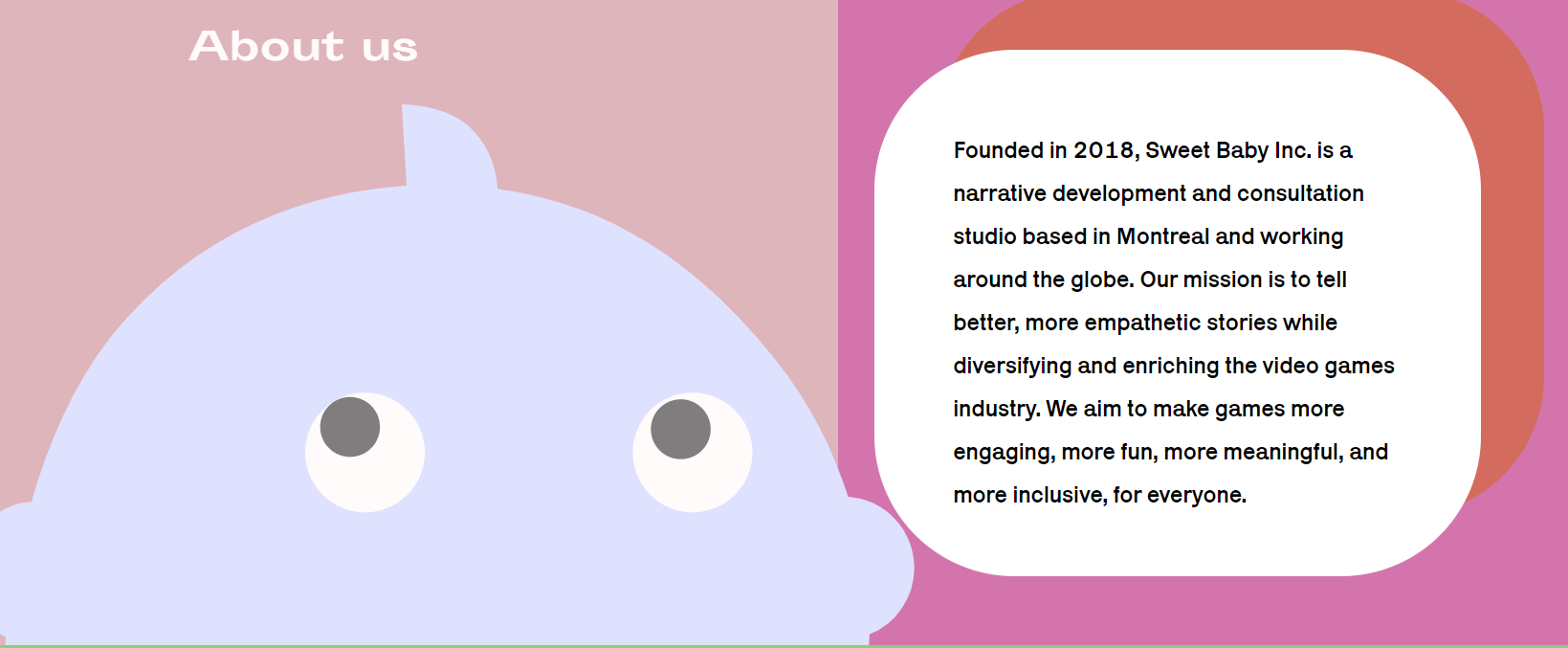
Sweet Baby Inc. About Us section
As Gothic Therapy notes in its breakdown, creating narrative outlines, character documents, and scripts from an initial concept places Sweet Baby Inc. in a foundational creative role—one far closer to development than consultation.
Deflection Instead of Accountability
When the conversation turned to backlash, Beck attributed criticism to “harassment” against her and her colleagues, including Sweet Baby Inc. co-founder and CEO Kim Belair. However, no acknowledgment was made of prior controversies that escalated tensions—most notably, attempts by Sweet Baby Inc.–associated figures to shut down third-party efforts cataloging the company’s involvement in games.

Sweet Baby Inc detected Steam Curator list
Ironically, Beck later expressed frustration that Sweet Baby Inc. does not maintain a public list of projects it has worked on, saying she wished such a record existed. That admission stands in stark contrast to the company’s past hostility toward independent tracking efforts designed to allow gamers to vote with their wallets.
A Pattern Becomes Clear
Taken together, the podcast appearance paints a consistent picture. Sweet Baby Inc. claims to be misunderstood, yet openly describes creating core narrative material. It insists criticism is driven by prejudice, yet declines to engage with the substance of that criticism. And when offered a friendly platform, it confirms—on the record—the very concerns players and developers have raised for years.

Sweet Baby Inc. credits for SSKTJL
As The Writing Raven observed in original reporting, Sweet Baby Inc. did not need leaks or speculation to undermine its own messaging. It did so publicly, through its own representative, in its own words.
Transparency builds trust. Deflection erodes it. And this podcast made clear which approach Sweet Baby Inc. continues to choose.
How do you feel about Sweet Baby Inc. and its continued involvement in the gaming world while dismissing critics? Sound off in the comments and let us know!
