


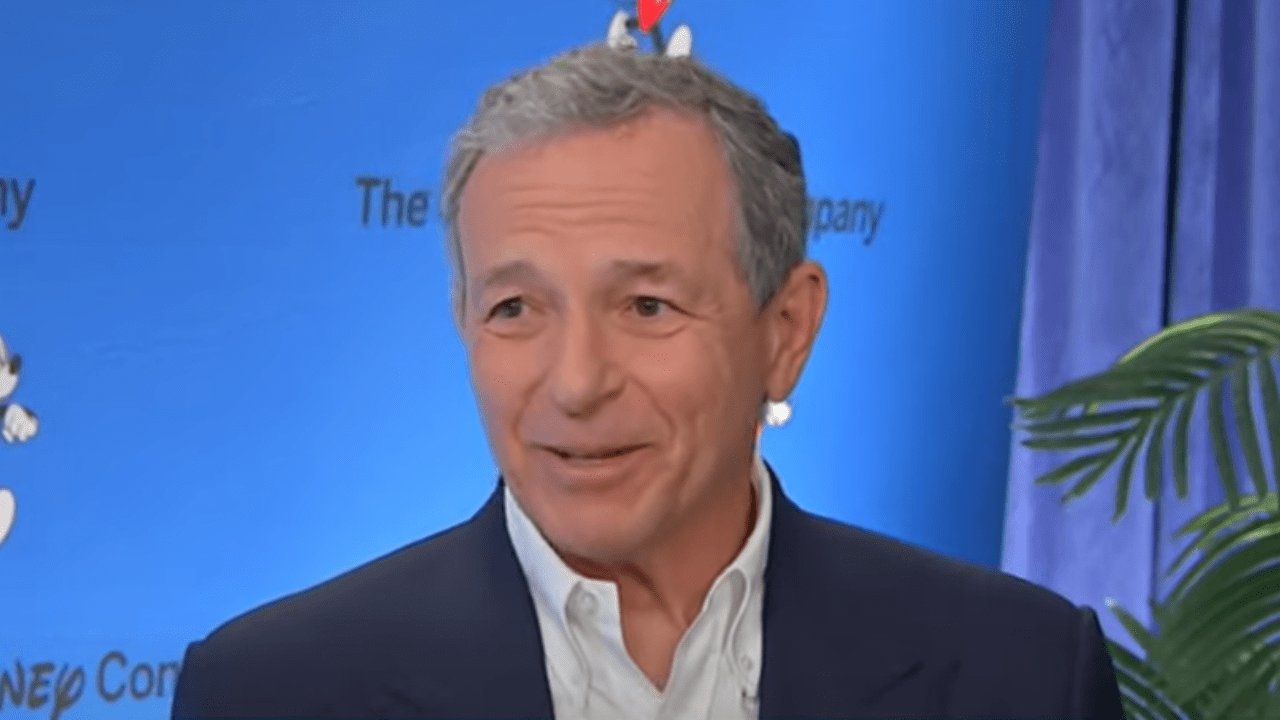
Companies know that stories matter… and perhaps no company knows it more than Disney. That’s why a new report from Florida Politics, presenting Disney as both victim of Florida Governor Ron DeSantis, as well as victor of the state of Florida’s attempts to stomp them out, is worthy of extreme skepticism. One might consider that this is an attempt to stamp the “official narrative” on a story that looks far more like Disney having lost in almost every possible way. In fact, it’s downright humiliating for Bob Iger and company.
What did Disney lose? Essentially a nowhere-else-in-the-world self-governance system over 40 square miles of property, the ability to pay itself its own taxes (through a bizarre quasi-city system explained later), and all of the benefits one might imagine from having not only private control but government control of multiple cities and resorts.
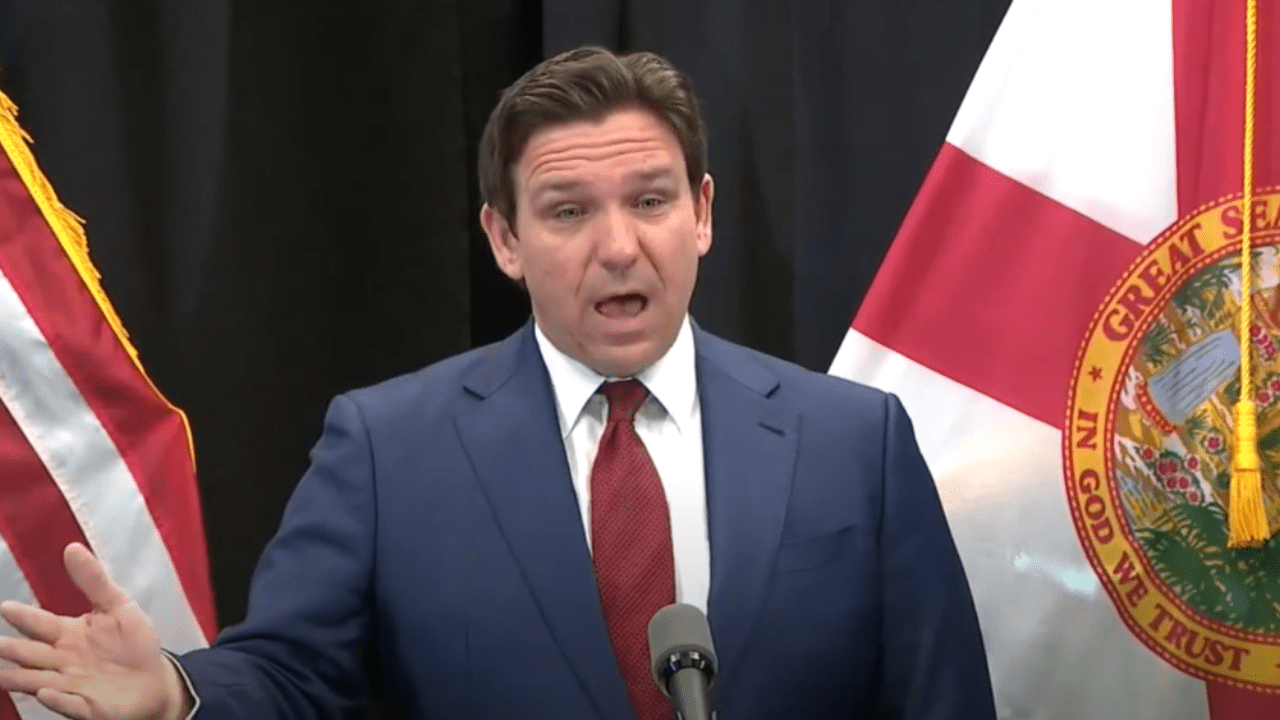
The new article presents the Disney-DeSantis battle as a story of a corporation reacting to a hostile state takeover, with Disney executives describing their concern that future Walt Disney World expansion could be jeopardized by a DeSantis-controlled board. The article includes valuable deposition material, but its framing deserves skepticism. It repeatedly casts Disney as the party being acted upon, while giving less weight to the fact that Disney was not a passive bystander. Disney placed itself directly into Florida’s political fight when it publicly pledged to help overturn the Parental Rights in Education law.
Ron DeSantis via News4JAX The Local Station YouTube
READ: ‘Doctor Who’ Star Peter Capaldi Claims He Doesn’t Understand Why Fans Take The Show So Seriously
The critical starting point is not simply that Gov. Ron DeSantis “put The Mouse in his crosshairs.” The starting point is that Disney, under then-CEO Bob Chapek (and under mounting mutiny pressure from Bob Iger allies resulting in a collapsing stock value), moved from corporate neutrality to political advocacy after internal and external pressure. After DeSantis signed HB 1557, Disney declared that the law “should never have passed” and that its goal as a company was for the law to be “repealed by the legislature or struck down in the courts,” while pledging support for organizations working toward that goal.
That matters because the Florida Politics article’s moral framing leans heavily on the idea of state “revenge.” But Disney was not merely issuing a vague statement about inclusion. It announced a corporate objective to defeat a duly enacted Florida statute. Whether one agrees with Disney or DeSantis, that is a major corporation entering the political arena. Once Disney used its brand power, lobbying influence and nonprofit support network against a state law, it became much harder to argue that the company was simply an apolitical victim of government hostility.

Pride Night at Disneyland – YouTube, Laughing Place
The Parental Rights in Education law barred classroom instruction on bedroom and identity issues in kindergarten through third grade, and barred instruction that was not age appropriate or developmentally appropriate under state standards. Florida Department of Education materials described HB 1557 as prohibiting such classroom instruction in K-3 and requiring parental notification procedures involving a child’s mental, emotional or physical health.
That does not settle the constitutional or cultural debate, but it does show why many supporters objected to the activist framing. Critics argued that the law was vague and harmful to non-traditional students and families. Supporters argued that it protected young children from controversial, age-inappropriate ideology in early-grade classroom instruction. A skeptical article should present both of those realities instead of simply adopting the political slogan preferred by Disney’s side of the dispute.
The deposition details in the Florida Politics article are important because they undercut the image of Disney as merely defensive. According to the article, Disney’s own lawyer, John McGowan, admitted he came up with the strategy to have the outgoing Reedy Creek board approve development agreements before the new DeSantis-appointed board took power. The article says the deadline was not a neutral construction deadline. It was the arrival of the new board. Disney’s stated purpose was to protect itself and Reedy Creek from a “hostile board.”

Empty Main Street USA and Cinderella Castle hub on Labor Day 2025 Magic Kingdom Disney World – Photo Credit: That Park Place
Left unstated in the Florida Politics article: McGowan’s insane strategy that involved twisting HOA bylaws into ironclad dictates that subjugated actual Florida and American property rights… was ultimately dropped in the Disney settlement. And why? Because it almost certainly would have lost all the way up to the Supreme Court of the United States because it attempted to re-write American property law. In other words, it was insane.
That is a revealing admission. Disney was trying to lock in development authority before public governance changed hands. The Florida Politics piece reports that McGowan’s name was removed from the development agreement because he worried that his involvement would feed a narrative that Disney had shoved the agreement “down the district’s throat.” It also reports that Disney’s counsel wrote “less is more” when discussing how much the outgoing Reedy Creek board should be told.
Those facts are not incidental. They support the DeSantis-appointed board’s argument that Disney was attempting an 11th-hour maneuver to preserve practical control even after the Legislature had acted. That does not automatically make every state action wise or lawful, but it does mean the Disney-friendly version of the story is incomplete.

Main Street USA in Magic Kingdom at Disney World on Labor Day 2025 – Photo Credit: That Park Place
READ: Shoe Tree Tradition Ends at Walt Disney World Amid Lakeshore Lodge Construction
The courts and eventual settlement also complicate the narrative. Disney filed a federal First Amendment lawsuit, but a federal judge dismissed it in January 2024, ruling on motions to dismiss and dismissing claims against the governor and a state official without prejudice for lack of subject matter jurisdiction. Later, in March 2024, Disney and the DeSantis-aligned district reached a settlement. Under that settlement, prior development agreements and restrictive covenants pushed through before the state takeover were treated as void, while the parties moved back toward negotiating under a 2020 comprehensive plan.
That is not a clean Disney victory. It’s not even a partial victory for Disney. In practical terms, Disney did not get the restoration of its old Reedy Creek arrangement. It accepted the new district structure and moved forward with a negotiated truce that gave the Disney Company nothing.
How Much Will Disney Pay in Taxes Over the Next 10 Years?
Where things get really bad for the House of Mouse is that they no longer control where the tax money is going that their prior “self-governance” system allowed.
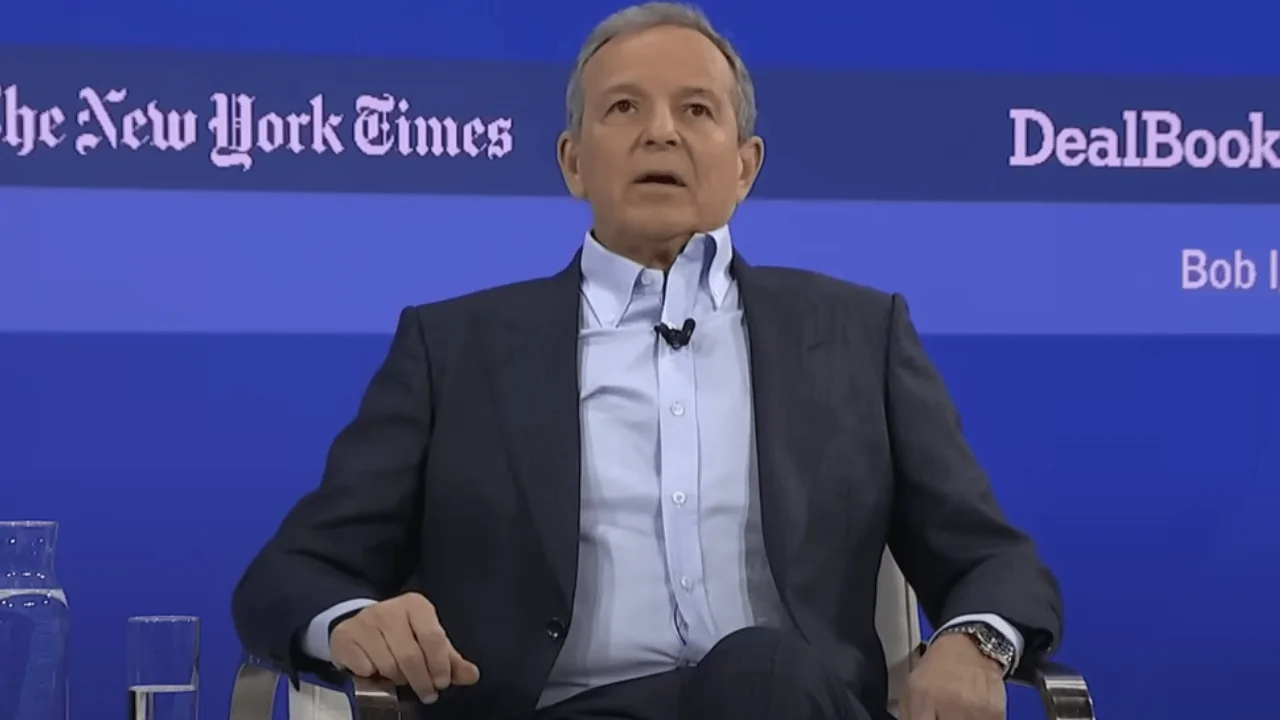
We can estimate the district tax burden Disney will continue paying under the new regime: the one they don’t control. CFTOD’s FY2025 final budget listed $205,228,870 in ad valorem taxes. Its FY2026 final budget lists $212,219,765 in ad valorem taxes. If Disney pays “more than 80%” of those district taxes, then Disney’s implied FY2026 share is at least about $169.8 million.
Bob Iger via New York Times Events YouTube
Using the FY2026 budget as a flat baseline, Disney would pay at least about $1.7 billion in CFTOD (previously Reedy Creek) ad valorem taxes over ten years. If district ad valorem taxes grow at roughly 3% annually, a conservative growth assumption close to the FY2025-to-FY2026 increase, Disney’s ten-year share would be closer to $1.95 billion. If Disney’s actual share is above 80%, as Disney’s own wording indicates, the number could be higher.
But here is the crucial fact check: that is not $1.7 billion to $1.95 billion in taxes Disney was entirely avoiding before. Disney already paid Reedy Creek district taxes. The stronger argument is not that Disney paid nothing before. The stronger argument is that Disney was largely paying taxes into a government it effectively controlled.
That is the real controversy. Not whether Disney contributed money. It did. The question is whether a private company should have been allowed to dominate the local government receiving and spending that money. When you additionally add in the money Disney will now pay for inspections and other government services that were previously waived by their RCID system, the Disney miscalculation becomes a multi-billion dollar error with no advantage whatsoever.
The Two Tiny “Cities” Inside Disney’s Kingdom
The strangest part of the old Reedy Creek structure is the existence of Bay Lake and Lake Buena Vista. These were not normal cities in any meaningful democratic sense. They were municipal bodies inside Disney’s special district, with tiny resident populations and enormous corporate importance.
The U.S. Census lists Lake Buena Vista’s 2020 population as just 24 people. Bay Lake’s 2020 population was just 29 people, according to Census-based listings. Together, that is only 53 residents across two cities embedded inside the governance structure of one of the most powerful tourism properties on Earth.
Bob Iger | 2019 Disney Legends Awards Ceremony | D23 EXPO 2019. Photo Credit: nagi usano from Tokyo, Japan, CC BY-SA 2.0 <https://creativecommons.org/licenses/by-sa/2.0>, via Wikimedia Commons
That should immediately raise eyebrows. Walt Disney World receives tens of millions of guest visits in a normal year, contains four theme parks, hotels, water parks, roads, utilities, emergency services and massive undeveloped land holdings. Yet the “cities” inside this structure had fewer residents than many extended families.
This is why the “corporate kingdom” critique resonated. The issue was not merely that Disney had a special district. Many special districts exist in Florida. The issue was that Disney’s district had county-like authority, municipal structures, landowner voting dynamics and a practical governance model that made Disney uniquely powerful over public functions.
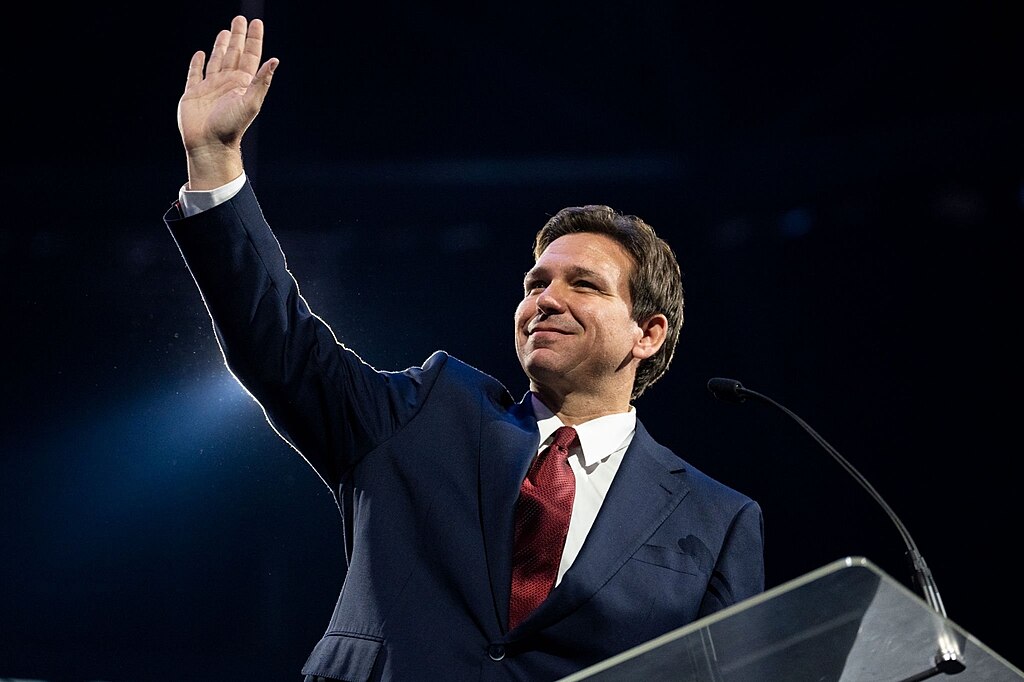
Florida Gov. Ron DeSantis (R) speaks during a convocation at Liberty University’s Vines Center in Lynchburg, Va., on Friday, April 14, 2023. Photo Credit: Tom Williams, Public domain, via Wikimedia Commons
READ: Facial Recognition Warnings Added To Disneyland Resort
CFTOD itself states that the original Reedy Creek district was created in 1967 to act with authority and responsibility similar to a county government over roughly 38.5 square miles of land. Disney’s own explanation says the district was created to manage municipal services across the Walt Disney World Resort and that landowners, primarily Disney, were responsible for paying for services such as power, water, roads and fire protection.
That arrangement may have been efficient. It may have helped Disney build and maintain a world-class resort without burdening Orange and Osceola county taxpayers. But efficiency is not the same as democratic legitimacy. The entire arrangement depended on the idea that Disney’s self-interest and the public interest were aligned closely enough that Disney could effectively manage a government around itself.
The Disney-DeSantis fight shattered that assumption and took it away from Disney investors.
The More Balanced Conclusion
The Florida Politics article contains important new deposition details, but its framing is too sympathetic to Disney. It emphasizes DeSantis’ hostility while giving insufficient weight to Disney’s own political escalation, Disney’s last-minute development maneuvering, and the unusual democratic problem of a corporate-dominated local government.
Disney did not merely “speak out.” It pledged corporate support for overturning a state law. Disney did not merely defend its future expansion. It worked with the outgoing Reedy Creek structure to lock in development rights before the new board arrived (and then totally lost said “lock in”). Disney did not merely pay taxes like any other company. It paid taxes into a special district where, for decades, it essentially acted as the de facto special district, thus paying taxes into what was essentially itself!
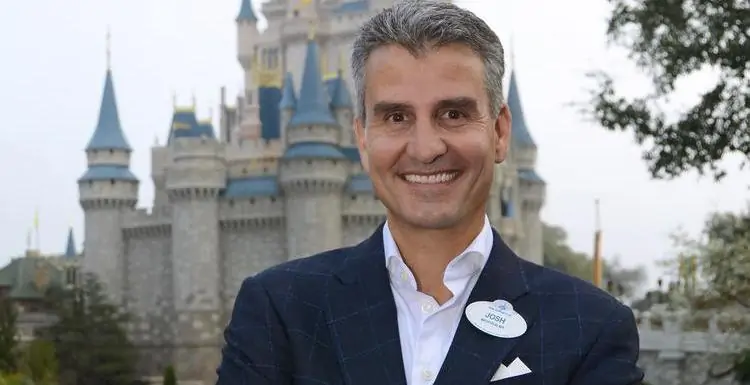
Josh D’Amaro by Cinderella Castle – Disney
The best fact check is therefore not a simple pro-DeSantis or pro-Disney verdict. It is this: Disney was both a major taxpayer and the chief beneficiary of an unusually powerful self-governance structure. DeSantis was both politically motivated and correct that the old arrangement gave Disney privileges unavailable to ordinary businesses. And the tax question is more complicated than either side often admits. Disney will likely pay well over $1.7 billion in CFTOD ad valorem taxes over the next decade, but much of that represents a continuation of district taxes Disney already paid under Reedy Creek, not a brand-new penalty. It’s just too bad Disney won’t control where that money goes any longer.
What changed is not simply the tax bill. What changed is who controls the kingdom.
UP NEXT: Bruce Springsteen Backlash Grows as “Working-Class” Image Collides With $2,900 Tickets
