


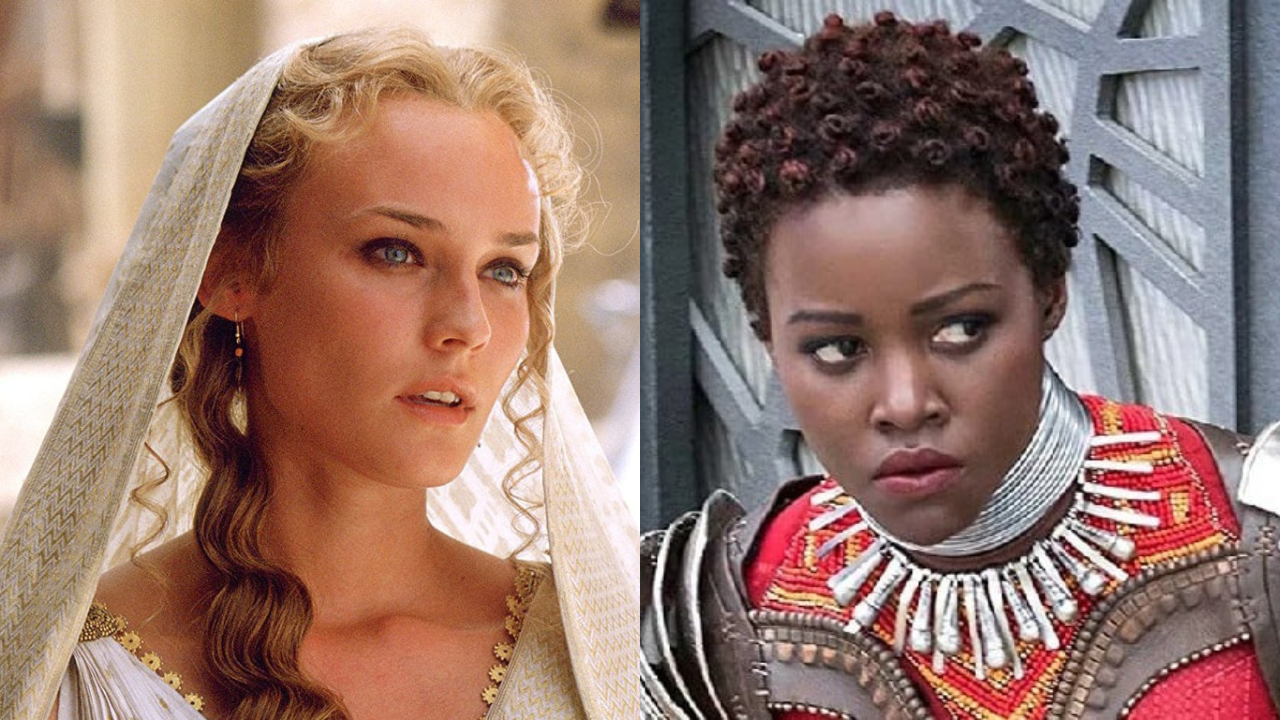
The casting of Lupita Nyong’o as Helen of Troy has reignited one of the internet’s favorite modern hobbies: arguing about history with the confidence of a tenured professor and the sourcing habits of someone quoting a TikTok stitched over anime footage.
With the announcement that Lupita Nyong’o would be stepping into the role of Helen in the upcoming adaptation of The Odyssey, social media immediately transformed into a digital battlefield of historians, pseudo-historians, mythology enthusiasts, and people whose strongest credential appears to be “felt very passionately about it.”
To be clear, very little of the reaction has been aimed at Lupita herself. Most people agree she is strikingly beautiful, charismatic, and an immensely talented actress.
The discussion instead revolves around whether Lupita Nyong’o fits the historical and literary understanding of Helen of Troy.
That distinction matters because conversations about casting increasingly become conversations about history, identity, and cultural ownership rather than simply artistic interpretation. And once that door opens, the internet charges through it carrying torches and badly sourced infographics.
Hollywood Casting Choices and the Business of Controversy
What fascinates me about this entire discussion is not the casting choice itself. Hollywood has always made unusual casting decisions for a mixture of reasons that range from artistic experimentation to market strategy.
Anyone who has worked near entertainment long enough understands the machine behind these choices. Executives are asking questions like: What face gets attention? What creates organic marketing? What sparks debate? What keeps the film trending for two weeks without spending another $10 million on advertising?
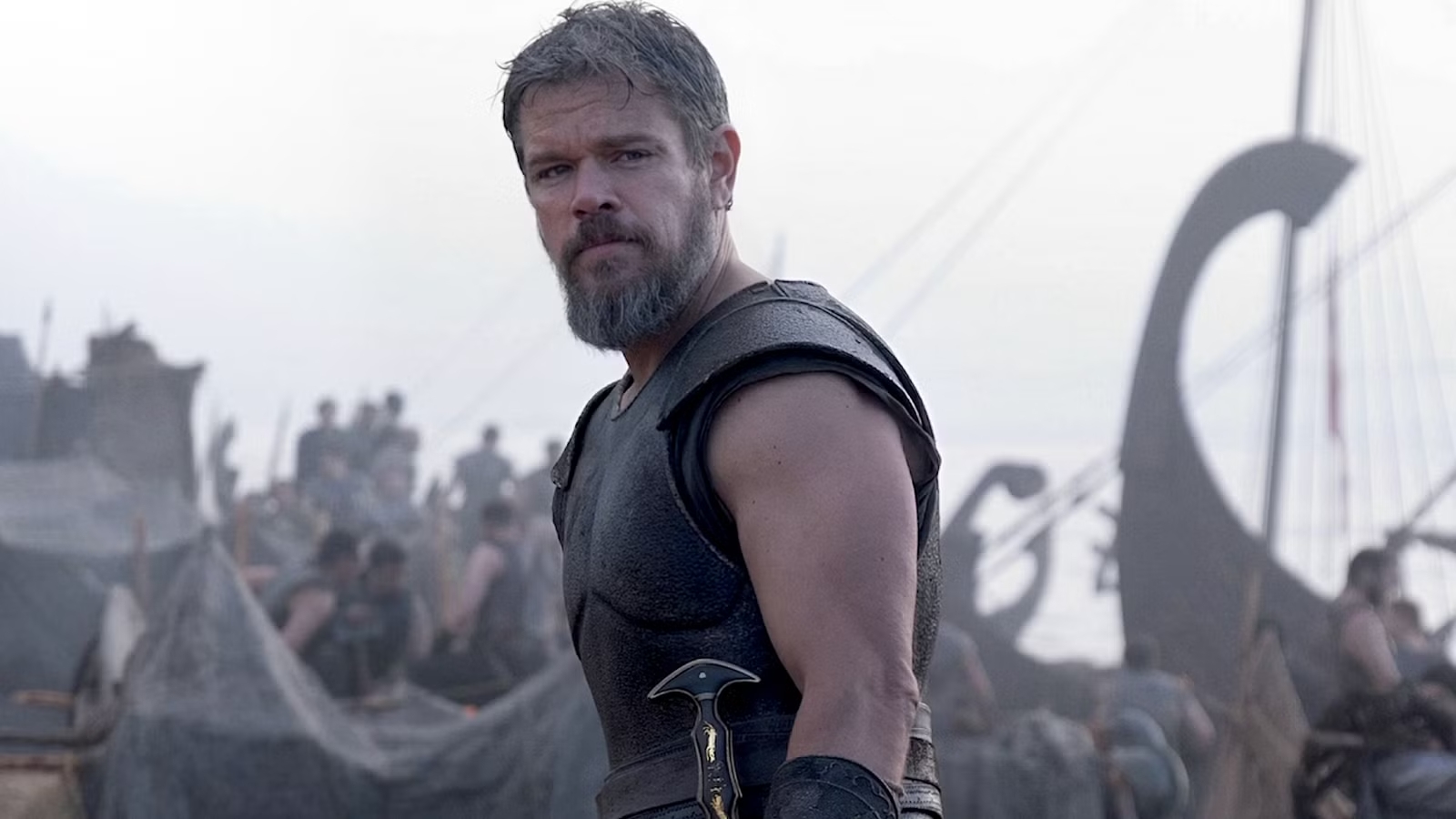
Matt Damon as Odysseus in the trailer for The Odyssey – YouTube @UniversalPictures
Somewhere in the middle of that process is probably a producer whispering, “Can controversy count as engagement?”
The answer, unfortunately, is yes.
Was Helen of Troy Black? The Internet Debate Explained
What pushed this conversation into more interesting territory was the immediate wave of claims online insisting that Helen of Troy was “always Black” and that ancient Greek civilization itself was fundamentally African in origin.
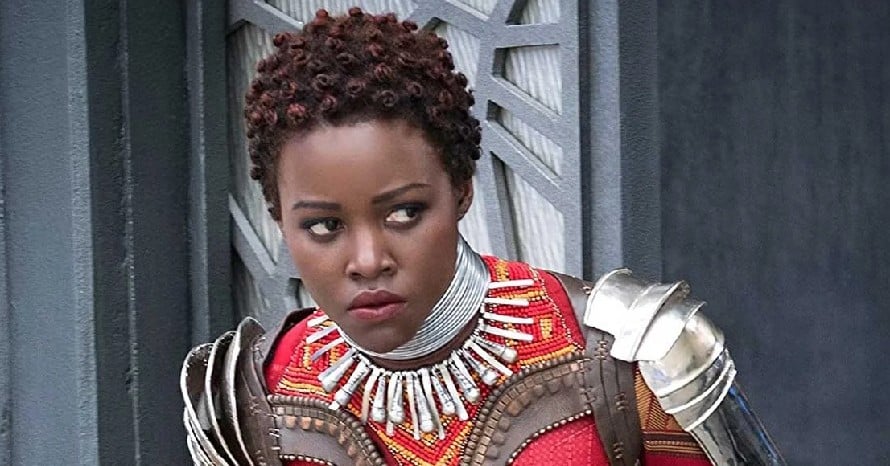
Lupita Nyong’o in Black Panther – Disney+
These arguments are not particularly new, but they have resurfaced with renewed energy. The problem is that many of the loudest claims are not being supported with rigorous historical evidence so much as emotional certainty. We are increasingly living in a time where conviction is treated as equivalent to scholarship. That should concern people regardless of political alignment.
How Different Countries Teach History Differently
I grew up in a military family and didn’t move to America until I was 25. One of the greatest gifts that experience gave me was learning very early that history is often presented differently depending on who’s telling it. In some cases, facts are emphasized. In others, they’re softened, reframed, or omitted entirely.
While living in Japan, I once worked with someone who believed the film Pearl Harbor was entirely fictional. When I explained that the attack itself was a real historical event, she was stunned and later looked it up herself. Why had she never learned it? Apparently, her school simply didn’t cover it in detail. At the same time, I met many other Japanese citizens who knew the history perfectly well. That contradiction stuck with me because it highlighted how education is often less about what happened and more about what institutions choose to emphasize.
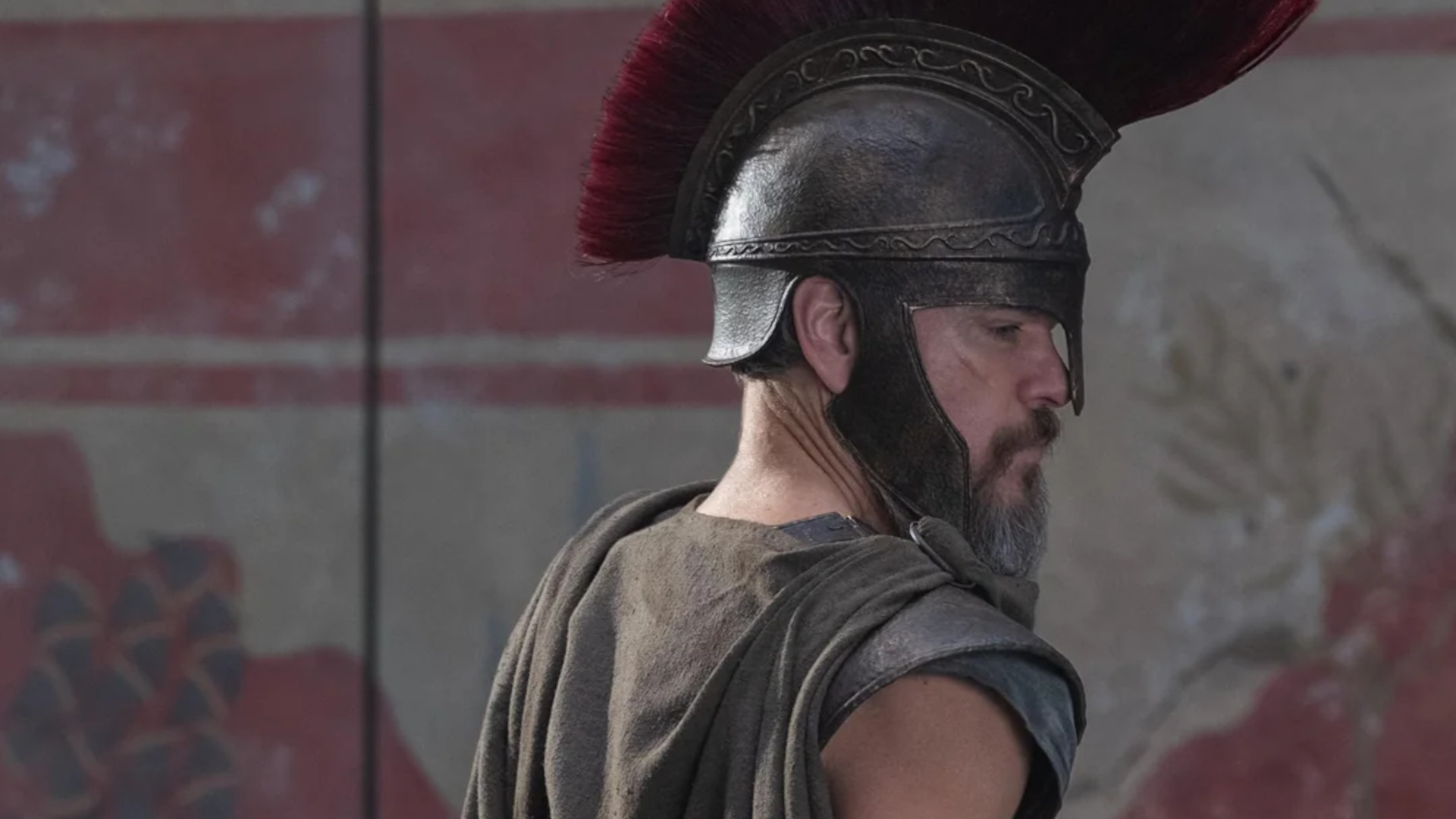
Matt Damon as Odysseus in the trailer for The Odyssey – YouTube @UniversalPictures
I had another experience during high school while discussing European colonial expansion. Our textbook described English settlers “occupying” certain regions. A student from Spain interrupted the class and bluntly said, “No, they didn’t settle. They killed people until the villages complied.” That moment was uncomfortable, but valuable. It demonstrated how sanitized language can dramatically reshape moral perception.
Those experiences taught me to approach history carefully. Not cynically, but cautiously. When researching an event or civilization, I try to examine multiple sources from multiple perspectives and search for overlapping points of agreement. Perfect objectivity is impossible because human beings are not objective creatures. Still, there is a meaningful difference between acknowledging historical bias and abandoning standards entirely.
What Is Black Athena and Why Is It Controversial?
This is where the conversation inevitably leads to Martin Bernal and his controversial work Black Athena. The book has become a cornerstone reference in many online discussions surrounding Greek history and African influence. Television personalities and commentators have increasingly cited it as evidence that ancient Greece was deeply rooted in Egyptian and Phoenician civilization.
One of the more viral moments came from The View’s Sunny Hostin confidently stating that anyone who believed Helen of Troy could not have been Black simply “didn’t know history.” She then referenced Black Athena as though it represented settled academic consensus.
It does not.

Sunny Hostin issuing a legal notice on The View – YouTube, Page Six
Bernal’s central thesis argued that ancient Greek civilization was significantly influenced by Egyptian and Near Eastern cultures and that later European historians minimized those influences due to racial and ideological bias. That idea alone is not especially controversial. Cross-cultural exchange in the Mediterranean world is well documented. Ancient civilizations traded, fought, borrowed from one another, and influenced one another constantly. The controversy emerges from how far Bernal extended those claims and the evidentiary methods he used to support them.
Bernal leaned heavily into mythology, linguistic parallels, selective archaeology, and reinterpretations of ancient accounts. Many classicists, archaeologists, and linguists criticized his methods, arguing that his conclusions frequently outran his evidence. Some praised him for challenging Eurocentric assumptions, while others accused him of replacing one ideological framework with another.
What makes this discussion especially frustrating online is that nuance dies almost immediately. People either treat Black Athena as revolutionary truth suppressed by racists or dismiss every single idea in it without engaging the arguments at all. The internet rarely rewards careful examination because careful examination is slower than outrage.
Greek Mythology, Historical Interpretation, and the Problem With Modern Retellings
Mythology itself complicates the issue further because myths evolve constantly. Take the story of Persephone and Hades. Modern retellings often frame it as a dark abduction narrative, but earlier versions of the myth were tied more directly to agricultural cycles and explanations for seasonal change. Over centuries, interpretations shifted, cultural anxieties changed, and the story transformed with them.

A screenshot from Assassin’s Creed Odyssey (2018), Ubisoft
Mythology is not a reliable historical document in the modern academic sense. Myths can contain fragments of cultural truth, but they are also symbolic, poetic, political, and heavily rewritten over time. Using mythology as definitive proof for racial or historical claims becomes incredibly dangerous territory because myths are elastic by nature.
To Bernal’s credit, Black Athena did force scholars to revisit assumptions and sharpen their research. Academic challenges can be healthy when they encourage deeper investigation. The issue is not that controversial ideas exist. The issue is what happens when controversial ideas escape academia and enter public discourse stripped of all context and caveats.
At that point, they stop being scholarship and start becoming ammunition.
Identity Politics, Historical Revisionism, and Social Media
We are already living in an age where identity politics heavily influences how people interpret art, history, and media. Entire historical narratives are increasingly reshaped to fit modern ideological needs. Some people rewrite history to create empowerment narratives. Others rewrite history to preserve old power structures. Both impulses exist simultaneously, and both are capable of distorting reality.
What concerns me most is not even the current argument. It’s what happens next.
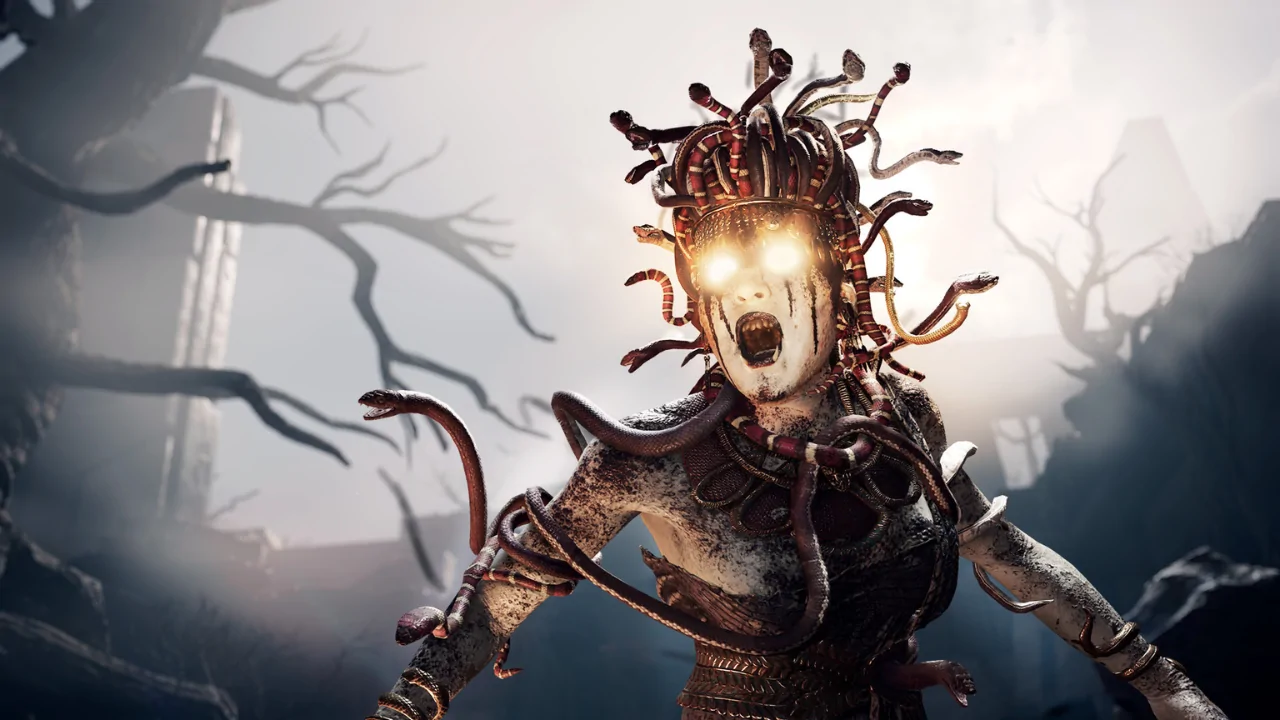
A screenshot from Assassin’s Creed Odyssey (2018), Ubisoft
Artificial intelligence systems are trained on human-generated data. They consume articles, posts, arguments, videos, and repeated claims. If enough people confidently repeat unsupported assertions online for long enough, those assertions begin contaminating the information ecosystem itself. Eventually, someone may ask an AI whether a historical figure was Black, White, Asian, or something else entirely, and the answer could become increasingly shaped by volume rather than evidence.
That possibility should alarm everyone.
Why Historical Accuracy Matters in the Age of AI
When I worked in education, I often wondered why historians, archivists, and researchers were so undervalued despite carrying enormous cultural responsibility. Society tends to celebrate entertainers and influencers far more visibly than the people quietly preserving records, translating ancient texts, and verifying whether sources are legitimate. Yet those quieter professions are often the only thing standing between civilization and collective misinformation. The older I get, the more I realize how fragile historical memory actually is.
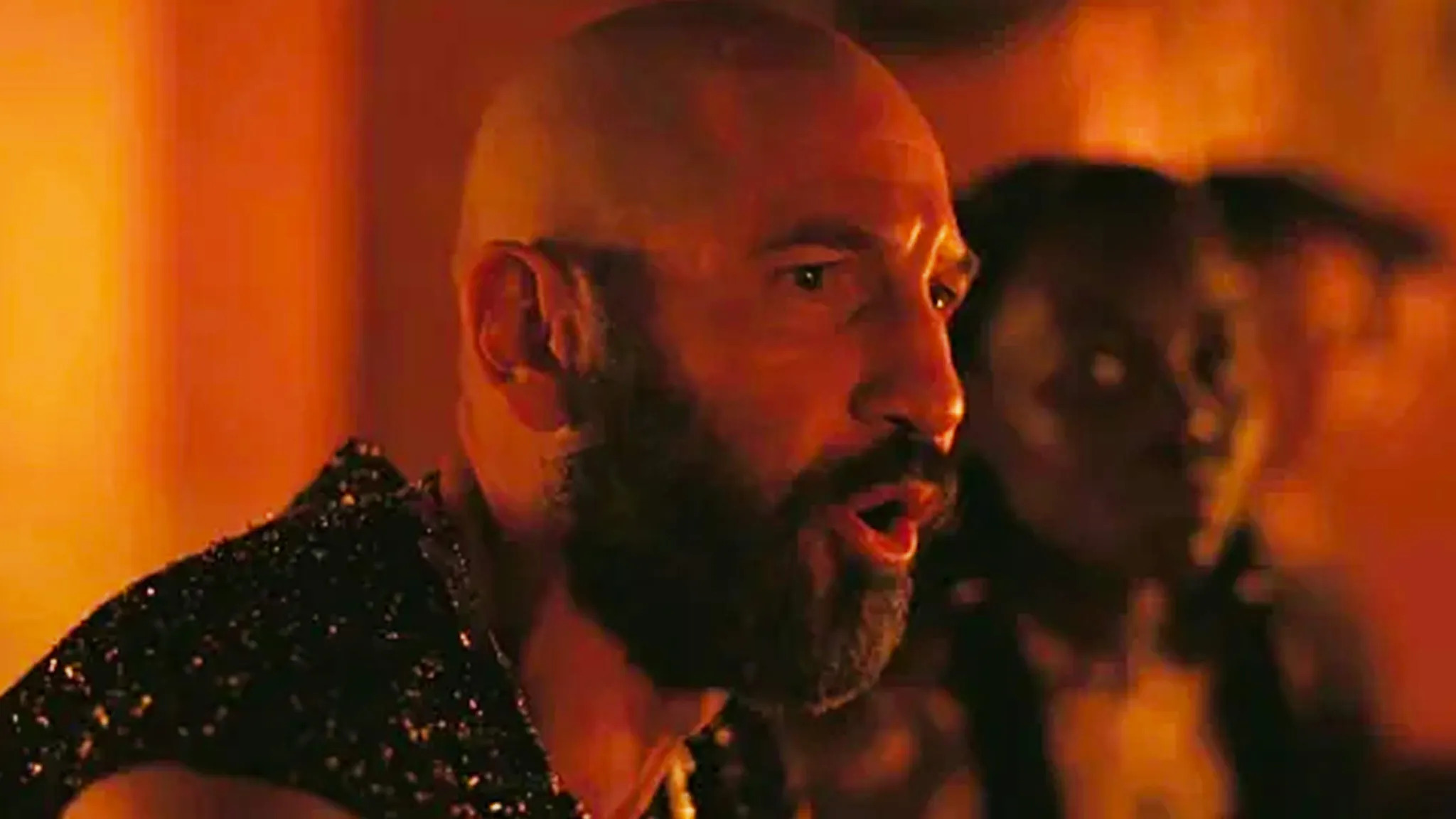
Jon Bernthal as King Menelaus in the teaser for The Odyssey – Universal Pictures
Most people imagine history as something fixed and immovable, but history is much closer to an ongoing conversation shaped by those who preserve it. Narratives survive because people revisit original sources, compare accounts, and challenge inaccuracies rather than blindly accepting popular retellings. The internet has dramatically accelerated how quickly altered narratives can spread, allowing emotional claims to travel farther than carefully researched facts. Today, one viral post can shape public perception long before experts even have time to respond.
Artificial intelligence adds another layer to this issue because AI systems learn from human-generated information patterns rather than independently verifying truth. If enough repeated claims, half-truths, or ideological narratives dominate online spaces, those patterns eventually influence the answers AI provides to future users. That becomes dangerous when people begin treating AI responses as unquestionable authority instead of a starting point for deeper research. Preserving historical accuracy is no longer just an academic concern; it is becoming a societal responsibility in an era where misinformation can be endlessly repeated, algorithmically amplified, and eventually mistaken for fact.
The Odyssey Movie Adaptation and the Cost of Cultural Friction
As for the new Odyssey adaptation itself, I suspect the production team understands exactly what they are doing. Whether intentional or not, the casting controversy has generated enormous free marketing. People who otherwise would not have cared about another adaptation of Homer are now discussing it across every social platform imaginable. From a business perspective, it’s undeniably effective. From a cultural perspective, I’m less convinced it’s healthy.
Entertainment companies increasingly profit from social friction because outrage drives engagement and engagement drives visibility. The machine does not particularly care whether people are uniting or dividing so long as they continue posting. That reality creates a dangerous incentive structure where provocation becomes more valuable than coherence.

Diane Kruger as Helen of Troy in the movie Troy – Warner Bros.
Perhaps the strangest part of all this is that Helen of Troy is ultimately a mythological figure filtered through centuries of poetry, translation, adaptation, and cultural reinterpretation, yet modern audiences speak about her as though there should be a definitive census record tucked away somewhere in ancient Greece. Classical descriptions do suggest she was imagined as fair-skinned and extraordinarily beautiful by the standards of the time, but they do not provide the kind of rigid racial classification modern internet debates demand. Much of the current argument comes from trying to impose contemporary ideas of race onto an ancient Mediterranean world that didn’t understand identity through the same framework we do today.
In the end, the discussion says far less about Lupita Nyong’o or Helen herself and far more about modern culture’s obsession with symbolism, representation, and ownership of the past, especially at a time when many people cannot even agree on historical events that occurred within living memory.
History and the classical works deserve better than becoming another culture war. The moment we stop valuing evidence, nuance, and historical literacy, we hand the past over to whoever can manipulate the loudest narrative. The past cannot defend itself from revisionism, so the responsibility ultimately falls to us.
UP NEXT: Don’t Blame Favreau: “The Mandalorian and Grogu” Is a Horrible Mess Because of Dave Filoni
