


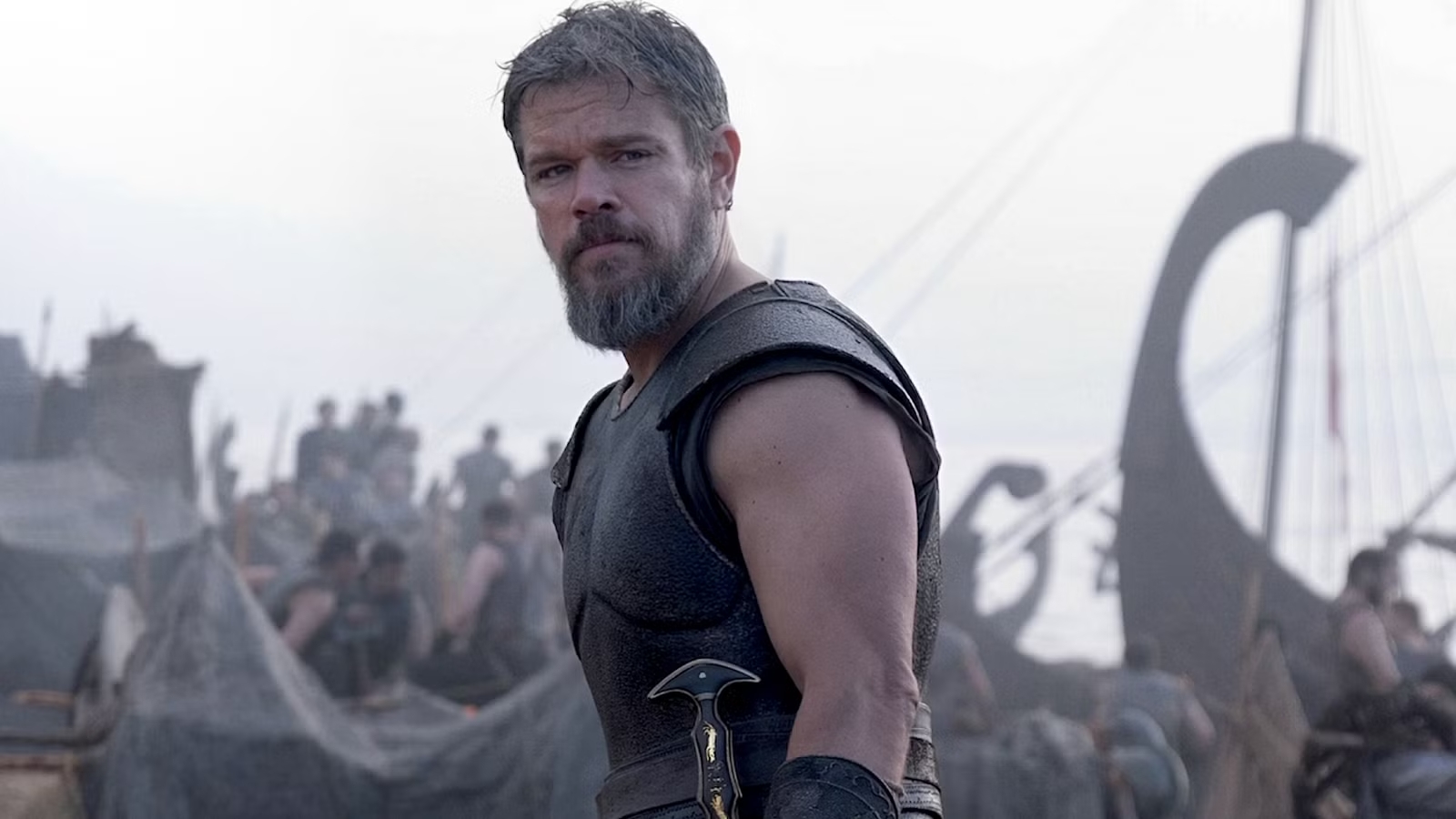
A lot has been said about The Odyssey and the language style used in its trailers
World-building is often associated with maps, costumes, architecture, and lore. Writers spend countless hours designing civilizations, magic systems, political structures, and histories to convince readers that a fictional world exists beyond the page. Yet one of the most powerful world-building tools is often overlooked.
Language.
Not just what characters say, but how they say it. Their vocabulary, sentence structure, forms of address, idioms, and cadence all communicate what kind of world the audience has entered. Change the vernacular, and you change how the world feels.
The recent discussion surrounding Christopher Nolan’s adaptation of The Odyssey has reignited this language debate. Much of the conversation has centered on the decision to use more modern dialogue in an effort to make the story more accessible to contemporary audiences.
Whether or not that decision proves successful remains to be seen. However, the conversation itself raises an important question every writer should ask: At what point does making language more accessible begin to erode immersion?
The Odyssey’s Vernacular Is World-Building
Every fictional world teaches its audience how to exist within it. Science fiction introduces unfamiliar technology, fantasy asks readers to learn kingdoms and magic systems, and historical fiction recreates another time through customs, traditions, and speech. Language is just as much a part of that world-building as architecture or clothing because it communicates how the people of that world think, interact, and perceive one another.
This is why the discussion surrounding The Odyssey is so interesting. Much of the debate has focused on the decision to use more contemporary dialogue to make the story more accessible to modern audiences. While that approach may reduce the initial barrier to understanding, it also changes the experience of entering Homer’s world. The language of an epic is more than a vehicle for delivering information—it establishes tone, scale, and the sense that we are witnessing events from a civilization far removed from our own.
READ: Disney Adds New Annual Passholder Good to Go Dates for July as Attendance Woes Continue
Imagine Odysseus rallying his crew by saying, “Alright everyone, let’s do this,” or greeting a king with, “Thanks for having me.” Those sentences are perfectly understandable, but they immediately diminish the grandeur that has defined the story for centuries. Nothing about the setting, costumes, or cinematography has changed, yet the illusion begins to weaken because the dialogue no longer feels like it belongs to the world surrounding it.
This is not an argument that The Odyssey should sound exactly as it did in Ancient Greek. That would be impossible. Every English version of the epic is already a translation and therefore an interpretation. The real question is what kind of English best recreates the feeling of listening to an ancient epic. An elevated, more formal vernacular reminds the audience that they have stepped into a different culture with different values, customs, and expectations. Modern conversational language, by contrast, pulls that world closer to our own.
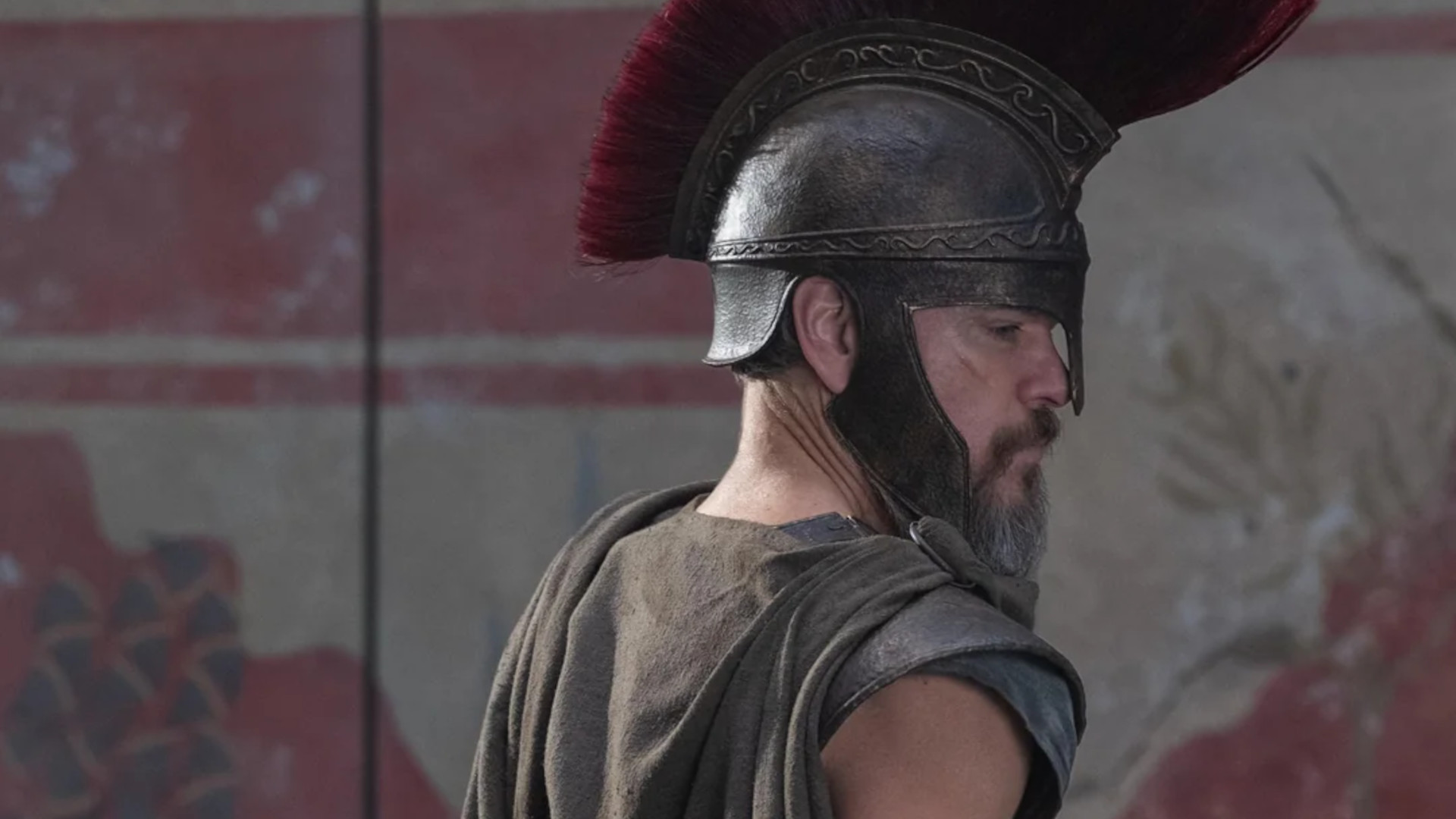
Matt Damon as Odysseus in the trailer for The Odyssey – YouTube @UniversalPictures
Ultimately, the issue isn’t historical accuracy—it’s consistency. Readers and viewers instinctively expect a fictional world to sound like itself. When the dialogue reflects the culture, traditions, and themes of the setting, immersion becomes stronger because every conversation reinforces the illusion that these characters truly belong there. When that vernacular is replaced with language that feels contemporary, the world itself can begin to feel contemporary as well, even if everything else on screen is trying to convince us otherwise.
Language Creates Tone in the Odyssey Before Plot Ever Does
Dialogue accomplishes far more than simply conveying information. It establishes emotional expectations, reveals social hierarchy, and teaches the audience how to interpret the world they have entered. Long before a plot begins to unfold, the language characters use tells us whether we are witnessing an everyday conversation, a political intrigue, or an epic worthy of legend.
This is one of the enduring strengths of The Odyssey. Throughout the poem, characters rarely speak with the directness of modern conversation. Instead, they speak with reverence, ceremony, and intention. When Odysseus addresses rulers or strangers, he doesn’t simply ask for help. He offers praise, acknowledges their hospitality, and appeals to the sacred customs of xenia—the ancient Greek tradition of guest-friendship. Likewise, when characters invoke the gods, they often do so with formal epithets such as “gray-eyed Athena” or “cloud-gathering Zeus.” These repeated phrases do more than identify a character; they continually remind the audience that divine forces are ever-present and that the events unfolding are larger than ordinary human affairs.
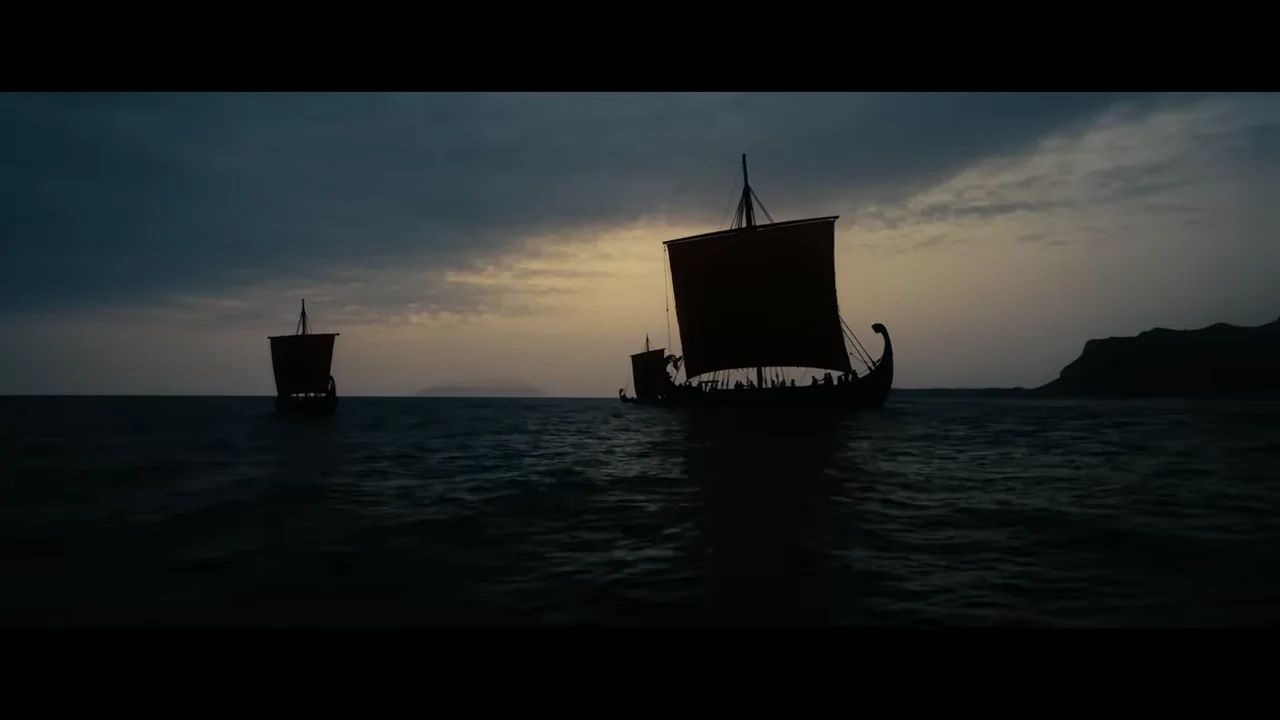
Scene from Christopher Nolan’s The Odyssey – Universal Pictures, YouTube
READ: Kevin Costner is Screening a 4-Hour Cut of ‘Dances With Wolves’
Consider the difference between a modern greeting such as, “It’s good to see you again,” and the tone found throughout many English translations of The Odyssey: “May the gods grant you every blessing,” or, “My heart rejoices that you have returned unharmed.” Both communicate relief and happiness, but they do so in fundamentally different ways. The modern phrasing feels casual and immediate, while the latter carries dignity, gratitude, and a sense that the relationship exists within a culture shaped by honor, hospitality, and divine providence.
The same principle applies to Odysseus himself. He is rarely presented as someone who simply says what he means in the most direct way possible. He persuades through carefully chosen words, layered speeches, and deliberate restraint. His reputation as “the man of many turns” is reflected not only in his actions but also in the way he speaks. His dialogue demonstrates intelligence, patience, and diplomacy, qualities that become less apparent if every conversation is rewritten in the cadence of twenty-first-century speech.
This is why vernacular matters. The exact words are not sacred—every English translation already interprets Homer’s Ancient Greek—but the feeling those words create is part of the story itself. Elevated language slows the audience down, encourages reflection, and reinforces the grandeur of an epic that has endured for nearly three thousand years. Modern dialogue may communicate the same information, but it does not always evoke the same emotional landscape, and that distinction can profoundly shape how audiences experience the story.
Readers Already Know How to Learn New Language
One argument frequently made in favor of modern vernacular is that audiences should not have to struggle with unfamiliar language. There is some truth to this. Stories should strive for clarity, and writers should never mistake confusion for sophistication. However, clarity does not require eliminating every unfamiliar element from a story.
Readers already perform this kind of mental adjustment every time they pick up a new book or sit down to watch a film. Fantasy novels introduce unfamiliar kingdoms, magic systems, and invented terminology. Science fiction asks audiences to understand fictional technologies, alien cultures, and entirely new political structures. Historical fiction expects readers to adapt to customs and traditions that no longer exist, while legal thrillers, medical dramas, and detective stories immerse audiences in professions with specialized vocabulary and procedures. In each case, the audience is not expected to understand everything immediately. Instead, they learn through context.
Jon Bernthal as King Menelaus in the teaser for The Odyssey – Universal Pictures
Language functions in exactly the same way. As readers spend more time inside a story, they begin to recognize its rhythm, vocabulary, and patterns of speech. What initially feels unfamiliar gradually becomes natural because the audience has acclimated to the world the author has created. That process is not a barrier to immersion—it is one of the ways immersion is achieved.
This is one reason the discussion surrounding The Odyssey has been so compelling. Advocates for modernizing the dialogue often argue that contemporary audiences will better connect with language that resembles their everyday speech. Yet audiences have repeatedly demonstrated their willingness to learn unfamiliar forms of communication when the world itself demands it. Readers embrace the formal language of Shakespeare, the distinctive cadence of Tolkien, and the specialized terminology of works like Dune because those linguistic choices reinforce the worlds those stories inhabit. The unfamiliarity becomes part of the experience rather than an obstacle to it.
If we trust audiences to understand invented languages, fictional religions, and complex political systems, it seems inconsistent to assume they cannot adapt to a more elevated style of English in a story that has survived for nearly three thousand years. The audience is already capable of making that mental adjustment. The question is whether modern adaptations are still willing to ask them to.
The Difference Between Accessibility and Simplification
Accessibility is a worthwhile goal. Stories should invite audiences into their worlds without creating unnecessary barriers, but accessibility should not automatically mean removing every challenge. There is an important difference between making a story understandable and making every aspect of it immediately familiar.
Readers routinely embrace concepts far more demanding than unfamiliar dialogue. They learn sprawling family trees, fictional currencies, political factions, magic systems, alien species, and entirely new cosmologies through context and repetition rather than expecting those elements to be simplified. Language can be learned in exactly the same way.
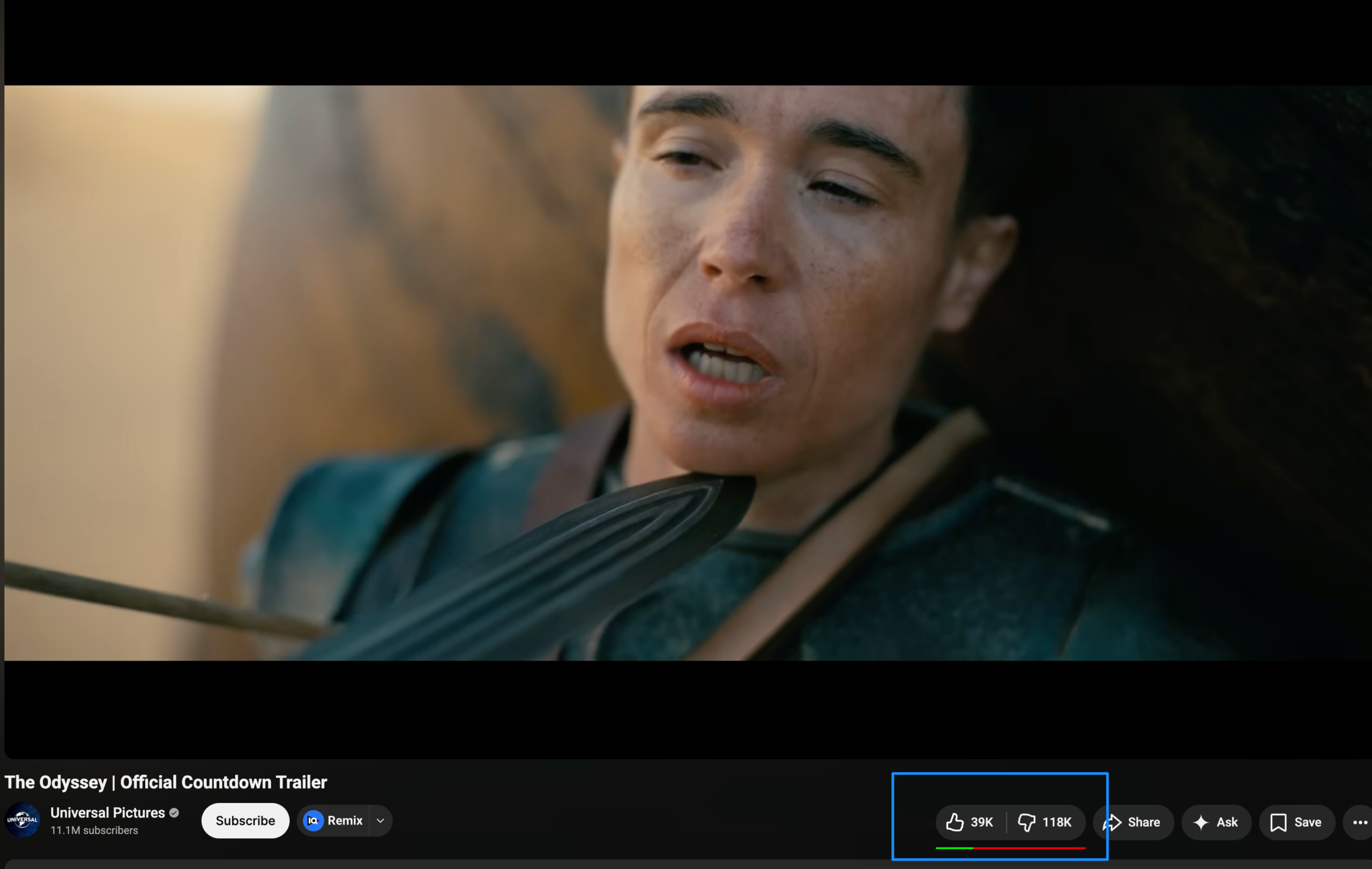
The like to dislike ratio for The Odyssey – YouTube, Universal Pictures
This is why I struggle with the argument that The Odyssey requires contemporary vernacular to remain accessible. The epic has endured for nearly three thousand years because audiences have always been willing to meet it where it is. Every generation has encountered unfamiliar customs, values, and forms of speech, yet readers adapted because the story rewarded that effort. Modernizing the dialogue may make the opening moments easier to follow, but it also diminishes an opportunity to experience the rhythm and grandeur that have long defined the epic.
Good writing provides the context readers need without overexplaining. It trusts audiences to become comfortable with an unfamiliar world as the story unfolds, allowing immersion to develop naturally instead of immediately reshaping that world to match contemporary expectations.
Accessibility and simplification are not synonymous. A story can be clear without becoming commonplace, and it can challenge its audience without becoming inaccessible. The strongest writing strikes that balance by inviting readers into a different world and trusting them to learn its language rather than replacing it with their own.
“They Didn’t Speak English Anyway”
A common response to discussions about The Odyssey is that Homer never wrote in English, making every adaptation a translation rather than a direct recreation of the original Ancient Greek. While that is undeniably true, it doesn’t answer the artistic question at the heart of the debate: what style of English best captures the experience of an ancient epic?
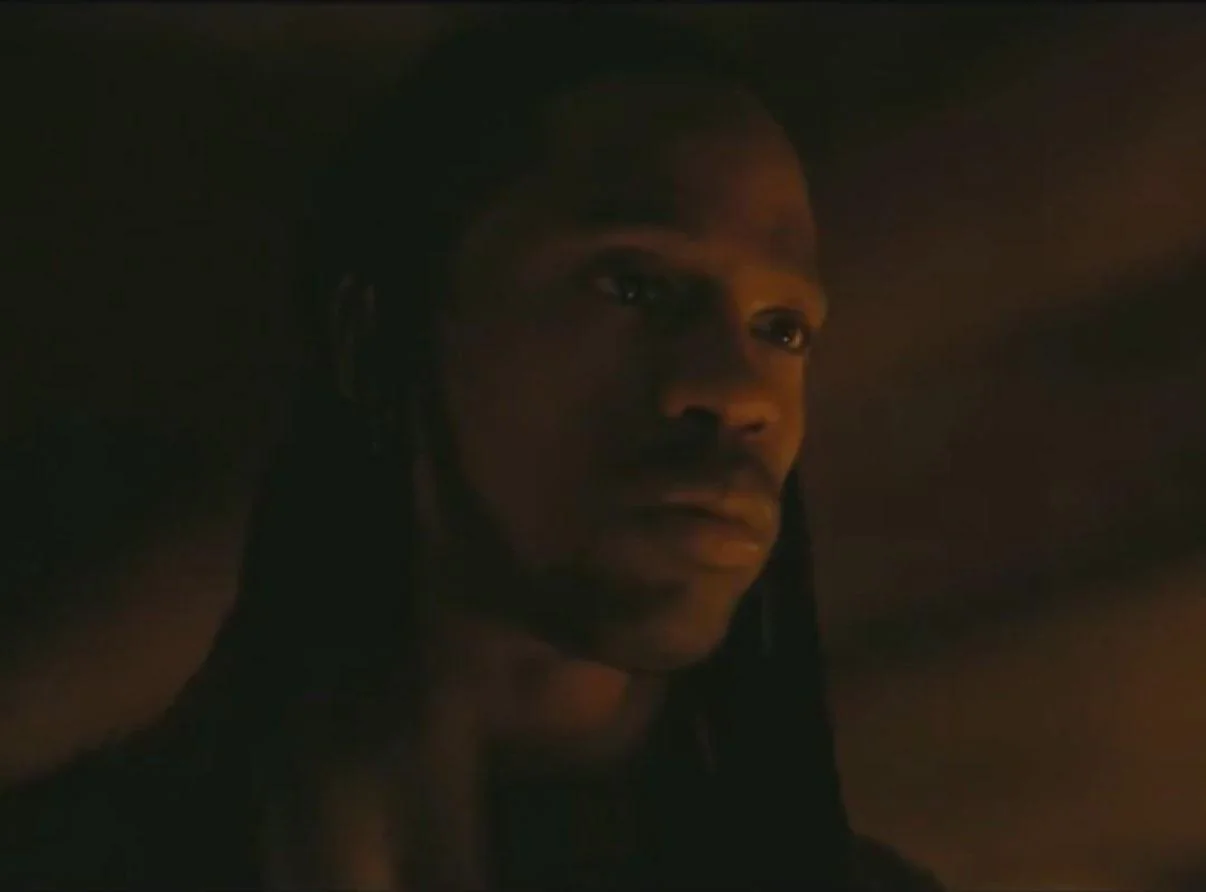
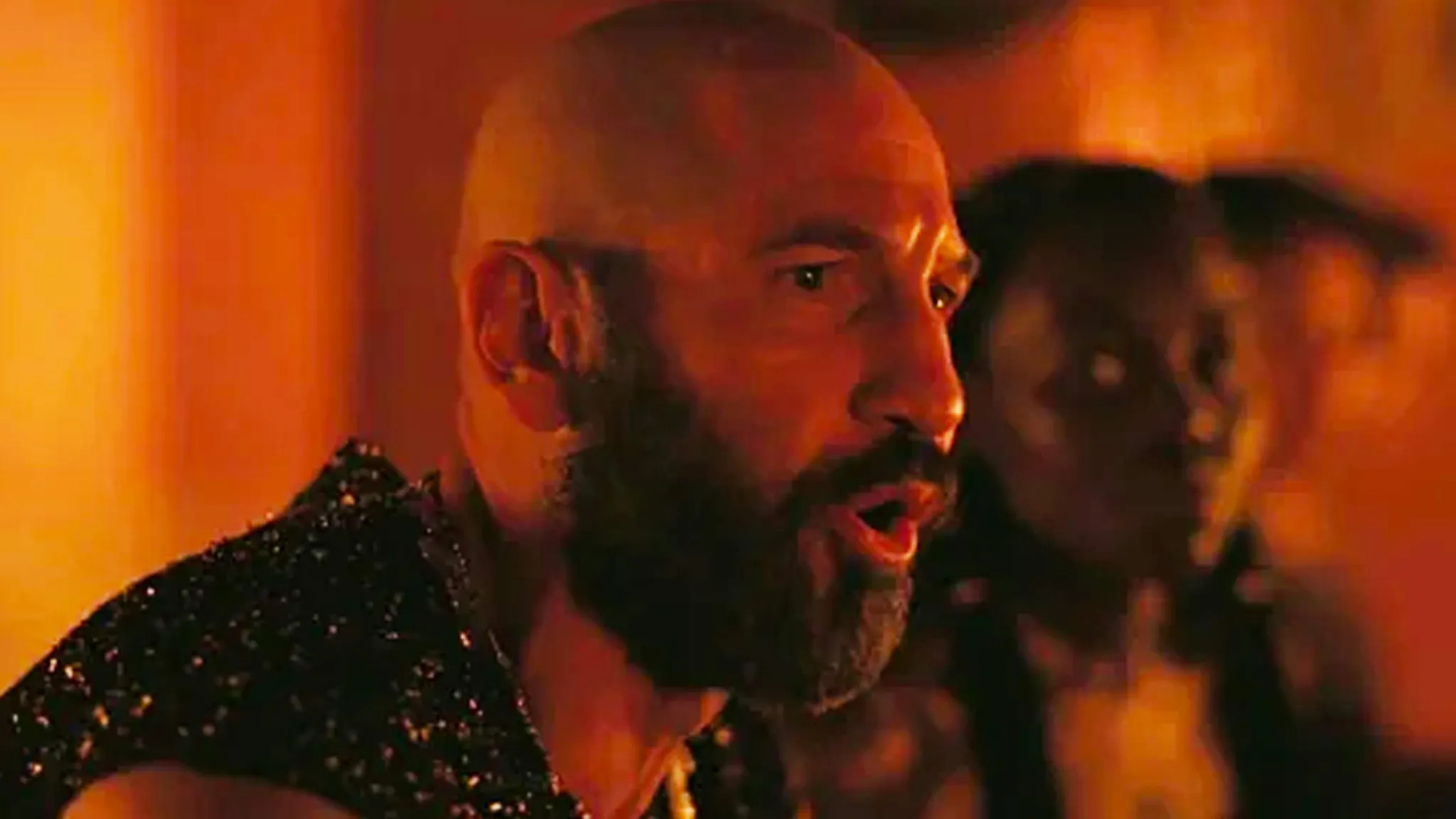
Travis Scott in The Odyssey – YouTube, Universal Pictures
READ: Tennessee Is Courting Paramount as Studio Weighs Future Amid California Legal Battle
Translators and screenwriters have countless options, from contemporary conversational language to elevated literary prose. Neither approach is inherently right or wrong, but they are not interchangeable. Each shapes the audience’s emotional experience, influencing whether the story feels immediate, timeless, intimate, or monumental.
People “Struggle” to Understand the Odyssey
Underlying this debate is a question that extends far beyond The Odyssey: should writers assume audiences need stories simplified for them, or should they trust audiences to rise to the occasion? I believe the latter. Great literature has always challenged readers—not to exclude them, but to expand their vocabulary, deepen their comprehension, and expose them to new ways of thinking. If we continually lower the bar because we assume unfamiliar language is too difficult, we risk diminishing one of storytelling’s greatest strengths: its ability to educate as well as entertain.
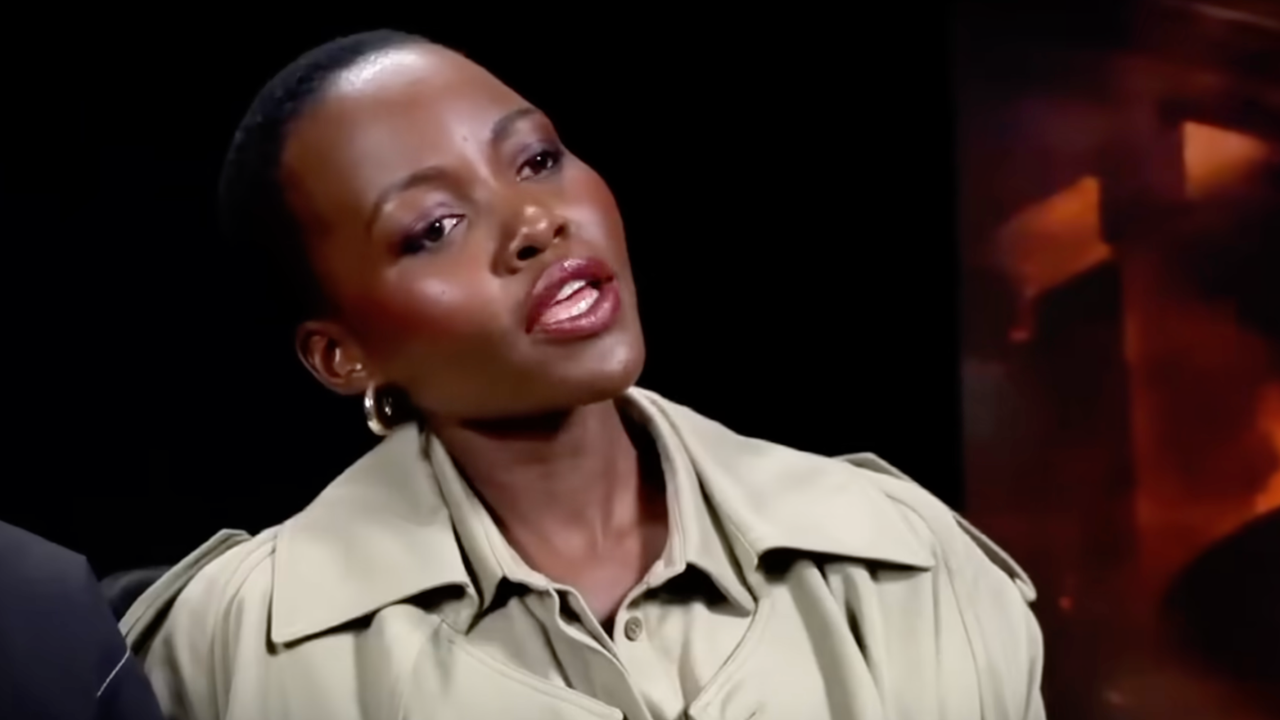
Lupita Nyong’o in an interview for The Odyssey – Universal
Every generation inherits the language and ideas of those who came before it, and wrestling with them is part of intellectual growth. Rather than asking how much we can simplify for modern audiences, perhaps we should be asking how much we can trust them to learn.
Great Writing Trusts Its Audience
Perhaps the most important quality a writer can possess is trust—trust that readers are capable of learning unfamiliar words, recognizing patterns, and meeting a story halfway. The most enduring works of literature rarely explain everything immediately. Instead, they invite audiences into an unfamiliar world and allow understanding to develop naturally through context, repetition, and experience.
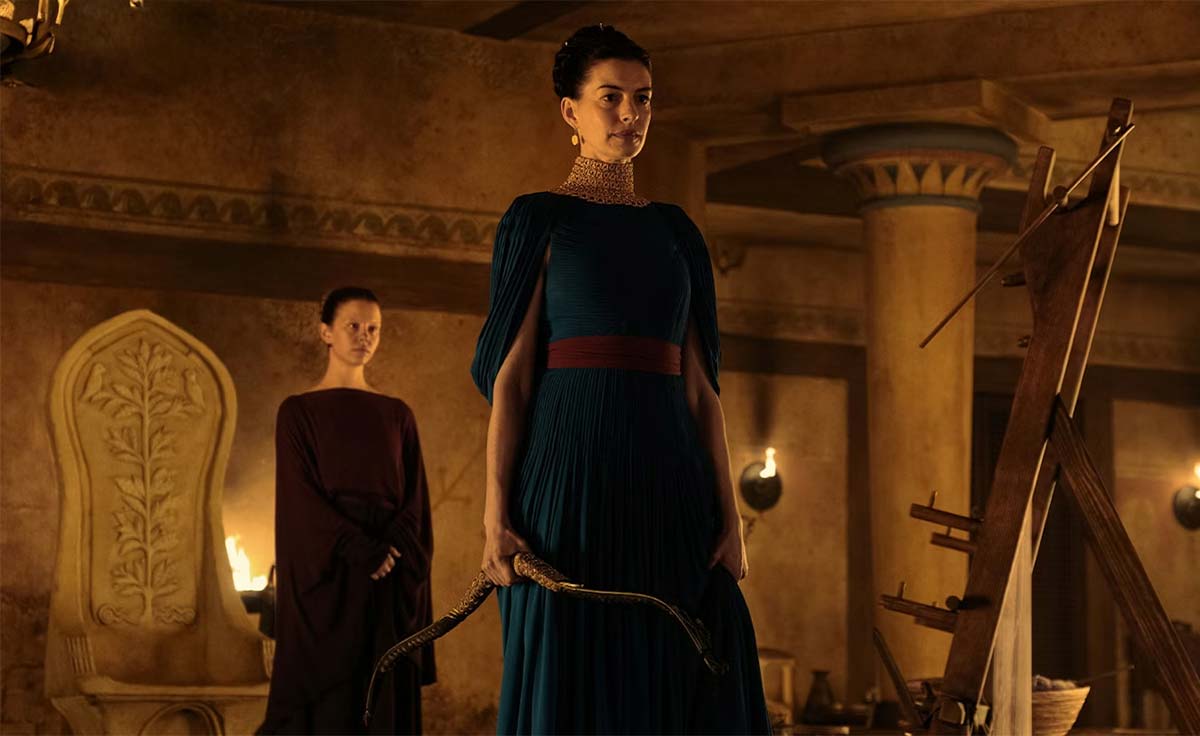
Mia Goth as Melantho and Anne Hathaway as Penelope in the trailer for The Odyssey – YouTube @UniversalPictures
Language deserves to be treated no differently. Rather than viewing vernacular as a barrier to accessibility, writers should recognize it as one of their most powerful tools for creating immersion. Dialogue does more than communicate information; it establishes culture, reinforces theme, and gives a world its own identity. When readers adapt to that language, they are not overcoming an obstacle—they are becoming part of the world the story has created. That, ultimately, is the purpose of immersive storytelling.
How do you feel about language in The Odyssey? Sound off and let us know!
