


The U.S. Department of Justice has stepped directly into the increasingly bitter legal fight over Paramount Skydance’s proposed acquisition of Warner Bros. Discovery, siding with Paramount on a potentially enormous question: Should the states trying to stop the merger have to put billions of dollars on the line?
The DOJ filed a statement of interest in federal court supporting Paramount’s argument that California and the other states challenging the merger should be required to post an appropriate bond while their antitrust lawsuit prevents the transaction from closing.
Paramount wants that bond set at a staggering $1.88 billion.
The Justice Department didn’t explicitly endorse Paramount’s calculation of $1.88 billion. But its intervention supports the company on the underlying legal issue — that the states shouldn’t necessarily be permitted to delay the merger without posting a meaningful bond that could compensate Paramount for losses if the injunction ultimately proves unwarranted.
That could dramatically raise the stakes of a legal battle that has become the final major obstacle standing between Paramount and Warner Bros. Discovery.
DOJ Steps Into Paramount’s Fight With California
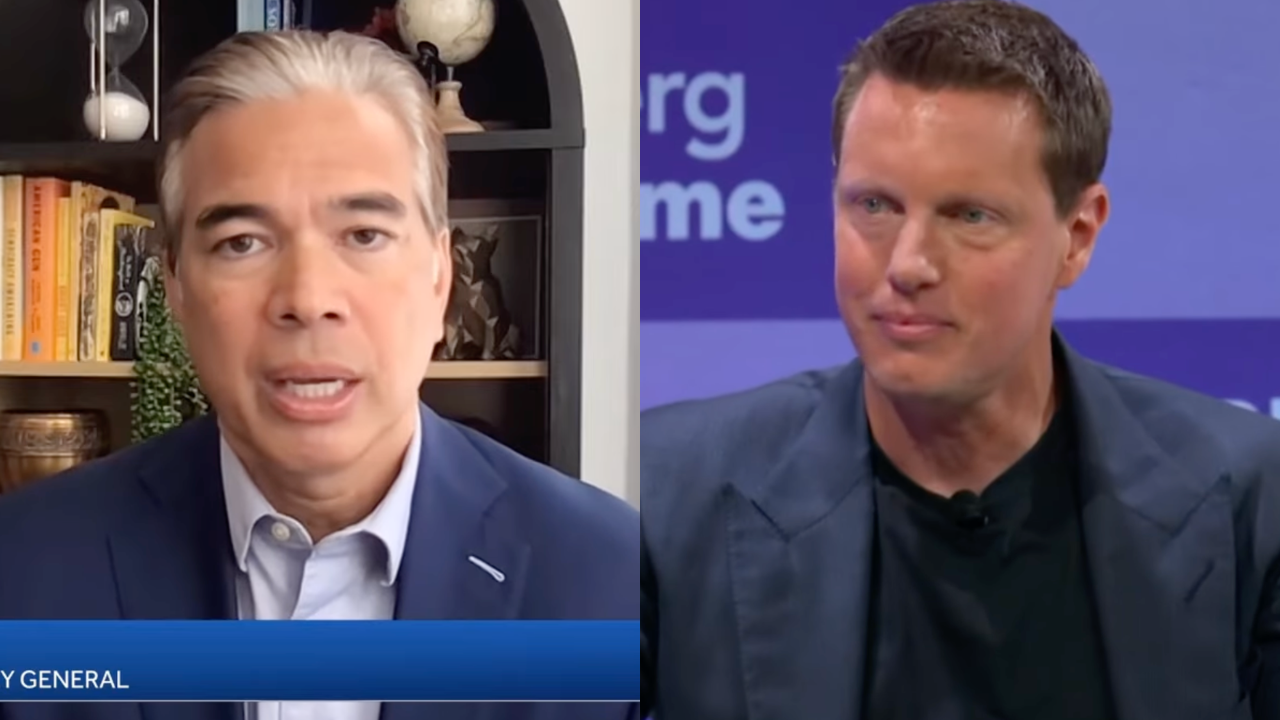
The coalition of 12 states, led by California Attorney General Rob Bonta, sued in July to stop the merger on antitrust grounds. The states contend that combining Paramount and Warner Bros. Discovery could reduce competition in areas including theatrical movies and cable television.
The federal government reached a very different conclusion.
Following an eight-month investigation, the DOJ’s Antitrust Division announced in June that it had closed its investigation into the transaction after determining that the merger was “not likely to result in harm to competition or American consumers.”
The department examined streaming, linear television, and theatrical film development, production, and distribution. It ultimately concluded that the combined company could actually increase competitive pressure within the entertainment business.
President Donald Trump in a 2020 interview – 60 Minutes, YouTube
READ: Sunday In The Park With George Canceled After Ariana Grande Quits Production
Now the DOJ is weighing in against the states on another critical element of the case.
According to the Justice Department’s filing, states pursuing an injunction under federal antitrust law are acting in the capacity of “private persons” and therefore remain subject to the bond requirement associated with an injunction.
That directly challenges the states’ attempt to minimize their financial exposure.
California and its partners have argued that any bond should be nominal, reportedly suggesting a maximum of just $10,000.
Paramount wants $1.88 billion.
Paramount Says Every Day Costs Millions
The reason Paramount is demanding such an enormous bond comes down to the financial structure of its Warner Bros. deal.
Paramount says it faces a $7 million-per-day ticking fee if the transaction doesn’t close by the end of September.
With the antitrust trial currently scheduled to begin March 2 and proceedings potentially stretching into April, Paramount argues it could incur roughly $1.3 billion in unrecoverable ticking fees before receiving a decision. Its broader calculation of potential losses resulting from the delay forms the basis for the requested $1.88 billion bond.
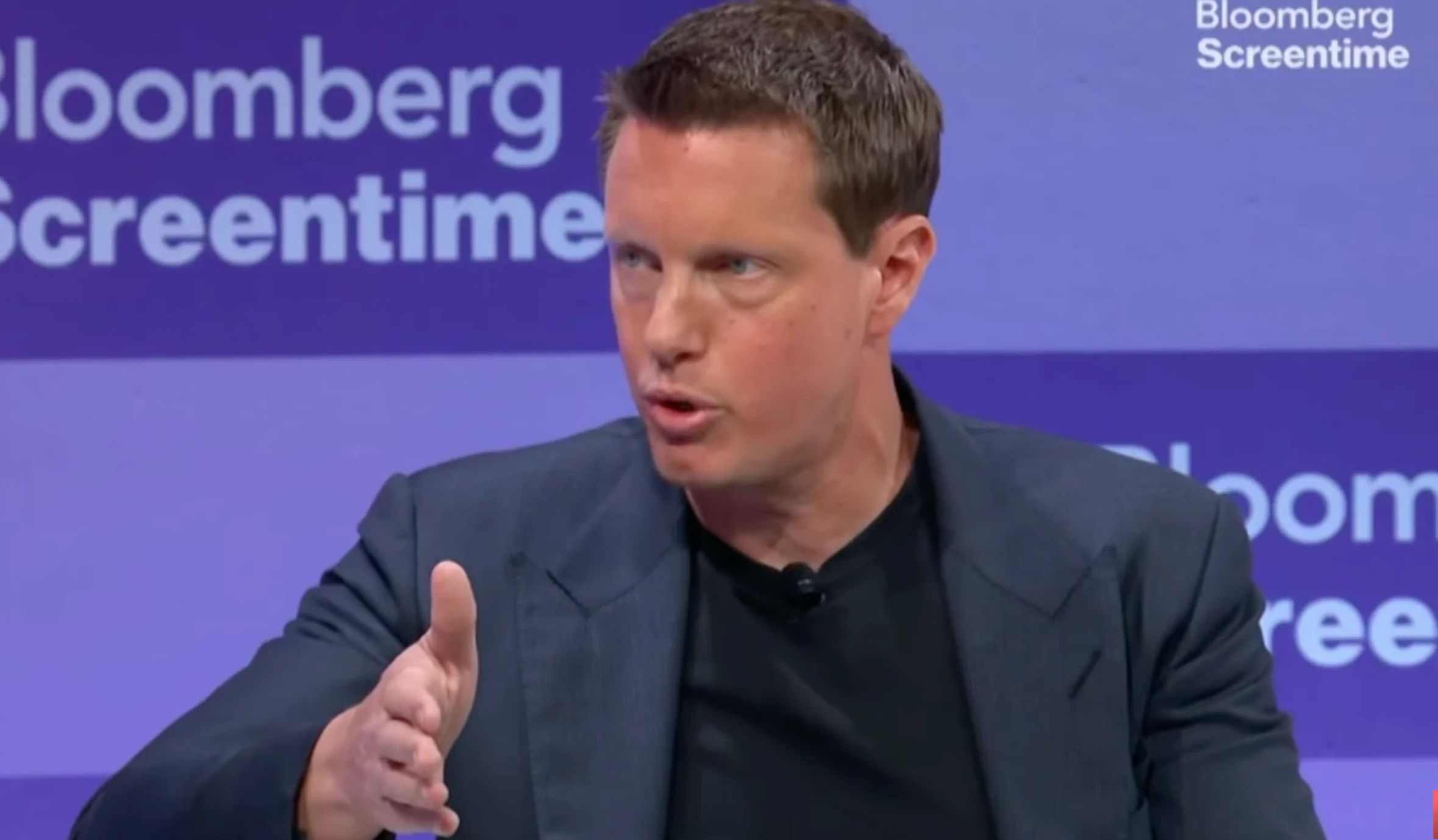
David Ellison in an interview with Bloomberg – YouTube, Bloomberg Podcasts
In other words, Paramount’s argument is straightforward: If the states want to prevent a $110 billion-plus transaction from closing while their lawsuit works its way through court, they should be prepared to cover the damage if Paramount ultimately wins.
The states see things differently.
They have argued that Paramount voluntarily accepted the ticking-fee arrangement and therefore should not be permitted to transfer the financial consequences of its own merger agreement onto taxpayers.
That leaves U.S. District Judge Araceli Martínez-Olguín with an extraordinary question.
How much money should the plaintiffs potentially have to put at risk to keep the merger frozen?
September 24 Just Became a Major Date
Judge Martínez-Olguín is scheduled to hear arguments over Paramount’s bond request on September 24.
The DOJ’s intervention gives Paramount substantial additional ammunition going into that hearing.
It doesn’t guarantee that Paramount will get anything close to $1.88 billion. The judge could agree that a bond is appropriate while setting the amount substantially below Paramount’s demand.
But the federal government’s position undercuts the argument that the states should automatically escape with only a token financial obligation.
Settlement Talks Are Moving Forward Too
The DOJ development arrives just as Paramount and Bonta’s office are being pushed back toward the negotiating table.
Paramount and representatives for the California attorney general are scheduled to participate in court-ordered settlement talks on October 14 and October 15, according to court filings reported by the Los Angeles Times.
Previous settlement discussions collapsed after Bonta accused Paramount of violating confidentiality surrounding the negotiations.

Paramount Pictures Logo – YouTube, ClosingLogosHD
READ: Zack Snyder Declares Himself “Pro Gay” and Claims ‘300’ is One of “The Gayest Movies Ever Made”
Now they’re going back.
That timing could be extremely important.
If Judge Martínez-Olguín orders the states to post a substantial bond on September 24, California’s leverage heading into the October mediation could look very different. Conversely, if the judge rejects Paramount’s demand or imposes only a nominal bond, the states could continue litigating without facing anything close to the financial risk Paramount is attempting to impose.
The bond decision therefore isn’t merely an obscure procedural fight. It could directly alter the incentives surrounding a settlement.
The Federal and State Governments Are Now on Opposite Sides
Perhaps the most remarkable aspect of the entire dispute is how starkly the federal and state antitrust authorities have diverged.
The Justice Department examined the merger and concluded that it was unlikely to harm competition.
California and 11 other states examined the situation and sued to stop it.
Now the Justice Department has entered their lawsuit to dispute the states’ position on the bond requirement.
The DOJ stressed in its filing that the United States has a significant interest in the proper application of federal antitrust law and argued that Congress established the DOJ and Federal Trade Commission as the primary federal antitrust enforcers.

Logos for Paramount Skydance and Warner Bros. – Paramount, WB
That doesn’t resolve whether the states’ underlying antitrust claims will succeed. That question remains for the court.
But it makes the divide impossible to ignore.
Paramount now heads into the September 24 hearing with the federal government’s Antitrust Division supporting its central argument that the plaintiffs should be required to post a proper bond.
Whether that bond is $1.88 billion, something dramatically smaller, or effectively nominal could determine far more than who writes a check.
It could reshape the leverage surrounding the entire Paramount-Warner Bros. Discovery merger battle just weeks before the two sides are forced back into settlement negotiations.
Do you think Paramount will receive its $1.88 billion bond? Sound off and let us know!
UP NEXT: Paramount Reportedly Set to Leave California as State Officials Brace for Announcement
