



Former Walt Disney Company CEO Bob Chapek is finally telling his side of one of the strangest corporate succession disasters in Hollywood history, and he’s placing much of the blame squarely on Bob Iger.
In his upcoming memoir, Behind the Castle Walls: My Thirty Years at the Happiest Place on Earth, Chapek alleges that Iger engaged in a “relentless” effort to undermine his successor, privately disparaged him to powerful people inside and outside Disney, and ultimately played an “intentional and preconceived role” in bringing Chapek’s brief tenure as CEO to an end.
The allegations come from an advance copy of Chapek’s book obtained by The New York Times ahead of its September 29 publication.
Chapek, who was abruptly fired by Disney’s board in November 2022 after less than three years as CEO, is not particularly interested in accepting the conventional narrative surrounding his downfall.
“My abrupt dismissal hurt my reputation, leaving those close to me, outsiders and some within the kingdom trying to figure out what I did wrong,” Chapek writes, according to the Times. “The answer, again, is nothing.”
Chapek Says Iger Undermined Him From the Beginning
The centerpiece of Chapek’s argument appears to be that Iger never truly surrendered control of Disney after stepping down as CEO in February 2020.
Chapek claims Iger privately criticized him to Hollywood power brokers and Disney insiders, including complaints that Chapek had shut Iger out and criticism of decisions surrounding theatrical releases during the COVID-19 pandemic.
Chapek goes considerably further than merely suggesting that the two executives disagreed.
He reportedly argues that Iger played “an intentional and preconceived role in abruptly ending my ride as Disney CEO.”
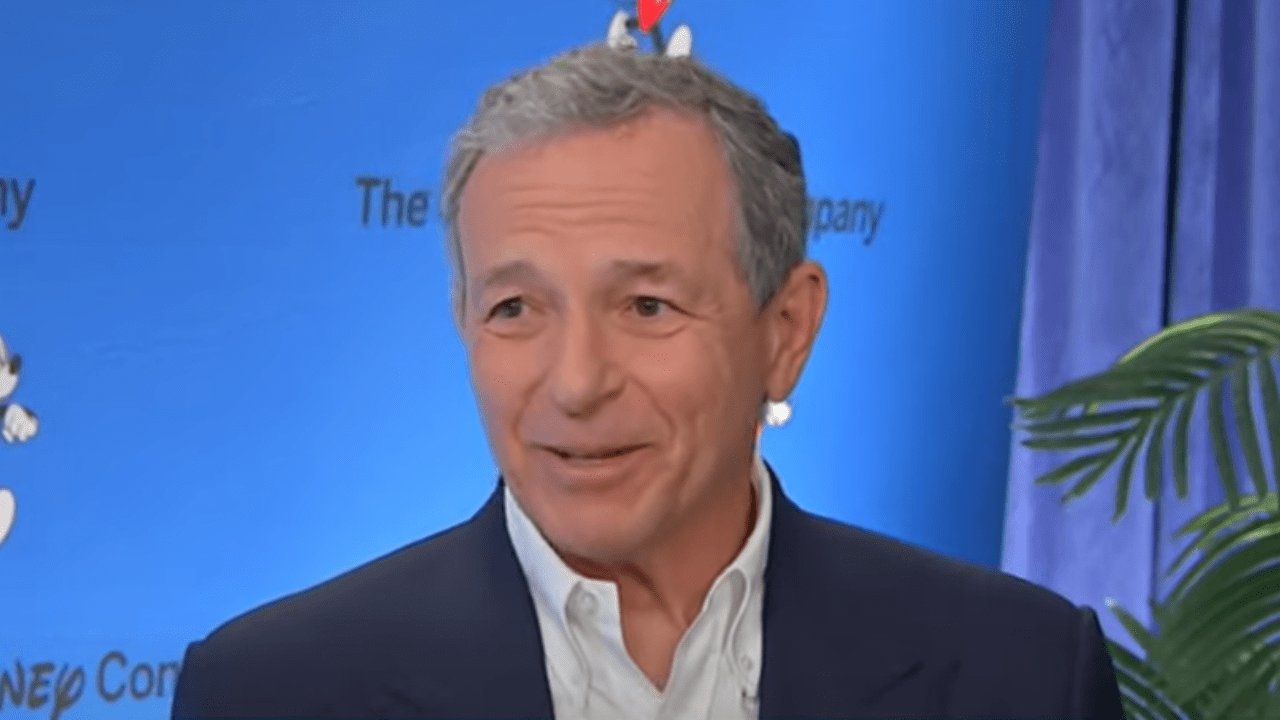
Bob Iger via CNBC Television YouTube
READ: Disney Rolls Out 2027 Room Discounts for Annual Passholder, Visa Card Holders, and More
Chapek characterizes his predecessor as manipulative and concerned with maintaining his own authority even after officially relinquishing the CEO position.
“I didn’t get a chance to finish what I started,” Chapek writes. “In truth, it pisses me off.”
There’s important historical context to Chapek’s complaint.
When Iger unexpectedly stepped down as CEO in February 2020, he didn’t leave Disney. Instead, Iger became executive chairman and retained oversight of Disney’s creative operations through the end of 2021. Chapek also initially continued reporting to Iger despite holding the CEO title.
Contemporaneous reporting noted just how unusual the arrangement was. CNBC reported at the time that the transition came roughly 22 months before Iger’s previously anticipated departure and that Iger would remain heavily involved in the company’s creative strategy.
That arrangement provides important context for Chapek’s contention that his predecessor continued wielding enormous influence after supposedly handing him the company.
Chapek Questions Why Iger Really Stepped Down
Chapek also raises a provocative question about the timing of Iger’s February 2020 departure.
Iger has previously said that he had grown tired of certain aspects of serving as CEO, including earnings calls.
Chapek claims, however, that multiple high-ranking people in government and private business subsequently offered him another theory.
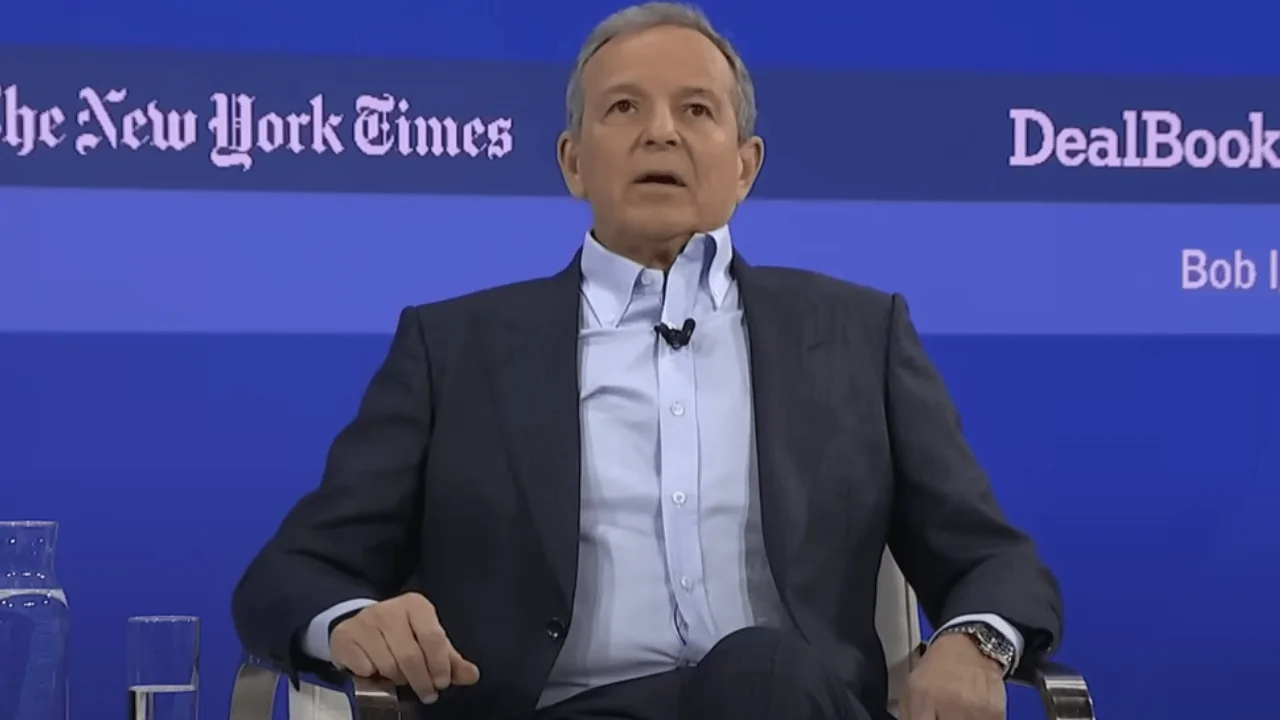
Bob Iger via New York Times Events YouTube
“I have been told by several high-ranking people both in government and private business that in their opinions, the real reason he left the company so abruptly was his anticipation of the arrival of Covid,” Chapek writes.
The Times notes that Chapek provides no evidence establishing that allegation, and Disney has previously denied that the looming pandemic had anything to do with Iger’s decision.
Chapek also suggests Iger operated under the assumption that he could eventually return to the CEO position if he wanted.
Whatever Iger’s intentions may have been in 2020, the extraordinary ending to the story is indisputable. Disney’s board fired Chapek on November 20, 2022, and Iger immediately returned as CEO.
Chapek Isn’t Apologizing for His Theme Park Strategy
Chapek also uses the memoir to defend one of the most controversial aspects of his Disney career: his aggressive attempts to extract more revenue from the company’s theme parks.
Chapek oversaw major price increases and helped introduce additional paid services into the parks, including monetizing access to shorter attraction lines.
Rather than apologizing, Chapek reportedly defends his philosophy.
“We’d been, at a minimum, leaving revenue opportunities on the table to avoid stirring the hornet’s nest,” he writes.

Cinderalla Castle Magic Kingdom in Disney World – YouTube, Park Hoppin
Chapek specifically touts bringing airline-style dynamic pricing to Disney’s theme parks, arguing that higher prices could simultaneously reduce overcrowding and improve guest satisfaction.
According to the Times, Chapek points to 18% compound annual profit growth during his tenure running Disney’s parks division as evidence that the strategy worked financially.
It’s a fascinating defense given the lasting backlash among Disney Parks fans over escalating prices and the increasing number of services that require additional payment.
Chapek’s argument appears to be that he was hired to run Disney as a business and made decisions that produced results — even when those decisions weren’t popular.
Chapek Takes Some Credit for Josh D’Amaro
There’s another particularly interesting element of Chapek’s memoir given Disney’s current leadership.
Chapek takes significant credit for helping elevate Josh D’Amaro, whom Disney selected earlier this year to succeed Iger as CEO.
Chapek describes D’Amaro as a protégé and “the tip of my spear” while the two men worked in Disney’s theme park organization.
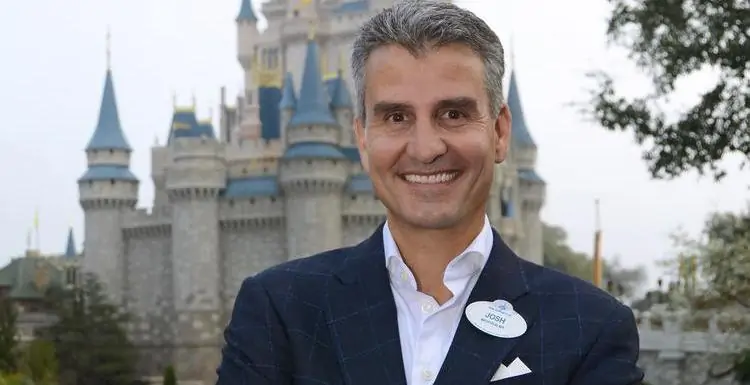
Josh D’Amaro by Cinderella Castle – Disney
READ: Paramount Reportedly Eyes Elon Musk as Investor as Warner Bros. Merger Nears Finish Line
“I consistently suggested the idea of promoting him,” Chapek writes. “He had been a relative unknown in the corporate hierarchy before I singled him out.”
D’Amaro’s spokesman declined to comment to the Times.
The claim creates another wrinkle in Disney’s tortured succession history. The executive Disney ultimately chose to succeed Iger is someone Chapek argues he personally identified and helped elevate through the company.
Chapek Says Disney Underestimated Him
Running throughout the book, according to the Times, is Chapek’s belief that Disney and Hollywood consistently underestimated him.
Chapek describes himself as a “square” from Indiana who lacked the Hollywood pedigree and celebrity relationships associated with executives like Iger.
Instead, Chapek portrays himself as a businessman willing to challenge established assumptions.
He points, for example, to his push for Disney’s direct-to-video animated sequel business during the 1990s.

LOS ANGELES, CALIFORNIA – JUNE 23: (L-R) Natalie Portman and Bob Chapek, Chief Executive Officer of Disney attend the Thor: Love and Thunder World Premiere at the El Capitan Theatre in [Hollywood], California on June 23, 2022. (Photo by Charley Gallay/Getty Images for Disney)
That theme apparently runs throughout the memoir. Chapek reportedly uses variations of the word “disrupt” roughly 30 times while attempting to reframe a Disney legacy that became almost entirely defined by his firing.
The book’s own publisher makes clear that this reassessment is central to the project.
The official description of Behind the Castle Walls says Chapek is breaking his silence about his time as CEO and specifically asks whether he was “given a fair shot” or “set up to fail.”
The book is scheduled for publication on September 29.
Now We Get Chapek’s Side of the Disney Civil War
For years, Bob Chapek has largely been remembered through the narrative constructed after his removal: an unpopular executive who made a series of mistakes, lost the confidence of Disney’s board, and had to be replaced by the executive who preceded him.
Behind the Castle Walls appears determined to challenge that history.
Chapek’s version instead presents a CEO who believes he inherited an extraordinarily difficult situation, took control of Disney immediately before a global pandemic devastated some of its most important businesses, never completely escaped the shadow of his enormously powerful predecessor, and was ultimately denied the opportunity to finish what he started.
That doesn’t necessarily make Chapek’s version correct.

Former Disney CEO Bob Chapek being interviewed by the Wall Street Journal – YouTube, The Wall Street Journal
But it does make his account worth examining on its merits — particularly when the man Chapek accuses of undermining him ultimately returned to occupy the very office Chapek was removed from.
The first excerpts suggest that Behind the Castle Walls could significantly complicate the public history of Disney’s disastrous 2020 succession and the corporate civil war between its two Bobs.
That Park Place will be reading Behind the Castle Walls in full and publishing a complete review of Bob Chapek’s memoir following its release.
Will you be reading the Bob Chapek book? Sound off and let us know!
