


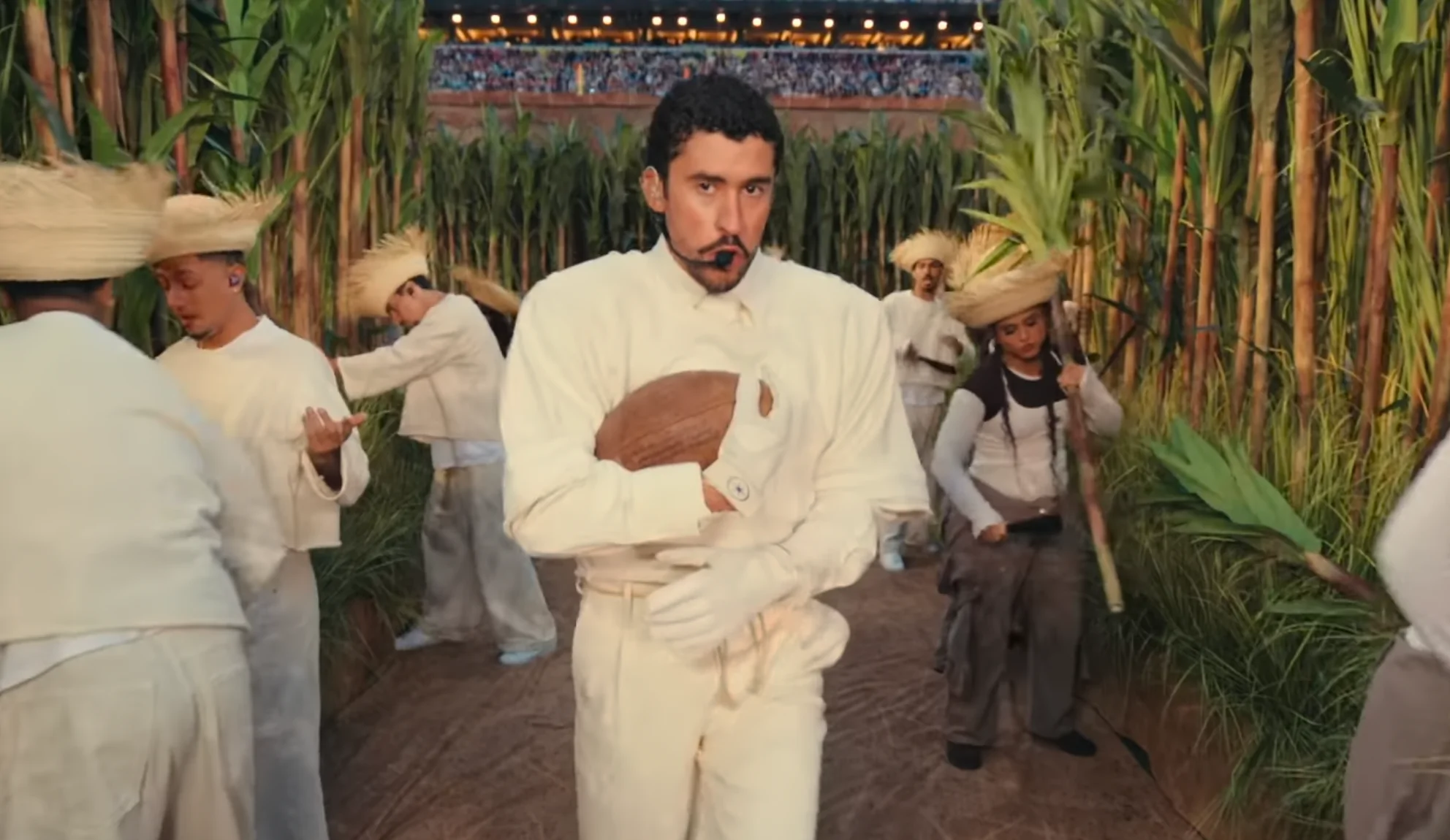
The early media victory lap surrounding the reported record-breaking Bad Bunny halftime show viewership is already falling apart.
In the immediate aftermath of Super Bowl LX, entertainment trades and mainstream press outlets rushed out headlines declaring the performance the most-watched halftime show in history. Preliminary projections floated a massive 135.4 million viewers, framing the show as a cultural milestone and a record-shattering success.
There’s just one problem. Those numbers weren’t final — and they weren’t accurate.
Now that the official Nielsen averages have been finalized, the Bad Bunny halftime show viewership narrative has shifted dramatically.
Final Nielsen Data Tells A Very Different Story
Updated Nielsen reporting shows the Bad Bunny halftime show averaged 128.2 million viewers.
While still an enormous television audience by any traditional metric, it falls well short of the early projections that fueled the “record-breaking” headlines.
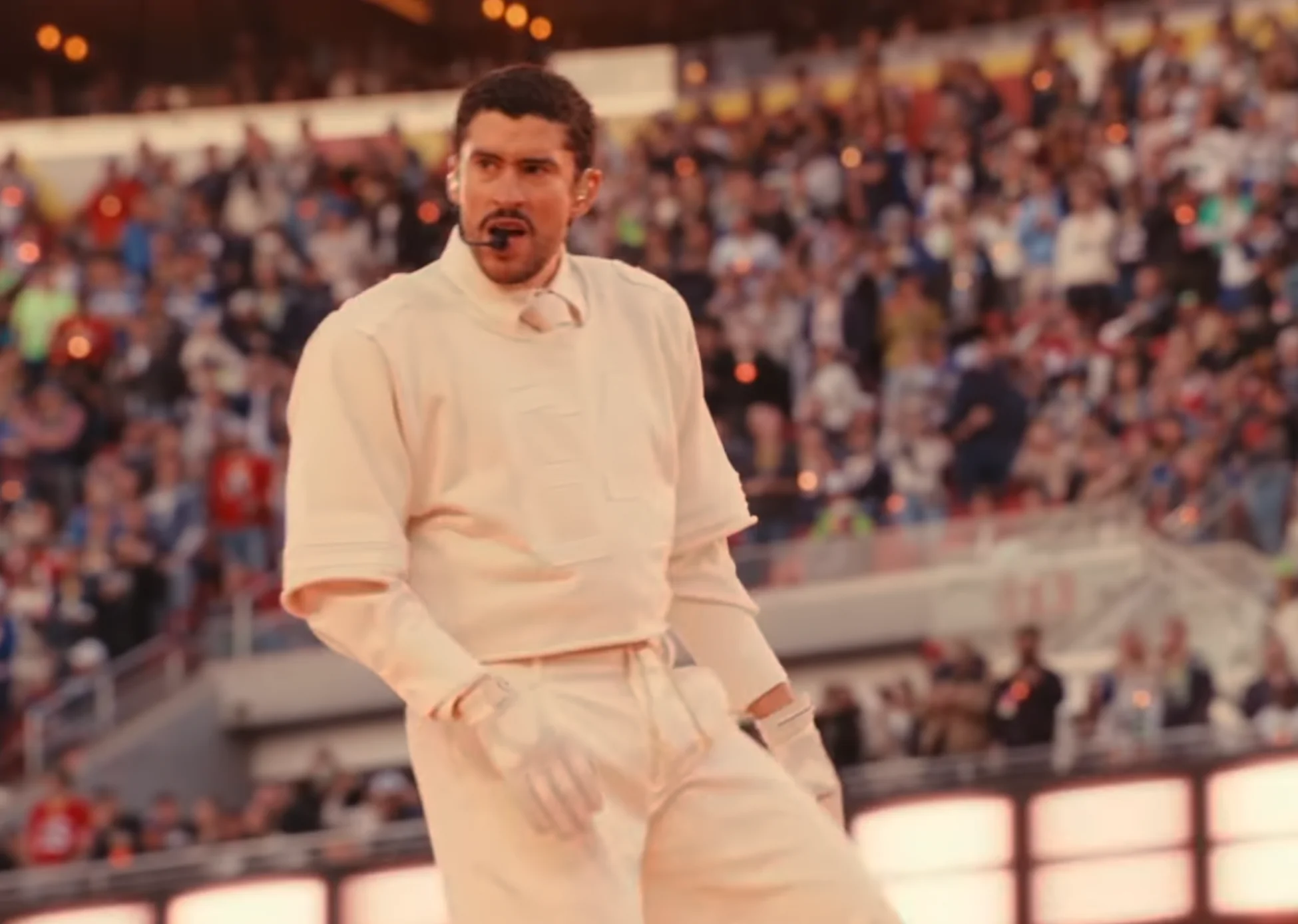
Bad Bunny performing at the Super Bowl Halftime Show – YouTube, NFL
More importantly, it represents a decline from the previous year.
Kendrick Lamar’s Super Bowl halftime performance in 2025 drew 133.5 million viewers, meaning Bad Bunny’s show dropped roughly 5.3 million viewers year-over-year.
That reversal transforms the story entirely.
Instead of growth, the halftime show experienced contraction.
Early Claims About Beating The Game Itself Also Proven False
Initial reports also pushed another now-debunked talking point — that more viewers tuned in for the halftime show than for the game itself.
Finalized data shows the opposite.
#BadBunny‘s #SuperBowl halftime show reached an average of 128.2 million viewers, breaking various NFL social media records.
Nielsen measured 124.9 million viewers for this year’s Super Bowl — higher than the average of 124.9 million overall this year but lower than the 133.5… pic.twitter.com/vWHsJOPvB6
— Variety (@Variety) February 10, 2026
Super Bowl LX peaked at approximately 137.8 million viewers during game play, meaning viewership actually declined heading into halftime rather than spiking.
In raw terms, that’s a drop of nearly 9.6 million viewers from the game’s peak audience to the halftime performance.
For an event traditionally designed to hold — or grow — audience retention, that dip is notable.
Samba TV Data Now Aligns With Nielsen Trends
The corrected Nielsen averages now mirror the engagement patterns reported earlier by third-party measurement firm Samba TV.
This image should terrify the NFL.
America changed the channel on Bad Bunny’s Anti-American Halftime Show that wasn’t in English.
Meanwhile, Turning Point broke the record for the #1 Entertainment YouTube stream with millions tuning in.
This is what winning culture looks like. https://t.co/B9VoRUsLc6 pic.twitter.com/V8n7nId57E
— Benny Johnson (@bennyjohnson) February 11, 2026
Samba’s minute-by-minute smart-TV data indicated:
-
Super Bowl viewership peaked late in the second quarter
-
Audience levels fell to roughly 88% of peak during halftime
-
That reflects about a 12% decline as the show began
At the time, that dataset appeared to contradict the early “record viewership” narrative.
With finalized Nielsen numbers now showing lower averages and reduced retention, the two measurement systems tell a more consistent story — halftime did not generate a surge in audience.
How The 135 Million Projection Took Over Headlines
So how did the inflated figure dominate early coverage?
Preliminary ratings are often built from fast-release projection models combining:
- Broadcast audiences
- Streaming platforms
- Mobile viewing
- Out-of-home measurement
- Co-viewing estimates
Bad Bunny at the 2026 Grammys – Recording Academy, YouTube
These models prioritize speed over precision, allowing networks and media outlets to publish attention-grabbing headlines before final reconciliation occurs.
Once Nielsen completes its verified averages, those projections are often revised — quietly.
That appears to be exactly what happened here.
Expanded Measurement Makes The Decline More Notable
Adding further context, Super Bowl LX was measured under Nielsen’s updated Big Data + Panel methodology.

Bad Bunny performs the halftime show at the Super Bowl – YouTube, NFL
This newer system incorporates broader viewing environments than prior years, including:
-
Mobile devices
-
Tablets and PCs
-
Streaming distributors (MVPD / vMVPD apps)
-
Expanded out-of-home viewing
In theory, that wider net should inflate total audience measurement compared to older panel-only tracking.
Yet even with expanded counting methods, Bad Bunny’s halftime show still fell below the prior year’s record.
That makes the year-over-year drop more difficult to dismiss as a measurement anomaly.
Media Coverage Quietly Pivoted To “Engagement” Metrics
As the ratings correction circulated, coverage emphasis began shifting.
Rather than continuing to frame the show as record-setting television, outlets pivoted toward alternative success indicators such as:
- Social media impressions
- Viral video clips
- Streaming music boosts
- International engagement
Those metrics track cultural conversation — not television retention. They measure reach, not how many viewers stayed tuned in live.
Retention May Be The More Important Halftime Metric
The Super Bowl halftime show isn’t just about attracting viewers — it’s about holding them.
Channel switching during the Super Bowl is historically difficult due to the event’s scale and advertising dominance.
Bad Bunny delivers a monologue on SNL – YouTube, Saturday Night Live
Audience erosion during halftime is comparatively rare, which makes the LX retention dip a meaningful data point regardless of performance reception or genre preference.
The Bottom Line On Bad Bunny Halftime Show Viewership
Once finalized data replaced early projections, the narrative changed substantially.
What was initially framed as a record-breaking television moment now reads differently:
- 128.2 million average halftime viewers
- Down from 133.5 million the previous year
- Below the game’s 137.8 million peak
- Measurable audience drop entering halftime
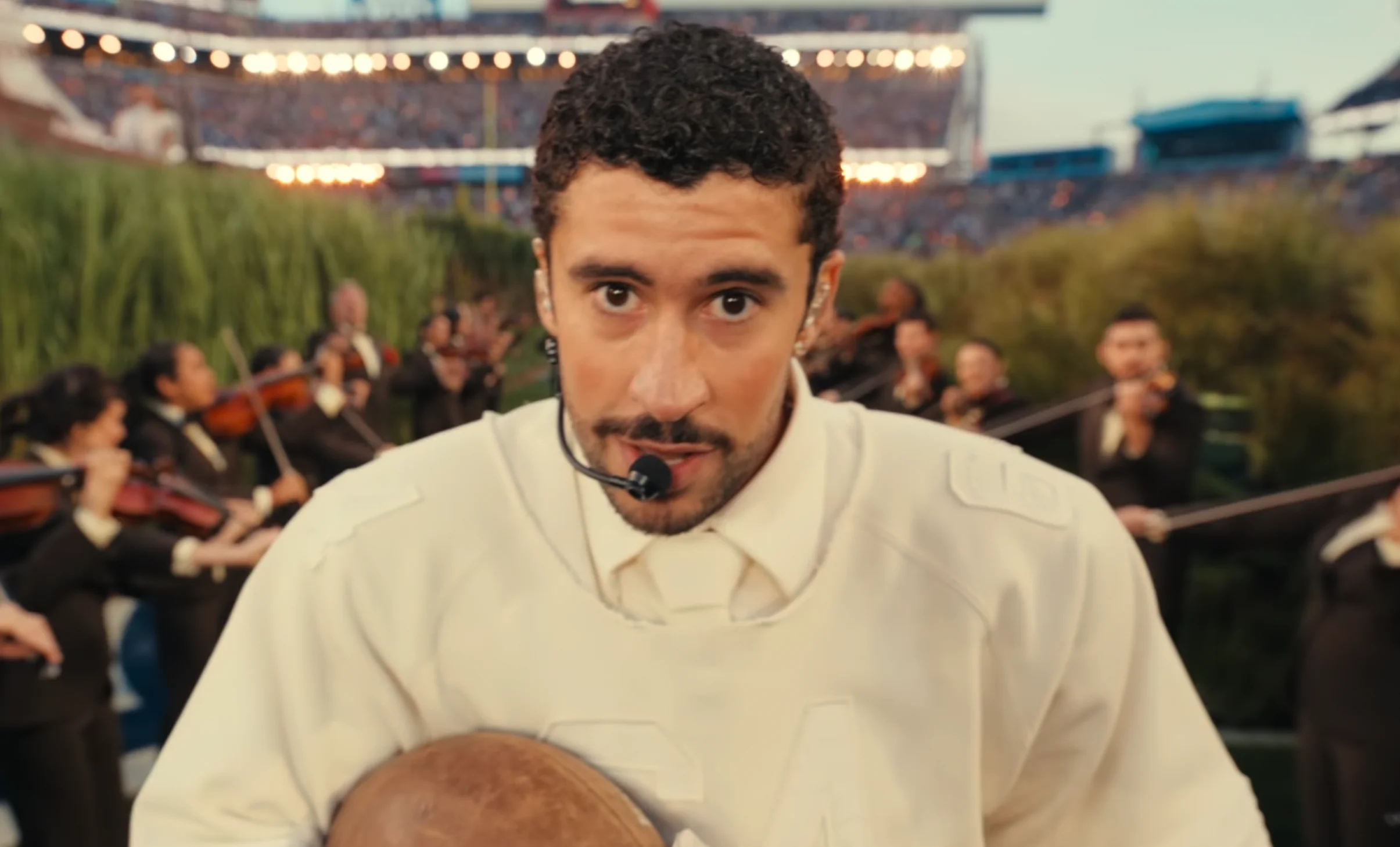
Bad Bunny in a close up shot at the Super Bowl Halftime Show – YouTube, NFL
The performance still ranks among the largest television audiences of 2026 — but the claim that it shattered all-time records no longer holds up under finalized measurement.
As is often the case with fast-cycle ratings reporting, the first headline wasn’t the final story.
Are you surprised reports of record-setting Bad Bunny halftime show viewership turned out to be false? Sound off in the comments and let us know!
UP NEXT: Greta Gerwig Narnia Editor Hints They’re Disregarding Source Material — “We’re Doing Our Own Take”
