


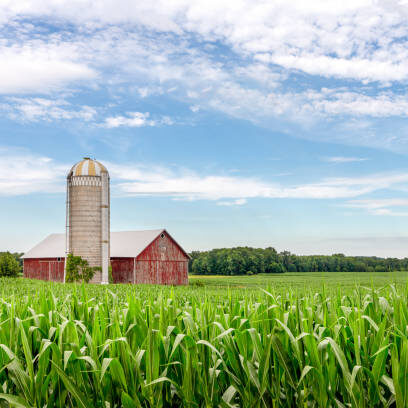
A new Canadian government policy is sure to drive up prices for food around the globe, making dining out harder to do and creating food scarcity for the poor.
During the 20th century, millions upon millions of people died of starvation. Often, the cause of starvation was not draught or fire or flooding… it was stupidity. That’s true. And the people who starved weren’t the ones who were acting out stupidly. It was mostly done by leaders who misunderstood reality to such a degree that when they experimented on new sociopolitical ideas, they forgot that food is integral to society’s functioning. As the leaders of some of the communist revolutions of the 20th century would replace farmers with people who had no idea the science of producing food, shortages would inevitably occur at very high rates and people would starve.
At that time, western nations were often not so interlinked in the “global supply chain” and thus would be less effected by idiotic decisions that would lead to horrific consequences on innocent victims. Unfortunately, that day is long gone.
In Canada, for some political reason, Justin Trudeau has decided to push the country into almost certain food shortages by decreeing a fertilizer decrease of 30%. That’s coming at a time when Canadian farmers already can’t afford fertilizer because most of it comes from Russia or Ukraine. Perhaps it’s a very bad decision to concentrate any single item or industry’s livelihood on a particular geopolitical area, but that’s what we’ve all done across a broad spectrum of markets. Today it’s the fertilizer crisis cause by the invasion of Ukraine… tomorrow it will be a number of items produced only in China.
The problem is that just like farmers in Europe are signaling a massive problem, so too are Canadian farmers now raising the red flag that an emergency is afoot. And as often is the case, this emergency is the result of human error by people who know very little about farming or food but lead a government nevertheless.
Canadian farmers also rise up and support the Dutch farmers' protest in Ontario. Also in Canada Justin Trudeau unveiled his new climate plan, focused on reducing nitrous oxide emissions from fertilizers by 30%, which will lead to the closure of numerous farms and cattle ranches. pic.twitter.com/QVcn8WNH75
— RadioGenoa (@RadioGenoa) July 24, 2022
From Food Ingredients First:
In a complex year for the agri sector, Canada plans to reduce 30% of its fertilizer use by 2030 in order to meet climate targets. However, Saskatchewan and Alberta Ministers of Agriculture have expressed their “profound disappointment” in the Canadian federal government’s “arbitrary goal.”
“This has been the most expensive crop anyone has put in, following a very difficult year on the prairies,” says Nate Horner, Alberta’s Minister of Agriculture.
“The world is looking for Canada to increase production and be a solution to global food shortages. The federal government needs to display that they understand this. They owe it to our producers,” he highlights.
Alberta and Saskatchewan authorities are critical that fertilizer emission reduction was not even a topic on the agenda at the annual meeting of Federal-Provincial-Territorial ministers of agriculture.
“Provinces pushed the federal government to discuss this important topic, but were disappointed to learn that the target is already set,” explains the authorities.
“The commitment to future consultations is only to determine how to meet the target that prime minister Trudeau and minister Bibeau have already unilaterally imposed on this industry, not to consult on what is achievable or attainable,” they continue.
At the same time we are experience record inflation across the globe, we are now seeing multiple reports that food supplies are in critically dangerous territory. While it’s unlikely the United States will suffer famine, third world countries are a far different story. Likewise, we do suspect that even leading countries in the world will experience significant increases in the cost for food over the next year. That doesn’t just raise the cost of going out to eat or taking a fun vacation… it also means that people no the margins — poor people — will be forced to eat food of lesser cost and quality.
Already we’ve seen inflation wreaking havoc on areas of people’s lives you wouldn’t expect. Did you know that much of the recent tapering off of gas prices has been due to people cancelling trips and vacations? Did you know that we’re actually seeing a decrease in the number of romantic dates by singles as taking someone out is getting prohibitively expensive?
As costs balloon, some singles are scaling back and being more selective about the dates they’re going on, while others are pausing their search for “the one” entirely. On dating site OKCupid, 34% of 70,000 users reported that inflation was impacting their love life.
“In the fall of 2020, I was going on dates left and right not really thinking about the costs,” said Seth Rosenberg, a 25-year-old in Philadelphia. “Now, it’s harder to be excited because if a date goes bad, you’re out anywhere from $50 to $100.”
Another unintended consequence of all this is that higher food prices out of countries such as Canada will inevitably put market strain on corn yields in the United States. The staple ingredient of so many cheap and nutritionally weak items (we’re looking at you corn syrup) could dramatically rise in cost… which would then also raise the cost of gas because of America’s determination to use corn-derived ethanol for fuel.
Food and travel are about to be much more expensive.
Different people have different theories about why world leaders are acting the way they are. Whatever cause you may believe in, and incompetence is certainly an option, it seems leisure activities like travel and dining out are going to be even more expensive in a year than they are today. That’s difficult to believe after a year of difficult-to-believe price increases, but that’s where we’re headed. Hopefully wisdom and credulity return to fashion. After all, if Trudeau’s Canadian government wants to prevent climate change through fertilizer reductions (i.e. less and more expensive food), it’s only a shame that the millions of people dying from starvation won’t have a chance to see the planet saved.
For all the latest news that should be fun, keep reading That Park Place. As always, drop a comment down below and let us know your thoughts.
