
Celebrity  ·  Featured  ·  Headline  ·  News

Chris Rock Speaks Out Against Companies Profiting off Virtue Signaling

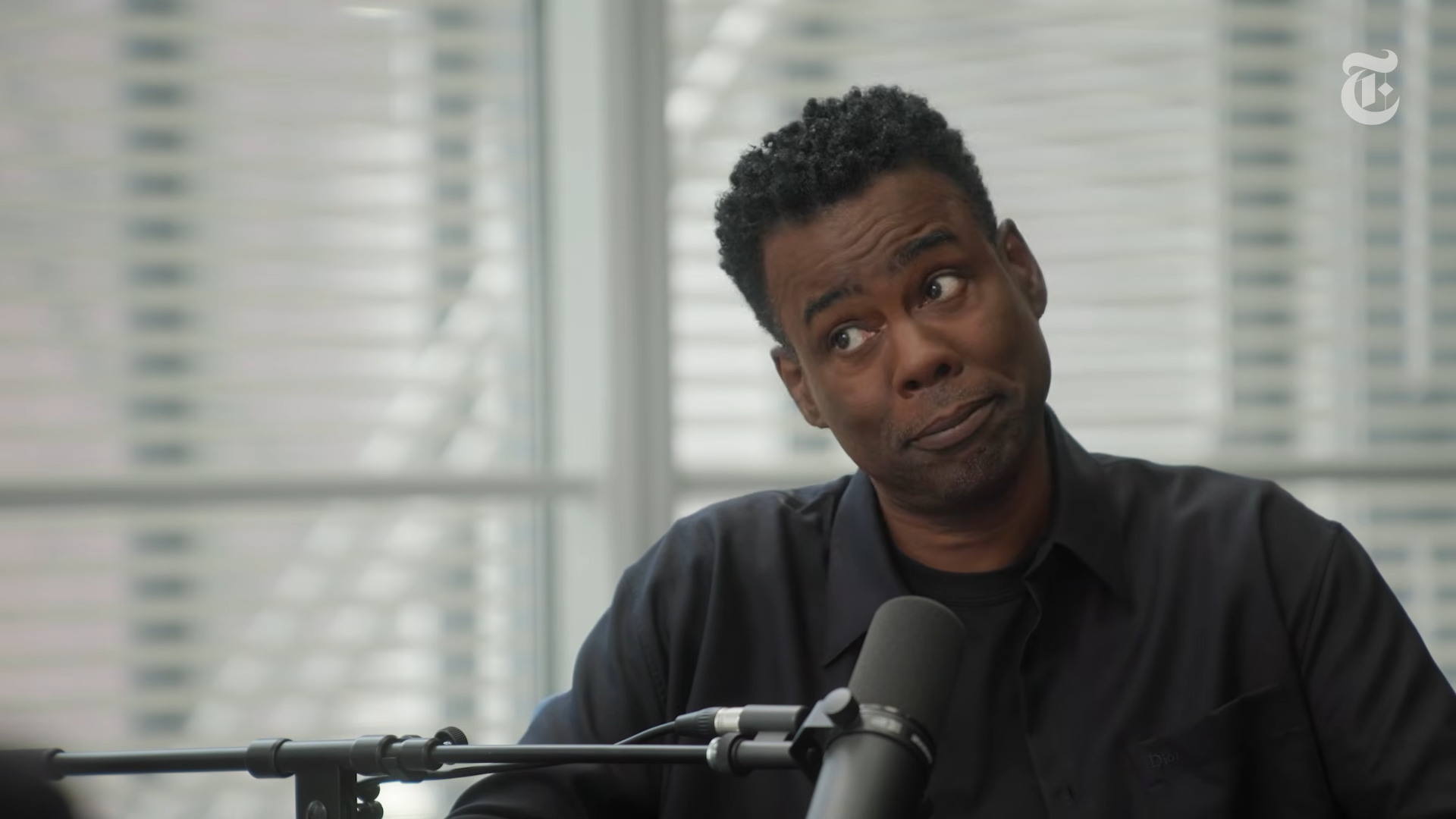
Chris Rock tilts his head with a half-serious expression

Chris Rock - The Interview, YouTube

Chris Rock is taking aim at what happens when helping people becomes an institution with salaries, overhead, and an incentive to keep finding offenders.

The comedian’s criticism highlights an uncomfortable possibility in the business of virtue signaling: once livelihoods depend on identifying wrongdoing, solving problems can become less profitable than keeping outrage alive.

Speaking with David Marchese on The New York Times’ The Interview, Rock discussed forgiveness while promoting his upcoming film, Misty Green. The conversation turned to wokeness and the activism that followed George Floyd’s death, which Marchese described as the beginning of what some call the “Woke 1.0 era.”

Chris Rock in a hat and vest making a serious point

Chris Rock in the trailer for Misty Green – A24, YouTube

READ: Fast & The Furious Series is Officially Coming to Peacock

Marchese asked whether Rock considered it simply a “crazy moment in time” or believed anything redeeming had emerged from it.

Rock resisted that framing, focusing instead on the distinction between helping people and institutionalizing the effort.

“It’s great to help those that need help. That is amazing. We need more of that. The problem is when you institutionalize it … Now you gotta start lying. Now you gotta f–king make shit up, cause you got overhead.”

His objection concerned what happens when a mission becomes an organization that must continually justify its existence.

Accountability Needs Room for Forgiveness

The broader conversation centered on Rock’s willingness to remain friends with someone who had been canceled.

Chris Rock on webcam looking thoughtful

Chris Rock – The Interview, YouTube

READ: Grok Affirms the Resurrection of Jesus Christ Based on ‘Historical Evidence’

“If you’re only friends with your friends when they’re good, they’re not your friends,” he said.

Rock distinguished maintaining a friendship from excusing abusive behavior, arguing that the current climate leaves too little room for forgiveness. Holding someone accountable, in his view, should still allow the possibility of reconciliation.

He explained that although he does not consider himself religious, he identifies as a Christian, emphasizing that “God forgives.”

The problem with wokeness, as Rock sees it, is the absence of that forgiveness. Without a path to reconciliation, condemnation can become permanent—and institutions built around it have little reason to move on.

When Outrage Becomes a Business

Rock illustrated his argument with a deliberately exaggerated comparison to the Salem witch hunts, describing it as “half a joke.”

“I’m sure the first three witches they caught were actually f- – -ing witches,” he said. “But then you open up a witch office and now you’ve got to start lying. Now you’ve gotta f- – – ing make s- – – up because you’ve got overhead. You’ve got to justify the witch hunters f – – -ing pensions and s- – -.”

The joke raises an uncomfortable question for organizations built around policing behavior: what happens when their financial interests depend on the problem never disappearing?

Chris Rock smiling at someone beside him

Chris Rock – The Hollywood Reporter, YouTube

READ: Ben Affleck Says He Doesn’t Want to Run for Political Office

Applied to corporate virtue signaling, the implication is straightforward. A company can advertise its moral commitments, employ people to enforce them, and make those commitments part of its public identity.

That creates a temptation to prioritize visible demonstrations of righteousness over measurable improvements.

Helping someone requires a useful outcome. Performing concern requires an audience.

Those goals can overlap, but they can also diverge. A public denunciation might generate attention without improving anyone’s circumstances. An internal campaign might give executives something to celebrate while leaving the underlying problem untouched.

Rock did not identify particular companies or make allegations against a specific business. His criticism addressed the incentives that emerge when advocacy acquires an institutional structure.

Who Benefits From Keeping the Outrage Alive?

Conservatives often describe the risks of corporate activism with “Go woke, go broke,” arguing that appeasing a vocal faction can alienate a broader customer base.

Chris Rock making a goofy face

Chris Rock – Variety, YouTube

READ: Disney Files Permit for Mystery Location Near Haunted Mansion at Magic Kingdom

Rock’s criticism highlights a related incentive: once people are paid to police wrongdoing, resolving problems may become less rewarding than finding new ones.

Applied to corporate virtue signaling, that raises an uncomfortable possibility. The people running an ideological campaign may have reasons to keep it going even when the company loses customers. Helping people can become secondary to justifying the next budget—and outrage becomes a business expense everyone else pays for.

Do you agree with Chris Rock that companies can profit from virtue signaling? Sound off and let us know!

UP NEXT: Gears of War E-Day Causes Controversy With PRIDE Profile Customization Options

Trevor Denning’s work has appeared in The Banner, Upstream Reviews, and The Daily Caller, while his fiction is included in several anthologies from independent presses. A graduate of Cornerstone University in Grand Rapids, Mich., he currently resides in the palm of Michigan’s mitten. Most days you’ll find him at home, working out in his basement gym, cooking, and doting on his cat. You can follow him on X, Criticless, and YouTube at @BookstorThor