

Disney has filed a patent application for an attraction warning system that could alert guests about specific effects before they occur. The proposed technology would use individual “preferences” and “aversions” to identify parts of an experience that may concern a particular guest.
The application, titled “Personalized Notification of Attractions Including User Preferences or Aversions,” was filed by Disney Enterprises on Feb. 14, 2025. The U.S. Patent and Trademark Office published the application on Aug. 20, 2026, as U.S. Patent Application Publication No. 20260245439.
How Disney’s attraction warning system could work
The proposed system would store a guest’s preferences and aversions in a database. Attraction systems would provide information about the characteristics of an experience. Software would then compare those characteristics with the guest’s profile.
The proposed interface could let users select characteristics they enjoy or want to avoid. The patent’s examples include categories such as “Dark Scary Scenes,” “Flashing Lights,” “Confined Spaces” and “Sharp Turns and Drops.”
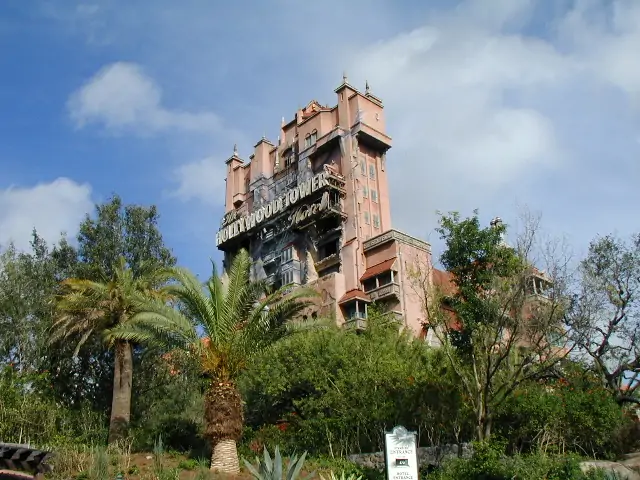
Looking up at The Hollywood Tower Hotel (The Twilight Zone Tower of Terror) at Disney-MGM Studios at Walt Disney World, December 2004. Photo Credit: The original uploader was Techclub at English Wikipedia., CC BY-SA 3.0 <http://creativecommons.org/licenses/by-sa/3.0/>, via Wikimedia Commons
The application also describes a text-entry option. A guest could enter words describing something they enjoy or want to avoid. Machine-learning software could then identify relevant characteristics from that description.
Warnings could happen before or during an attraction
The system could provide information before a guest reaches an attraction. Location data could help determine when someone comes within a predetermined distance of an attraction with a matching characteristic. The system could then notify the guest.
The proposal also addresses warnings during an experience. Attraction data could include the location and timing of events containing specific characteristics. The system could use that information to anticipate when a flagged event will occur.
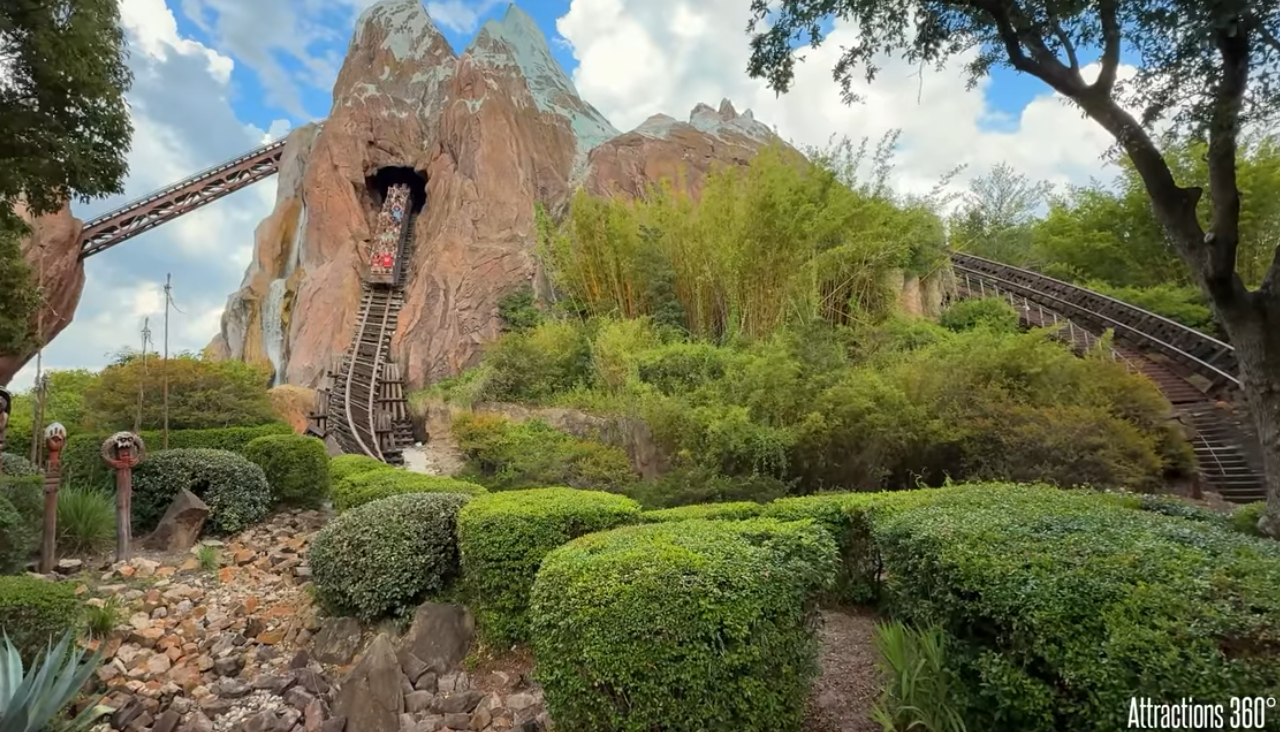
Expedition Everest at Disney’s Animal Kingdom – YouTube, Attractions 360°
READ: Disney Offers Executives Early Retirement Packages as Cost-Cutting Push Deepens
For example, the technology could identify an upcoming scene containing something a guest marked as aversive. It could then warn the guest before that event occurs. The patent describes several possible warning methods, including visual alerts, sounds and haptic effects.
The application describes devices that could deliver these notifications. Examples include smartphones, tablets and wearable devices such as smartwatches. It also mentions augmented-reality and virtual-reality devices.
The system could offer substitute content
The proposal goes beyond advance warnings in some implementations.
The application describes one implementation in which a guest who chooses an attraction containing an aversive characteristic could receive substitute content during the relevant portion of the experience. The proposed substitute content could omit or reduce the characteristic.
The filing also describes a separate implementation in which the system could send modification data to an attraction. That data could request an increase, decrease or omission of a particular characteristic while the guest experiences the attraction.
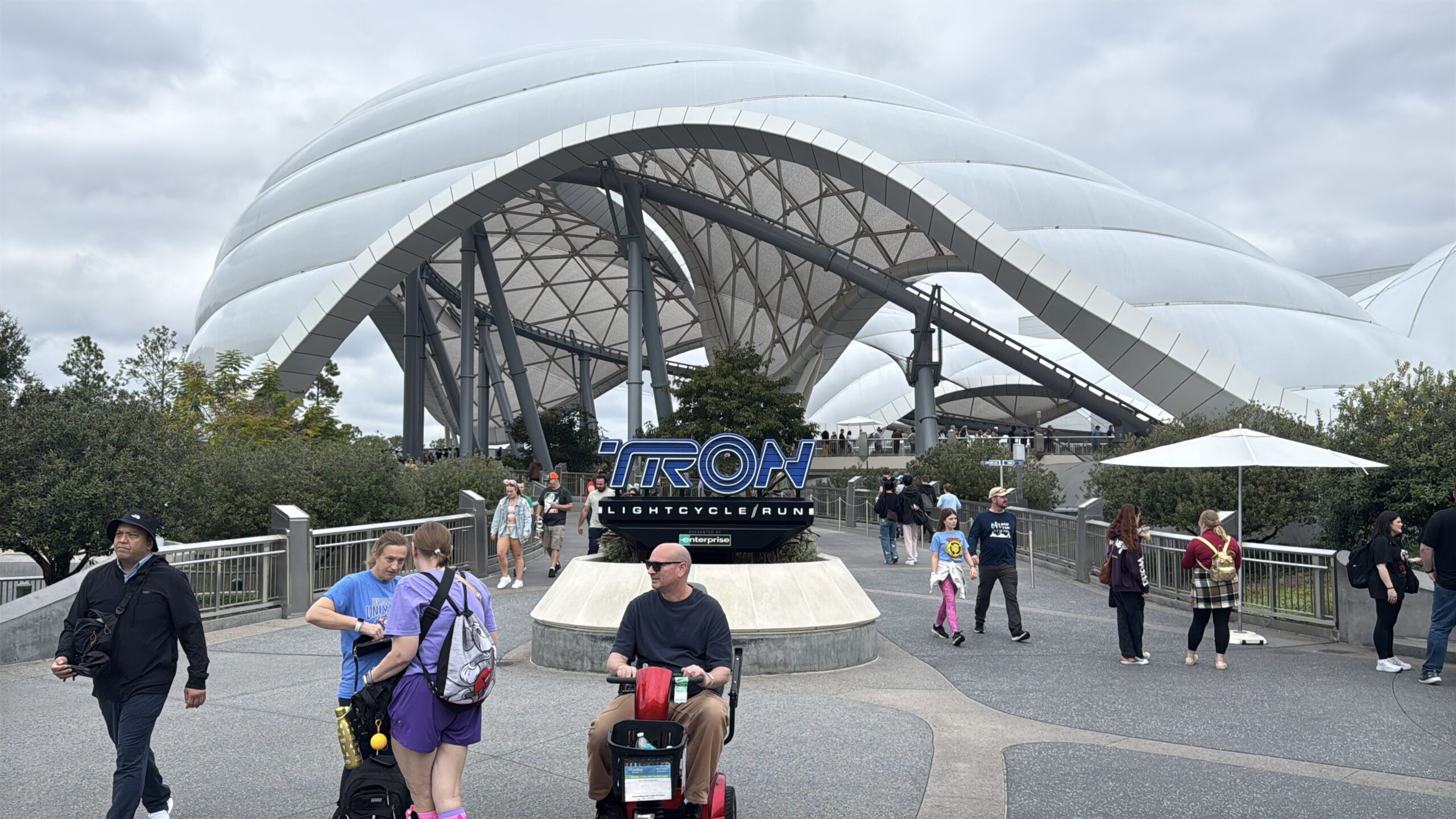
Tron Lightcycle Run in Tomorrowland at Disney World’s Magic Kingdom – Photo Credit That Park Place
The patent gives visual effects, sounds and motion as examples of characteristics that could change. It also notes that some sensory effects may be harder to modify than others.
The proposal could work in the opposite direction as well. A guest could identify something they enjoy, and the system could request greater emphasis on a preferred characteristic.
These descriptions represent possible implementations in the patent. They do not show that Disney has equipped existing attractions to make individualized changes.
Machine learning could improve future alerts
The patent also describes collecting feedback after a guest experiences an attraction or receives a notification. Machine-learning models could process that information to improve later alerts.
One example involves alert timing. Feedback could help the system determine whether a warning arrived too early or too late. The software could then use that information to improve future notifications.
The filing also describes intensity ratings. In some implementations, the system could rate how strongly an attraction presents a particular characteristic. The application gives scales ranging from one to five or one to ten as examples.
The patent does not confirm a Disney park rollout
The filing does not establish that Disney has tested or implemented the system at a theme park. It also does not provide a launch schedule or identify an existing attraction that uses the technology.
If Disney eventually implements the technology, guests could receive warnings about particular moments rather than avoiding an entire attraction. The system could also support alternative content or changes to certain effects where an attraction allows those modifications.
Although the patent does not specifically mention the My Disney Experience app, that would be a logical choice for implementing the system.
For now, the technology remains a patent application. The filing shows what Disney Enterprises has proposed and sought to protect, but it does not establish that the system is currently available to Disney guests.
Would you like a system that warns you before scary moments in attractions? Sound off and let us know your thoughts!
UP NEXT: Paramount Denies Leak Came From Them After Rob Bonta Cancels Merger Talks
