


The Disney OpenAI partnership has officially fallen apart—and it didn’t take long.
Just months after announcing a high-profile collaboration centered on AI video generation, Disney is now walking away entirely after OpenAI abruptly shut down its Sora video app. What was once being positioned as a potentially transformative deal for entertainment and streaming has now fizzled out before it ever had a chance to deliver anything meaningful.
And if you read between the lines, this isn’t just about one app shutting down. It’s about a rapidly shifting AI landscape—and a major studio realizing the ground beneath its investment isn’t as stable as it hoped.
OpenAI Pulls the Plug on Sora
OpenAI confirmed it’s shutting down the standalone Sora app, a tool that generated significant buzz when it launched due to its ability to create realistic video content using artificial intelligence.
In a statement, the company said: “We’re saying goodbye to Sora. To everyone who created with Sora, shared it, and built community around it: thank you.”

Videos created using Sora, the ChatGPT text-to-video advancement – OpenAI
READ: Live Action Moana Trailer Destroyed by Fans With Mass Dislike Ratio
While OpenAI clarified it’s not abandoning AI video technology entirely, the decision signals a clear pivot away from maintaining Sora as a standalone platform.
Instead, the company appears to be consolidating its efforts—likely integrating similar capabilities into broader tools rather than keeping a dedicated app alive.
Disney Quietly Backs Out of $1 Billion Deal
That pivot had immediate consequences for Disney.
According to the report, Disney is now exiting its previously announced deal with OpenAI, which reportedly included:
- A planned $1 billion investment
- Licensing of Disney-owned characters for use within Sora
- Long-term ambitions to integrate AI-generated content into Disney+
With Sora gone, the foundation of that agreement effectively disappeared.
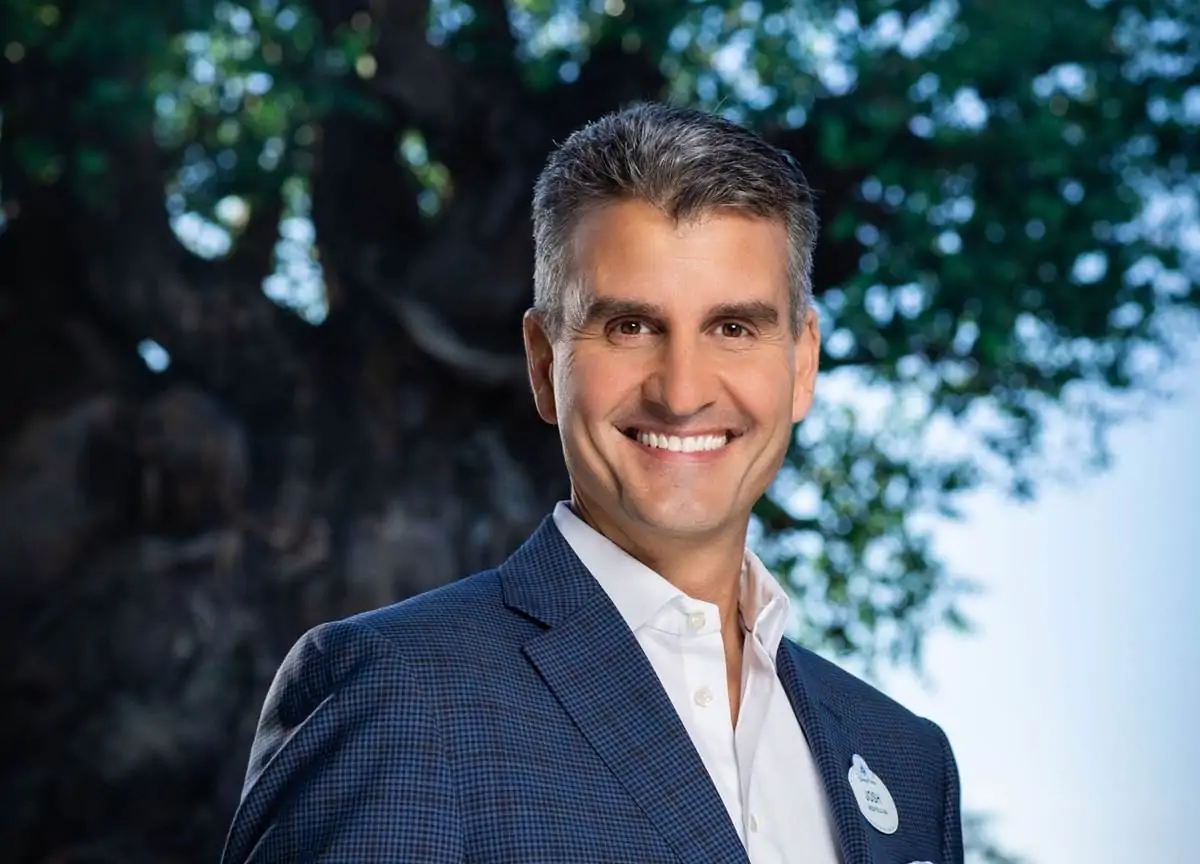
Josh D’Amaro by the Tree of Life – Disney
A Disney spokesperson acknowledged the shift, stating: “As the nascent AI field advances rapidly, we respect OpenAI’s decision to exit the video generation business and to shift its priorities elsewhere.”
That’s the corporate way of saying: this is no longer what we signed up for.
From “Game-Changer” to Footnote
When Sora launched, it turned heads across Hollywood.
The technology raised immediate questions about:
- Intellectual property usage
- Actor likeness rights
- The future of production pipelines
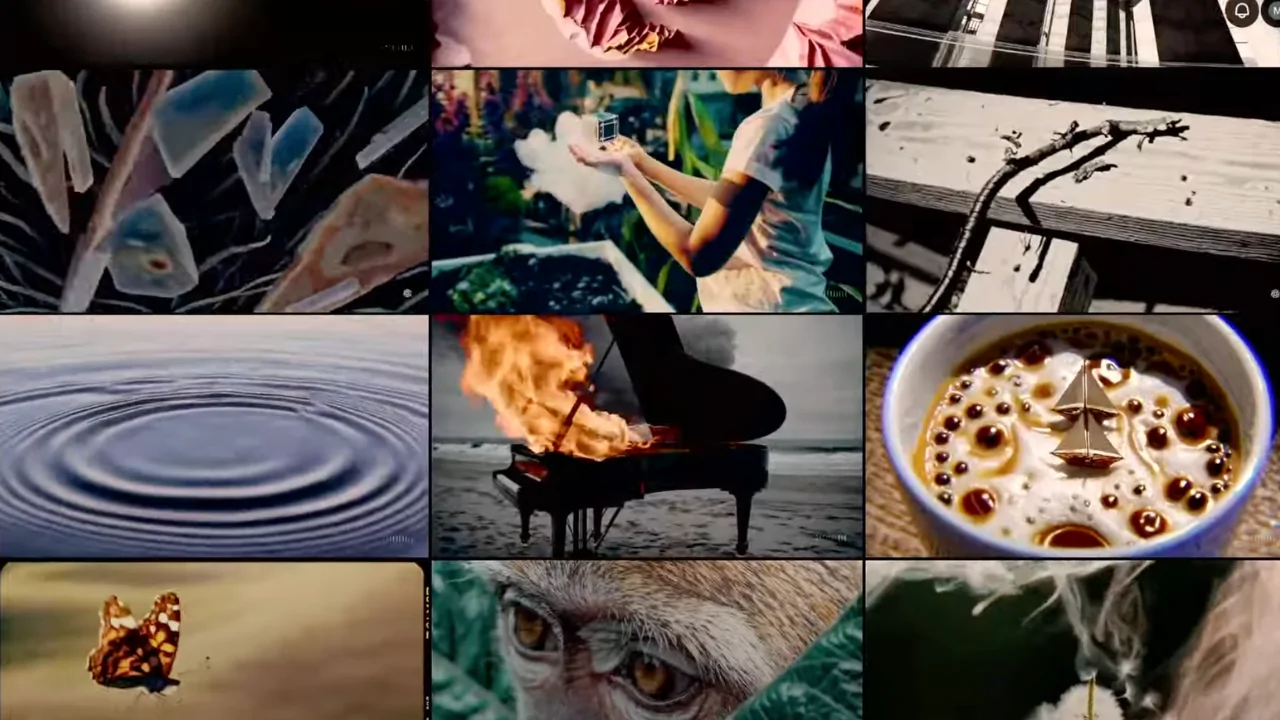
Videos created using Sora, the ChatGPT text-to-video advancement – OpenAI
READ: John Boyega Confirms He’s Spoken to Dave Filoni About a Return to ‘Star Wars’
In fact, early reactions forced OpenAI to quickly adjust how the tool handled copyrighted material and recognizable figures.
But now, just months later, Sora is already being written off as something closer to a short-lived experiment than a lasting disruption.
That’s a stunning reversal for a product that was initially treated as a potential industry-defining breakthrough.
A Bigger Problem for Hollywood’s AI Ambitions
Disney’s exit doesn’t just reflect disappointment in one product—it highlights a broader uncertainty around AI in entertainment.

A clip from the Brad Pitt Tom Cruise AI fight – X, @RuairiRobinson
Studios have been eager to explore:
- Cost-cutting through automation
- AI-assisted production tools
- New forms of digital content creation
But the Sora situation shows how quickly things can change.
A billion-dollar partnership collapsing almost overnight sends a clear message: The tech may be evolving fast—but it’s still volatile.
The AI Video Race Is Just Getting Started
With OpenAI stepping back from a standalone AI video platform, The Hollywood Reporter suggests Google could gain an early advantage—but it’s far from operating unchallenged.
Emerging players are moving fast, and in some cases, they’re generating more excitement than Sora ever did. Elon Musk’s xAI initiative, particularly through Grok, has begun pushing into AI video capabilities, signaling that competition is not only alive—but accelerating.

A Seedance 2.0 created AI fight between Disney’s Wolverine and DC’s Superman – X, @EnisPresheva
Meanwhile, Seedance 2.0 has gone viral ahead of its full rollout, showcasing just how quickly this technology is evolving. Even in its limited exposure, it has already captured attention across social media, raising expectations for what next-generation AI video tools could deliver.
That creates a much more complex and competitive landscape. New entrants are rapidly gaining traction while viral tech demos are shaping public perception faster than official releases.
When it comes to AI video, studios now have more options—but far less clarity.
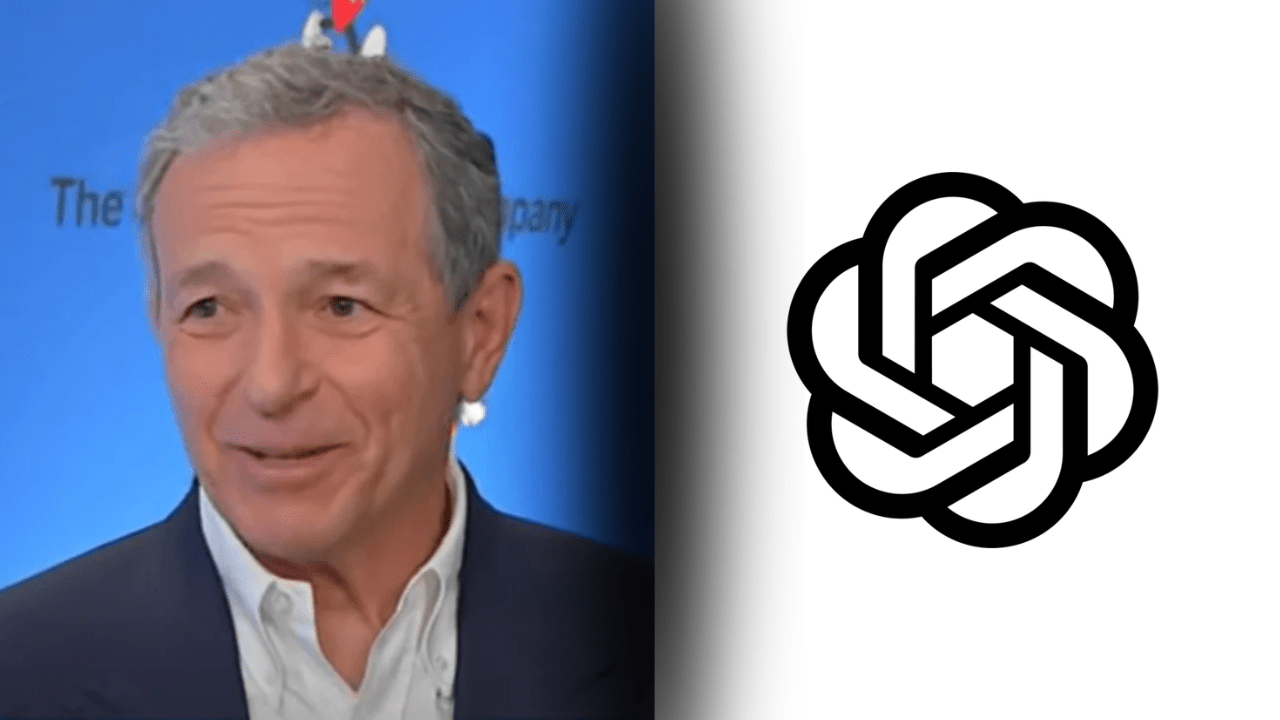
Bob Iger and the OpenAI logo – Photo Credit: CNBC Television YouTube; OpenAI
At the same time, even the most established players face significant hurdles. Google, despite its scale, has reportedly not secured major IP licensing deals and is already dealing with legal challenges tied to content usage.
So rather than a single dominant force emerging, the AI video space is starting to look like a volatile arms race—one where leadership can shift almost overnight.
What This Means Going Forward
The collapse of the Disney OpenAI deal is a reminder of just how unpredictable this AI gold rush really is.
Just a few months ago, this partnership was being framed as:
- A major leap forward for streaming
- A new frontier for storytelling
- A massive financial commitment to emerging technology
Now it’s over before it even started.
And while AI will absolutely play a role in the future of entertainment, this situation shows that studios betting big on unproven platforms might want to proceed with a little more caution.
The Bottom Line
The Disney OpenAI story isn’t just about a canceled app.
The Disney logo with a Tron Ares Overlay – YouTube, Disney
It’s about:
- A billion-dollar deal collapsing
- A hyped technology losing momentum overnight
- And an industry still trying to figure out what AI actually means for its future
For now, Sora looks less like the future of filmmaking—and more like a warning shot.
Are you surprised that the Disney OpenAI deal fell apart? Sound off in the comments and let us know!
UP NEXT: RUMOR: Tarantino and Stallone Team Up for 1930s Black-and-White Gangster TV Series
