



The Walt Disney Company has just sent signals that it may be developing a “second Walt Disney World” for its previously announced Middle East theme park in Abu Dhabi. It’s a gigantic risk few fully understand.
Walt Disney World Resort is not just another Disney asset. It is the crown jewel of the company’s owned theme park empire, the physical place where Disney’s intellectual property, hotels, transportation, food, merchandising, and vacation economics all converge at the highest level. Disney does not publicly break out Walt Disney World’s standalone revenue or profit, but it does disclose that its Experiences segment generated $36.0 billion in revenue and $9.995 billion in segment operating income (i.e. “profit”) in fiscal 2025, with domestic Parks & Experiences alone contributing $25.191 billion in revenue.
Walt Disney World sits at the center of that domestic business, and Disney’s own filings identify it as a core component of the domestic parks and resorts portfolio.
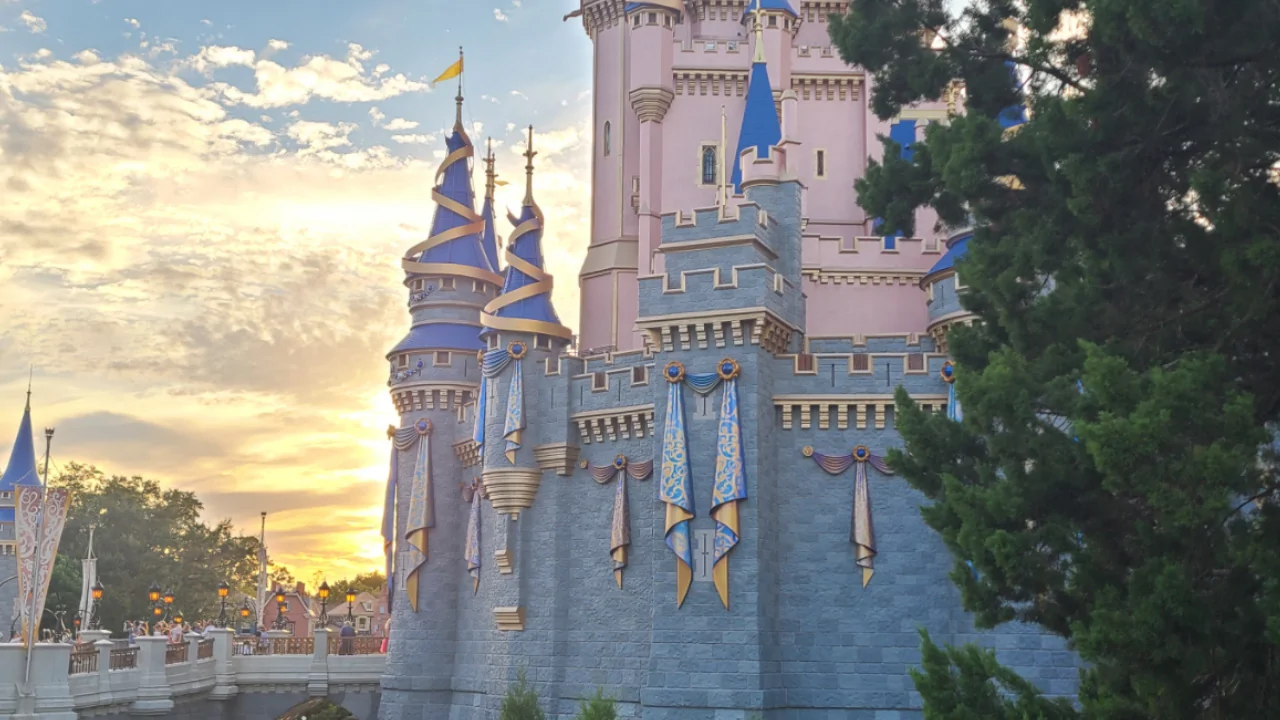
Cinderella Castle in Walt Disney World at Dusk looking into Liberty Square – Photo Credit: M. Montanaro
READ: Little Red, Animatronic Baby Elephant, Returns to Disney’s Animal Kingdom
By far, Walt Disney World is the most profitable and successful asset in all of Disney’s quiver. It’s not close.
That matters because Disney, for all its talk about streaming and franchises, still depends heavily on experiences for hard cash generation. The movie business is volatile.
Television is under structural pressure. Streaming has improved, but it remains a more contested and less durable business than the company’s destination resorts. Parks, by contrast, produce recurring, monetizable demand with pricing power across tickets, Lightning Lane-style line-skipping products, hotels, food, beverages, retail, and vacation packages.
Disney itself has leaned into that reality by announcing plans to dramatically expand investment in the parks business, with a roughly $60 billion capital plan over about 10 years. The reason is obvious: this is the segment that gives Disney ballast.

SPaceship Earth and the EPCOT fountain – Photo Credit: Follow The Bradleys’ Fun
And within that segment, Walt Disney World is uniquely important. Disneyland is iconic, but Walt Disney World is the company’s true vacation kingdom, with four theme parks, resort hotels spread across a giant destination footprint, two water parks, transportation systems, and enough scale to keep families on Disney property for days rather than hours.
A regional-style park visit is one thing. A weeklong Walt Disney World vacation is another thing entirely. The latter extracts far more revenue per household and creates a much deeper emotional association with the Disney brand.
This is exactly why the “Disney World” name should be treated with extreme caution.
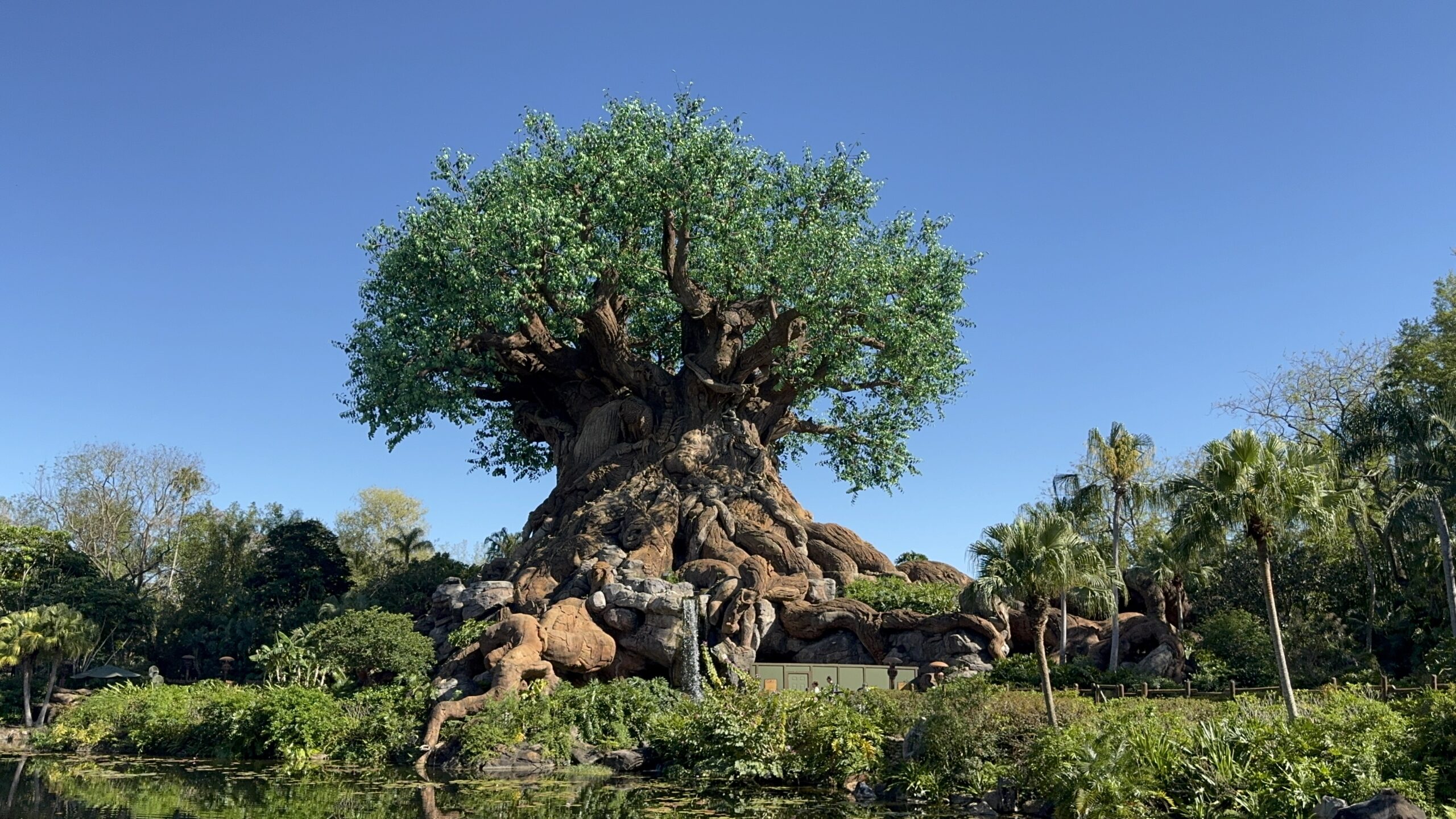
The Tree of Life in Disney’s Animal Kingdom in Walt Disney World – Photo Credit M. Montanaro
“Disney World” is not just a catchy label. It is arguably the most important place-brand Disney owns. It represents scale, permanence, multiday immersion, and a level of control that the company has spent decades building in Florida. It signals to consumers that this is Disney at its biggest, richest, and most complete. That brand equity was not created overnight, and it was not created cheaply. It was built through decades of capital deployment, operational discipline, storytelling consistency, and a physical footprint unlike almost anything else in entertainment.
While the other resorts are regional, Walt Disney World is the global vacation / holiday capitol of the world. Anything that would endanger that concept for the Disney Company is a fool’s errand on mouse-roids.
That is why a new article by Caroline Reid and Christian Sylt is so audacious and unbelievable… yet likely true! It notes that Disney registered disneyworldabudhabi.com before the Abu Dhabi resort was announced, raising the possibility that Disney could attach the “Disney World” name to the new project. It also points out that the Yas Island site is large enough to support a broader resort concept and that Miral and Disney continue to advance the development. Those are real signals, and they understandably invite speculation.
Adding to the chances that Disney takes the gamble? The other theme parks at Abu Dhabi are all named “world”. Sea World, Warner Bros World, Ferrari World.
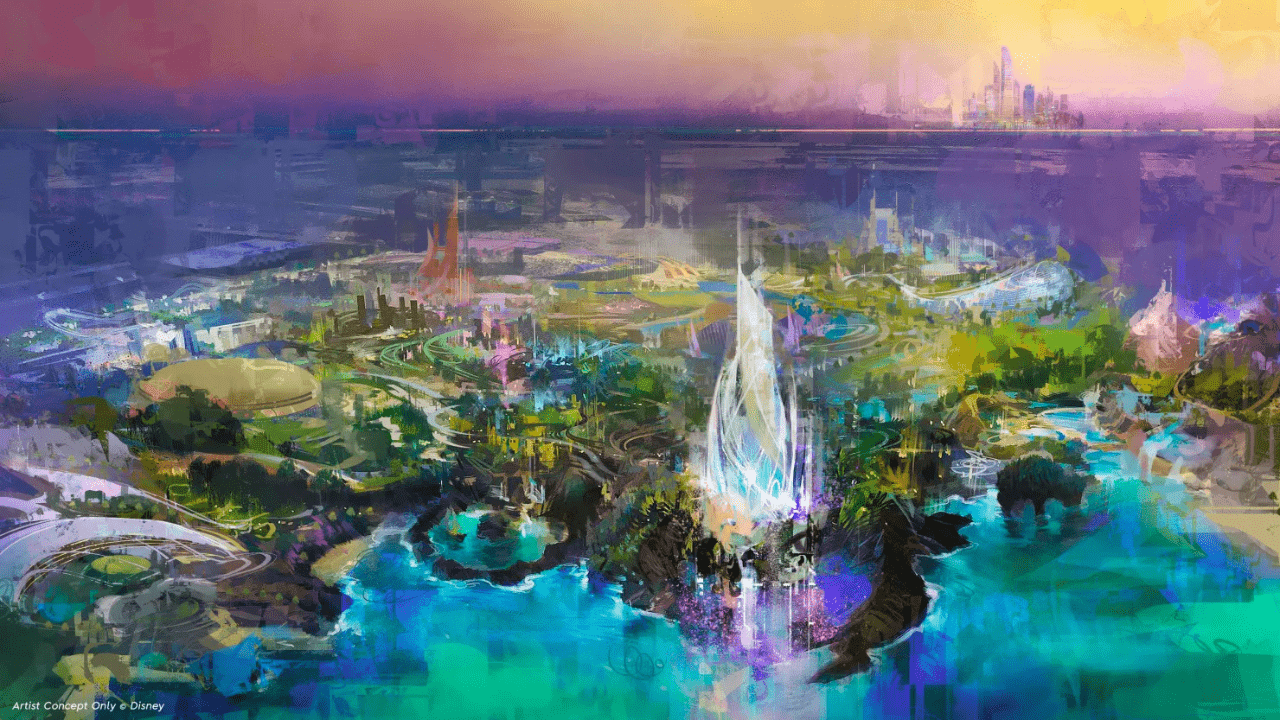
Concept art for the new Disney theme park in Abu Dhabi – Disney
But from a brand management standpoint, using “Disney World” in Abu Dhabi would be an incredible risk. The official structure of the deal is not the same as Walt Disney World in Florida. Disney’s own press release says the Abu Dhabi resort will be fully developed and built by Miral, with Miral operating it as well. Disney will provide creative design leadership and operational oversight, and Disney will earn royalties plus development and management fees. Disney will not provide capital for the development and operation of the resort.
In other words, this is a Disney-branded, fee-based, partner-operated project, not a company-owned flagship on the Florida model. This is a licensee agreement.
That difference is not trivial. It goes to the heart of what consumers think the brand means. When guests hear “Walt Disney World,” they think of Disney ownership, Disney control, Disney standards, Disney infrastructure, Disney transportation, Disney hotels, Disney service, and a generational institution that is inseparable from the company itself. They think of an area twice the size of Manhattan. They think of an entirely different “world” inside America.
If Disney applies a similar name to a resort it does not actually own and is not funding, likely tiny compared even to Disneyland in Anaheim, it risks compressing the distinction between a crown-jewel in-house asset and a licensed overseas development. That may look clever in a boardroom presentation, but it can become messy in the marketplace.
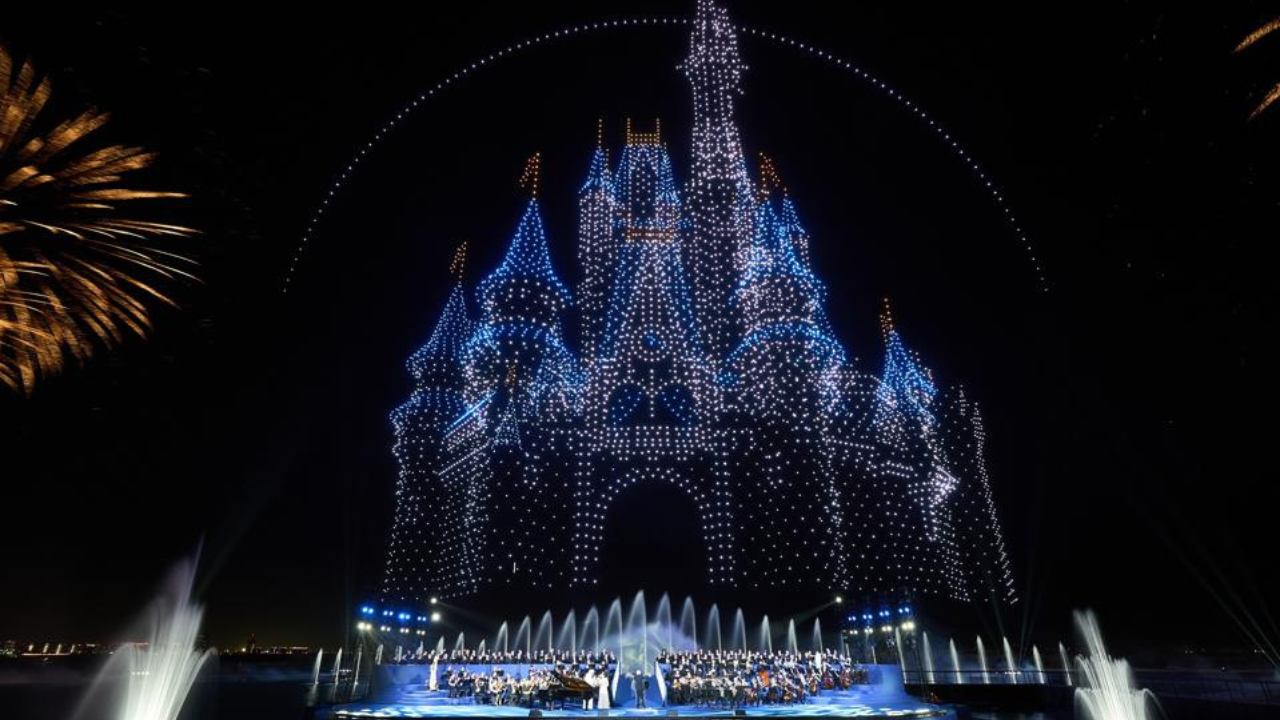
The drone show announcing the Disney Abu Dhabi theme park – Photo Credit: Miral
There are at least three obvious risks.
First, there is dilution risk. If “Disney World” can now mean something Disney does not own and which is largely an indoor park one-percent the size of the resort in Florida, the term becomes less precise and therefore less powerful.
Second, there is control risk. Even with Disney oversight, a resort run by a third party is still not the same as a resort operated inside Disney’s own corporate system. If there are service issues, pricing controversies, or guest experience problems, the average consumer will not say, “Well, technically Miral operates it.” They will say Disney failed. They will say “a Disney World failed.”
Third, there is comparison risk. The Florida resort will inevitably become the benchmark, and if Abu Dhabi is smaller, more limited, or structurally different, the name itself may generate expectations the project cannot or should not try to meet.
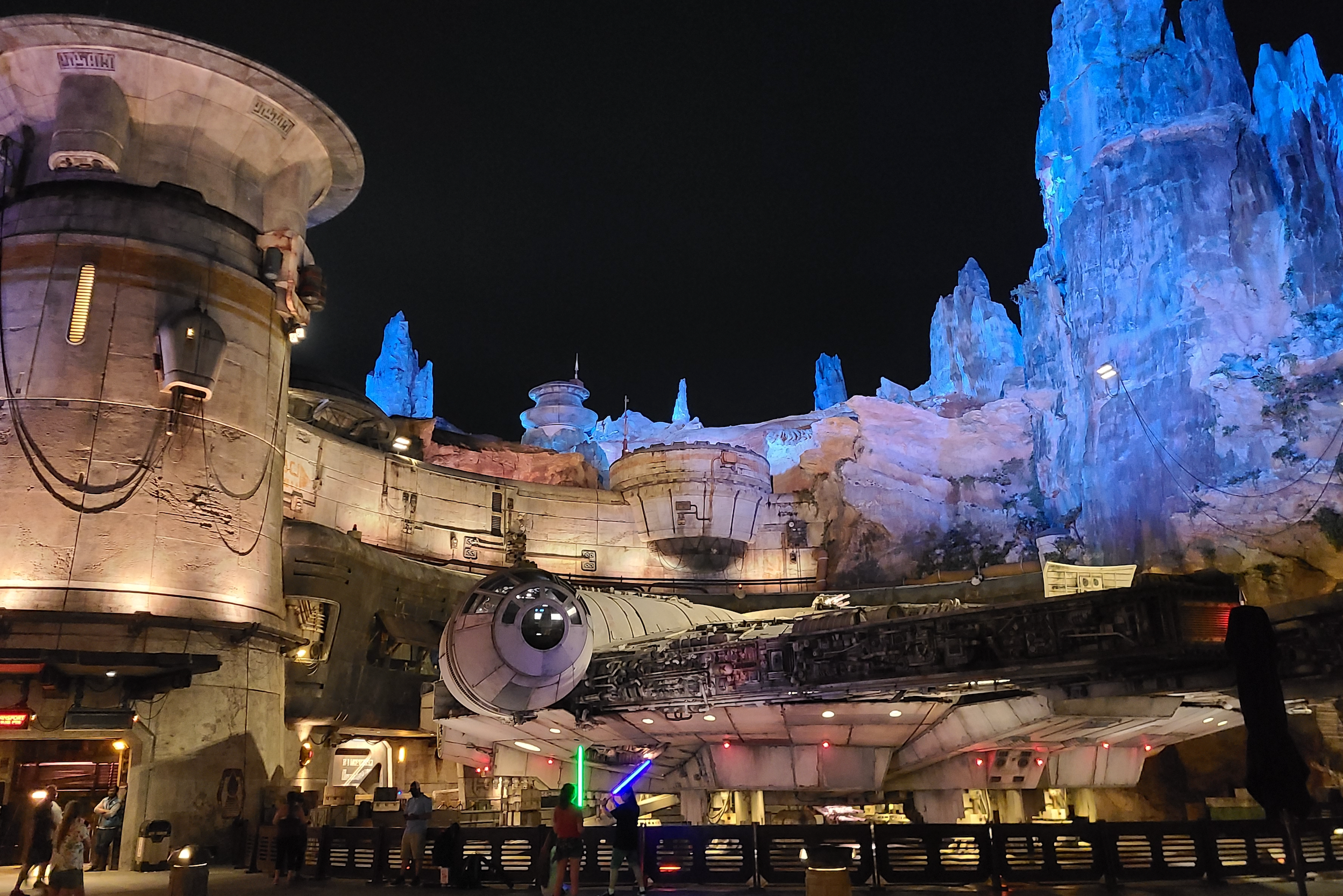
The Millennium Falcon at Star Wars Galaxy’s Edge in Disney’s Hollywood Studios in Walt Disney World – Photo Credit: That Park Place
There is also a strategic contradiction here. Disney has spent years telling investors that its owned Experiences business is a major profit engine worthy of tens of billions in new investment. That argument depends on the idea that Disney’s physical destinations are scarce, premium, and carefully managed. If the company now starts extending its most prestigious resort nomenclature to third-party-operated developments, it risks weakening the very scarcity value that makes the original so powerful. A brand can absolutely travel. Disney has proven that. But not every name should travel equally.
The safer route would be a distinct identity such as “Disneyland Abu Dhabi” or simply “Disney Abu Dhabi,” both of which keep the project clearly within the Disney family without borrowing the full symbolic weight of Walt Disney World. In fact, Disney’s own May 2025 announcement used “Disneyland Abu Dhabi” in Bob Iger’s quote, while the Yas Island project page uses “Disney Abu Dhabi.” That ambiguity may be intentional, and Disney would be wise to keep it that way until it decides whether it values short-term headline impact more than long-term brand discipline.

Space Mountain in Tomorrowland at Disney World’s Magic Kingdom – Photo Credit That Park Place
Because the truth is simple. Walt Disney World is not just another resort name in Disney’s portfolio. It is the company’s most important economic engine and one of its most valuable brand assets. Borrowing that identity for a resort Disney does not truly own may flatter the Abu Dhabi project, but it could also diminish the singularity of the original. And for a company that increasingly relies on its parks to stabilize earnings and justify investor confidence, that would be an unnecessary risk.
