



Disney Parks attendance is plummeting in the summer, but the company’s SEC filings say differently.
It looks like Bob Iger’s Mouse House has a new problem on its hands—and this time, it isn’t streaming losses, theme-park price hikes, or the ongoing decline in audience goodwill. It’s something far more fundamental: its own financial filings no longer match reality.
According to a detailed report by Caroline Reid of Forbes, Disney’s annual filings continue to claim that the Experiences segment—home to the theme parks, cruise line, and consumer products—“generally” sees increased revenue during the first and fourth fiscal quarters. The first quarter boost is accurate. But the fourth quarter?
Not even close.

The hub of the Magic Kingdom in Walt Disney World on Labor Day 2025 – Photo Credit: That Park Place
READ: Star Wars Insider Magazine to be Canceled in 2026
In fact, Disney Parks Summer revenue has repeatedly hit the lowest level of the year, contradicting the exact language Disney continues to publish in its SEC documents. And that mismatch is more than embarrassing—it’s potentially dangerous.
Below is the full breakdown of why this outdated claim could become a real liability for Disney.
1. SEC Could Step in if Filings Misrepresent Trends
Because these statements appear in official SEC filings, the risk isn’t just theoretical. When a company repeatedly publishes language that no longer reflects reality, the SEC has several tools it can deploy.

The empty entrance of Magic Kingdom in Disney World on Labor Day 2025 – Photo Credit: That Park Place
That includes issuing comment letters demanding clarification, requiring amended filings if disclosures are misleading, or even launching a financial reporting review if the inconsistency appears systemic. In the most serious cases, the agency can pursue civil penalties or enforce disclosure-control improvements if investors were misled.
No one is saying Disney has crossed that line. But when outdated boilerplate survives year after year while revenue trends move in the opposite direction, it creates exactly the kind of discrepancy that regulators are designed to investigate.
And for a company as closely watched as Disney, even a basic inquiry would be an unwelcome headline.
2. Disney’s Filings Must Reflect Present-Day Realities—Not Nostalgia From a Previous Decade
Financial statements are legal documents, not marketing copy. When a company continues to include phrasing that is demonstrably outdated—like asserting that fourth-quarter park revenue “generally increases”—it opens the door to questions about accuracy, oversight, and intent.

Main Street USA in Magic Kingdom at Disney World on Labor Day 2025 – Photo Credit: That Park Place
READ: The Game Awards 2025 Announces GOTY Picks as Clair Obscur Dominates the Field
The Forbes analysis shows that in two of the last three years, the fourth quarter produced the lowest revenue of the entire year. The only exception still wasn’t strong enough to justify calling the fourth quarter “generally” higher.
Yet the boilerplate line lives on.
For investors relying on these filings to understand seasonal performance, this is not a minor mistake.
3. It Misleads Investors About the Health and Trajectory of the Experiences Division
The idea that the Disney Experiences summer quarter is strong paints a picture of robust seasonal demand. Reality, however, looks different.
Domestic Parks & Experiences revenue crashed 8.5% between Q3 and Q4 this year. Operating income also collapsed 44.2% in the same period.

The entrance to Magic Kingdom on the opening day of Epic Universe – YouTube, Park Hoppin
The revenue drop was actually double last year’s decline.
Disney’s filings imply stability and seasonal strength that simply aren’t there. That mischaracterization affects everything from investor confidence to long-term projections.
4. It Could Show a Hidden Disney Structural Problem
For decades, summer was Disney’s golden quarter—the period when the parks overflowed with families and the cash registers followed. Now? Caroline Reid’s reporting shows the quarter is consistently the weakest.
That immediately raises two questions corporate leadership does not want to answer:
- Is Universal’s Epic Universe siphoning attendance?
- Has Disney priced out the average family?

The entrance to Super Nintendo World at Night – Photo Credit: NBC Universal
Disney’s CFO Hugh Johnston attempted to downplay the Epic Universe factor on the company’s recent earnings call.
“Demand was, I wouldn’t characterize it as light. It basically came in line with our expectations,” he said. “We’ve talked about Epic in the past, in particular, as something that we knew was going to be a factor in domestic parks, and, in fact, was very much in line with our expectations. If anything, it seems to be, in fact, impacting the rest of the competition down in Florida more that it’s impacting us. From a consumer perspective, we certainly feel good about it.”
The numbers don’t reflect that confidence. And when the filing language contradicts the data, it creates the impression that Disney is playing defense rather than being transparent.
5. Undermines Executive Credibility
Bob Iger and Hugh Johnston are already under pressure from investors who want clearer answers on Disney’s strategy, its spending, and its theme park turnaround.

Bob Iger via New York Times Events YouTube
Leaving inaccurate boilerplate language in the filings signals sloppy financial oversight, outdated internal assumptions, or intentional soft-pedaling of negative trends.
None of those inspire shareholder confidence.
6. Elevates Risk of Future Shareholder Suits
If investors make decisions based on filings that present a rosier picture than the data supports, the company could face complaints, legal action, or pressure to correct prior filings.
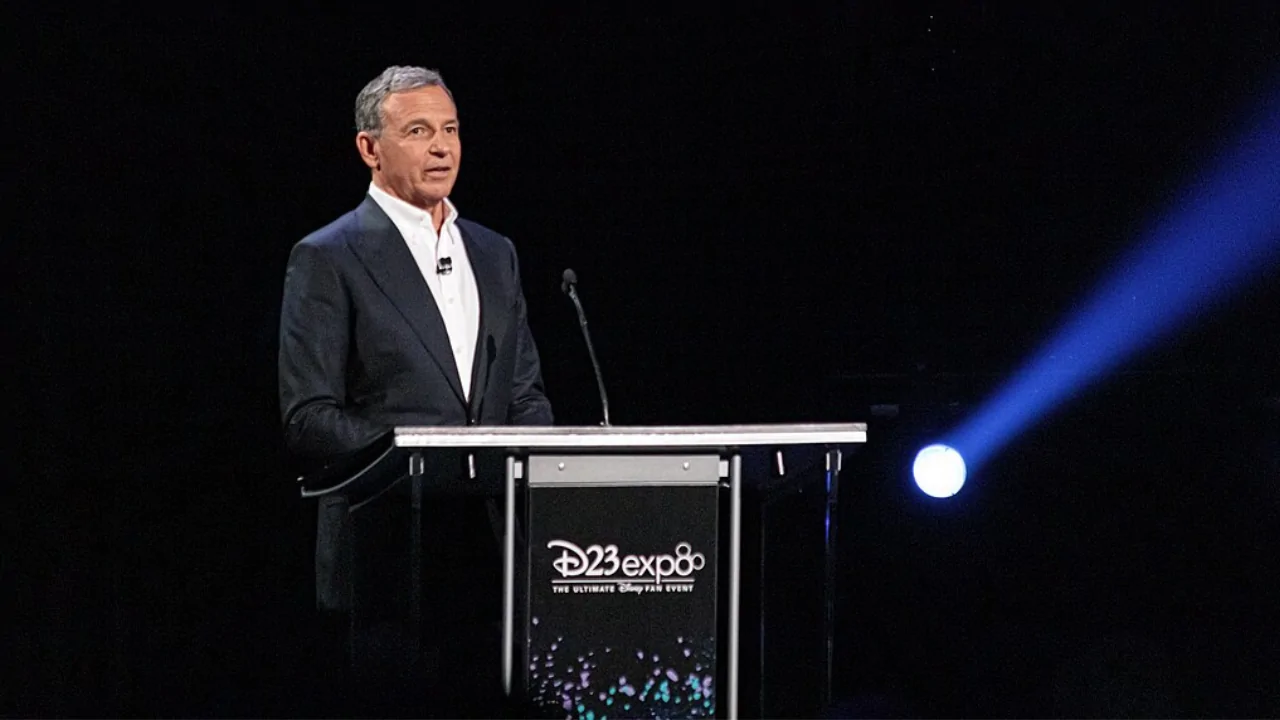
Bob Iger | 2019 Disney Legends Awards Ceremony | D23 EXPO 2019. Photo Credit: nagi usano from Tokyo, Japan, CC BY-SA 2.0 <https://creativecommons.org/licenses/by-sa/2.0>, via Wikimedia Commons
Companies rarely get sued for bad performance. They get sued for portraying performance inaccurately.
This is exactly the kind of mismatch that becomes Exhibit A in a class-action complaint.
7. Refusal to Comment Makes the Problem Worse
Reid contacted Disney for clarification on these potential inaccuracies. Disney declined to comment.

Bob Iger via New York Times Events YouTube
READ: Daniel Radcliffe Sends a Letter to HBO’s New Harry Potter Actor, ‘I Hope You Have the Best Time’
Silence in this scenario is not neutral—it tells investors that the company either has no explanation, is internally conflicted about addressing the issue, or doesn’t want to discuss the topic publicly because the explanation is worse than the silence.
None of those interpretations is reassuring.
8. Internal Reporting May Not Align With Actual Operational Conditions
The most damaging implication isn’t legal or financial. It’s strategic.
If Disney hasn’t corrected this language, one of two things is true.

Dreamer’s Point Walt Disney Statue and Spaceship Earth at Walt Disney World – Photo Credit: Follow The Bradleys’ Fun
Either the company doesn’t know the filings are outdated, which signals disorganization. Or the company knows but chooses to leave it in, which signals intentional spin.
For a company already navigating declining guest satisfaction, increased competition, and major brand-loyalty shifts, this is the last signal it wants to send.
Conclusion
Caroline Reid’s Forbes report reveals far more than a seasonality quirk. It exposes a growing credibility problem inside Disney’s parks division: the Disney Parks Summer quarter is in trouble, and Disney’s filings still pretend it isn’t.

Cinderella Castle peeks above construction walls in the Magic Kingdom at Walt Disney World – Photo Credit: Follow The Bradley’s Fun
With domestic revenue falling, operating income plunging, and Universal’s Epic Universe reshaping the Florida market, the company cannot afford to have its SEC documents contradicted by its own data.
The longer the outdated claim remains in place, the more it appears Disney is clinging to a version of its parks business that simply no longer exists.
