


The following article features opinion analysis of The Walt Disney Company. It should be in no way used or construed as financial advice.
Over the past decade, The Walt Disney Company’s stock performance has presented a rather negative picture for long-term investors, especially when considering inflation and broader market trends. Unlike the torrent of negative articles about Tesla stock after a single quarter of roving crazies scaring customers away, you’re unlikely to find much negative about Disney even after a decade of decline! Even despite the legacy media’s penchant for picking and choosing narratives that suit their needs, it’s pretty astounding that they’ve managed to be un-critical of losing money this long. For example, on April 7, 2015, Disney’s stock closed at $97.06 per share. Fast forward to April 7, 2025, and the stock closed at $82.68 per share. However, this decline of approximately 14.8% does not account for the eroding effects of inflation over the same period. When you consider its impact, the situation gets far worse.
Inflation significantly impacts the real value of investments. Between 2015 and 2025, the U.S. experienced an average annual inflation rate of about 2.97%, culminating in a total inflation of approximately 33.68% over the decade. Adjusting Disney’s 2015 stock price for inflation, $97.06 in 2015 equates to about $129.73 in 2025 dollars. Therefore, the inflation-adjusted decline in Disney’s stock price over this period is roughly 36.3%, indicating a substantial loss in real purchasing power for investors.

Cinderella Castle in Walt Disney World at Magic Kingdom during a clear Orlando day – Photo Credit: M. Montanaro
In contrast, the broader market, as represented by the S&P 500 Index, has shown totally different dynamics. On April 7, 2015, the S&P 500 closed at 2,080.62. By April 7, 2025, the index had risen to 5,611.85. This represents a nominal increase of approximately 169.7%. After adjusting for the same 33.68% inflation over the decade, the real growth of the S&P 500 stands at about 102%, effectively doubling the purchasing power of an investment in the index.
These figures underscore the importance of considering both nominal returns and inflation when evaluating long-term investments. Disney’s stock not only declined in nominal terms but also suffered a significant reduction in real value when adjusted for inflation. Conversely, the S&P 500 provided substantial real growth, highlighting the potential benefits of diversified investments in broad market indices.
Disney stock has cratered over the weekend, dipping below $80 for the first time since…. 2014…..
Here’s hoping the Disney comeback over the next decade is utterly magnificent. There’s no limit to what they can achieve if they fully invest in and trust their creatives 🙌🏼🙌🏼🙌🏼 pic.twitter.com/fnJ8ZHtfHP
— Wallin Ballin (@wallin_ballin) April 7, 2025
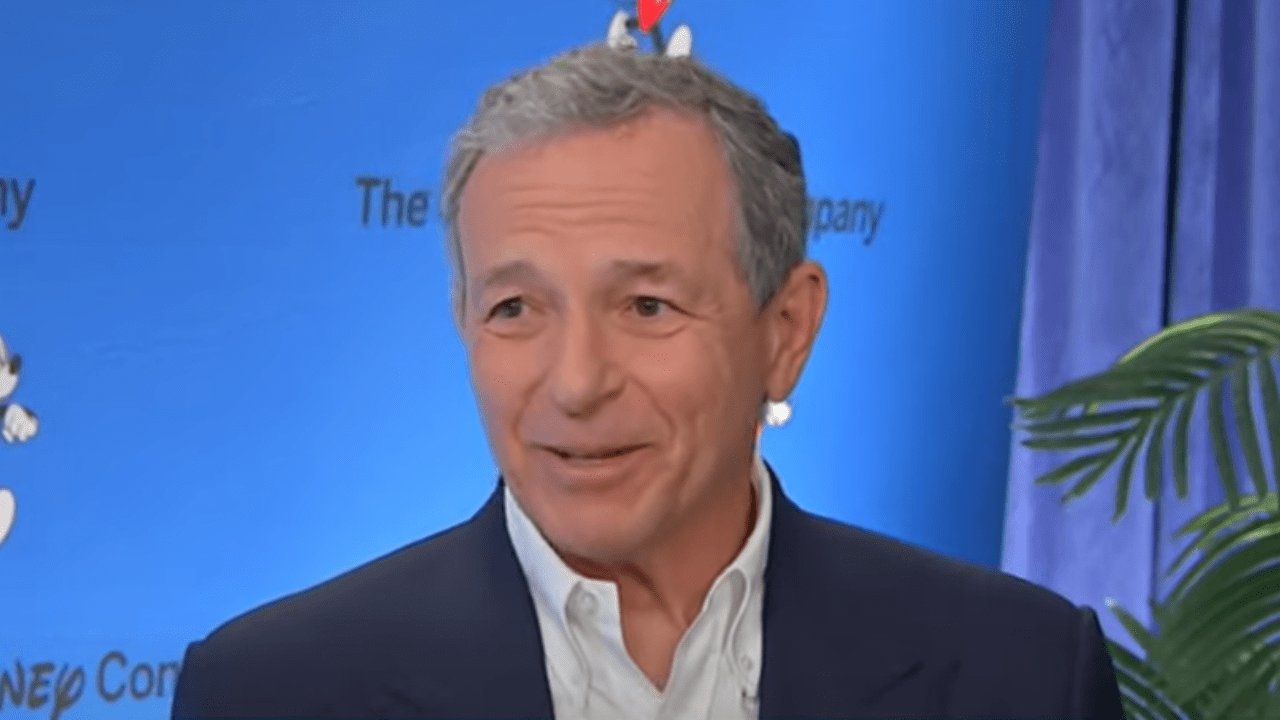
Several factors have influenced Disney’s stock performance over the past decade. The company faced challenges such as shifts in consumer preferences, disruptions in the entertainment industry, and broader economic conditions, including trade tensions and tariff policies. For instance, in early 2025, escalating tariff disputes under the Trump administration contributed to market volatility, impacting companies with significant international exposure like Disney. However, even when we remove the volatility of the tariffs, we don’t find Disney gaining much ground except for a period of time between 2020-2022 when Bob Chapek was CEO of Disney instead of Bob Iger.
In summary, a decade-long investment in Disney, when adjusted for inflation, resulted in a notable loss of real value. In contrast, an equivalent investment in the S&P 500 yielded significant real gains. This comparison highlights the critical role of diversification and the impact of macroeconomic factors on individual stock performance. As for the House of Mouse, Bob Iger certainly has his work cut out for him in rebounding the stock. Given that he’ll be cutting a rug somewhere else soon with a replacement CEO on the way (again), there’s not much time to do it and save his legacy.
