



The Walt Disney Company released its fiscal third-quarter earnings for 2025 on August 6th, revealing impressive growth in its Experiences division, which encompasses theme parks, resorts, cruise lines, and consumer products. Of course, Disney failed to draw attention to declining attendance and massive price hikes that far exceed the rate of inflation.
The segment reported $9.086 billion in revenue, marking an 8% increase from $8.386 billion in the same quarter last year. Operating income also climbed 13% to $2.516 billion, driven primarily by strong performance at domestic parks and the Disney Cruise Line.
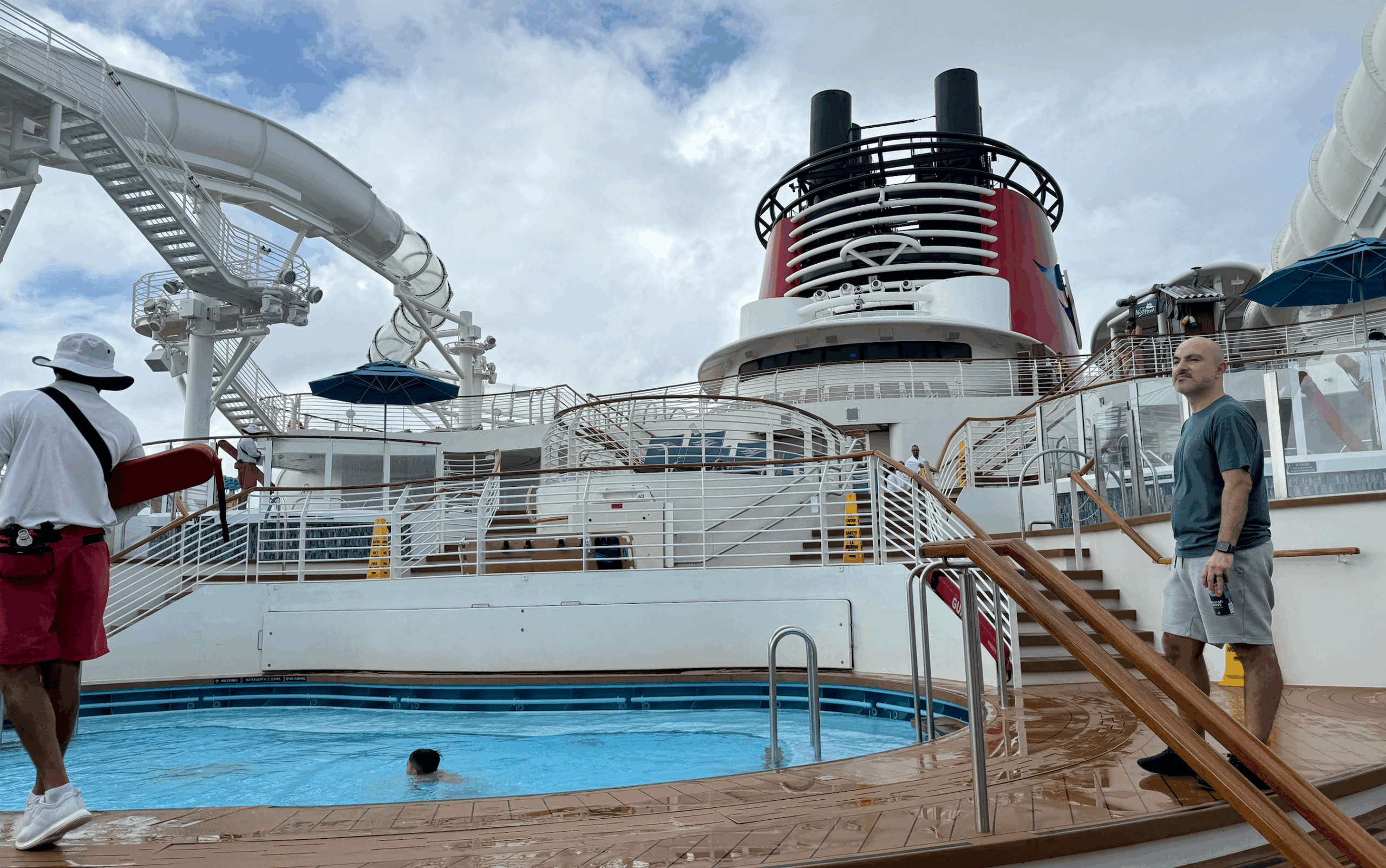
One of the pools on the deck of the Disney Wish Cruise Ship – Photo Credit: M. Montanaro
Domestically, parks and experiences generated $6.403 billion in revenue, up 10% year-over-year, with operating income surging 22% to $1.650 billion. This growth was attributed to higher guest spending at theme parks and increased volumes from passenger cruise days and occupied room nights, bolstered by the recent launch of the Disney Treasure ship.
International Disney theme parks saw more modest revenue growth of 6% to $1.691 billion, though operating income dipped 3% to $422 million, reflecting some challenges abroad. Consumer products contributed $992 million in revenue, a 3% rise.

The Train Station at Main Street USA
Overall company revenue rose 2% to $23.7 billion, with diluted earnings per share jumping to $2.92 from $1.43 in the prior year.
CEO Bob Iger highlighted the company’s ongoing expansions, noting, “We have more expansions underway around the world in our parks and experiences than at any other time in our history. With ambitious plans ahead for all our businesses, we’re not done building, and we are excited for Disney’s future.”
Highlights from the Earnings: Focus on Growth and Expansions
Disney’s report emphasized positive drivers, including a $40 million benefit from the Easter holiday timing and higher per-guest spending at theme parks.

The Dapper Dans on Main Street USA in Walt Disney World – Photo Credit: That Park Place
The company celebrated milestones like Disneyland’s 70th anniversary and Hong Kong Disneyland’s 20th, with celebrations drawing strong guest reception. Expansions are in progress at every global theme park, such as a new World of Frozen land at Disneyland Paris in 2026, Villains and Cars-themed areas at Magic Kingdom, a Monsters, Inc. zone at Disney’s Hollywood Studios, and an Avatar-themed destination at Disney California Adventure.
A new theme park is also planned for Abu Dhabi.
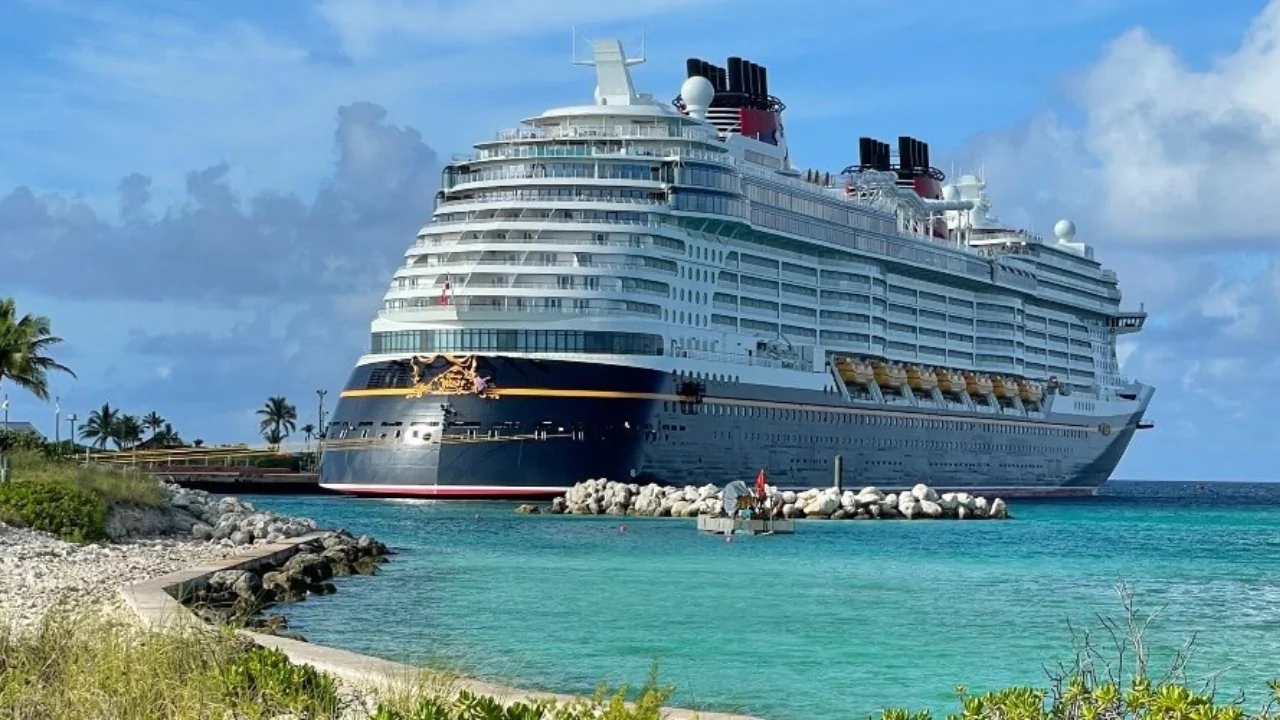
The Disney Wish cruise ship docked at Castaway Cay – Photo Credit: M. Montanaro
The Disney Cruise Line is expanding rapidly, with the Disney Destiny launching in November 2025 and the Disney Adventure—Disney’s largest ship—set for its Asian homeport debut soon after. The Disney Treasure, launched last year, has performed strongly.
These initiatives demonstrate Disney’s strategy to diversify and grow its experiences portfolio amid broader company efforts, including streaming enhancements like the ESPN direct-to-consumer service and Hulu integration into Disney+.
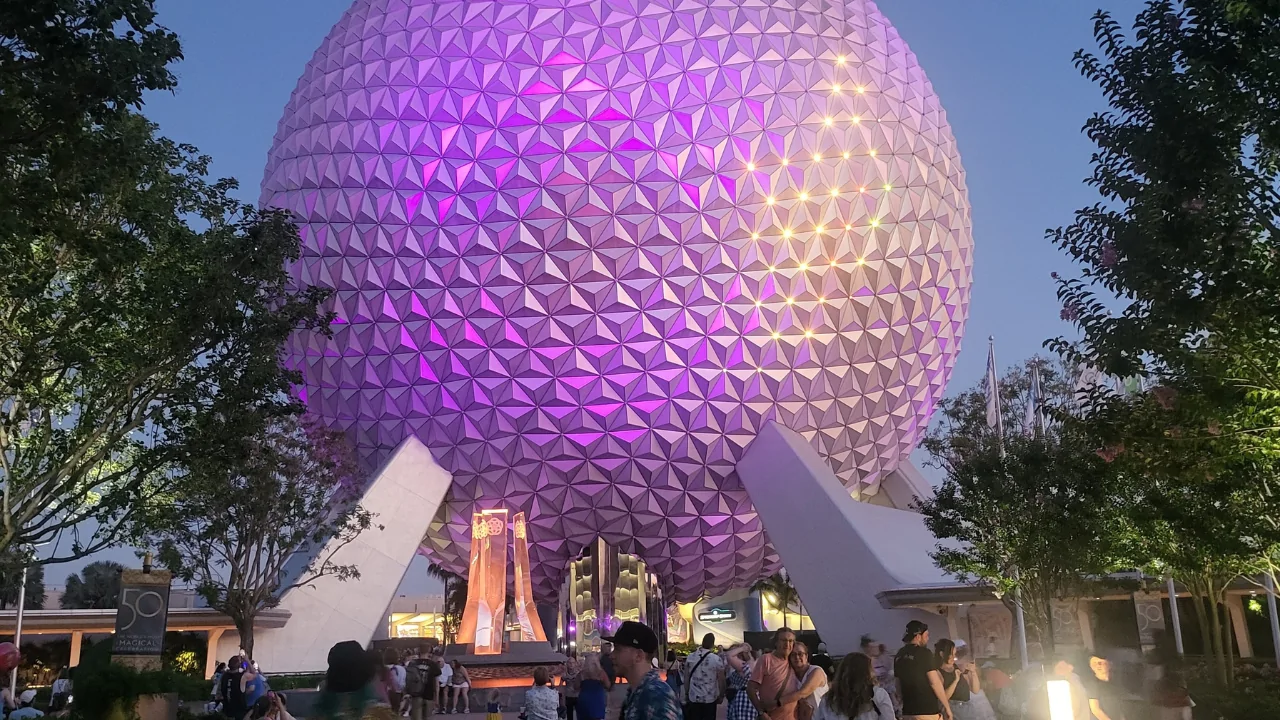
Spaceship Earth in the evening in EPCOT at Walt Disney World – Photo Credit: Marvin Montanaro
For the nine months ending June 28, 2025, the Experiences segment achieved $27.4 billion in revenue and $8.1 billion in income, up 6% and 7% respectively from the prior year.
Of course, that doesn’t tell the full story…
Attendance Concerns: A Quiet Summer at Walt Disney World?
While the earnings spotlight revenue gains, notably absent was detailed discussion of theme park attendance figures—a metric Disney has historically referenced but omitted here.
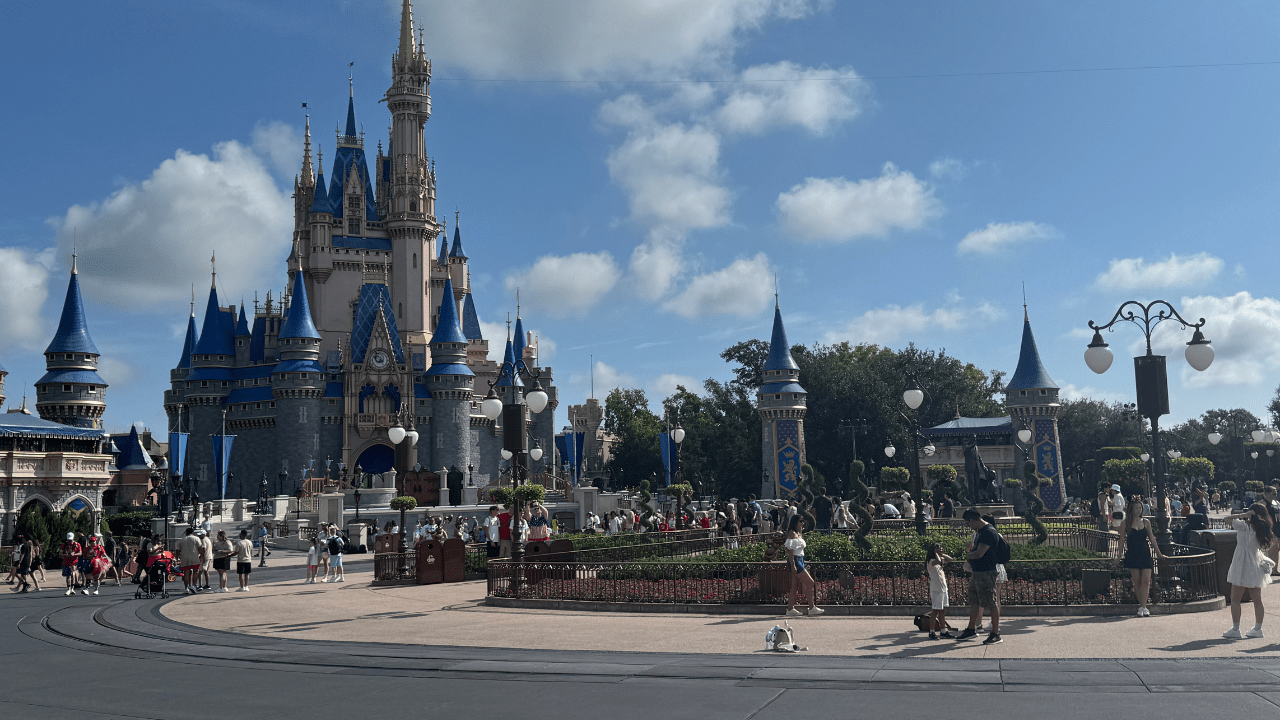
The Cinderella Castle Hub in Walt Disney World on the Fourth of July 2025 – Photo Credit: That Park Place
This omission has fueled speculation, particularly given reports of unusually low crowds at Walt Disney World during the summer of 2025.
Data from crowd trackers and analysts paint a picture of subdued visitation. June 2025 marked the slowest month of the year, with average wait times at 31 minutes and crowd levels averaging 2/10. Some stretches, like June 12-15, saw wait times drop to 22 minutes and crowds at a mere 1/10.
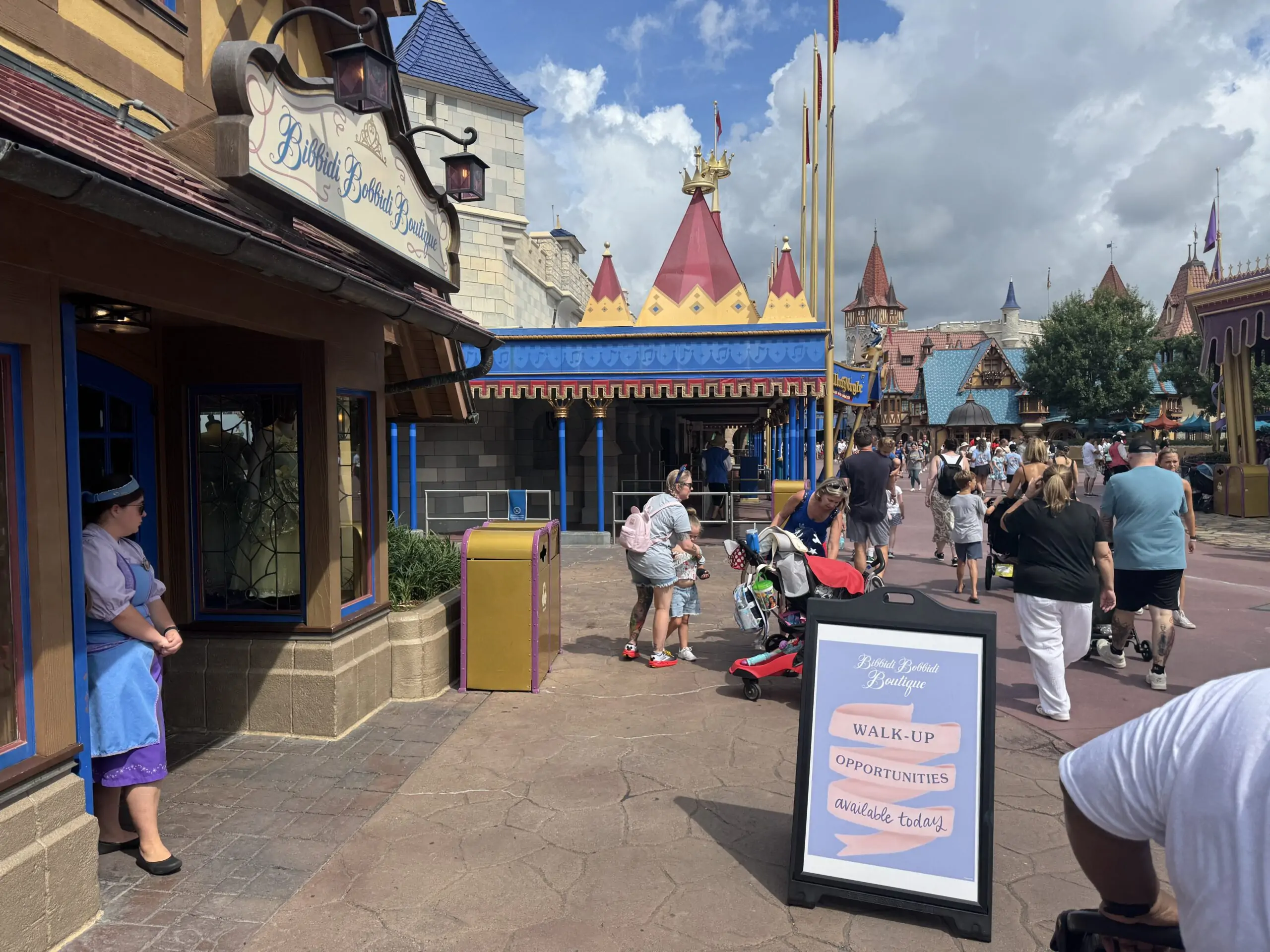
The Bibbidi Bobbidi Boutique in Walt Disney World with a sign welcoming walk-ins on July 4, 2025 – Photo Credit: That Park Place
This trend continued into July and August, with mid-July described as “shockingly low” and August projected as one of the lightest periods annually. Compared to pre-lockdown peaks in 2018-2019, summer attendance has declined steadily over the past decade, with 2025 showing further softening.
Speaking of knowing things Disney opened to a almost completely empty park on July 4th.
One of the BIGGEST times of the year.
We did warn that Disney will be having problems.
— THE REAL DARK JUDGE (@ROYALMRBADNEWS) July 7, 2025
Public sentiment on social media echoes these observations. Posts described Walt Disney World as “empty” on July 4th—one of the busiest holidays historically—with attendance plunging to “historic lows.”
Analysts and visitors alike noted parks operating at around 30% capacity, with July seeing 78% of park-days below predicted crowds.

Fantasyland sits nearly empty in Walt Disney World on July 4, 2025 – Photo Credit: That Park Place
Several factors may contribute to this slowdown. Economic pressures, including consumer stress from inflation, have prompted aggressive temporary discounting by Disney (amid broader price hikes), making July 2025 one of the cheapest travel periods since 2019.
International tourism has declined slightly (1-1.5%), with sharp drops from Canada due to geopolitical concerns and a strong U.S. dollar. Additionally, shorter park hours and a lack of special summer events may have reduced appeal.
Disney’s own strategies, such as charging for previously free perks, have been cited by locals and experts as potential turn-offs.
Walt wisdom “If they ever (guests) stop coming, it’ll cost ten times that much to get ‘em back.” Seems like the situation at Disney World. As a local, I can verify that attendance this summer is off. How to turn off guests? Start charging for things that used to be free. pic.twitter.com/E5zHlgpCGb
— LikeaMouseTips-Disney inspired consulting-keynotes (@LikeaMouseTips) July 31, 2025
As one observer noted, quoting Walt Disney himself: “If they ever stop coming, it’ll cost ten times that much to get ‘em back.”
Pricing Power: Offsetting Attendance with Higher Per-Guest Spending?
The revenue bump despite potential attendance softness points to Disney’s reliance on increased per capita spending. The earnings explicitly credited “higher spending at our theme parks” for domestic growth. This aligns with a pattern of ticket price hikes that have outpaced inflation.

The statue of Walt Disney in Dreamer’s Point in EPCOT at Walt Disney World – Photo Credit: Marvin Montanaro
For 2025, one-day, one-park tickets ranged from $119 to $199. Looking ahead to 2026, prices are set to rise further, with increases of $10-$30 for single-day tickets and park-hoppers. Months like January ($149+ to $169+) and October ($159+ to $179+) see widespread hikes, while summer months like July ($149+ to $164+) and August ($119+ to $159+) have more stable or even decreasing prices on select days to boost off-peak visits.
Annual passes increased by up to $100 in late 2024.
Comparisons highlight the escalation. A family’s eight-day ticket package rose 55% from $1,932 in 2020 to $2,998 in 2025. Disneyland tickets breached the $200 barrier in 2024, with multi-day options up $20-$25.
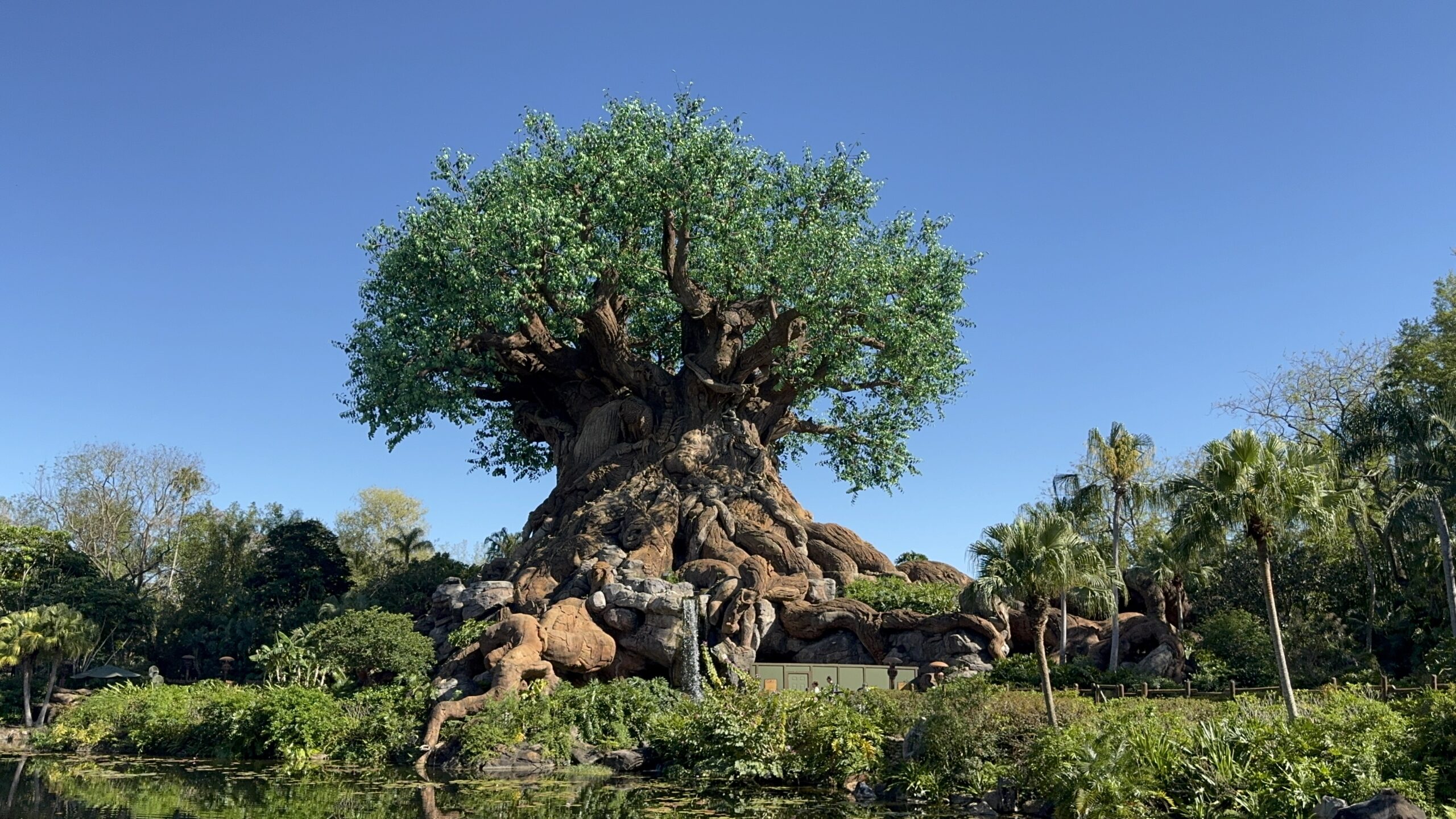
The Tree of Life in Disney’s Animal Kingdom in Walt Disney World – Photo Credit M. Montanaro
These adjustments, combined with upcharges for Genie+, dining, and merchandise, appear to compensate for lower headcounts, supporting the 22% domestic operating income growth.
Critics argue this strategy risks alienating budget-conscious families, especially amid economic headwinds. However, Disney maintains that pricing reflects value from new offerings and experiences.
Looking Ahead: Balancing Growth and Challenges
Disney’s Experiences division remains one of the company’s most profitable areas. Yet, the summer 2025 attendance dip—evident in data, social buzz, and analyst reports—suggests vulnerabilities. If revenue gains stem largely from price increases rather than volume, long-term sustainability could be tested.
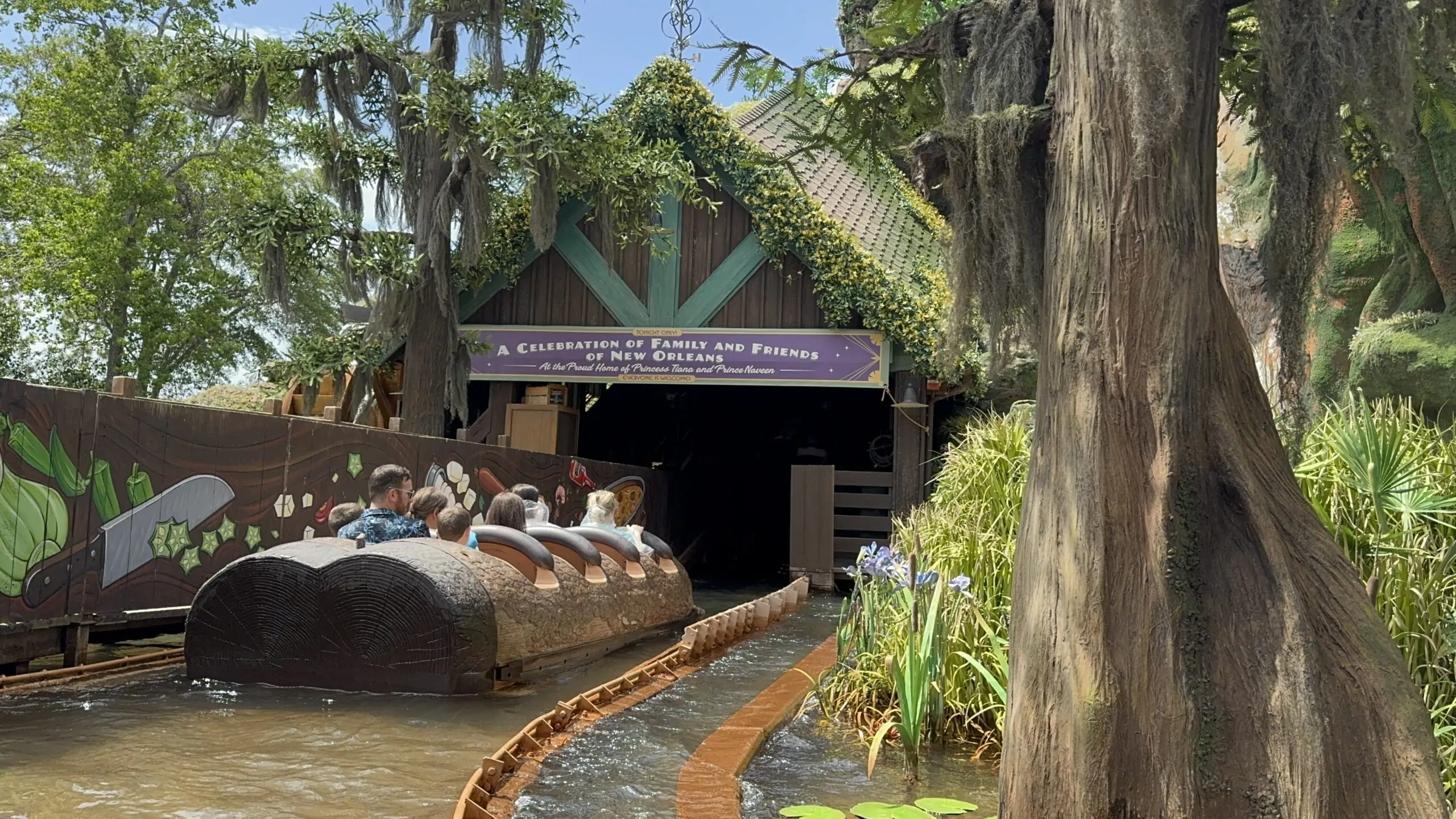
The exterior of Tiana’s Bayou Adventure in Walt Disney World – Photo Credit: M. Montanaro
As Iger stated, Disney is “taking major steps forward” across its portfolio. With new attractions, cruises, and streaming integrations on the horizon, the company aims to reignite guest enthusiasm.
For now, the $9 billion milestone shows resilience, but addressing attendance trends and pricing perceptions will be key to future magic.
What do you think the future holds for Disney theme parks? Sound off in the comments and let us know!
UP NEXT: Disney Admits That Marvel’s ‘Thunderbolts’ and Pixar’s ‘Elio’ Were Flops in Latest Earnings Report
