



Disney keeps telling Wall Street that Walt Disney World is “for everyone.” But for one Ohio family traveling with a two-year-old heart-transplant survivor, the newly overhauled Disney World Disability Access Service turned a milestone trip into a relentless exercise in humiliation, stress, and medical risk.
Instead of making things easier for a child who literally survived organ failure, Disney forced her mother to repeatedly explain — and emotionally relive — her daughter’s near-death experience just to access rides safely.

Space Mountain in Tomorrowland at Disney World’s Magic Kingdom – Photo Credit That Park Place
The story, reported by WDW News Today, is one of the clearest examples yet of how Disney’s 2024 DAS overhaul has crossed the line from stopping abuse into punishing families with legitimate medical needs.
Disney Changed Disability Access — And Families Are Paying the Price
In 2024, Disney radically tightened eligibility for its Disability Access Service at both Walt Disney World and Disneyland. While Disney claimed the changes were meant to prevent abuse of the system, many guests with serious medical conditions have since found themselves denied accommodations.
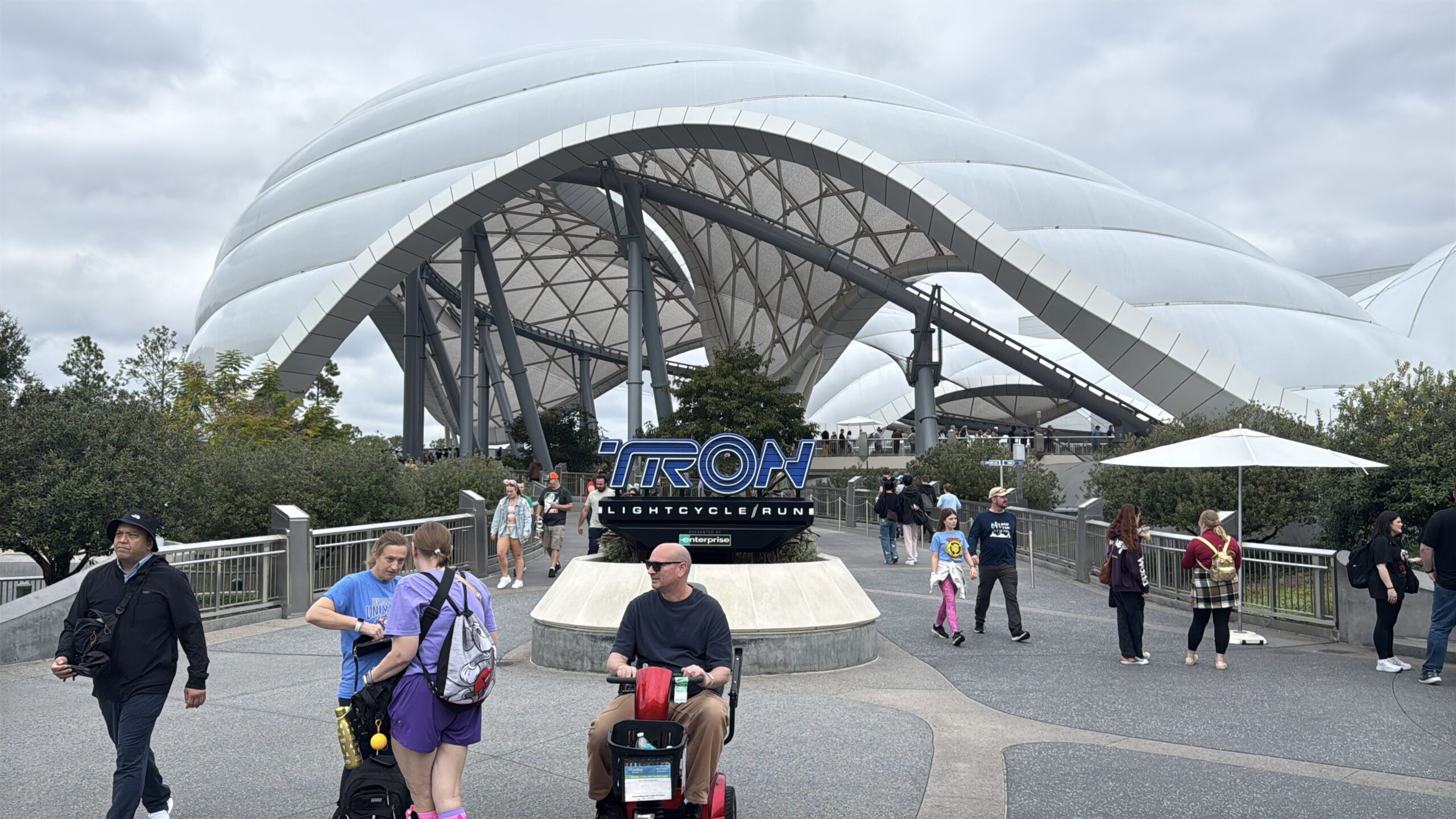
Tron Lightcycle Run in Tomorrowland at Disney World’s Magic Kingdom – Photo Credit That Park Place
The new process requires families to go through high pressure video calls, justify their diagnoses, and rely on cast members to make case-by-case decisions — often without medical training.
For Caitlin, a mother from Ohio, that system failed in the most devastating way possible.
A Two-Year-Old Who Survived a Heart Transplant
Caitlin’s daughter Frankie is not a theoretical edge case. She is a toddler heart-transplant recipient who depends on medication, strict schedules, and protection from crowded, enclosed spaces to stay alive.
Caitlin described the moment her family’s life was saved.
“Eighteen months ago, I stood in a hospital room and prayed for a miracle,” she said. “My daughter’s heart was failing, and we were running out of time. When the call finally came — that a donor heart was available — it felt like the world stopped. We knew another family was losing everything, so ours could have a chance. That is a weight I carry every single day…”
The theater in Better Zoogether at Animal Kingdom in Walt Disney World – Photo Credit: Follow The Bradleys’ Fun
In October 2025, the family took Frankie to Walt Disney World to celebrate her birthday, knowing full well that 18 months earlier, doctors weren’t sure she would ever reach it.
But Disney’s disability system turned that celebration into a trial.
Disney’s DAS Process Forced Caitlin to Beg for Basic Safety
Before their trip, Caitlin applied for Disability Access Service and explained Frankie’s transplant, her immunosuppressed condition, and the medical requirement to avoid long waits in crowded indoor queues.
“This Disney trip – the one we just took – was supposed to be a celebration of survival,” she said. “It wasn’t supposed to feel like a fight. But the new Disability Access Service system turned what should have been a magical experience into a series of hurdles no parent of a medically complex child should ever have to navigate.”
Elsa close up in Frozen Ever After at EPCOT in Walt Disney World – YouTube, 4K WDW
Disney’s response to the family was blunt.
According to Caitlin, the House of Mouse said: “You can wait in the regular line. If she struggles, she can leave and return later when you are closer to the front of the attraction or ask for a return time.”
That suggestion was not just unrealistic — it was medically dangerous. Disney allegedly wanted a two-year-old heart transplant survivor to wait in a line and trigger a potentially dangerous situation before it would provide any kind of meaningful aid.
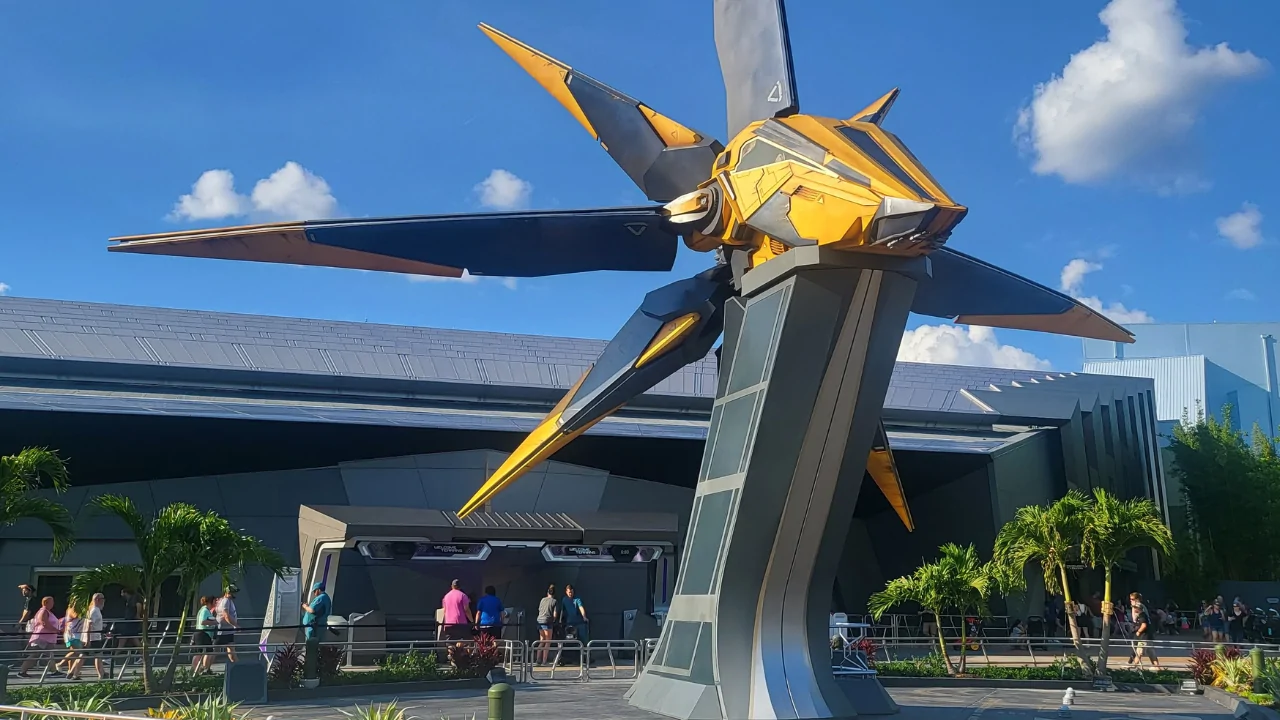
The Exterior of Guardians of the Galaxy Cosmic Rewind in EPCOT at Walt Disney World – Photo Credit: That Park Place
If Frankie missed a medication window, stayed in a packed queue too long, or was forced to exit and re-enter repeatedly, it could put her health at risk.
“Why?” — Being Forced to Re-Live Trauma Over and Over
Inside the parks, Caitlin was told that attraction cast members might offer return times if she explained Frankie’s needs. But instead of relief, she encountered the same question again and again: Why?
Caitlin explained what she was forced to repeat her family’s worst nightmare to strangers all day long.
“I have a two-year-old who had a heart transplant… she’s immunosuppressed,” she explained over and over again. “She can’t stay in crowded lines… we need to minimize exposure… she’s non-verbal… she takes medication throughout the day…”

Spaceship Earth in Walt Disney World at night – Photo Credit: That Park Place
And every time she said it, the emotional toll deepened.
“Every time I said the words ‘heart transplant,’ I felt the ground shift beneath me, tears filling my eyes — the same way it did the day we almost lost her shortly after she was born,” Caitlin recalled. “Trauma lives in your body. And reliving it 20+ times a day is a special kind of exhaustion.”
Some cast members tried to help. Others seemed unsure. Many suggested waiting in line anyway — forcing the family to leave again and again when it became unsafe.
Disney’s System Forced the Family to Pay for Safety
With no meaningful DAS support, Caitlin and her family had no choice but to purchase Lightning Lane Multi Pass just to avoid the most dangerous queues.
“We needed to secure some way of avoiding the longest, most crowded queues — especially indoors,” she said.
That came at a steep, unexpected cost.
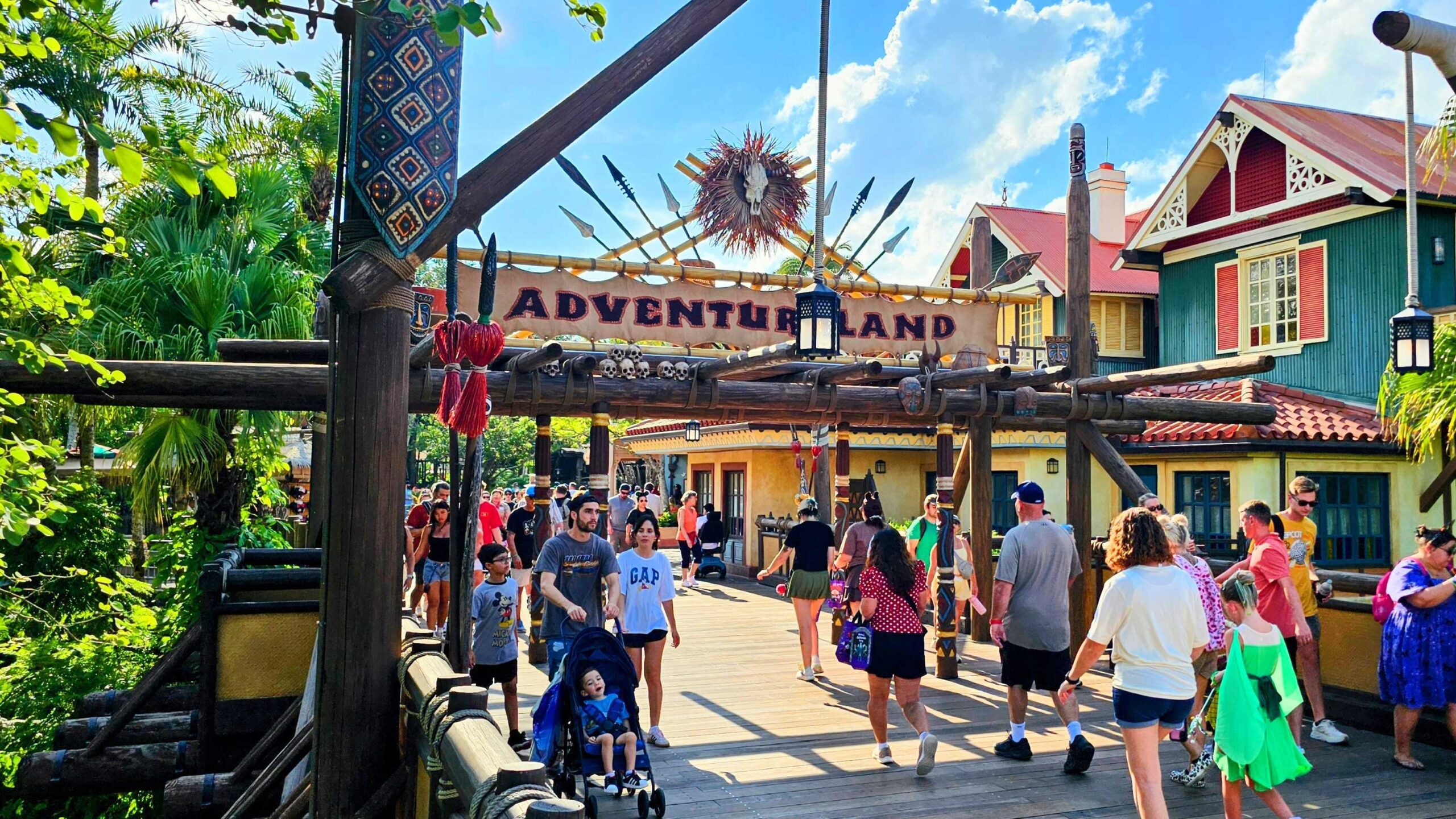
The new Adventureland Sign in the Magic Kingdom at Walt Disney World – Photo Credit: Follow The Bradley’s Fun
Caitlin addressed Disney’s justification for tightening the system.
“I’ve heard people say the DAS changes were designed to stop ‘abuse.’ But the system is now punishing families whose needs were never abused in the first place.”
In other words: Disney solved a PR problem by creating a human one.
Making the Best of a Bad Situation
Frankie’s stroller was flagged as a wheelchair, which gave her a protected space and allowed it to be taken into queues — one of the few accommodations that actually worked.
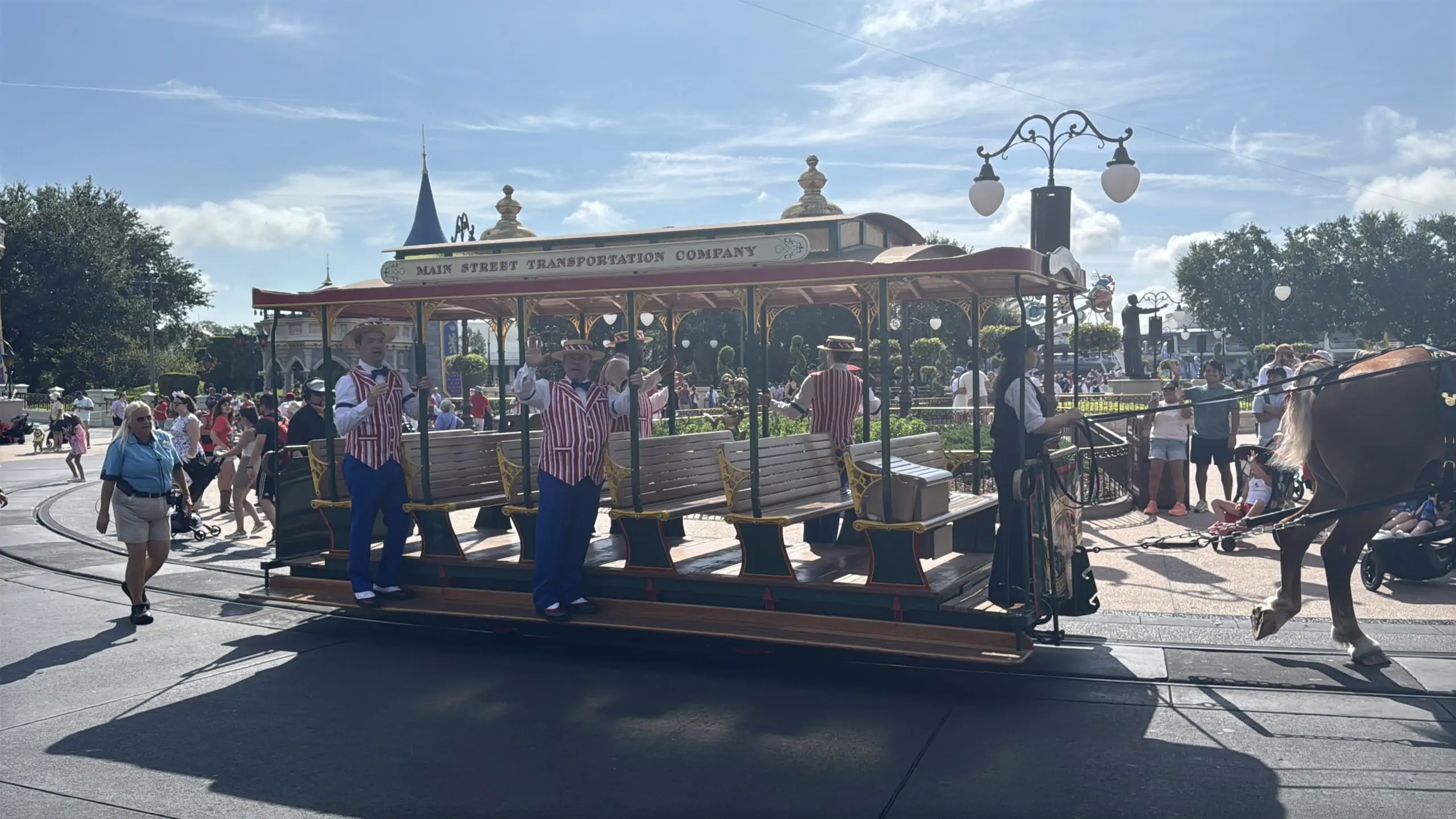
The Dapper Dans on Main Street USA in Walt Disney World – Photo Credit: That Park Place
Despite everything, the family still tried to create memories.
“We took photos. We laughed. We watched her eyes light up when she saw characters. We celebrated the fact that she is here — that she’s alive – that we get to have these moments at all,” Caitlin recalled.
But none of that erases what Disney put them through.
Disney World Disability Access Is No Longer About Access
The Disney World Disability Access Service was created to help guests who cannot safely wait in standard lines. Today, it has become a bureaucratic obstacle course where families with serious medical needs must justify their existence to ride a theme-park attraction while a massive corporation attempts to upcharge them into an expensive FastPass system.
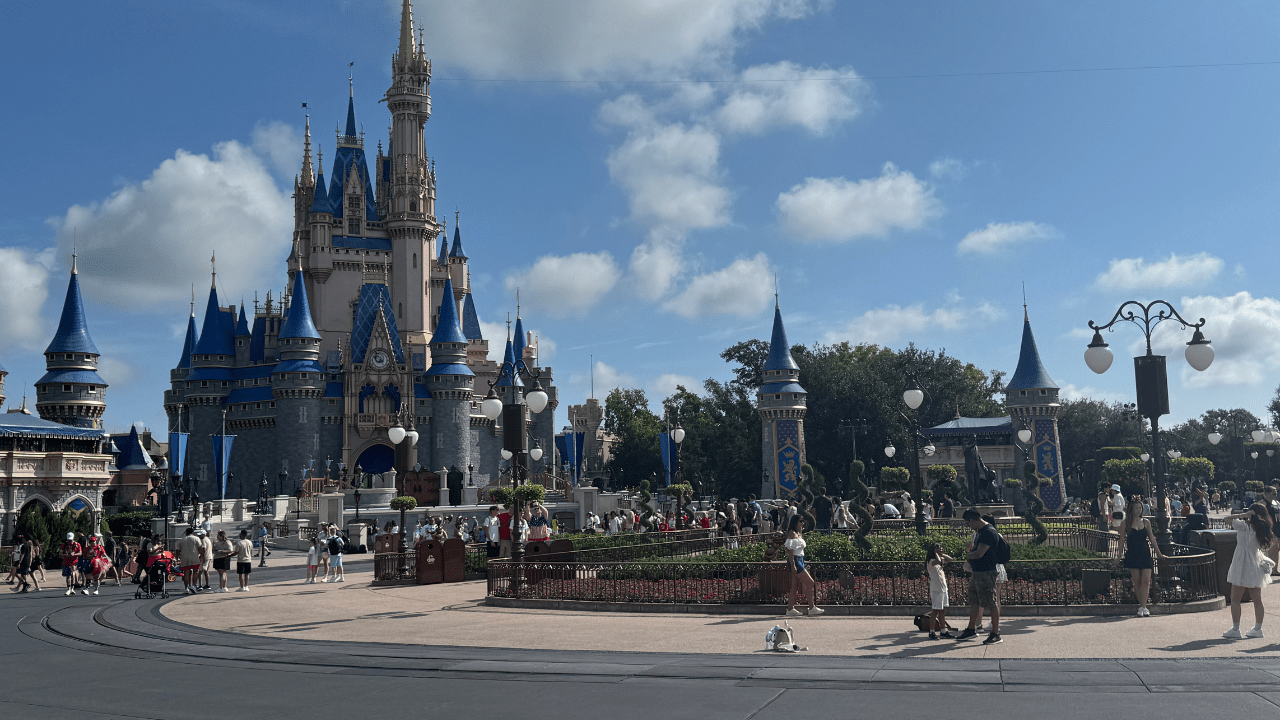
The Cinderella Castle Hub in Walt Disney World on the Fourth of July 2025 – Photo Credit: That Park Place
For a two-year-old heart-transplant survivor, Disney’s system didn’t provide dignity, safety, or compassion.
It provided paperwork, suspicion, and emotional damage.
And that should horrify anyone who still believes Walt Disney World is supposed to be for everyone.
Have you had an issue with the Disney World Disability Access Service? Sound off in the comments and let us know!
