


A recent financial publication bluntly labeled Disney stock a “lost decade,” arguing that shareholders who held Disney for 10 years would have significantly underperformed compared to broader market benchmarks.
At the heart of this critique is the simple fact that Disney’s shares today trade around the same levels as they did in 2015, providing minimal real return to investors over that span.
Benchmark Underperformance
From 2015 to mid‑2025, Disney stock has generated only modest returns. It has barely outpaced cash or locking in minimal gains overall, while the S&P 500 soared by over 170 % in the same period.

The Walt Disney Animatronic in Walt Disney – A Magical Life at Disneyland – YouTube, Attractions Magazine
Over the past decade, Disney ranked among the bottom quartile of S&P companies, delivering approximately 20-30% total return versus nearly 240% for the index. The disparity grows when compared to holdings in Netflix, Apple, or Nvidia, which soared by hundreds of percent in that decade.
Root Causes of the Underperformance
Critics say Disney lost its creative edge, citing poorly performing big‑budget films and ongoing content failures. Its studio division often failed to produce timely or compelling content, and recent releases have underwhelmed in both box‑office and streaming metrics. Meanwhile, Disney+ continued posting losses through 2023, losing roughly 14 cents per dollar of revenue, while Netflix earned approximately 21 cents per dollar.
Disney’s streaming woes turned around somewhat in 2024 through the integration of Hulu and ESPN+ into Disney+.
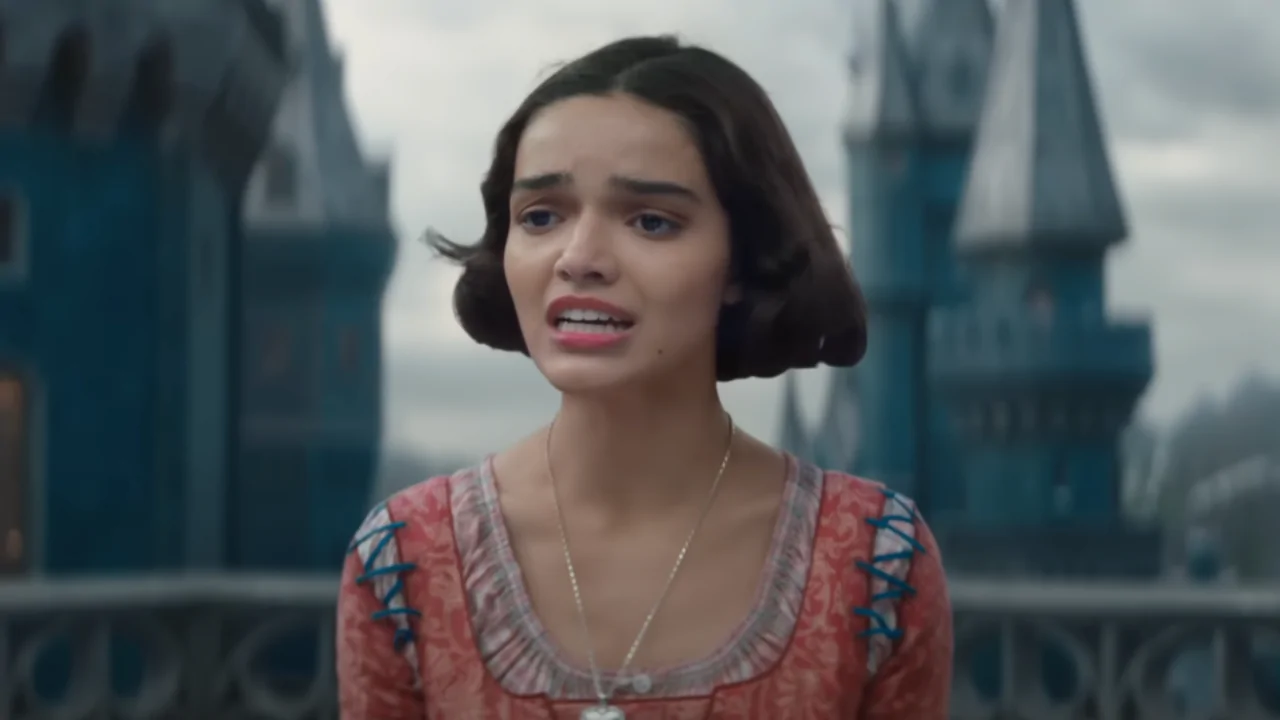
Rachel Zegler singing the original song “Waiting on a Wish” from Disney’s Snow White live action remake – YouTube, Disney
ESPN and Disney’s linear networks have also suffered steep declines as cord‑cutting accelerates. Revenue and operating income from these divisions have dropped sharply, draining this once‑reliable profit engine. Theme parks remain profitable and resilient, but critics note that revenue growth rested heavily on aggressive price increases rather than volume gains. Admission prices rose more than 35% over the decade, leaving questions as to long‑term sustainability.
Leadership and Strategic Concerns
A proxy fight led by activist investor Nelson Peltz spotlighted concerns over governance and creative direction. Though Peltz failed in his bid to win board seats, his campaign showed investor discontent over Disney’s strategic drift.

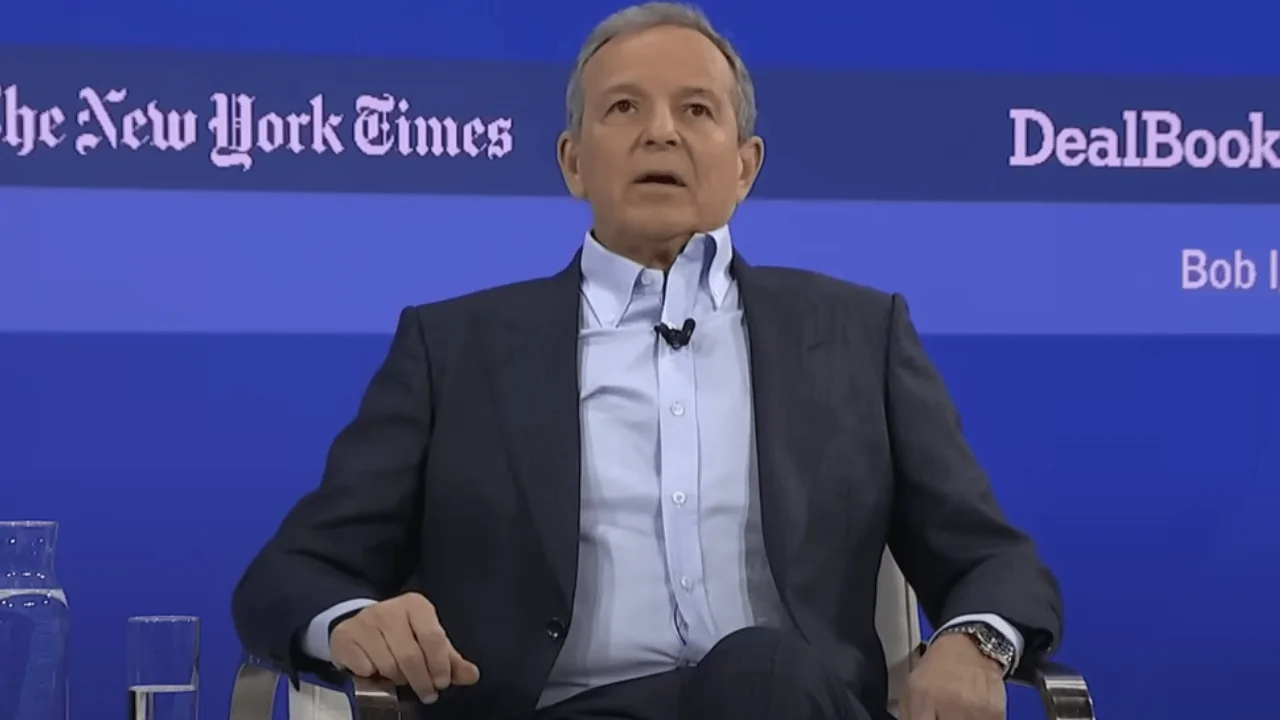
Bob Iger and Nelson Peltz
Meanwhile, Disney disclosed in regulatory filings that it “lost its way,” emphasizing breakdowns in creative workflow, weak streaming strategy, and deferred park investment plans. Critics also flagged ESPN’s escalating rights costs and unclear return profile tied to cord‑cutting trends.
Signs of a Turnaround?
Not everyone agrees this decade was doomed. A recent Barron’s piece called Disney “ready to rally,” after its lost decade, pointing to some recovery in parks and streaming margins, and forecasts showing operating profit rising from $15.6 billion in 2024 to $17.5 billion in 2025. That article also noted that streaming had finally turned profitable and parks generated 59% of total operating profits.

The statue of Walt Disney in Dreamer’s Point in EPCOT at Walt Disney World – Photo Credit: Marvin Montanaro
CEO Bob Iger’s return saw cost‑cutting measures including layoffs and strategic restructuring to refocus on creative leadership. The company posted strong cash flow improvement and regained profitability in streaming by mid‑2024.
Some analysts, however, retain neutral or cautious stances. Macquarie’s Tim Nollen maintained a Hold rating due to persistent ESPN weakness and uncertain streaming returns. Meanwhile, others warned that macro headwinds, elevated valuations, and policy risks may cap upside and drag stock toward $80 if sentiment worsens.
Bottom Line
The phrase “lost decade” reflects a valid comparison: Disney delivered minimal stock gains while the market flourished.
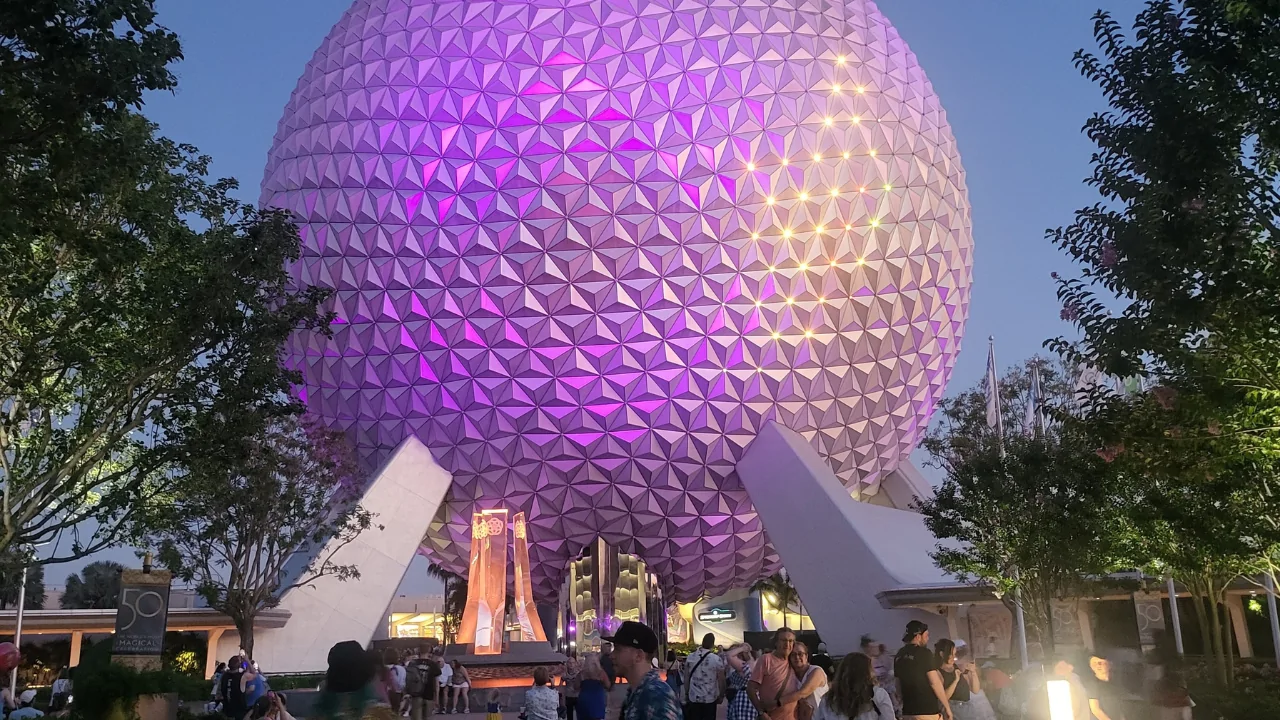
Spaceship Earth in the evening in EPCOT at Walt Disney World – Photo Credit: Marvin Montanaro
That label resonates with shareholders who watched peers outperform by wide margins. Still, emerging signs of recovery and improved discipline under Iger provide cautious optimism. Whether Disney can truly overcome content issues, linear erosion, and large capital outlays in parks remains an open question.
What do you think of the Disney’s “Lost Decade”? Why do you think the House of Mouse has lost its economic magic and can it turn it around? Let us know in the comments!
