


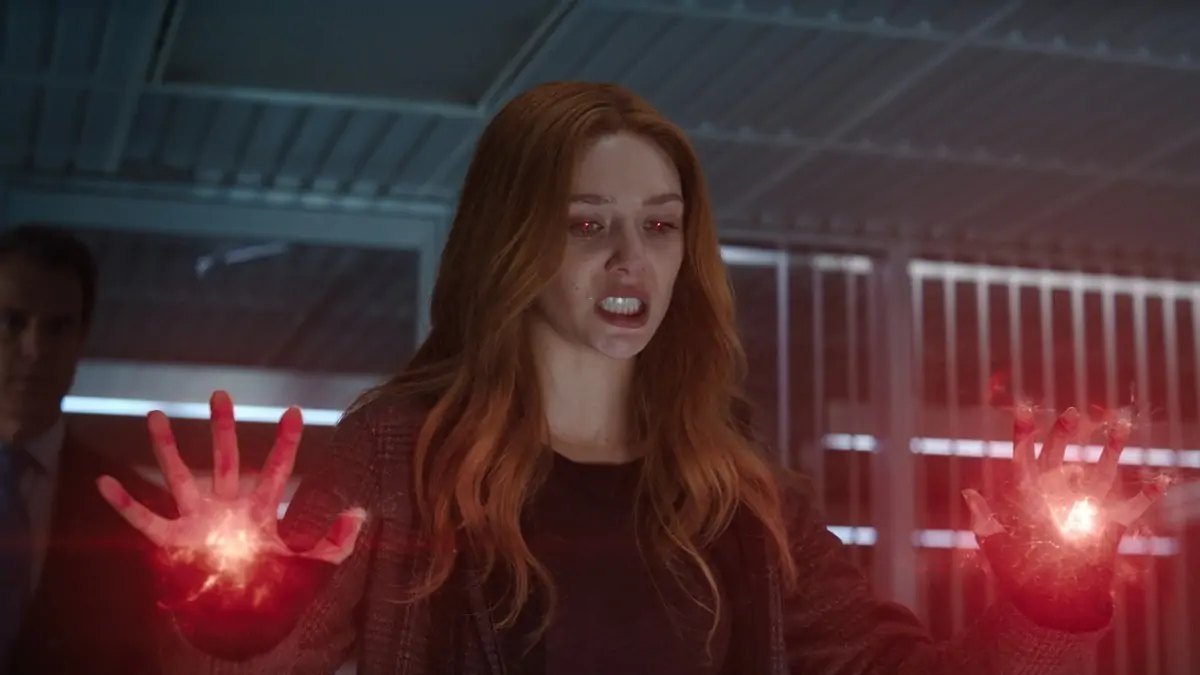
Elizabeth Olsen has come out against direct-to-streaming studio films.
We probably won’t be seeing Elizabeth Olsen in any Netflix-exclusive movies, as the actress recently told InStyle magazine that if a movie isn’t getting a theatrical release, she’ll pass on it.
“If a movie is made independently and only sells to a streamer, then fine. But I don’t want to make something where that’s the end-all,” she said.
Elizabeth Olsen Won’t Act in Studio Movies If There’s No Theatrical Release: ‘I Don’t Want to Make’ Movies Where Streaming Is the ‘End-All’ https://t.co/91FYzHt7Ef
— Variety (@Variety) October 21, 2025
READ: WB Rejected Third Paramount Bid Despite Offer to Keep Zaslav as Co-CEO
With more actors and directors insisting that their work be seen first on the big screen, streaming-focused studios like Netflix may have trouble signing A-list talent unless they’re willing to put movies in theaters.
Olsen Isn’t the First, and She’s Not Alone
Few artists have been as vocal as Christopher Nolan. On December 3, 2020, Nolan broke ties with Warner Bros. over their decision to release all of their 2021 movies simultaneously in theaters and HBO Max.
“Some of our industry’s biggest filmmakers and most important movie stars went to bed the night before thinking they were working for the greatest movie studio and woke up to find out they were working for the worst streaming service,” Nolan said in a statement to The Hollywood Reporter.

Aaron Eckhart as Two-Face in The Dark Knight (2008), Warner Bros. Pictures
Nolan took his next project, Oppenheimer, to Universal Studios, which promised him a 100-day theatrical window.
In 2022, Steven Spielberg told The New York Times that he felt many filmmakers had been thrown “under the bus” by the streaming platforms when their movies weren’t given a theatrical release.
“They were paid off and the films were suddenly relegated to, in this case, HBO Max… And then everything started to change,” he said. The director went on to express his belief that seeing a movie in the cinema with a bunch of strangers can be a magical experience.

Steven Spielberg being interviewed – YouTube, The Late Show With Stephen Colbert
READ: Ubisoft Hits Star Wars: Outlaws Studio Massive Entertainment With Layoffs
It’s a sentiment on streaming-only films that Elizabeth Olsen likely shares.
“I think it’s important for people to gather as a community, to see other humans, be together in a space,” she said. “I think it’s really powerful for people to come together for something that they’re excited about.”
The sense among some of her fellow actors that those powerful moments extend beyond the individual experience. Glen Powell told The Hollywood Reporter last year that when he and Sydney Sweeney were working on their romantic comedy Anyone But You, they had offers from “every streamer,” which would have given them bigger paydays and a bigger budget.
“We said, ‘If we make this on a streamer, it won’t have any cultural impact,’” he admitted.
Is it considered saying the quiet part out loud to claim releasing things straight to streaming has ‘no cultural impact’? Even as movie after movie fails at the box office, streaming is still hard to sell as being as relevant as theaters. https://t.co/TjNaY8KTv3
— Brett Dasovic (@Brettdasovic) May 23, 2024
If there’s a bias toward movies that get a theatrical release as being more significant than those that go straight to streaming, it’s not just audiences who hold it.
“The streamers came in and effed up the industry a bit — for good and for bad. The studios are confused; the streamers are confused,” Channing Tatum recently told Variety. Like Powell, he admits that working with streamers provides more money upfront, but “You’re incentivizing me to go make a subpar movie — a B script, a programmer that isn’t special.”
Channing Tatum on the state of the film industry:
“The streamers came in and effed up the industry a bit — for good and for bad. The studios are confused; the streamers are confused.” He notes that streamers paying better money up front has created a topsy-turvy system of… pic.twitter.com/PNKkdoRg6e
— Variety (@Variety) September 2, 2025
But with studios like Netflix, Amazon Prime Video, and Apple TV+ original films consistently getting Academy Award nominations and wins (after limited theatrical runs to qualify), the executives of those studios are unlikely to share that perspective. By the numbers, the only reason they would need to change from a streaming-first model is if there’s a concerted effort from talent like Elizabeth Olsen forcing a change.
Netflix on Movies and Who Gets the Final Say
At the TIME100 summit in New York last April, Netflix co-CEO Ted Sarandos, noting that box office receipts are trending down, rhetorically asked, “What is the consumer trying to tell us?” before answering: “That they’d like to watch movies at home.”
With a reported 301.6 million global subscribers (as of August 2025), it’s difficult to argue with his logic.
Netflix co-CEO Ted Sarandos says #Barbie and #Oppenheimer would have been just as big on Netflix
“There’s no reason to believe that the movie itself is better in any size of screen for all people. My son’s an editor … he watched ‘Lawrence of Arabia’ on his phone”
(via… pic.twitter.com/jBKUB7EwmL
— Culture Crave 🍿 (@CultureCrave) May 26, 2024
What’s harder to quantify, however, is how the actors making the movies and the audiences who watch them feel about the final product. While Olsen, Spielberg, and others argue that the theatrical experience is an important element in a film reaching its full potential, Sarandos dismisses that.
Addressing the communal act of filmgoing, he said, “I believe it is an outmoded idea, for most people – not for everybody.” He also noted that Netflix provides an important service to those who might be unable to go to a movie theater.
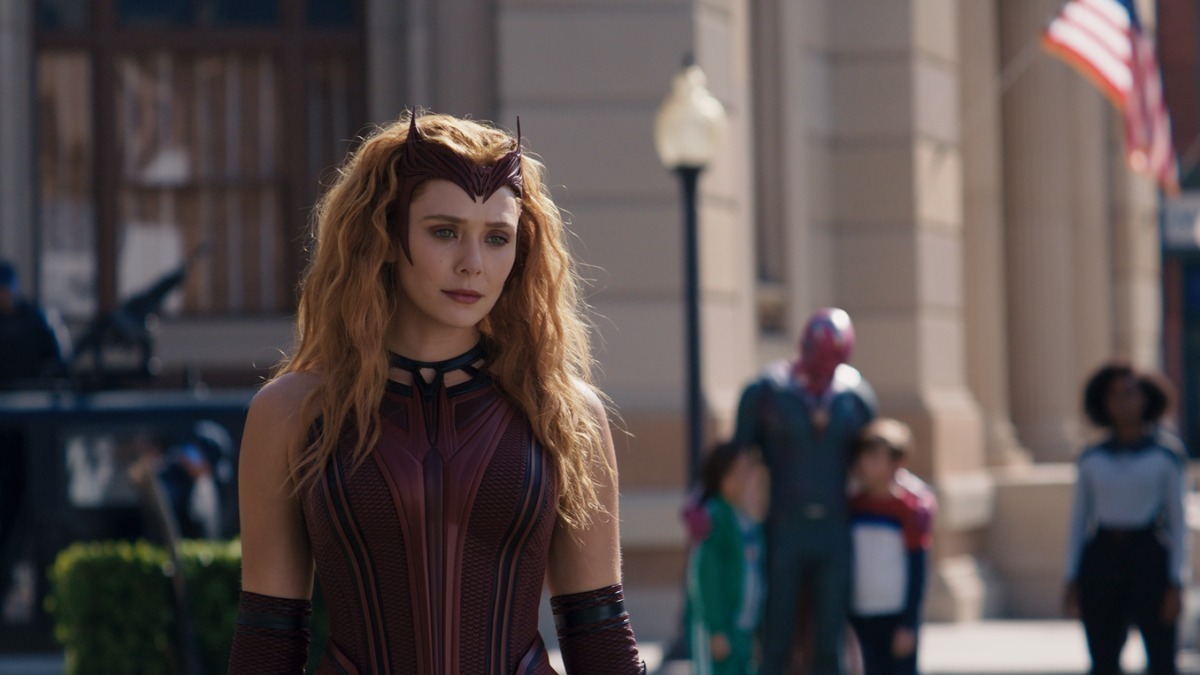
(L-R): Scarlet Witch/Wanda Maximoff (Elizabeth Olsen), Tommy (Jett Klyne), Vision (Paul Bettany), Billy (Julian Hilliard) and Monica Rambeau (Teyonah Parris) in Marvel Studios’ WANDAVISION exclusively on Disney+. Photo courtesy of Marvel Studios. ©Marvel Studios 2021. All Rights Reserved.
Ultimately, while the importance of a theatrical release may be up for debate, the presence of known stars and big-name directors is not. If artists like Olsen hold their ground, it’s possible that executives may be forced to yield or adapt their approach to making and distributing movies.
What do you think? Do you agree with Elizabeth Olsen on streaming movies? Does knowing a movie was in the theater make a difference in your perception? Will Netflix change their tune? Let us know in the comments!
