


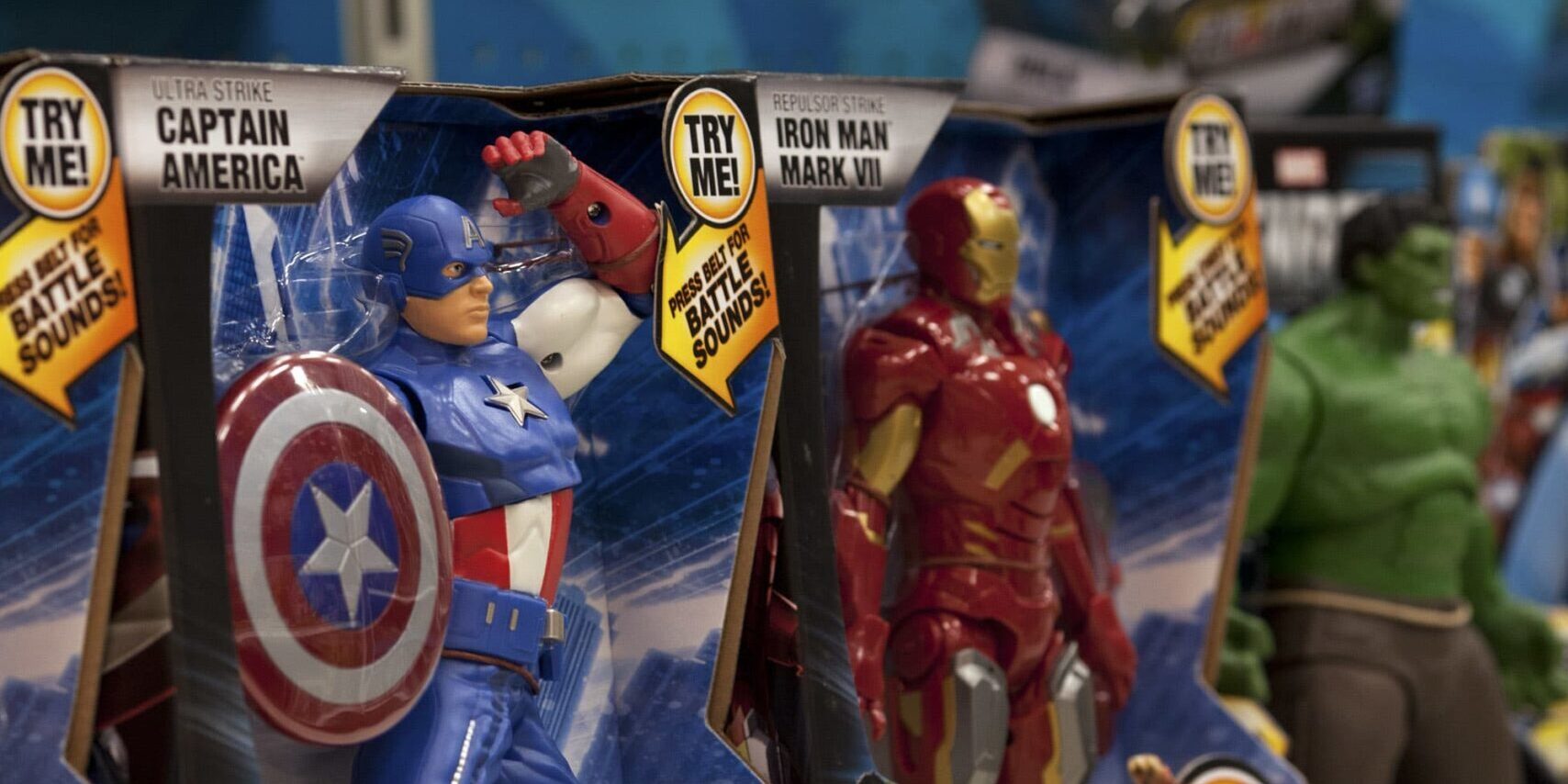
According to sources within the toy industry, major Disney merchandising partners are looking to Japan for new content as Marvel and Star Wars lag.
More and more information is coming from the toy industry into That Park Place. Today, we have a ton of new commentary from focus group moderators. Their thoughts have been collected and provided to us by the same source we have used before to relay what is really going on behind the scenes for Disney’s major merchandising partners. While we cannot independently corroborate the opinions shared below, and while we cannot definitively claim that these individuals are leaking this information, we have confirmed to the best of our ability the identity of the go-between source sending this our way. We do believe that the information is accurate in terms of what experts in the merchandise and toy industries are saying.
For the most part, we are not redacting the core message we received. Feel free to read through it and see what you think. Again, we have much more to share as time goes on, and we are extremely thankful for so many indivduals suddenly sending us so much information. It really is telling that perhaps a great number of people have “had it” with Disney behind the scenes. And, of course, we’re extremely grateful for the one industry expert facilitating all of this flow of information our way. It’s impossible without him or her.
The twelve-point message follows:
1) Remember that we are talking licenses that can be leveraged at scale. Walmart used to have 16 feet of Star Wars (which would scale down but hold at 8/12 feet as the cycle would run its course) when a prequel movie would open, there would be themed kids meals, etc. Not only merch based on printed delivery of the license, but on more complicated plastics (= China, moulds, MOQs, 120 day production cycles including 90 days on the water, plant forecasts with production reservations, etc) and electronics (where you need to commit to ICs – say voice chips, etc). We’re talking multiple price points where applicable : entry price point, birthday party gift pricing (when your little boy is invited to 6-8 birthdays/year), main playsets/core pieces, accessories, grandma pricing (the biggie where she buys jr’s love for another year of visits to her … there is a lot of work, risk and investment behind « going big », not counting the interaction with the retail side (listing fees, negotiating ad pricing, etc).
2) there is still money being made on Starwars and Marvel on the high end, more niche segments (low volume, higher price, higher gross margin) – there is a company called Hot Toys who illustrate this quite well
3) however the model on point 2 above, while great and does mint some millionaires, is much much smaller and does not bring in the dollars anywhere near the mass market described in point 1. Various stake holders do not want Star Wars and Marvel to become « niche » or « collector driven » Those are Bad Buzzwords for the stake holders we are talking about … Disney acquired those two licenses to balance out their « princess problem » – a nice problem to have where billions are being made but only from girls, with very little boys participation (it even played on the theme parks where there weren’t enough brands related to boys to leverage into rides/attractions so they had to go with pirates and generic adventure themes). Greedily, they wanted something for boys that they could own, and went out and bought them.
4) so what else besides Star Wars and Marvel is out there, ready for the big time? With the Toy guys in the lead, like they’ve done many times before (think Pokémon as an example.), they are looking to Japan where Industry is trying to get a handle on how to monetize manga and anime at mass scale.
5) Pokémon is seen as brilliant, and well managed, and at this point can be considered to have been « passed on to the next generation » of consumers. Evergreen …
6) the problem with manga/anime (manga-anime in this conversation should be seen as stands in for Japan created and controlled IP) is that North American industry doesn’t fully understand them or their weird organic (not forced!) appeal, mainly because « manga » is of course a medium, and therefore not one thing with there being super hero manga, YA manga, literally hundreds of very different IPs. Manga/anime is huge, and everywhere, but at the same time we’ve discovered that it’s also strangely underground, kinda like a club, something kids keep from their parents – it’s their «thing » – manga skews older, 10 and up – which can be a good thing long term for licensing, opens up other product categories – it’s almost a badge of pride that you’ve moved on from the Star Warzes and Marvels to Manga.
7) Many manga’s have a « coolness factor » that other IP would kill for. They are legit, righteous. They are personal, like the best licenses they are a way to express yourself – flash your paperback sized demonslayer at school and at least one group of kids will know you’re cool, you’re in. Girls are also into it big time and manga/anime is one of the gateways where boys first start to talk girls (yes, focus groups go there). Kids doodle manga characters in their school books instead of rock band logos (do those still exist?..) > >
ok, so it’s known that manga is a good place to be gold mining. But where do you go? Even the big manga brands like Hero Academia and Demonslayer are tough to get a handle on with – and this was tested in focus with parents : strange artwork, reading from the back of the book, stylized animation that has parents scratching their heads (compared to say trad Disney, Pixar), characters « all look the same », facial designs of the characters are not for everybody, things seem more sexualized (not like North American super hero costumes aren’t sexualized, but parents are familiar, so more at ease with those), also violence can ramp up pretty quick in manga where blades and bullets do fully illustrated damage, etc
8) basically manga/anime is, for lack of a better term, still seen as a little « foreign ». I should point out that part of the appeal of a mass license is that it is parent approved, where they feel good when buying (we test for that), because they are gatekeepers of much of the purchases (is mom at ease with buying a lunch box for her son with what looks like two school girls/cheerleaders holding spearguns on it in poses where you can see their underwear?)
9) North American parents are so desperate for their kids to read that on that front they will support anything that is not a gorefest or overtly [lude], so the books are flowing into the veins of the kids, no matter if the parents « don’t get it ».
10) still manga/Japanese created and managed IPs are being done successfully by many licensees and are showing the most expansion, and fan passion. Each day their « foreignness » is being increasingly assimilated (art style, characterizations, etc) by North America – Pokémon, power rangers and many others trend setters – even Kaiju – have contributed and continue to do so. Merch has migrated from specialized outlets to mass, regularly expanding into new product categories. Mainstream is here. Now it needs to grow, be nurtured.
11) because Japan-sourced IPs are so hard to get a handle on, many majors have bitten the bullet, swallowed their pride and hired Japanese-based consultants to explain them, so they can better monetize in North America and Europe.
12) manga is here so how does Disney react? They currently have no credible answer (especially because they can’t or don’t know how to tell the stories that Japanese producers spin seemingly effortlessly) and with Star Wars & Marvel you would think they wouldn’t need to react, but with industry increasingly turning to Japanese sourced IP’s they may have to. Do they buy in like they’ve done in the past? The only reason Disney haven’t reacted to date is because they don’t see the threat and think that Japanese IPs are not that big. Relatively speaking they are small in publishing where manga is eating the lunch of North American comics, but they will pay increasing notice as the anime and movies and merch sales increase of Japan IP increase.
So what do you think? Is the toy industry moving in the direction of manga and Japanese content in an effort to get away from the identity politics and contaminated culture of North American corporations? Let us know in the comments below. And, as always, keep reading That Park Place for all the latest news that should be fun!
