


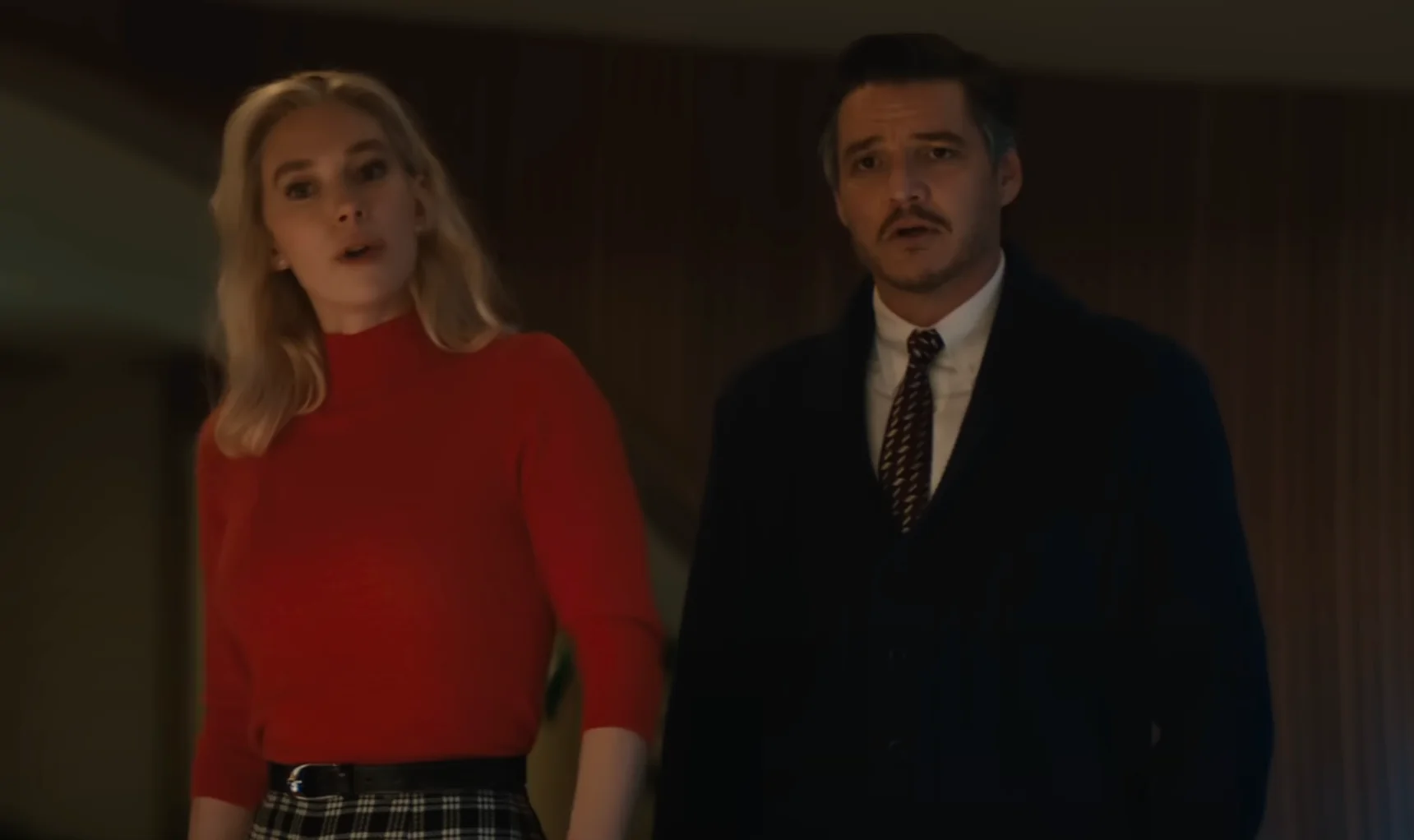
As Fantastic Four First Steps heads for flop territory with its 66% (or more) drop at the box office in its second weekend, Marvel’s track record of producing more financial failures than successes is becoming common knowledge. Whatever the cause, Kevin Feige’s grand plan for the fourth and fifth phases of Marvel have been as awful as the first three phases were record-breaking in the other direction.
Since 2020, Disney’s once-infallible Marvel Studios has experienced a sharp downturn at the box office, with many of its recent theatrical releases failing to turn a profit by traditional Hollywood accounting standards. Using the commonly accepted benchmark that a film must earn at least twice its production budget plus the “P&A” expenses to account for global marketing and distribution costs, a number of Marvel titles distributed by Disney have either flopped financially or barely broken even—an alarming trend for what was once the most bankable franchise in entertainment history.
This is a factor of multiple things. Marvel had so many flops for so long that people no longer care about it. the next thing is Pedro Pascal fatigue. and the third is the cast openly discussing their political views, which is a turn off at best and a complete alienation of your… https://t.co/6pQTr7ykef
— SameDesu🔍🍃🪶🔱 (@xSame_Desux) August 2, 2025
Perhaps the most prominent example is The Marvels (2023), which earned just $206 million globally against a production budget estimated at $307 million. Under break-even calculations, the film would have needed to generate at least $714 million worldwide to be considered financially successful… and that’s before we consider the marketing spend which easily sends that number even higher. Instead, it ranks as the lowest-grossing Marvel Cinematic Universe (MCU) film to date, resulting in an estimated loss of over $250 million. Another high-profile disappointment was Ant-Man and the Wasp: Quantumania (2023), which cost approximately $330 million to produce and brought in $476 million globally. While not a total bomb, its performance still fell about $280 million short of what was needed to break even, placing it firmly in the “underperformer” category. To reiterate, I’m not even including the marketing costs for Ant-Man. In other words, the numbers are far worse… again.
At this point, you might bring up Eternals, Shang-Chi, or Black Widow. Of those, only Shang-Chi may have broken even financially. Yet, they come from the “pandemic era” in which we were told things were fine, superhero flicks were just struggling to convince consumers to return to theaters. For this reason, although I’ll mention them, I set them into a separate category lest detractors claim we’re being unfair.
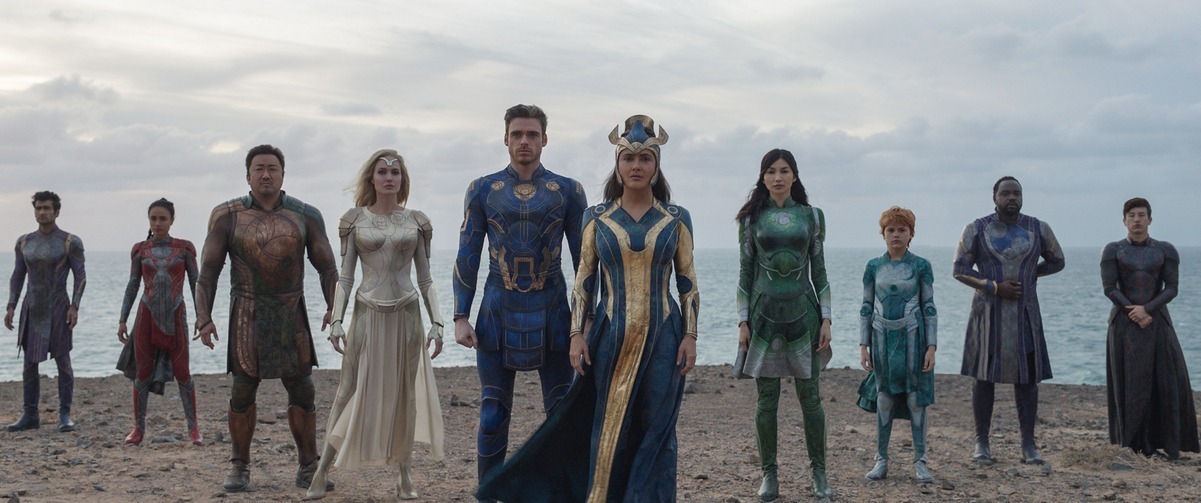
(L-R): Kingo (Kumail Nanjiani), Makkari (Lauren Ridloff), Gilgamesh (Don Lee), Thena (Angelina Jolie), Ikaris (Richard Madden), Ajak (Salma Hayek), Sersi (Gemma Chan), Sprite (Lia McHugh), Phastos (Brian Tyree Henry) and Druig (Barry Keoghan) in Marvel Studios‘ ETERNALS. Photo courtesy of Marvel Studios. ©Marvel Studios 2021. All Rights Reserved.
The trend continued in 2025 with Thunderbolts, which featured a roster of lesser-known anti-heroes and was intended to be a grittier ensemble film within Phase Five of the MCU. Despite critical praise and a modest marketing push, the film earned between $371 and $382 million globally. Given its estimated production and marketing costs of roughly $275–300 million (touted as a Marvel movie made on a stricter budget), Thunderbolts likely needed to earn north of $500 million or more to break even. As it stands, industry analysts have labeled it a financial miss or, at best, a razor-thin breakeven effort. Captain America: Brave New World is an even worse case for Marvel and Disney. Both films were back-to-back for Marvel in 2025.
While not all Marvel films in this era struggled, the hits have been fewer and further between. Black Panther: Wakanda Forever (2022) was a solid performer, grossing over $850 million worldwide, thanks in large part to strong emotional resonance and a built-in fanbase honoring the late Chadwick Boseman. Guardians of the Galaxy Vol. 3 (2023) similarly delivered with $846 million globally, benefitting from both positive word of mouth and the conclusion of James Gunn’s beloved trilogy.

(L-R): Iman Vellani as Ms. Marvel/Kamala Khan, Brie Larson as Captain Marvel/Carol Danvers, and Teyonah Parris as Captain Monica Rambeau in Marvel Studios’ THE MARVELS. Photo by Laura Radford. © 2023 MARVEL.
Still, the broader picture reveals an unsettling shift. Five of the last six major MCU films (Quantumania, The Marvels, Captain America: Brave New World, Thunderbolts, and now Fantastic Four First Steps) failed to achieve financial success by traditional standards. These shortcomings come amid ballooning production costs, saturation of superhero content, and a growing sense of franchise fatigue among audiences. While Disney once enjoyed near-guaranteed box office dominance with each Marvel release, the margin for error has narrowed. Mid-tier and lower-profile entries in the MCU now struggle to justify their increasingly hefty price tags.
This shift has prompted concern among industry observers and investors alike. Many analysts now predict Fantastic Four will struggle to beat the $500 million dollar global box office mark. With a production budget estimated at $200 million and a marketing budget of at least $100 million, the film needs at least $600 million to break even. It’s also the lead-in for the Avengers movies, each of which will likely be some of the most expensive movies ever made. Their price tags are far north of anything we’ve discussed so far, with some MCU watchers estimating they’ll have production budgets alone around $750 million. With scripts still being written as they’re into production, reshoots look likely.
And, in case you’re wondering, no the Disney+ shows have not been any better for Marvel. Somehow, perhaps they’ve been worse.
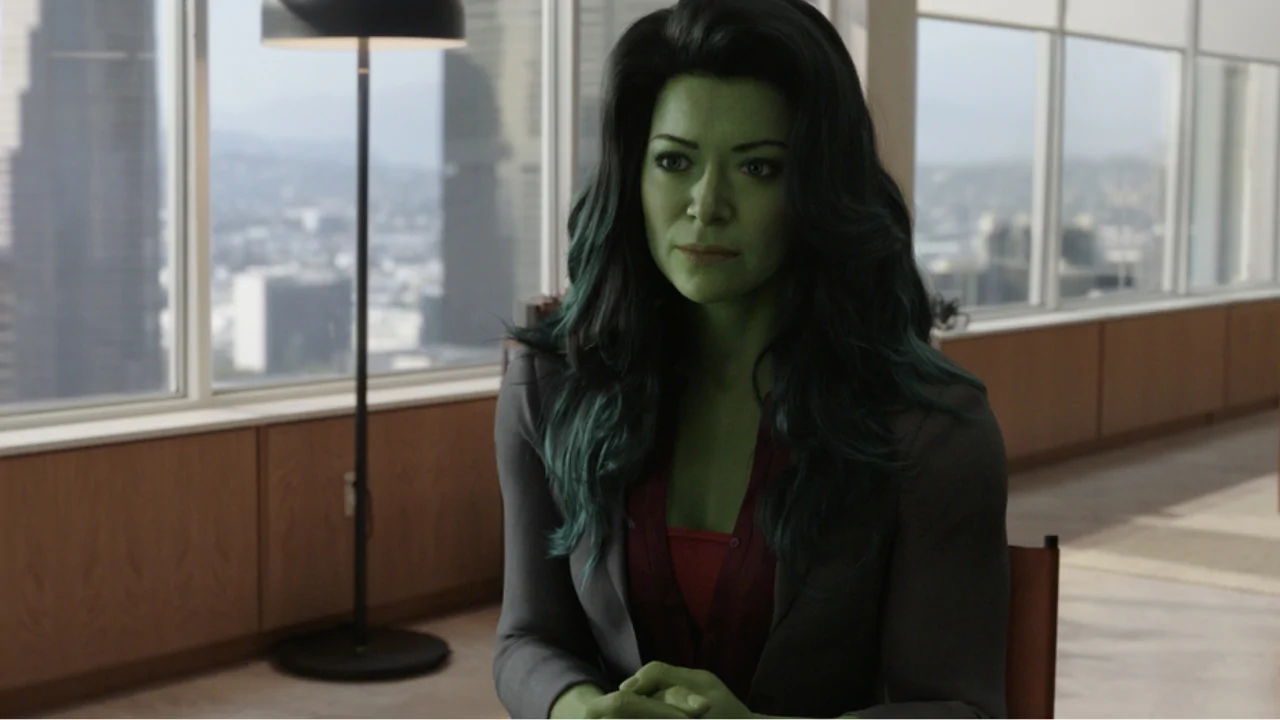
Tatiana Maslany as Jennifer “Jen” Walters/She-Hulk in Marvel Studios’ She-Hulk: Attorney at Law, exclusively on Disney+. Photo courtesy of Marvel Studios. © 2022 MARVEL.
Some will say it’s superhero fatigue. Others will claim that audiences just changed consumer habits. But there’s a far more obvious answer that the common person knows instantly. Marvel changed immediately after Endgame. They told you they were changing, they explained why they were changing. Funny names were given to the MCU to mock the direction Kevin Feige purposefully took the franchise. But there’s nothing funny about the change in market response to Marvel’s deliberate alterations to its successful formula. Yet despite the approximate 50% decline in attendance for most Marvel movies following those changes, there has yet to be an official statement or mea culpa about something having gone wrong. In this case, hubris may just be what ends the Marvel theatrical legacy.
