

It’s a lovely but sleepy Sunday today. There’s little in the way of hard entertainment news after a burst of activity last week. The biggest thing we have scheduled for today is a review of Chip and Dale. That’s how you know it’s a newsy kind of lull.
I thought I’d take the opportunity to write about lovely places I’ve been across the country that might be overlooked sometimes. These are the places that I most worry about when it comes to higher gas prices — they’re not the Disneys or the Universals. They’re not the Charlestons or the San Fransisco Bays. These are the places that have fewer visitors and it’s a real shame. But when gas prices soar, they’re also the places that will suffer the most when it comes to tourism.
So, here are the spots I wish our readers could send some love in the upcoming weeks and months:
Petrified Forest National Park
Located out in the middle of absolutely nowhere, the Petrified Forest National Park lies on Interstate 40 in Arizona. It is a truly beautiful park but it’s not located anywhere near an airport. It’s also not buoyed by a nearby city or major town. Already isolated, this is the sort of place you’re likely to lose for a while as gas prices rage. Tourists won’t want to afford the fuel costs of traveling there and even employees may struggle to drive to work. It’s a tough situation, especially in the west where gas prices are far higher than in other parts of the country.
Eastern Oklahoma
The first time I drove into Oklahoma, I had the wrong idea of the state. I had heard of the “badlands,” and I just assumed that… well… Oklahoma was kinda… bad. I had also heard about it being the dumping grounds for the Trail of Tears — the end point for one of the worst sins the United States ever committed. And though rounding up Native Americans and dropping them in Oklahoma is downright evil (Andrew Jackson is in the running for absolute worst president ever), Oklahoma itself is a beautiful state. I therefore worry, because it’s also not highly populated. I worry because I remember the Cherokee reservation and the souvenir shops. I worry because it’s going to be so expensive for anybody to travel through there now. And that would be a shame, because those scrubby cottonwood trees and vast stretches of land are beautiful to see. I’d love to go camping there sometime in the near future. If you’re in the Dallas Fort Worth metro area, do Oklahomans a favor and visit this summer. It may be a tough time for some parts of the country.
Gulf Shores
Unlike the coastal areas of the Northeast and the beach towns of Florida, the Gulf Coast cities are not supported by major metropolitan areas. They’re also not necessarily the primary vacation destination for many people outside of the region in which they reside. That’s why I worry about places like Gulf Shores, Alabama. I think Charleston, South Carolina will be fine. The same is true for New Orleans. But the smaller coastal locations that are heavily dependent on travelers stopping by… I think they’e the most vulnerable. So here’s to Gulf Shores and other places like it this summer. I hope the season isn’t as rough as it could be if gas prices soar even more.
Flagstaff
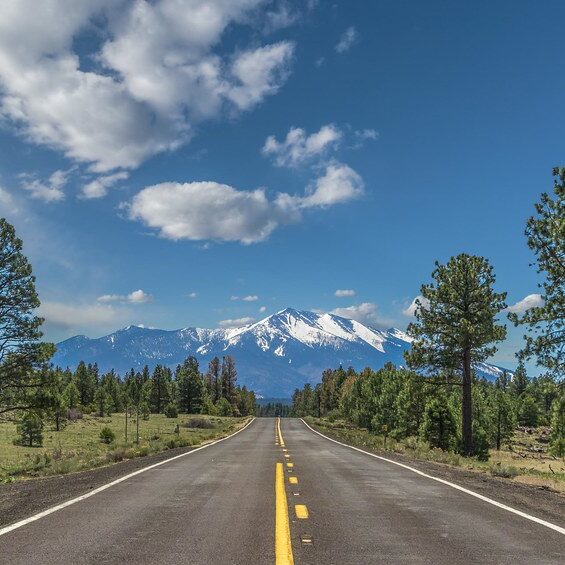
In the American southwest, there are so many beautiful smaller cities to see. But again, each one of those beautiful places requires a significant amount of travel. Often overlooked as people go to the Grand Canyon rim is Flagstaff, Arizona. Yes, Arizona, you get two spots on this very limited list. It’s the desert areas, however, that I think could suffer most in the summer heat with gas prices spiking. That would be a real shame for a place like Flagstaff where an oasis of forested mountains makes the air smell like Christmas year round and temperatures are often twenty degrees below the surrounding red rock terrain.
West Virginia
It doesn’t get anymore remote, east of the Mississippi, than West Virginia. I’m not trying to be mean to anyone from that area, but the first time I drove through there it was a bit of culture shock. I found exactly one Starbucks in hours or driving and that was at the Travel Center. Once I entered through Virginia, I found that there were less lights to be seen in any direction. West Virginia has it rough. It’s a shame considering the history of West Virginia and why it split off, but there’s no going back and changing how West Virginians have suffered in the past. What can be changed is the future. But with higher gas prices, how many people are going to make the trek to a most rugged location for camping, hunting and fishing. There’s a direct correlation between lower fuel costs and tourism… I worry that West Virginia could take a huge hit to its local economy from people choosing to skip out on the outdoors this year. That’s a real shame.
Anyway, those are just some of the areas I’m worried about this year as gas prices go up. Where are some beautiful areas that you fear may suffer as a result of tourists staying home? Let us know in the comments below. And, as always, keep reading That Park Place for all the latest news that should be fun!
