



The Hollywood access media is at it again—and this time, they’ve managed to turn a fire-breathing cartoon turtle into a symbol of modern political discourse. In her review of The Super Mario Galaxy Movie, Grace Randolph delivered what can only be described as a head-scratching take, claiming that Bowser somehow reflects what she calls the “toxic manosphere.”
Yes, really.
And if you thought critics learned anything after wildly missing the mark on The Super Mario Bros. Movie, think again.
“Toxic Manosphere”? Over Bowser?
Randolph’s comments come directly from her review.
READ: Tom Holland Speaks on Why He Keeps Distance from Hollywood — “The Business Really Scares Me”
“I continue to feel that Bowser and now Bowser Jr. are a little bit too actually evil,” she said. “Like, it goes beyond cartoon villain. I think maybe because they kind of mimic like the toxic manosphere… I see a lot of similar talking points there.”
Let’s pause there.
Bowser—voiced once again by Jack Black—is a decades-old villain whose entire identity boils down to kidnapping Princess Peach, getting defeated, and trying again. That’s it. That’s the character.

Bowser in a Nintendo Direct – YouTube, Nintendo
Yet somehow, Randolph manages to draw a straight line from that to modern online discourse about masculinity.
It’s the kind of reach that would make even Stretch Armstrong blush.
A Pattern of Missing the Point
This isn’t an isolated incident. Randolph also famously criticized The Super Mario Bros. Movie when it debuted in 2023—despite audiences overwhelmingly embracing it.
Critics at the time handed the film a lukewarm reception, while general audiences propelled it to massive box office success and glowing audience scores. The divide couldn’t have been clearer.
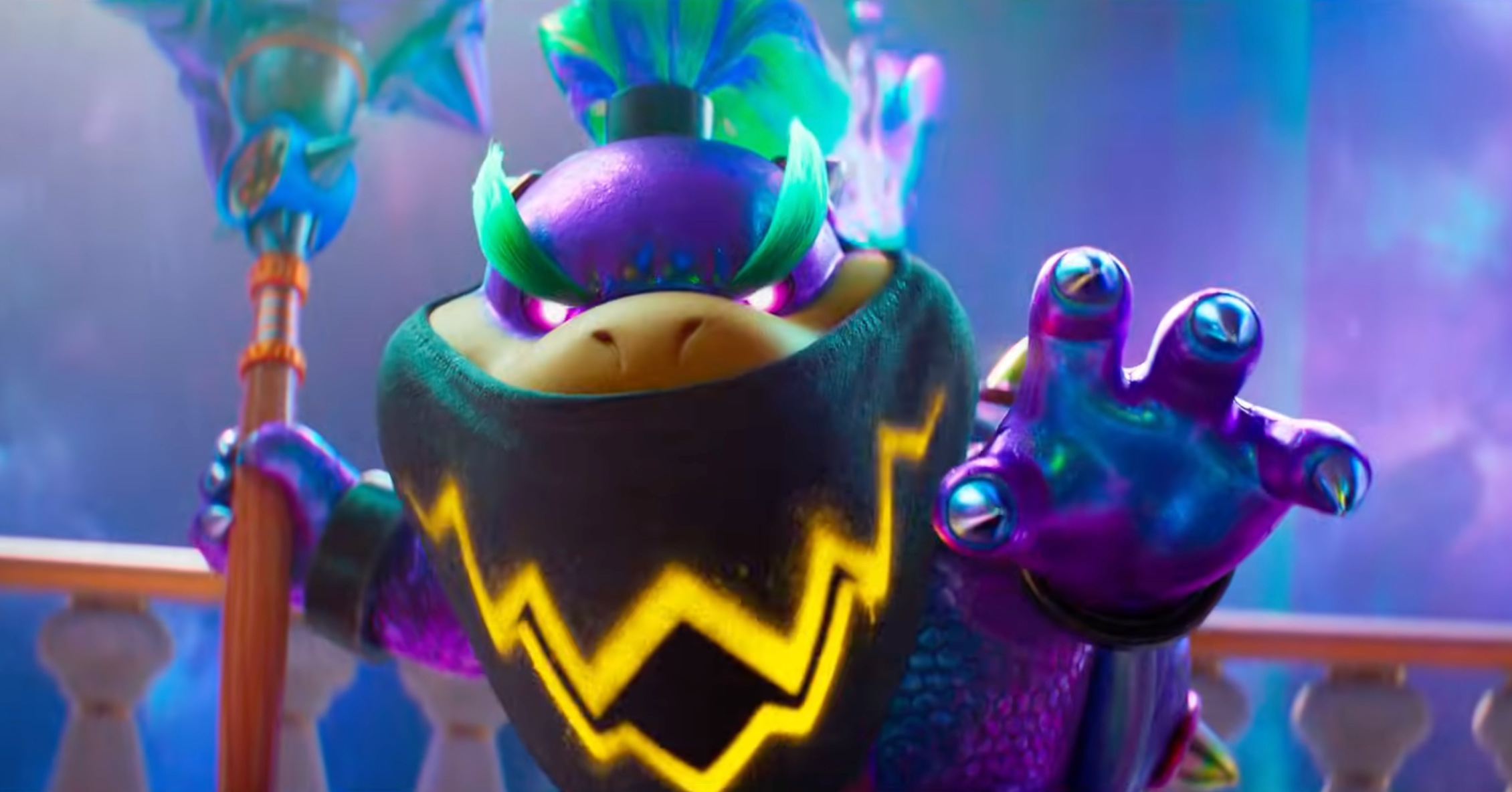
Bowser Jr. in The Super Mario Galaxy Movie – YouTube, Nintendo of America
And now? We’re seeing the same script play out again with The Super Mario Galaxy Movie.
Instead of focusing on what the film actually delivers—colorful world-building, fan service, and classic Nintendo charm—Randolph zeroes in on ideological interpretations that simply don’t exist in the text.
Turning Mario Into a Political Battlefield
The biggest issue here isn’t just a bad take—it’s what it represents.
The Nintendo brand has largely avoided the pitfalls that have plagued modern Hollywood franchises (with a few notable exceptions). No heavy-handed messaging. No agenda-driven storytelling. Just fun, accessible entertainment.
That’s exactly why audiences show up.

Mario and Luigi in the desert kingdom from the Super Mario Galaxy Movie Trailer – YouTube, Nintendo of America
So when critics attempt to inject real-world political frameworks into something like Bowser—a literal dragon-turtle warlord from a fantasy universe—it feels less like analysis and more like projection.
And frankly, audiences are tired of it.
Even Her Own Review Undercuts the Argument
Ironically, Randolph’s own review contradicts her broader criticism.
At one point, she admits that Bowser is actually the most compelling character in the film:
“By far and away, my favorite character in this movie is Bowser,” she said, apparently forgetting the toxic manosphere for a moment. “He’s just so funny with a lot more layers and nuance.”

Yoshi, Toad, and Baby Mario and Luigi in the Super Mario Galaxy Movie Trailer – YouTube, Nintendo of America
So which is it?
Is Bowser a well-developed, entertaining villain—or a stand-in for modern social commentary?
It can’t be both.
Critics vs. Audience—Round Two
We’re once again watching the growing divide between Hollywood critics and the audiences they claim to represent. One side is looking for fun, escapism, and nostalgia. The other is busy dissecting children’s characters through a political lens.
And history suggests we already know how this ends.

Yoshi, Toad, and Mario and Luigi in the Super Mario Galaxy Movie Trailer – YouTube, Nintendo of America
If The Super Mario Galaxy Movie follows the same trajectory as its predecessor, it won’t matter what critics say. Audiences will show up anyway—because they’re not looking for a lecture.
They’re looking for Mario.
Final Thoughts
Calling Bowser a symbol of the “toxic manosphere” isn’t just a stretch—it’s emblematic of a broader problem in entertainment media.
When everything becomes a vehicle for modern commentary, even the most straightforward stories lose their simplicity.

Mario and Luigi from the Super Mario Galaxy Movie Trailer – YouTube, Nintendo of America
And in the case of Mario, that simplicity is exactly the point. Sometimes a villain is just a villain.
How do you feel about Grace Randolph and her comments on The Super Mario Galaxy Movie? Sound off in the comments and let us know!
UP NEXT: Is Disney Buying Epic Games?
