


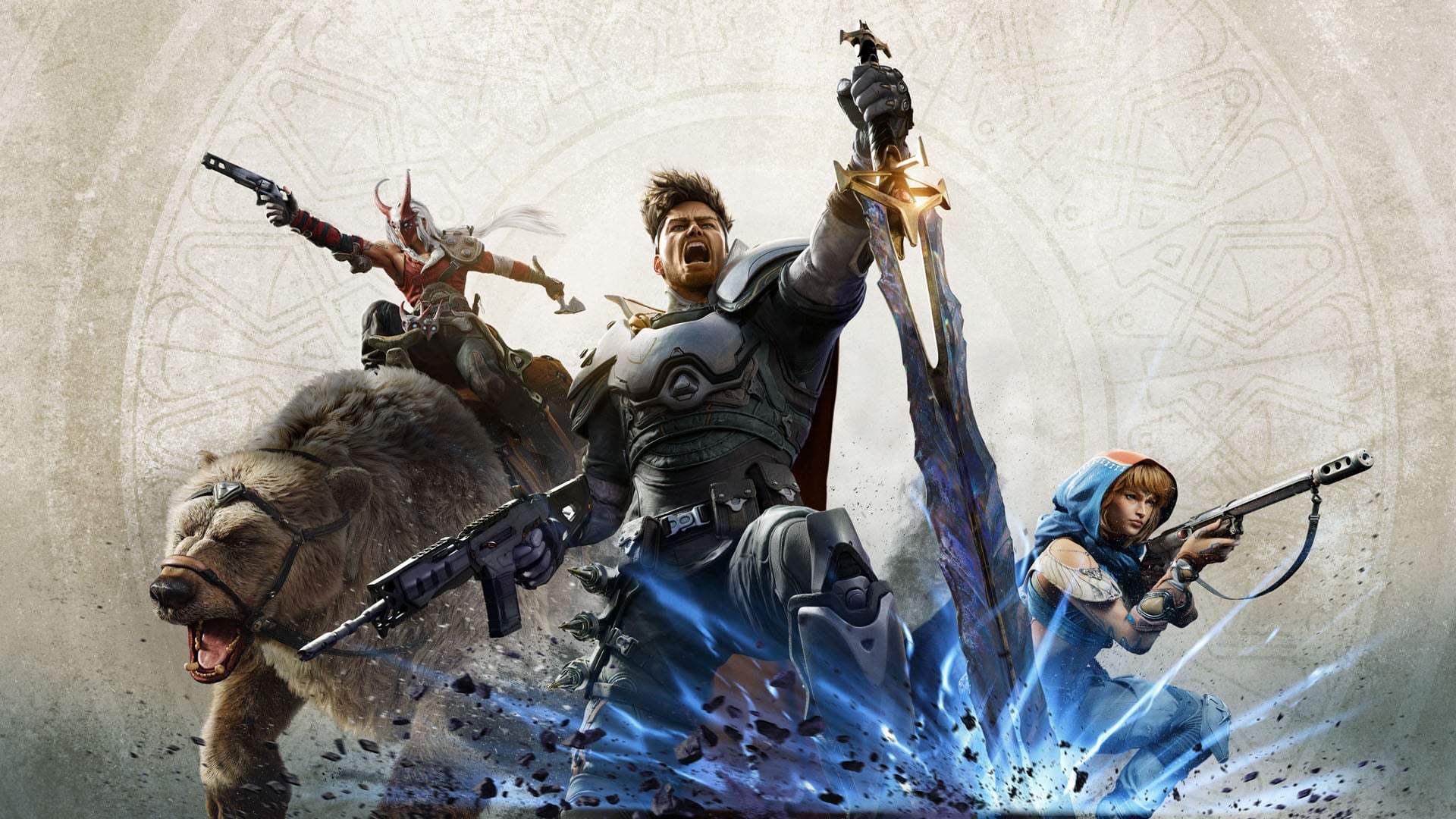
A new report is raising fresh questions about the troubled launch and uncertain future of Highguard, the free-to-play PvP “raid shooter” that went from splashy awards-show reveal to industry punchline in a matter of months. According to reporting highlighted by IGN, the Highguard developer — Wildlight Entertainment — was quietly backed by Chinese tech and gaming giant Tencent, a financial arrangement that was never publicly disclosed prior to the title’s release.
Game File reported that Tencent was the primary financial backer behind Wildlight — a revelation that sheds new light on the studio’s origins and funding structure.
Prior to this disclosure, it remained unclear who was financing the developer, despite Highguard reportedly being in production for years before its reveal at The Game Awards in December.

Highguard – Wildlight Entertainment
Wildlight’s LinkedIn page had long described the company simply as: “A new, fully-funded entertainment studio.”
Who was doing that funding, however, had not been publicly clarified until now.
A Heavily Promoted Reveal That Now Raises Eyebrows
The game’s initial unveiling already sparked controversy — not just because of its trailer, but because of how aggressively it was promoted on stage.
The reveal was spearheaded by longtime Game Awards host Geoff Keighley rather than the studio itself, an unusual move that drew scrutiny from viewers at the time.

A screenshot of Geoff Keighley from The Game Awards – YouTube, TheGameAwards
Now, in light of Tencent’s reported financial backing, that promotional push is facing renewed examination.
Tencent executive Steven Ma — Senior Vice President of Tencent — serves on The Game Awards advisory board, creating an indirect institutional connection between the event and the game’s financial backer.
Ah, now it makes sense. Steven Ma (Senior Vice President of Tencent) is on the Advisory Board of the Game Awards. That’s why Geoff Keighley was pushing this so hard. Gotcha. https://t.co/cxpyKB3b8I
— Jordan Hawes (@Jawes_WTMG) February 17, 2026
There is no evidence that this relationship influenced the decision to spotlight Highguard. However, the overlap is fueling speculation online about whether the title received preferential visibility during the show.
From Awards Stage To Online Mockery
Even before release, Highguard struggled to win over audiences.
Its Game Awards trailer triggered weeks of criticism and skepticism across social media and YouTube, with some creators declaring the game “dead on arrival” based solely on its early footage and tone.

An image from Highguard – Wildlight Entertainment
READ: ‘The Mandalorian and Grogu’ Trailer Finally Shows What the Movie Is Selling — But is Anyone Buying?
One developer later reflected that the project had been: “Turned into a joke from minute one” — blaming what they described as false assumptions formed from the reveal trailer.
Despite that early backlash, the game did manage a strong launch window on PC.
Highguard reached nearly 100,000 concurrent players on Steam shortly after release — a respectable debut for a new free-to-play shooter.
But the momentum didn’t last.
Reviews Falter As Player Interest Collapses
While launch numbers showed initial curiosity, reception quickly cooled.
Critic reviews landed in the “so-so” range while user scores trended negative. Within weeks, player engagement began falling sharply.
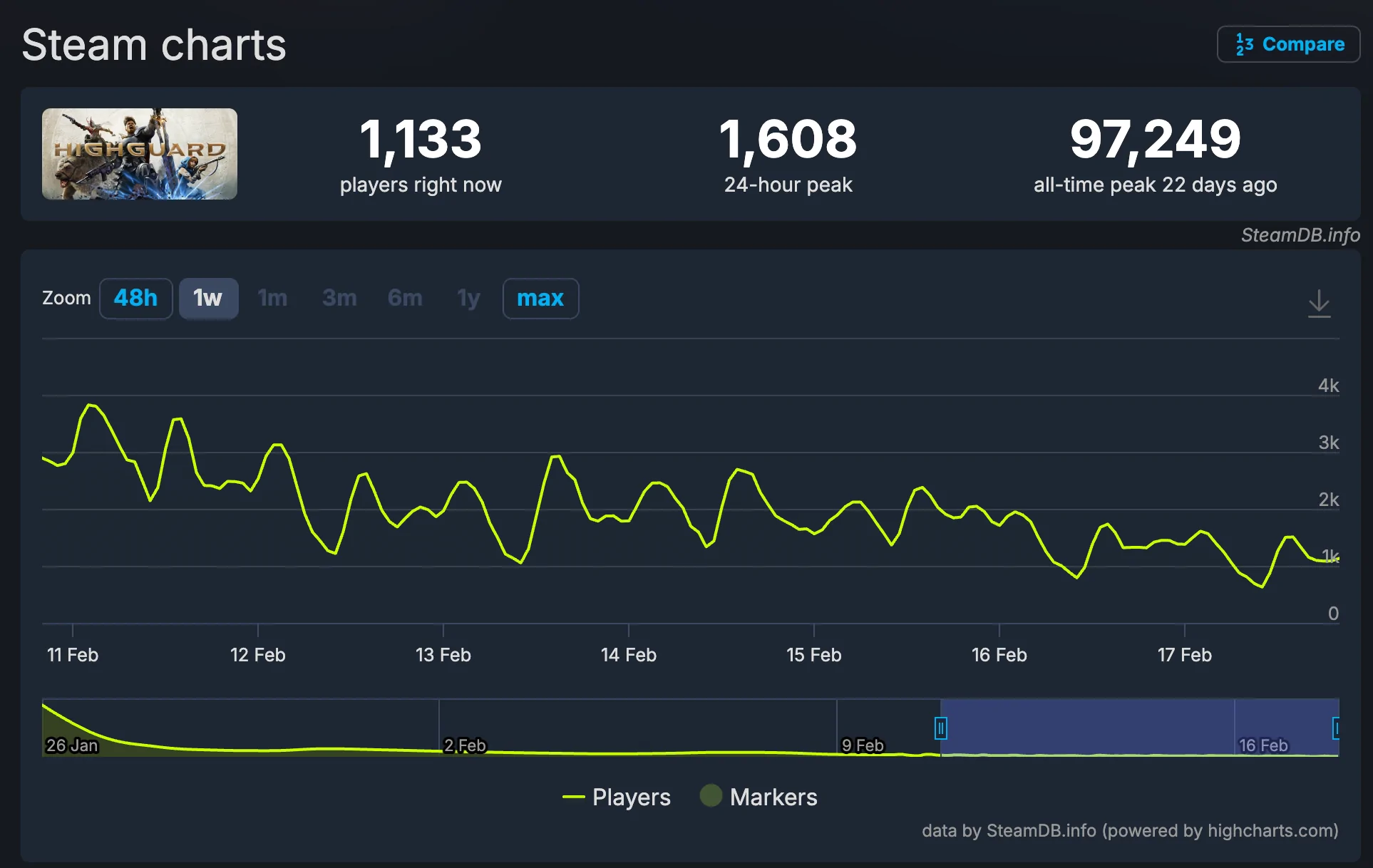
Highguard concurrent player count on February 17, 2026 – Steam
As of this writing, Steam concurrency has cratered to barely 1,000 active players, signaling a dramatic population collapse for a live-service PvP title that depends on sustained engagement.
For a multiplayer-focused shooter, that kind of drop is often viewed as existential.
Mass Layoffs Rock Wildlight Entertainment
Then came the most damaging blow.
Just weeks after launch, developers from Wildlight revealed that most of the studio had been laid off, stunning both players and industry observers.
The layoffs immediately raised questions about:
- The game’s financial performance
- Long-term funding stability
- Investor confidence
- The studio’s future viability
In the wake of the cuts, Wildlight issued a statement saying it would retain a “core group of developers” to continue supporting Highguard.
But the scale of the layoffs suggested severe internal disruption.
Did Tencent Pull Funding? Questions Remain
One of the biggest unknowns following the Game File report is how dependent Wildlight was on Tencent financing — and whether that funding changed at any point.
It remains unclear:
- How heavily the studio relied on Tencent
- Whether funding was reduced or withdrawn
- If financial shifts contributed to the layoffs
Neither Tencent nor Wildlight has publicly clarified the situation. Without transparency, speculation has filled the vacuum.
Website Outage Fuels Shutdown Fears
Now, new developments are intensifying those concerns.
Highguard’s official website recently went offline — and, as of this writing, has remained down for nearly 24 hours.
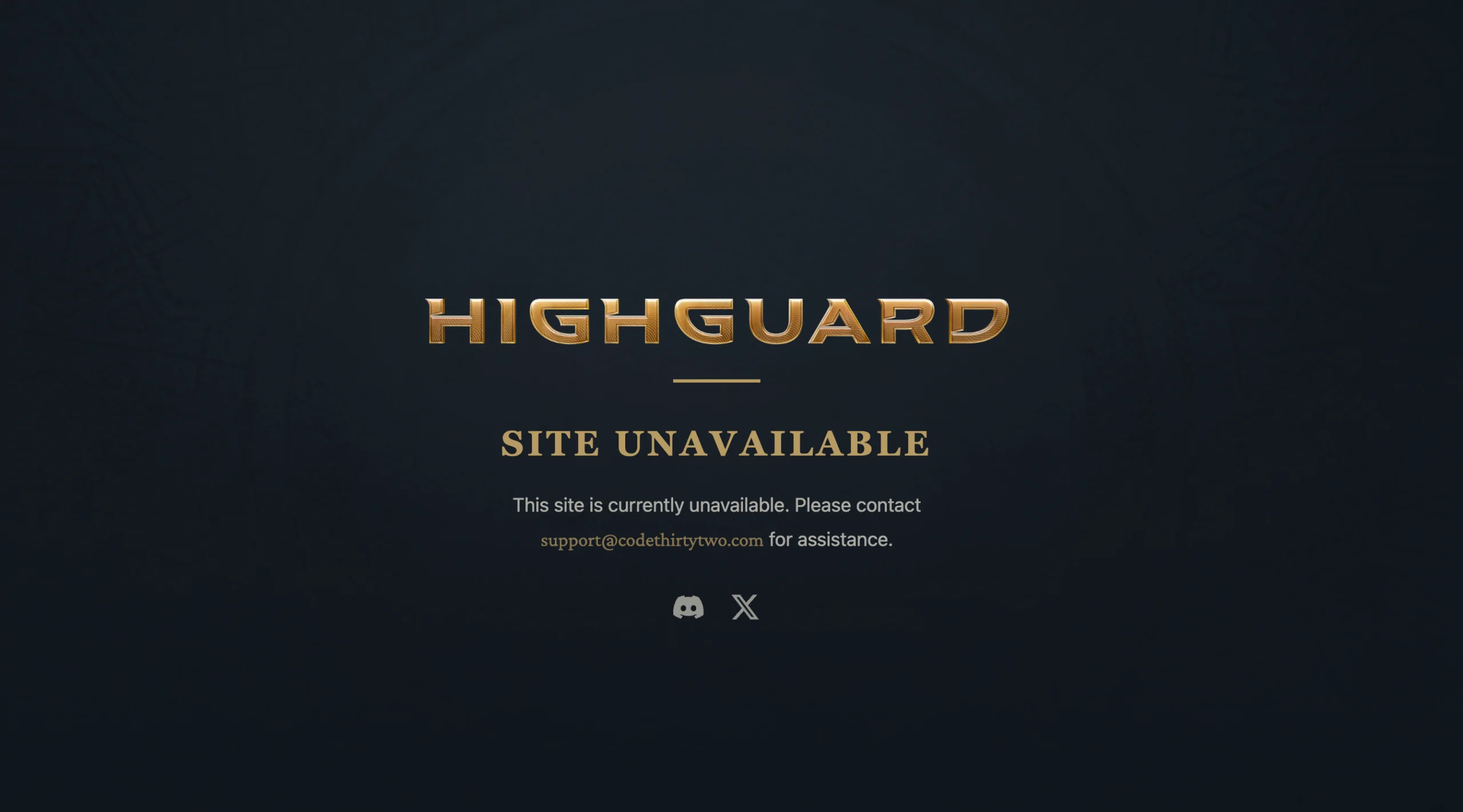
A message on the Highguard website that lists it as unavailable – PlayHighguard.com
That outage has sparked fears that:
- The game could be winding down
- Support may be ending
- The studio itself could be closing
No official explanation has been provided for the downtime.
While websites can go offline for routine maintenance or technical issues, the timing — following layoffs and funding revelations — has only amplified anxiety within the player base.
A Troubled Trajectory From Start To Finish
From its beginning, Highguard has faced an uphill battle:
- A controversial awards-show reveal
- Immediate online backlash
- Mixed critic reception
- Falling player engagement
- Mass layoffs
- Funding questions
- Now, a website outage
The revelation that Tencent was quietly financing the project adds yet another layer to an already turbulent story — one that raises broader questions about transparency, investor influence, and the long-term sustainability of live-service launches.
Highguard looks to be toast:
– Revealed they faked indie/self-funded status, was Tencent funded all along.
– Website is GONE.
– You can’t even list it as a game on Youtube now.
Was this actually faster than Concord’s implosion? Or just bigger? pic.twitter.com/nZSDZq5LuV
— Grummz (@Grummz) February 17, 2026
For now, Wildlight says a skeleton crew remains in place to keep the game operational.
But with player numbers dwindling, infrastructure faltering, and financial backing under scrutiny, the future of Highguard — and the studio behind it — remains deeply uncertain.
How do you feel about Tencent backing Highguard? Sound off in the comments and let us know!
