



For most of Hollywood’s history, copyright disputes were fought studio to studio, or studio to platform, over distribution, windowing, and piracy. Generative AI shifted the battleground. Now the question is not just who distributes a movie or a song, but whether a model can be trained on copyrighted catalogs without permission, then used to output new works that clearly evoke, and sometimes reproduce, protected expression. That shift has produced a familiar pattern that is accelerating fast: rights holders sue when they believe the training and outputs cross the line, and they cut licensing deals when they believe the technology is inevitable and monetizable.
AI spiderman with seedance 2.0
This is todays AI so the future of video is already evolving. pic.twitter.com/atOdfi6Cin
— Aijaz (@iamsofiaijaz) February 18, 2026
The earliest modern wave of AI copyright conflict took shape outside film and TV, but it set the template for everyone else. Large image models were accused of being built on vast, unlicensed archives, prompting landmark litigation that framed the core issues: where training happens, what “copying” means in model development, whether outputs can create trademark or copyright liability, and whether responsibility sits with users or model providers. Getty Images’ case against Stability AI became a bellwether in the United Kingdom, and a High Court ruling in late 2025 addressed trademark and other issues while Getty’s broader copyright claims continued to face serious legal headwinds. Permission to appeal was granted in December 2025, keeping the UK fight very much alive entering 2026.
In parallel, publishers and authors opened a second front over text training. The New York Times sued OpenAI and Microsoft in late 2023, alleging unauthorized use of its journalism and harmful substitution effects, and the case has produced notable procedural rulings that let key claims continue. But the publishing sector also revealed the other half of the modern playbook: if you can secure favorable economics and guardrails, you might prefer a contract to a courtroom. OpenAI struck licensing partnerships with major publishers, including Axel Springer and News Corp, positioning these arrangements as a way to pay for access, reduce legal exposure, and improve product quality with authorized data.
This video of Brad Pitt fighting Tom Cruise and angry about killing Epstein looks completely real. It’s not. It’s AI. ByteDance’s Seedance 2.0 generates this in minutes. Think about what this means for the next election. pic.twitter.com/3FKnpfLtv9
— Alex Grankin (@grankin) February 11, 2026
Music then provided the clearest illustration of how quickly “sue versus deal” can flip into “sue and deal.” In June 2024, major record labels sued Suno and Udio, alleging mass infringement through training on sound recordings. Yet by late 2025, at least one major label group was experimenting with licensing frameworks that let artists opt in, control usage, and monetize AI-generated works tied to their likenesses and catalogs. The through line is pragmatic: litigation is leverage, and licensing is the end state if the price and controls are acceptable.
Hollywood’s direct collision with generative AI, especially in images and video, moved from anxiety to open warfare once character-based outputs became a marketing feature rather than an edge case. In June 2025, Disney and Universal filed a high-profile lawsuit against Midjourney, describing AI image generation as an industrialized infringement machine that could reproduce their best-known characters on demand. By September 2025, Warner Bros. Discovery had filed its own Midjourney lawsuit, placing additional pressure on the same legal fault line: whether training on copyrighted works and enabling users to generate character images and videos creates direct or secondary liability for the model provider.
The next step was predictable: the fight expanded from still images to video generation systems marketed as consumer-friendly replacements for studio-grade production. In September 2025, Disney, Universal, and Warner Bros. Discovery sued Chinese AI company MiniMax over its Hailuo AI service, alleging that it used and promoted recognizable studio characters and pitched itself with language that implied studio equivalence. Reuters reported the studios claimed MiniMax effectively sold “a Hollywood studio in your pocket,” making the substitution threat explicit rather than theoretical. This matters because it ties copyright harm to market harm in plain terms: if AI video tools can generate character-driven clips at scale, the studios argue they are not just being copied, they are being undercut.

A Seedance 2.0 created AI fight between Disney’s Wolverine and DC’s Superman – X, @EnisPresheva
At the same time, Hollywood has not waited for courts to resolve everything before experimenting with authorized model building. The Lionsgate and Runway partnership announced in 2024 is the clearest example of a studio choosing a licensing-first strategy. The companies described a customized “cinematic video” model trained on Lionsgate’s proprietary catalog, framed as a tool to augment filmmakers and reduce friction in preproduction and postproduction workflows. Even that deal has been treated by observers as a case study in how complicated execution can be when IP, talent relationships, and tool maturity collide, but the strategic intent is unmistakable: if models are coming, studios want models that are contractually clean and competitively differentiating.
So where does this go over the next few years, especially as video generation reaches and then surpasses traditional production and CGI capabilities for many use cases?
The most likely path is not a single industrywide verdict, but a patchwork of rulings, settlements, and licensing standards that converge into de facto norms. Courts will continue to test training as fair use in the United States and to evaluate model provider responsibility in other jurisdictions, while rights holders press for injunctions, statutory damages, and discovery into datasets. Meanwhile, the deal market will expand because it solves problems litigation cannot solve quickly: access to high-quality data, provenance, and repeatable permissions.
Expect Three Practical Outcomes…
First, licensing becomes segmented and priced like any other exploitation right. Major studios and entertainment conglomerates will increasingly treat their libraries as training assets, offering tiered access: internal models for production, controlled partner models for approved vendors, and consumer-facing constraints for brand protection. The Lionsgate-Runway approach is the prototype. In this world, the studios that license early could shape technical standards and capture rents, while the holdouts rely on courts and enforcement to slow unauthorized competitors.
seedance 2.0 is the only model make me so scared
literally every job in film industry is gone, you upload a script, it generates scenes (not just clips) with vfx, voice, sfx, music all nicely edited, we may not even need editors anymore
and now I understand why it’s not… https://t.co/YUQAYuMhh8 pic.twitter.com/UYsP5fGMo6
— el.cine (@EHuanglu) February 8, 2026
Second, “character safety” will become a product feature and a legal shield. The MiniMax and Midjourney lawsuits highlight that rights holders care as much about branded characters and signature universes as they do about generic style. AI companies that want enterprise film and TV business will need robust controls: blocklists, fingerprinting, provenance logging, and audit trails that can survive discovery. If they cannot offer that, they will be pushed toward gray markets, offshore distribution, or endless litigation risk.
Third, as AI video generation improves, the competitive threat shifts from “piracy of assets” to “commoditization of production.” The most disruptive capability is not recreating a single Disney character. It is making competent, emotionally legible, broadcast-ready video at marginal cost, then iterating it thousands of times for different audiences, languages, and platforms.
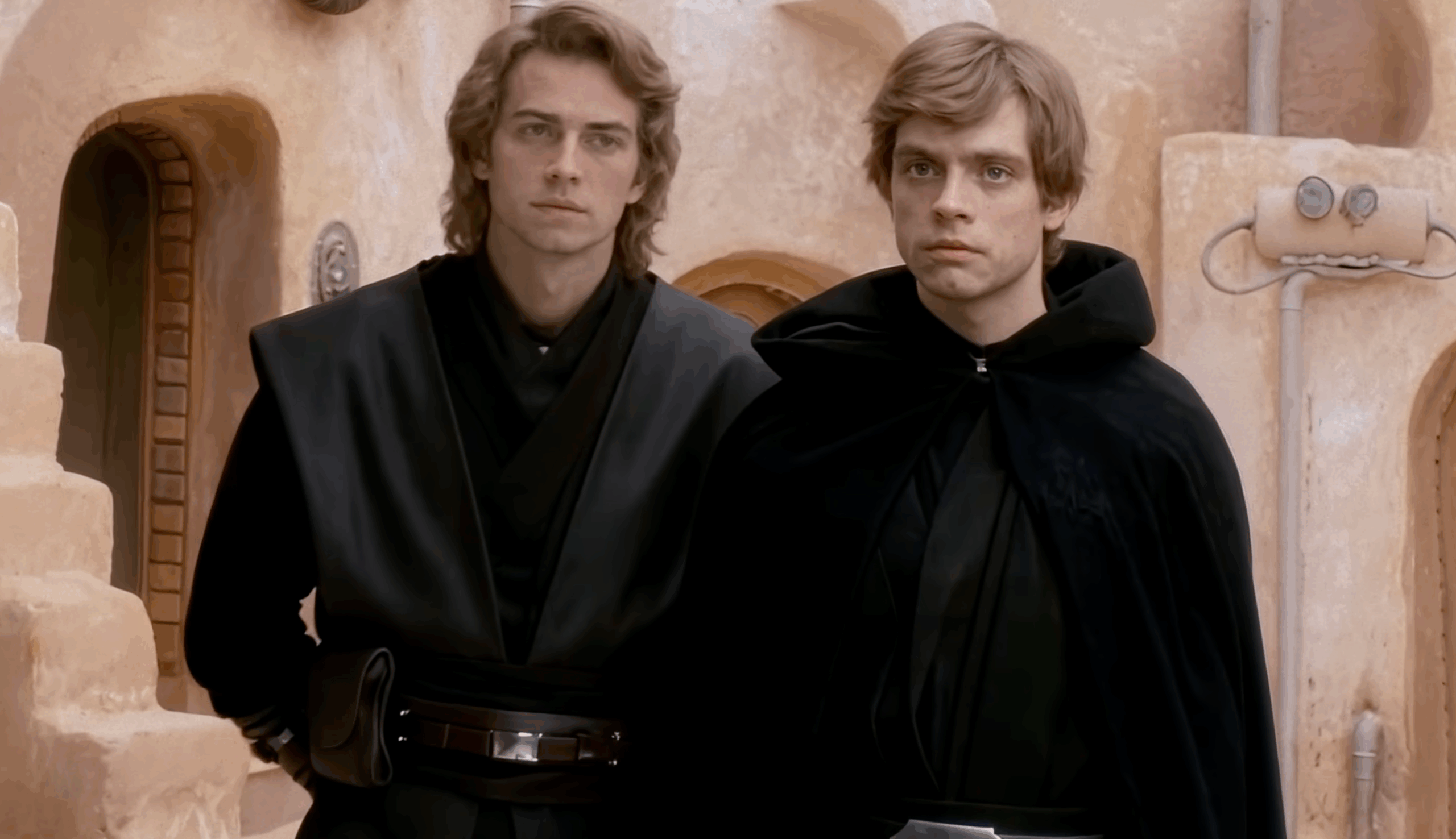
Anakin and Luke Skywalker made with AI – YouTube, Skywalker Stories
Once that becomes routine, studios will defend their advantage where it still holds: franchise IP, talent relationships, distribution leverage, and marketing reach. That is why the legal battles focus so heavily on characters and recognizable universes. Generic video is becoming abundant. Scarce branded worlds are the moat.
The bottom line is that Hollywood is already acting as if video generation will outrun many traditional pipelines. The lawsuits are about preserving exclusivity and leverage while the courts catch up. The deals are about ensuring that when the inevitable tools arrive, they run on authorized fuel, with studio-grade controls, and with revenue flowing back to the rights holders who can credibly claim they own the raw material of modern entertainment.
UP NEXT: Cris Cyborg Calls Out Ronda Rousey After Gina Carano Fight Announcement
