



California Attorney General Rob Bonta is facing growing pressure to bring his legal battle against Paramount Skydance’s acquisition of Warner Bros. Discovery to an end, with two of Hollywood’s largest unions warning that the prolonged uncertainty surrounding the transaction is making an already disastrous employment situation even worse.
The Directors Guild of America and the International Alliance of Theatrical Stage Employees sent a joint letter to Bonta and Paramount Skydance Chairman and CEO David Ellison on Wednesday urging the two sides to directly negotiate a resolution to the antitrust concerns surrounding the merger.
The unions, which collectively represent nearly 200,000 entertainment industry workers, stopped short of endorsing the merger itself. In fact, they reiterated their belief that major entertainment mergers historically provide few benefits for workers.
But their message to Bonta was equally unmistakable: dragging the legal process into next year could cause additional damage to an entertainment industry already suffering from a dramatic decline in production.
“We cannot overemphasize how damaging the current timeline for the trial — which would extend the uncertainty surrounding the proposed merger until the spring of next year at the earliest — is to an already struggling industry,” the unions wrote.
They added that worldwide film and television production has fallen between 35% and 40%, with conditions even worse in California.
The DGA and IATSE further claimed that productions have already been placed on hold or canceled amid the uncertainty, leaving even less work available for crews and other entertainment workers.
That puts Bonta in an increasingly uncomfortable position.
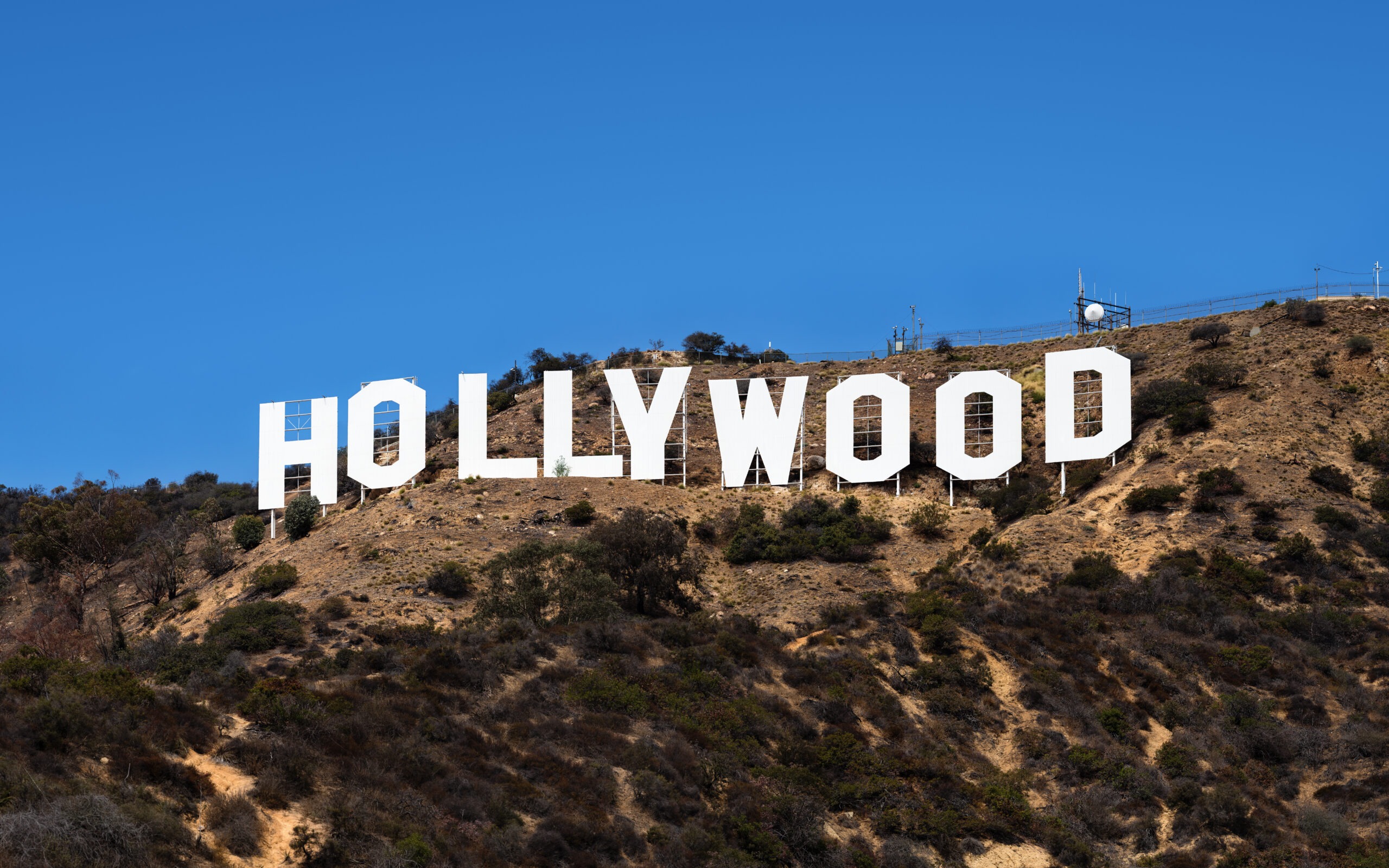
The Hollywood Sign – Photo Credit: Thomas Wolf, www.foto-tw.de, CC BY-SA 3.0 <https://creativecommons.org/licenses/by-sa/3.0>, via Wikimedia Commons
The attorney general launched California’s lawsuit against the Paramount-Warner Bros. transaction under the argument that he was protecting consumers, theaters, competition, and ultimately entertainment industry workers.
Now, two organizations representing nearly 200,000 of those workers are warning him that the prolonged litigation itself is hurting them.
DGA And IATSE Want A Deal
The unions are not asking Bonta to simply abandon his antitrust concerns.
Instead, the DGA and IATSE proposed a lengthy series of binding conditions they believe could address many of the concerns associated with the combination while allowing the transaction to proceed.
Among the most significant proposals would be a requirement that Paramount Pictures and Warner Bros. continue operating as separate motion picture studios, maintaining distinct production, distribution, marketing, and exhibition operations.
Each studio would also be required to produce and distribute at least 15 theatrical movies every year. That lines up with a deal Ellison recently made with AMC and Regal Cinemas, guaranteeing theater owners a minimum of 30 releases per year.
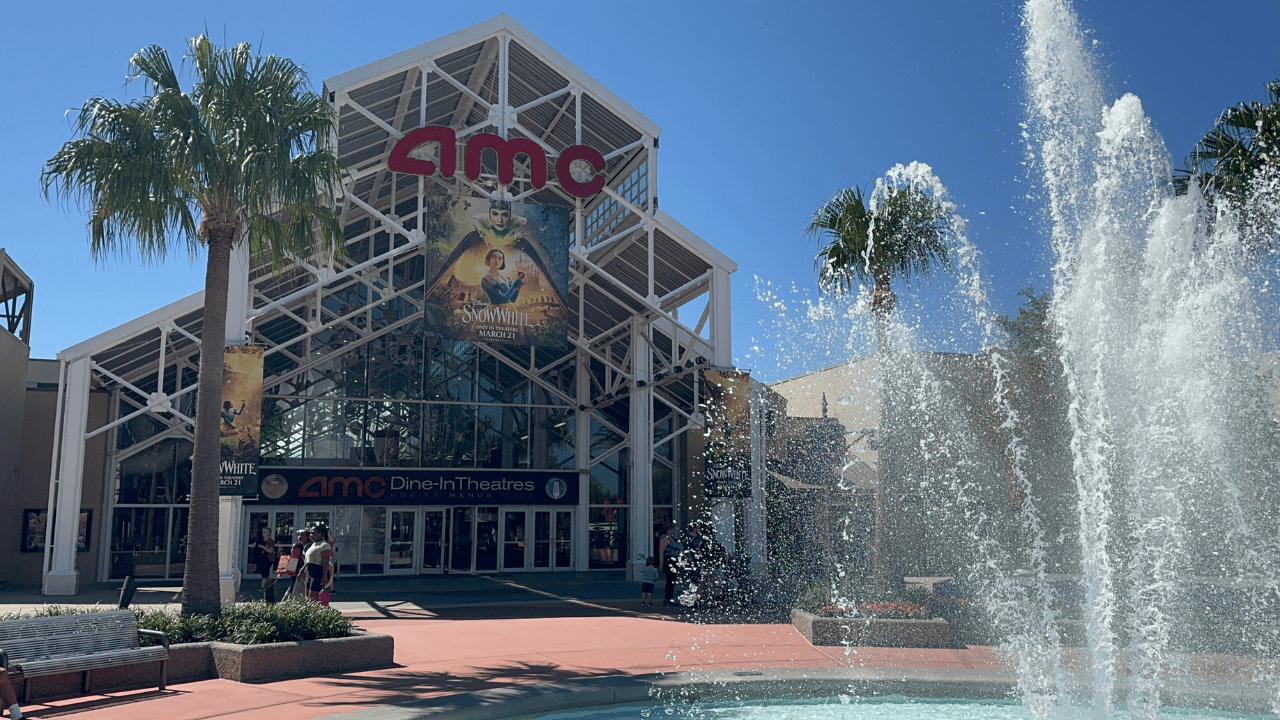
A movie theater at Disney Springs – Photo Credit: M. Montanaro
READ: Disney’s Animal Kingdom Getting Extended Evening Hours This Fall
The unions additionally want those movies guaranteed an exclusive theatrical window of at least 45 days before premium video-on-demand availability, although they stated that 60 days or longer would be preferable. Films would also have to wait 120 days before becoming available through subscription streaming services.
Similar separation requirements would apply to Paramount and Warner Bros.’ television studios. HBO would be required to continue operating as a traditional linear premium television network and remain available through third-party distributors.
The unions are also requesting guarantees that the combined company maintain a substantial percentage of its film and television production inside the United States, based on production levels over the previous five years while excluding the abnormal pandemic and 2023 strike years.
But perhaps the most significant demand considering the events of the past week is this: Paramount must remain based in Los Angeles.
Paramount Is Considering Leaving California
The DGA and IATSE letter arrives just as the possibility of Paramount abandoning California has gone from industry rumor to something company leadership is publicly acknowledging.
Reports emerged this week that Ellison has been considering moving Paramount’s corporate operations out of California if Bonta refuses to negotiate a resolution to the lawsuit.
Texas, Tennessee, and Georgia have all reportedly emerged as potential destinations.
Paramount Chief Legal Officer Makan Delrahim subsequently confirmed that leaving California is something the company may consider, explaining that management eventually has a fiduciary obligation to consider the financial interests of shareholders.
That is an extraordinary development for a company whose Hollywood studio lot dates back more than a century.

Logos for Paramount Skydance and Warner Bros. – Paramount, WB
READ: Sonic The Hedgehog is Coming to Fortnite
It also comes while California has been desperately attempting to prevent film and television production from fleeing the state for locations offering cheaper production costs, lower taxes, and more aggressive incentives.
Bonta has portrayed Paramount’s potential departure as an attempt to pressure California into approving a deal his office considers unlawful.
But whether Bonta considers the possibility a negotiating tactic or not, Hollywood workers are clearly taking the underlying danger seriously enough that the DGA and IATSE specifically want Paramount’s continued presence in Los Angeles written into any settlement.
And Bonta is not simply receiving pressure from Hollywood management.
His own governor has reportedly expressed concerns about the lawsuit.
Gavin Newsom Has Already Pushed For A Settlement
The Wall Street Journal previously reported that California Gov. Gavin Newsom has privately raised concerns that successfully blocking the Paramount-Warner Bros. transaction could damage Hollywood employment.
According to that report, Newsom’s office encouraged Bonta’s office to pursue an out-of-court resolution.
That is particularly noteworthy because California’s attorney general has independent authority over the litigation, meaning Newsom cannot simply order Bonta to abandon the case.
But politically, the situation is becoming increasingly difficult to ignore.

Gavin Newsom speaking at Climate Week in NYC – Photo Credit: Office of the California Governor, Public domain, via Wikimedia Commons
California’s governor is worried about jobs. The DGA is worried about jobs. IATSE is worried about jobs.
Paramount is also considering leaving California. And an entertainment industry already hemorrhaging production is now facing months of additional uncertainty while the case works its way through federal court.
The DGA and IATSE are essentially arguing that even if Bonta has legitimate antitrust concerns, those concerns should be addressed through enforceable conditions rather than allowing uncertainty to continue indefinitely.
Their letter states that the unions believe “many of these concerns can be addressed through the imposition of enforceable conditions in a binding agreement.” If Bonta and Ellison cannot reach such an agreement, the unions want them to jointly request that the trial be moved forward.
Bonta Wants To Block The Historic Merger
Bonta filed suit in July alongside attorneys general from 11 other Democrat-led states seeking to stop Paramount Skydance’s acquisition of Warner Bros. Discovery.
The deal values Warner Bros. Discovery at approximately $81 billion in equity value and roughly $110 billion in enterprise value. Bonta’s office argues that combining Paramount and Warner Bros. would dramatically consolidate the entertainment industry. According to the California attorney general’s complaint, the combined company would control approximately 27% of the wide-release theatrical film distribution market.
When examining anticipated major blockbuster films, Bonta’s office claims the combined market share would exceed 30%.
David Ellison talks to Bloomberg – YouTube, Bloomberg Podcasts
The combined company would also control approximately 27% of the basic cable channel licensing market.
Bonta argues that this consolidation could result in fewer choices, higher prices, weaker competition, and reduced content output. Paramount strongly disputes that characterization and has pledged that the combined studios would release at least 30 theatrical movies annually.
Interestingly, the DGA and IATSE appear willing to accept that commitment — provided it becomes legally enforceable and guarantees 15 films from each individual studio rather than simply 30 movies from the combined corporation.
That represents a potential middle ground.
Instead of trusting Paramount to keep its promises voluntarily, Bonta could potentially force those promises into a binding settlement.
Hollywood Labor Is Now Divided
The letter also exposes a significant disagreement inside organized Hollywood labor.
The Writers Guild of America has taken the opposite approach.
The WGA filed its own lawsuit seeking to stop the merger, arguing that the combination would give the resulting company enormous leverage over writers, reduce employment opportunities, suppress wages, and further consolidate an entertainment industry already dominated by a handful of massive corporations.
The WGA has remained firmly opposed to the transaction.

The logo for Paramount Skydance – Paramount
The DGA and IATSE are now advocating a different approach.
They share many of the WGA’s concerns about consolidation, but appear to believe the immediate consequences of continuing uncertainty may be worse than allowing the merger to proceed under strict conditions.
Bonta Faces A Difficult Choice
Bonta can continue pursuing his lawsuit and argue that preventing further consolidation is necessary to protect Hollywood over the long term. But the DGA and IATSE have now placed another reality directly in front of him.
Productions are leaving, workers are struggling to find employment, studios are cutting costs, and other states are aggressively courting entertainment companies.
Perhaps most importantly, the unions have offered Bonta a potential path out.
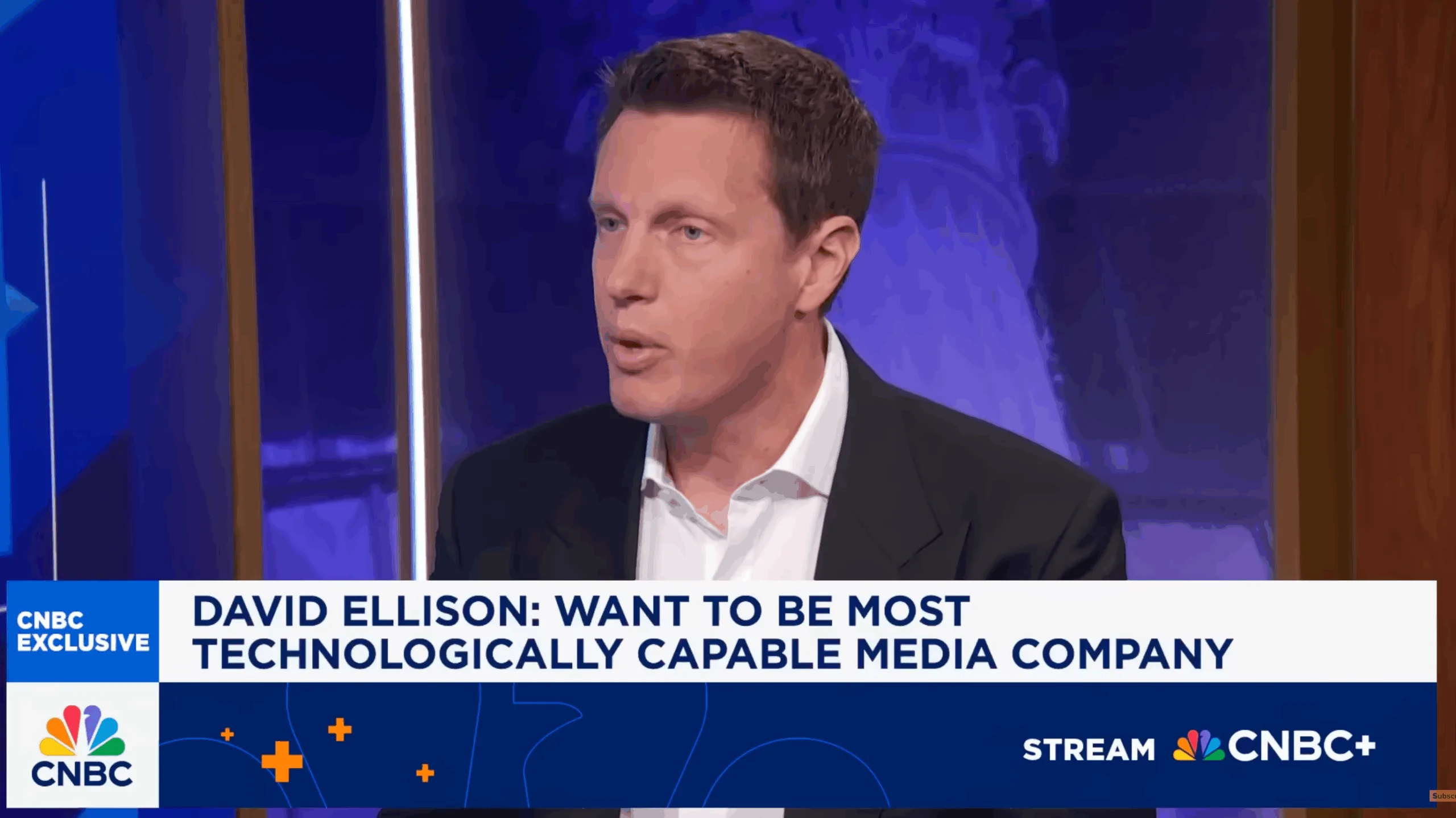
Paramount Skydance CEO David Ellison sits for an interview with CNBC – YouTube, CNBC Television
Keep Warner Bros. and Paramount operating separately, guarantee 30 theatrical releases annually between them, protect meaningful theatrical windows, guarantee domestic production, protect third-party licensing, preserve HBO, and keep Paramount in Los Angeles.
Those would be substantial concessions. The question now is whether Bonta is willing to negotiate them.
Because with Gavin Newsom concerned about California jobs, DGA and IATSE demanding a faster resolution, and Paramount openly contemplating life outside the Golden State, the political cost of allowing this fight to drag into 2027 is becoming considerably harder for California’s attorney general to ignore.
How do you feel about Hollywood unions pushing for a deal in the Paramount Warner Bros. merger lawsuit? Sound off and let us know!
