



With so much conflicting information out there, how much does Superman actually need to make at the box office to be profitable?
The 2025 Superman film, directed by James Gunn and starring David Corenswet as the Man of Steel, represents a pivotal reboot for the DC Universe (DCU) under Warner Bros. Discovery (WBD). Released on July 11, 2025, the movie has already generated significant buzz, both positive and negative.

Superman fighting an unknown enemy in the trailer for James Gunn’s Superman – YouTube, DC
As of July 14th, just three days into its theatrical run, the film has grossed $122 million domestically and $217 million worldwide, marking the third-biggest opening weekend of the year behind Jurassic World Rebirth and Lilo & Stitch. This debut has alleviated some concerns about the superhero genre’s post-lockdown fatigue, but questions linger.
What did it cost to make and market? And how much does Superman need to earn to be deemed a financial success? This analysis draws on verified reports, tax filings, industry estimates, and statements from James Gunn himself to provide a clear, sourced breakdown of what Superman needs to be profitable.
Production Budget: Navigating Rumors and Tax Incentives
The production budget for Superman has been a flashpoint of debate since pre-production. Initial reports, based on public tax credit applications filed with the Ohio Motion Picture Tax Credit program listed a gross expenditure of $363.8 million. These filings, reported by outlets like The Hollywood Reporter, suggested Superman could rank among the most expensive films ever, potentially eclipsing budgets for Marvel’s Avengers: Infinity War and Endgame if unadjusted for incentives.

Lex Luthor in the trailer for James Gunn’s Superman – YouTube, DC
However, WBD and DC Studios have consistently countered that this gross figure does not reflect the net cost after tax breaks from multiple filming locations.
Official statements peg the net production budget at $225 million, a figure corroborated by sources like The Wall Street Journal, IMDb, and Box Office Mojo. This adjustment aligns with common industry practices, where tax incentives can reduce costs by 10-30% or more.

James Gunn attends the European Premiere of Marvel Studios’ “Guardians of the Galaxy: Vol 3” in Disneyland Paris on April 22, 2023 in Paris, France. (Photo by StillMoving.Net for Disney)
James Gunn has also been (extremely…) vocal in debunking the higher estimates. In a social media post, Gunn clarified that the budget was not over $364 million, asking, “How in the world do they think they know what our budget is?”
Marketing Campaign: A High-Flying Push
Marketing for Superman was aggressive and widespread, featuring Roku home screen ads, Times Square takeovers, global trailers, and partnerships with brands like Samsung, Amazon, and Progressive.

Superman and Krypto in the trailer for James Gunn’s Superman – YouTube, DC
Industry trades initially estimated the campaign at $200 million, exceeding the typical $150 million for summer tentpoles. This figure reflects WBD’s bet on reigniting interest in the DC brand amid competition from Marvel.
However, post-release reports from Variety have revised this downward to $100 million, suggesting the initial estimates may have been overstated or inclusive of broader promotional tie-ins.

Rachel Brosnahan as Lois Lane in James Gunn’s Superman – YouTube, DC
For this analysis, we’ll consider the higher $200 million as the upper bound, given its prevalence in pre-release coverage, while noting the discrepancy.
Total Costs: Adding It Up
Combining the net production budget of $225 million with a marketing spend of $200 million yields a total outlay of approximately $425 million. If the lower marketing figure of $100 million is accurate, this drops to $325 million.

Krypto the Super Dog in Superman – YouTube, DC
Additional ancillary costs (e.g., prints and advertising residuals) could push it higher, but these are typically folded into marketing estimates.
The Superman Break-Even Point: Beyond the Headlines
Box office break-even calculations account for theater revenue shares. Studios retain about 50-55% of domestic grosses and 40-45% internationally, meaning a film needs to gross roughly 2-2.5 times its total costs to recoup expenses before profits.

Nicholas Holt as Lex Luthor in Superman – YouTube, DC
For Superman, using the $425 million total:
- At 2x: $850 million worldwide needed.
- At 2.5x (conservative, factoring in higher international cuts): $1.06 billion.
Hollywood trades have (of course) floated lower thresholds. Some say $500 million (focusing on international sales goals), while others cite $562.5 million (2.5x production only, excluding marketing).
Reports of a $700 million requirement—stemming from the gross budget rumors—have been dismissed by Gunn as “utter nonsense,” arguing it overstates the pressure on the film. Gunn has further stated that Superman “doesn’t need to be as big of a situation as people are saying” to sustain the DCU.

Nathan Fillion as Guy Gardner in Superman – YouTube, DC
Still, many question the industry pushed $500 million break even figure. It certainly seems too low, given theater splits.
Indeed, if total costs are $425 million, $500 million in grosses would yield only $225-250 million back to the studio. That’s far short of any kind of break-even point. The $700 million figure, while called nonsense by Gunn, aligns more closely with a 2x multiplier, but still could fall short if marketing costs are on the higher end of projections.
Conclusion: Defining Success Beyond Dollars
For Superman to be a clear financial success, it would seemingly need to surpass $600 million mark worldwide to approach break-even on reported costs, with $700-850 million ensuring profitability and justifying the reboot.
If marketing was closer to $100 million (which given the scope of this campaign doesn’t seem likely), it lowers to $500-650 million.
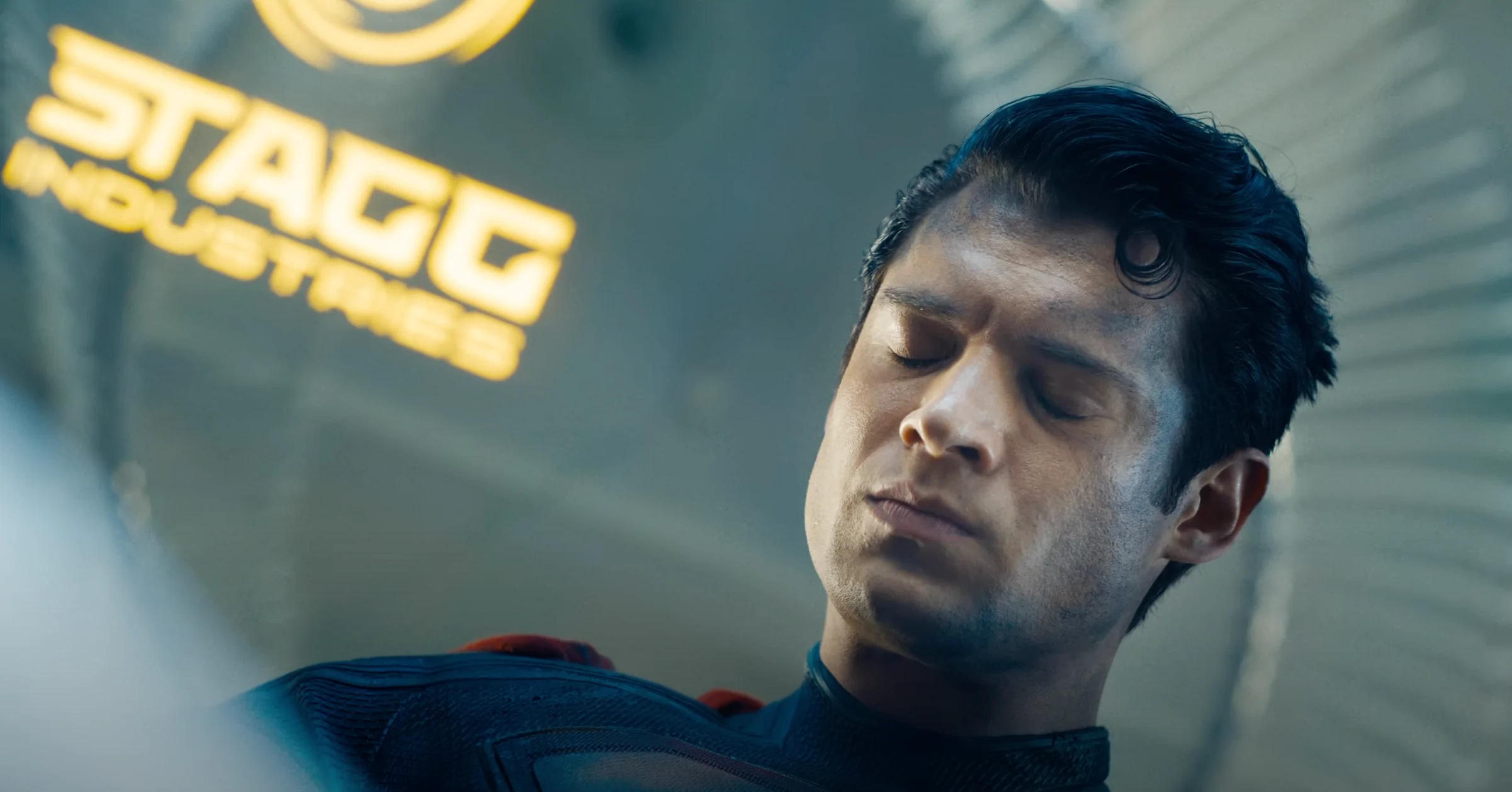
Superman grimacing by a Stagg Industries sign in the trailer for James Gunn’s Superman – YouTube, DC
However, success isn’t purely numerical. Ancillary revenue (merch, streaming, sequels) and cultural impact play key roles. Gunn’s dismissals of inflated expectations suggest WBD is playing for franchise longevity, not a one-film windfall.

Superman saves a little girl in the Superman teaser trailer – YouTube, DC
Superman is on pace to potentially fall short of billion-dollar heights but still deliver a much-needed lift for DC in 2025 landscape. Whether it breaks even or soars further will unfold in the coming weeks.
Do you think Superman will be profitable? Sound off in the comments and let us know!
