

If you’ve been holding onto your Xbox Series X physical games under the belief that discs still matter, it’s time to take a hard look at what’s quietly happening across Microsoft’s game releases.

The Xbox Series X Console – YouTube, Xbox
Three major titles — The Outer Worlds 2, Ninja Gaiden 4, and potentially Gears of War: Reloaded — are all either confirmed or expected to be digital-only releases on Xbox, even for a console that still features a Blu-ray disc drive.
And that’s not just a curious blip on the radar. It’s likely a calculated shift. Microsoft appears to be prepping Xbox fans for a future where physical games are no longer part of the plan.
The Canary in the Disc Tray
Earlier this month, it was confirmed that The Outer Worlds 2 will not ship with a physical disc on Xbox. Retail buyers will instead receive a download code tucked inside a game case — a token gesture for anyone still pretending physical media exists.

The Xbox Series X Console – YouTube, Xbox
Ninja Gaiden 4 is reportedly following the same pattern according to retailers. Listings show Xbox versions shipping without discs, while PlayStation 5 owners still get a traditional physical release. Then there’s Gears of War: Reloaded, which — while not officially confirmed — is widely rumored to be another digital-only title.
One is a fluke. Two is a pattern. Three? That’s a strategy.
Xbox Play Anywhere and the Push to Go Disc-Free
At the 2025 Xbox Showcase at Summer Game Fest, Microsoft quietly but consistently applied the Xbox Play Anywhere label to every first-party title. That label isn’t just marketing fluff. It signals a key pillar of Microsoft’s future strategy. Namely games that are tied to your digital Microsoft account, playable across consoles, PC, handhelds, and cloud.
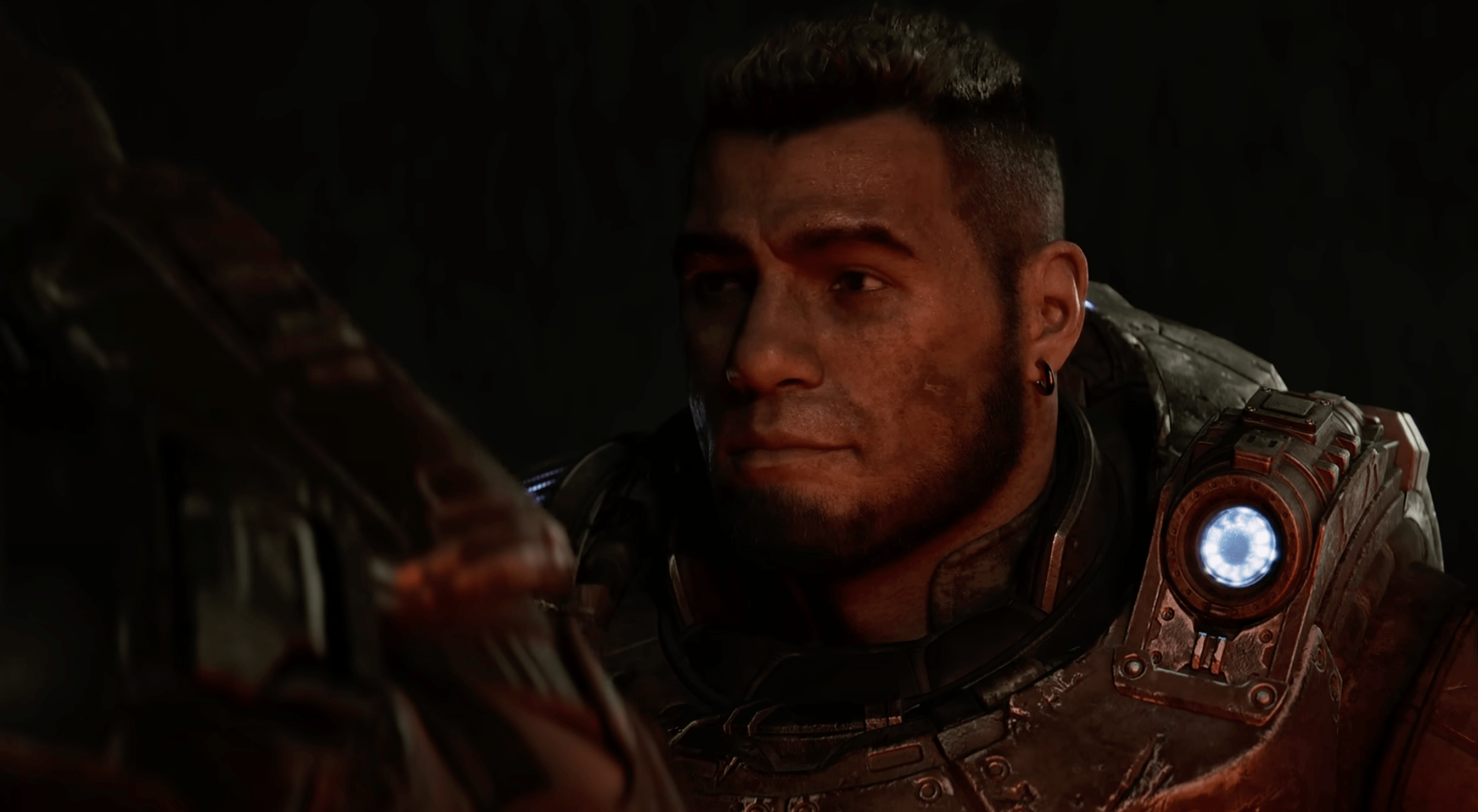
A screenshot from the trailer to Gears of War E Day – YouTube, Xbox
The implication is obvious — your discs don’t come with you. Your download license does.
This aligns with Xbox’s broader goals of building an ecosystem, not just a console. With an Xbox handheld on the horizon and more cloud features being baked into everything from Samsung TVs to Surface laptops, the future Microsoft envisions is seamless, cross-platform, and entirely digital.
In other words, you’ll own nothing and like it…
Why This Matters to Gamers
For some, this might all sound like progress. Why not have your games available everywhere? But that future comes with strings.
No disc means:
- No secondhand sales or trades.
- No borrowing from friends.
- No ownership outside the permission of Microsoft servers.
If a title is pulled from the store — as Forza Horizon 3 and Alan Wake were in the past — you’re out of luck. And if Microsoft changes the rules on digital licenses, you have no physical fallback.
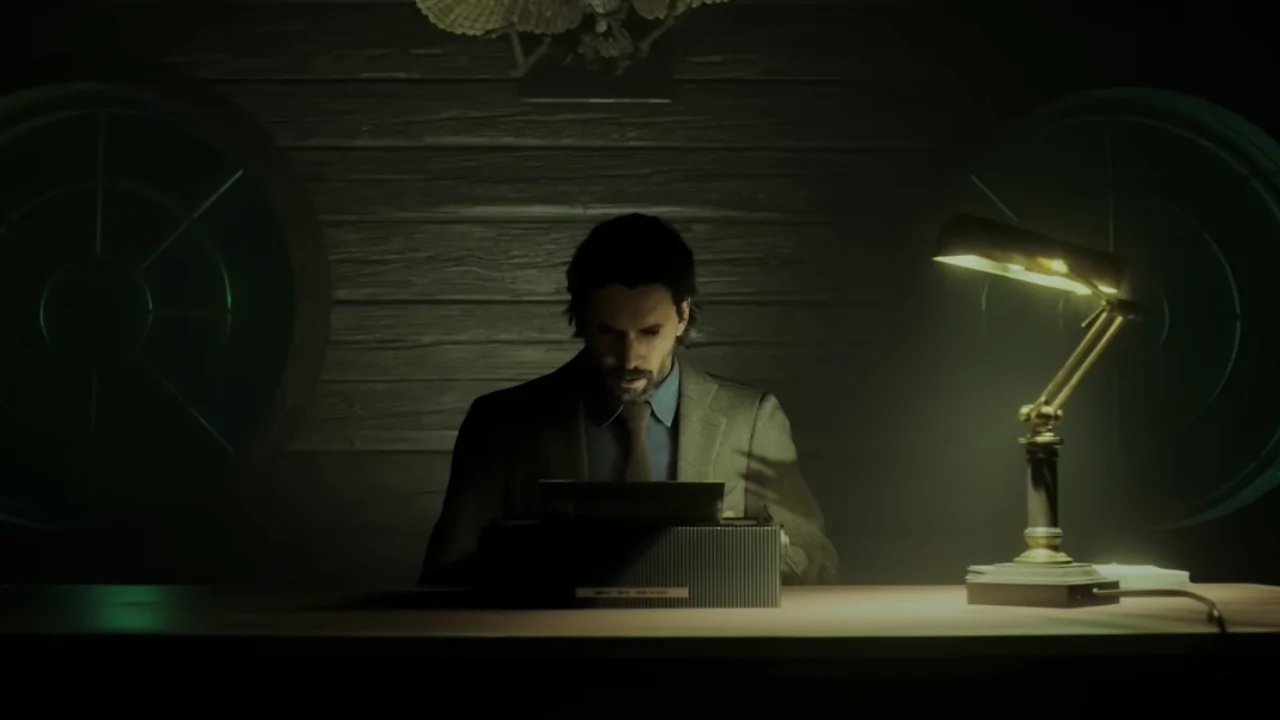
A screenshot from Alan Wake 2 (2023), Remedy
It’s also a preservation issue. Discs allow collectors and archivists to preserve a game’s original state, unaltered by later patches or censorship. Digital-only platforms don’t offer that guarantee.
Sony and Nintendo: Not Much Better
To be fair, Xbox isn’t alone on this road. Sony has been pushing digital as well, with the PS5 Digital Edition and more games launching with expensive digital-only collector’s editions. But for now, PlayStation 5 still ships physical discs, even for third-party titles like Ninja Gaiden 4, which Xbox is reportedly making download-only.
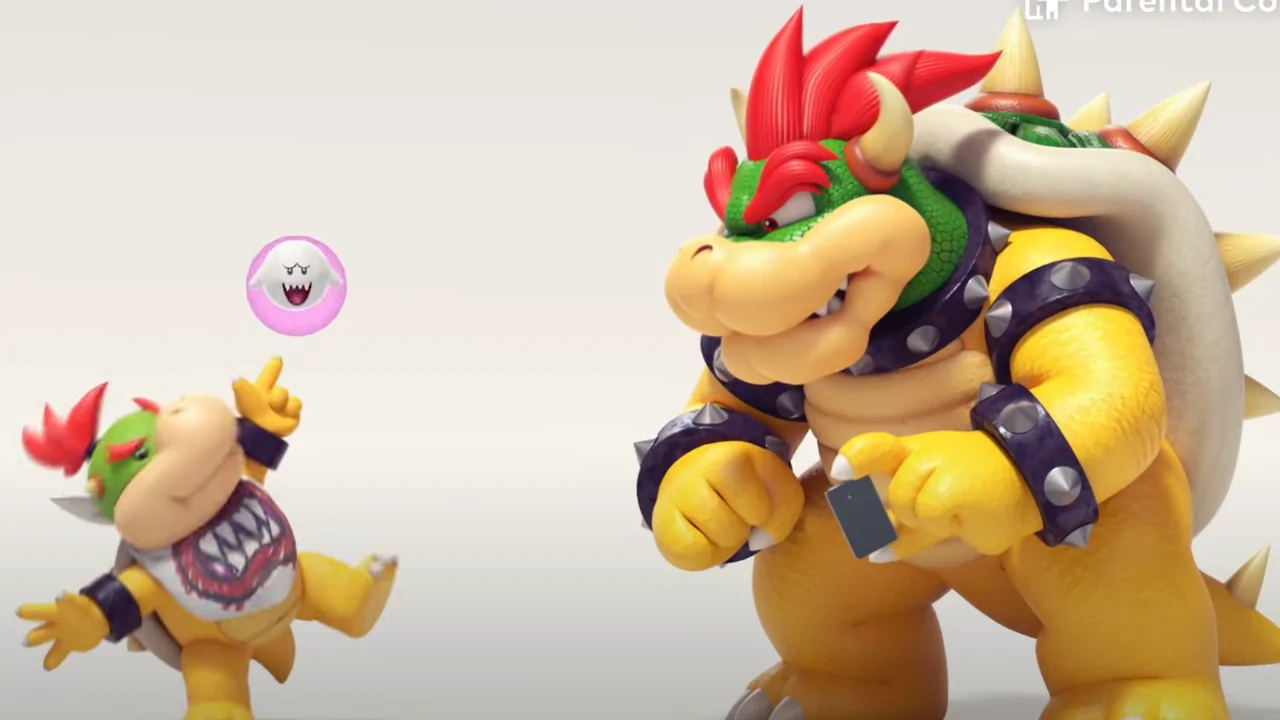
Bowser and Bowser Jr. demonstrate Nintendo’s new parental controls – YouTube, Nintendo of America
Nintendo, meanwhile, has arguably gone further. The company’s “Game-Key Cards” are physical tokens that offer no game data — just download codes in a cartridge-shaped box. That’s the worst of both worlds: a chunk of plastic with none of the permanence.
PC gaming? It abandoned physical media over a decade ago. So if you’re hoping to jump ship to a platform where discs still matter, your options are shrinking.
Microsoft Might be First — But it Won’t Be the Last
Here’s the reality: Microsoft is merely accelerating what the entire industry has been quietly preparing for. Physical game sales have dropped drastically in the last five years. Digital storefronts are more profitable. Manufacturing discs costs money. Retail partnerships cut into margins. And controlling licensing rights gives companies long-term leverage.
But don’t be fooled into thinking this savings on production would mean that you’d experience some kind of relief at checkout. Prices are more likely to rise than fall.
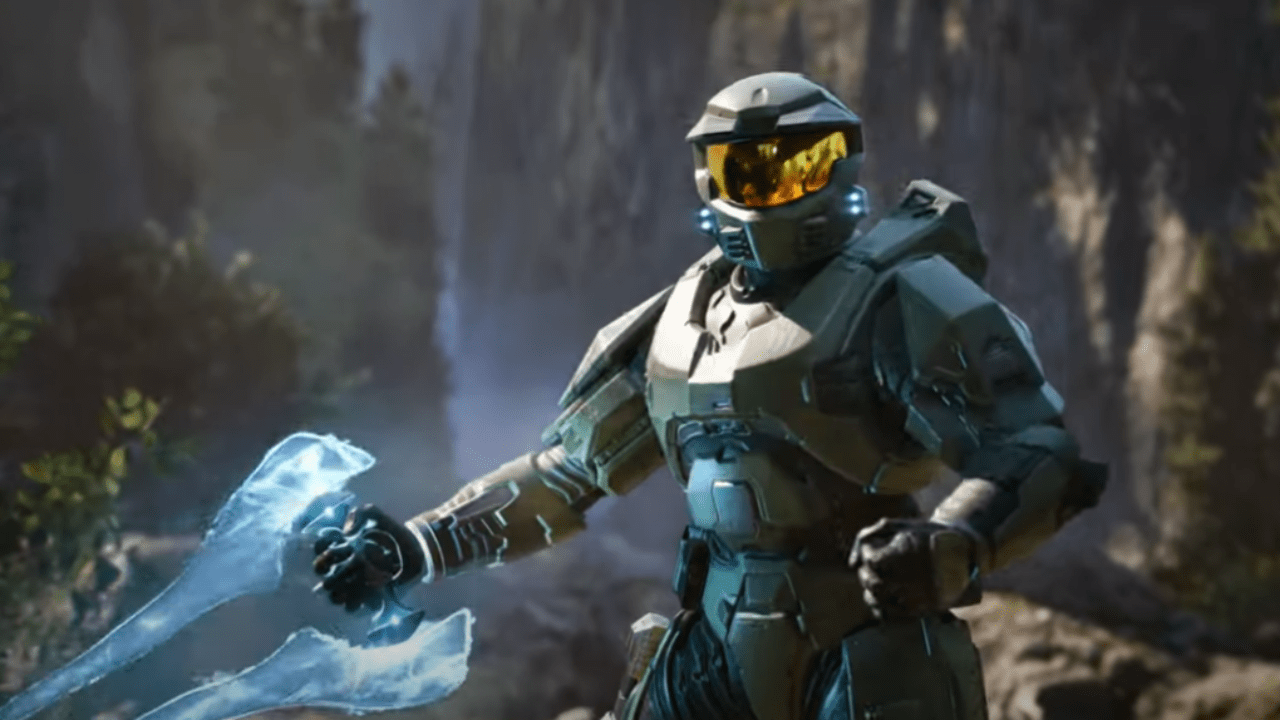
A screenshot of Master Chief via Halo YouTube
By nudging its biggest games into digital-only territory now, Microsoft is testing the waters. If fans don’t make noise, the dam will break — and it won’t just be Xbox that goes disc-free.
A Final Thought
This doesn’t have to be a doomsday article. But it is a moment of clarity.
Microsoft hasn’t officially ended Xbox physical games — but the trend is unmistakable. The Outer Worlds 2 and Ninja Gaiden 4 are major red flags. And if Gears of War joins, it’ll be hard to argue this isn’t the new normal.
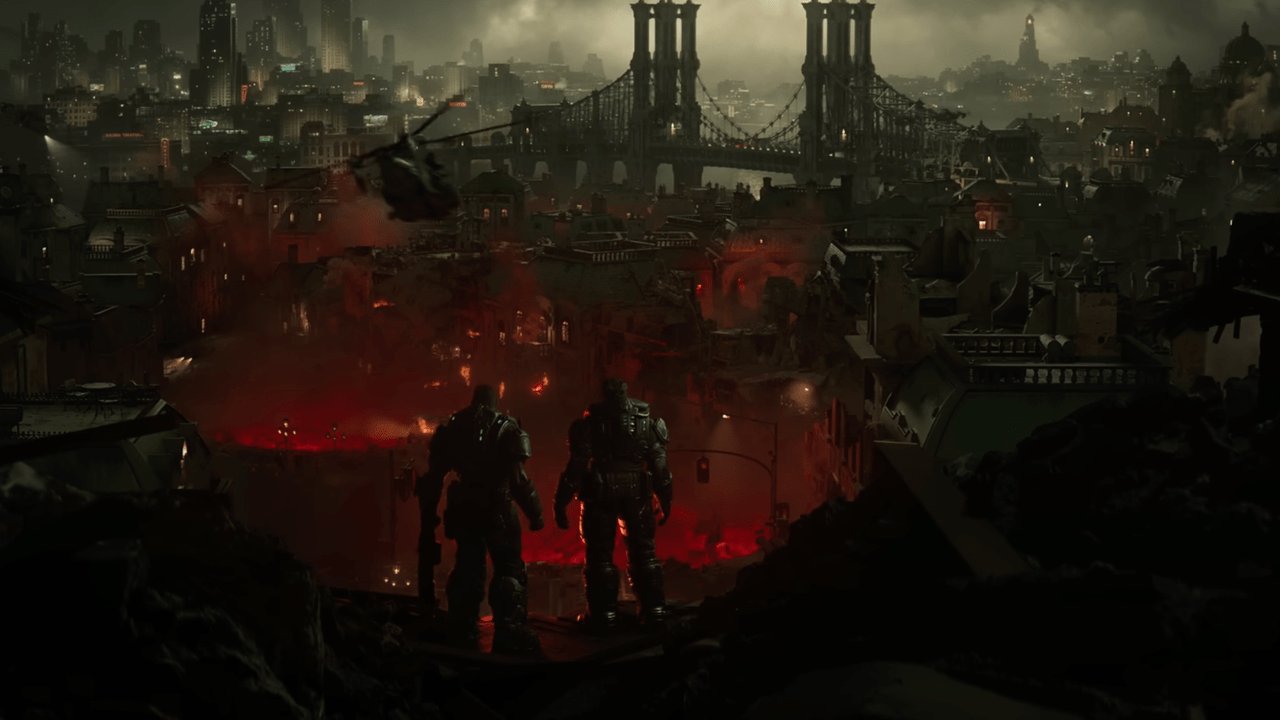
A screenshot from the trailer to Gears of War E Day – YouTube, Xbox
So here’s the real question: Are gamers ready to let go of physical media? Or are we simply being trained to accept its disappearance — one code-in-a-box at a time?
Because once the discs are gone… they’re not coming back.
Do you think Xbox is getting rid of physical games? Sound off in the comments and let us know!
UP NEXT: Epic Universe Expansion Begins as Project 915 Permits Reveal New Construction Plans


Nintendo pushes $80 USD games, and locks them behind a license. Now Microsoft is locking games away from a license. I wonder how they are working around the EU requirement that people be permitted to resell their game licenses.
The game publishers have been in an arms race with the second hand market for decades now. For every used copy people buy the publisher and the platform lose profit. The publisher is an obvious loser but it is important to remember that Nintendo, Xbox, and Sony each charge a per-copy sold licensing fee; not too many years ago this was about $10/unit.
For a a game like CoD or Madden the platform holder could look at hundreds of millions in revenue for giving Activision or EA the privilege of releasing on their hardware. I have heard of games logging twice as many unique players as they got in sales. All, I am sure, due to the second hand market so we’re talking big (hypothetical) bucks.
This, btw, is likely how Microsoft scores so many 3rd party releases on Game Pass. They simply forgive any per-copy licensing fee.
Fun fact: “Season Passes” as a DLC strategy were created as tools to keep people from trading in games. If the publisher could give a discount to Day One at a time most attractive to the harder core players, those who consume content much faster than normal. Not only did they get extra money for the Season Pass, but they’d have a better chance of keeping that copy off the used market. Most games sell a majority of their units in the first 30 days, and that is a long time for a die-hard beat or get bored of a game and trade it in for a different fix.
The promise of a piddling amount of content at high cost did drive quite a few sales, especially if a game had great word of mouth. And that content was usually already in progress because of certification and manufacturing lead times meant there were months of gap to fill before the game could start generating revenue; what better way to keep a core team on the hook while you tried to figure out if you could afford your next project?
Of course. The next step will be games releasing exclusively on Gamepass. And a bunch of gamers will fall for it like the brainless lemmings that they are until years down the road Microsoft starts pulling games from it or otherwise limiting access and they go “hOw DiD tHiS hApPeN??”
The moment physical games die, is when I’ll become mostly a retro gamer and it seems tit going to happen in the next couple of years. I have a massive backlog, so this doesn’t bother me all that much.
To the question “Are gamers ready to give up physical media?”
My answer is NO! However, I’m well aware that after more than 45 years of playing video games, it will soon be time to move on, because these companies (Sony, Microsoft, and even Nintendo) are doing everything they can to be disgusting and no longer make people want to buy their games, much less their 100% digital consoles.
I also have a long backlog, going back to the Xbox 360/PS4 era, and I often have more fun with these older games than all these GAS and other crap filled with DEI! So, for my part, I’ll simply avoid buying their games in the future, which I’ve been doing for a while now, given the direction this industry is taking and the fact that I don’t endorse 100% digital, whether it’s music, video games, or movies. They MUST give us the choice, but Microsoft seems to want to IMPOSE digitalization: too bad for them, I can live without it just fine.
But I also know that the new generation of gamers (“the modern audience,” as they like to call them) doesn’t care about physical games (and those who like them), because they haven’t really experienced them (especially if they were born after 2010, that famous Generation Z who only knows how to use three fingers to tap on a screen!), or even the beginnings of video games. So for them, in 2025, having only subscriptions and owning nothing seems sadly “normal.”
But I’m curious to see what they’ll think about it in 10, 20, or 30 years, if they’re truly passionate about video games. Because today, this medium has nothing to do with what it was in the 80s/90s and even the early 2000s. It has become so mainstream, so widespread, that many people consider video games a simple pastime. They are completely unaware of what this industry is plotting behind their backs. They don’t want to understand what it means to no longer own anything, to be dependent on the goodwill of these mega-corporations…
What is certain is that in 20 or 30 years, and if I’m still alive, I could always replay my games from the Xbox 360/PS3 era and older consoles as well. However, it seems that this new generation doesn’t know what nostalgia means, but by the time they do, it will probably be too late; all the favorite games of their childhood/adolescence will probably simply be gone forever, thanks to these dematerialized games. We’re already seeing the number of games that are no longer available, aside from physical ones, some of which have been removed from stores, driving up the price of second-hand games, sometimes absurdly.
And a second video game crash wouldn’t change anything; they won’t turn back now; their shareholders have become far too greedy. Except that at some point, it will be impossible to continue making a profit and hope to double it every year.
In short, I love video games, but I hope all these big companies, which no longer exude any passion for video games, go to hell.
So my response to Microsoft & Co.: I won’t buy your games anymore, and I don’t want your subscriptions, much less play via an undeveloped cloud service (still in Beta at Xbox), in 1080p 30fps.
You will own nothing and you will be happy.
XBox games are games you RENT and do not own. Boycott Microsoft. Their games are garbage anyway. Woke AF.
[…] Fonte: thatparkplace […]
“Or are we simply being trained to accept its disappearance — one code-in-a-box at a time?”
It’s definitely this. Microsoft is more committed to it than the others though, at least for now.