



ABC’s Jimmy Kimmel is reportedly refusing to air a new episode of Jimmy Kimmel Live! on the night of the final Stephen Colbert Late Show broadcast, turning what should be a straightforward business story into yet another political spectacle from late-night television.
According to Variety, Kimmel will instead air a rerun on May 21 “out of deference to Colbert’s sendoff” as Colbert exits CBS after 11 seasons hosting The Late Show.
The move is being framed by Hollywood media as an emotional show of solidarity among late-night hosts. But it also highlights the increasingly insular nature of modern late night television, where hosts appear more focused on political activism and industry back-patting than connecting with broad audiences.
Jimmy Kimmel and Stephen Colbert Have Become Political Allies More Than Comedians
Kimmel, Colbert, Seth Meyers, John Oliver, and Jimmy Fallon have spent years operating as a tightly aligned ideological bloc in entertainment media.
Variety reports that Kimmel, Fallon, Meyers, and Oliver are all appearing together on Colbert’s show this week in a reunion of their “Strike Force Five” podcast group formed during the 2023 Hollywood strikes.
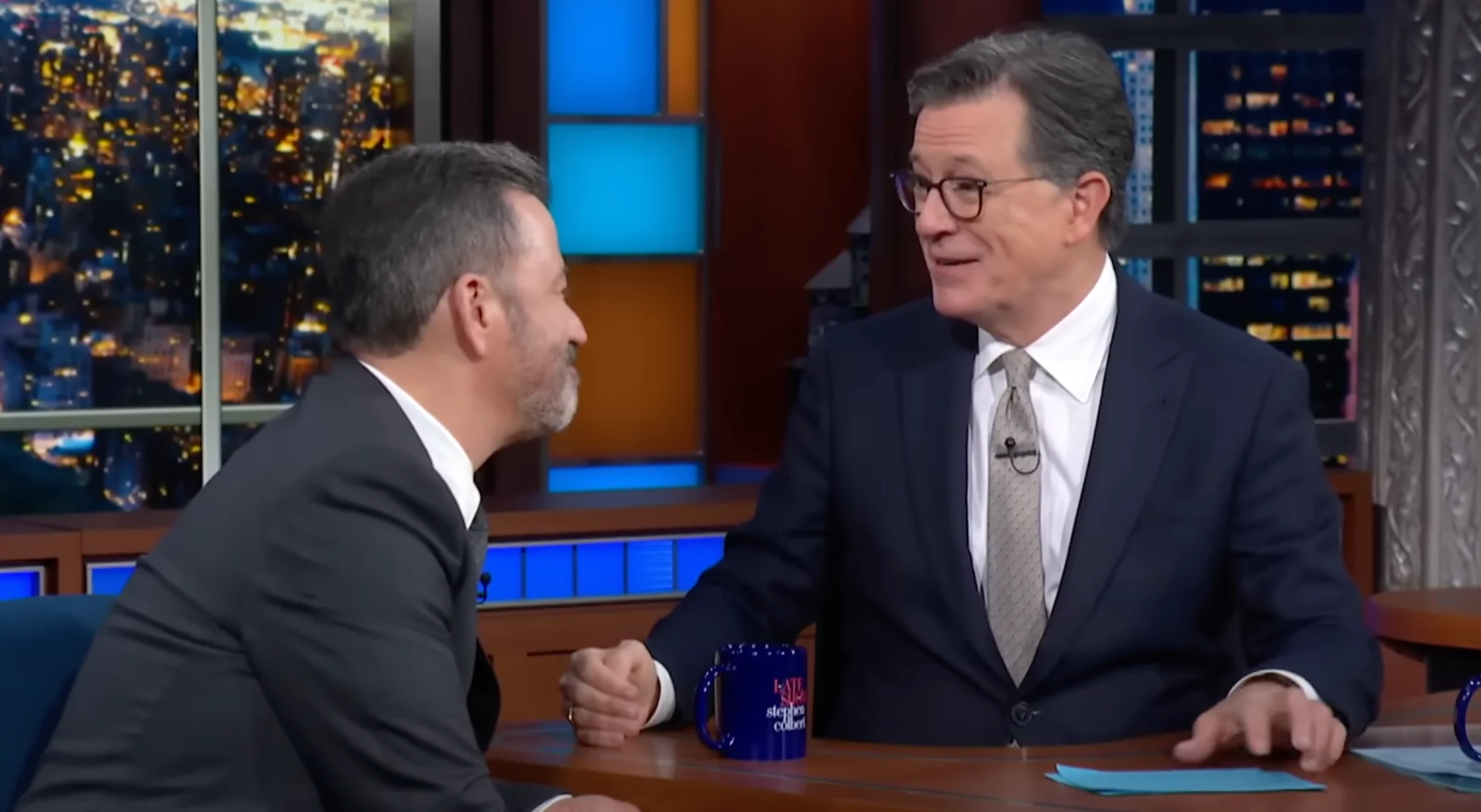
Jimmy Kimmel appears on Stephen Colbert’s show – YouTube, The Late Show With Stephen Colbert
READ: Disney Leadership Visits Lucasfilm Amid Growing Questions About Star Wars Sequel Trilogy Future
Rather than using late night as an escape from politics or cultural division, most of these hosts leaned harder into partisan commentary over the last decade, particularly during President Trump’s rise.
Colbert especially transformed The Late Show into an aggressively anti-Trump platform, abandoning much of the broader comedy appeal that once defined network late night television.
Kimmel followed a similar path at ABC, increasingly using monologues to attack conservatives, mock Republican voters, and lecture audiences on political issues.
CBS Says Colbert’s Exit Was Financial — Hollywood Keeps Claiming Censorship
CBS has repeatedly maintained that canceling The Late Show was “purely a financial decision.”
But many figures in Hollywood continue insisting the move was politically motivated because Paramount Global was, at the time of the announcement, seeking federal approval for its merger with Skydance Media.
That theory has become the dominant narrative among entertainment insiders despite the obvious financial realities surrounding modern late-night television.

Stephen Colbert being interviewed by Jimmy Kimmel – YouTube, Jimmy Kimmel Live!
Ratings for broadcast late night have declined dramatically over the last several years as younger audiences abandon traditional television entirely and viewers increasingly tune out overtly political programming.
The economics simply aren’t what they once were.
Massive salaries, expensive New York productions, shrinking ad revenue, collapsing linear TV audiences, and declining cultural relevance have all put enormous pressure on the format.
Yet instead of acknowledging that audiences may simply be exhausted by nightly political lectures disguised as comedy, many in Hollywood would rather blame President Trump and claim censorship.
David Letterman Escalates the Rhetoric
Former Late Show host David Letterman has emerged as one of the loudest critics of CBS over Colbert’s exit.
In comments to The New York Times, Letterman blasted the network and Paramount executives.

David Letterman sits for an interview with Stephen Colbert – The Late Show With Stephen Colbert
READ: IGN ‘Mixtape’ Review Draws Backlash Over Perfect Score for Controversial Game
“He was dumped because the people selling the network to Skydance said, ‘Oh no, there’s not going to be any trouble with that guy. We’re going to take care of the show. We’re just going to throw that into the deal. When will the ink on the check dry?’” Letterman alleged. “I’m just going to go on record as saying: They’re lying. Let me just add one other thing, Jason. They’re lying weasels.”
That quote has quickly become a rallying cry for entertainment media figures attempting to portray Colbert as some kind of victim of political suppression rather than the host of a declining legacy television format facing economic realities.
Late Night Television’s Audience Problem Keeps Getting Ignored
What many of these conversations continue to avoid is the simple question: if these shows remain culturally dominant, why are the ratings and relevance continuing to erode?
For years, late-night hosts positioned themselves less as comedians and more as political commentators for a very specific ideological audience.
That strategy may have generated applause lines on social media and glowing coverage from entertainment journalists, but it also alienated large portions of the country.

Stephen Colbert dances around with human needles – YouTube, The Late Show With Stephen Colbert
Viewers looking for comedy increasingly migrated elsewhere — podcasts, YouTube creators, streamers, independent comedians, and alternative media personalities who don’t spend every night delivering the same political messaging.
The result is a late-night ecosystem where hosts largely perform for each other, for entertainment reporters, and for shrinking audiences that already agree with them politically.
Now, as Colbert exits network television, the industry appears determined to treat the moment as proof of political persecution instead of acknowledging the obvious business collapse surrounding the format itself.
How do you feel about Kimmel airing a rerun during the final Colbert broadcast? Sound off in the comments and let us know!
UP NEXT: ‘Michael’ Breaks Domestic Box Office Record for Musical Biopics
