



The writer behind one of Lanterns’ most controversial episodes was preparing for backlash before it even aired. Vanessa Baden Kelly, who wrote Lanterns Episode 3, “OutKast,” told TheWrap that she spent the morning of her interview reading negative Reddit reactions to Damon Lindelof’s 2019 HBO series Watchmen.
Her takeaway was extraordinary.
“I have to read through all of this, because not only did I love it, and not only was it super decorated, but it’s considered one of the best DC shows, and one of the best comic book TV shows in the past 20 years,” Baden Kelly said. “So I have to see that even if a million people hate (Lanterns), that’s OK, because people didn’t like Watchmen either, and it still was what it was.”
The statement still reveals a troubling philosophy within James Gunn’s DC Universe: audience rejection can apparently be tolerated as long as critics and awards organizations eventually approve of the work.
That may be comforting inside an HBO writers’ room. It’s a dangerous attitude for a DC Studios franchise that needs paying customers to care about John Stewart beyond a single season of television.
‘Lanterns’ Completely Rewrites John Stewart’s Origin
“OutKast” doesn’t simply add new details to John Stewart’s history. It replaces the foundation of his story.
In the comics, the Guardians of the Universe select John as Earth’s alternate Green Lantern after Guy Gardner is incapacitated. John is chosen because of the man he already is—not because his parents spent decades manufacturing him for the position.
DC’s official John Stewart profile identifies him as a Marine Corps veteran, former architect, and one of the Green Lantern Corps’ greatest leaders. A separate DC retrospective on Green Lantern #87 explains that the Guardians selected John and instructed Hal Jordan to train him as a relief Lantern.
“OutKast” discards that origin.

John Stewart as Green Lantern – YouTube, Comics Explained
The episode reveals that Abin Sur’s ring first approached John Stewart Sr. and asked whether he was afraid. When John’s father answered honestly that he was, the ring rejected him and eventually selected Hal Jordan.
John’s mother, Bernadette, then confronts a Guardian.
“Do you understand how unfair it is to ask a Black man in America if he’s afraid?” she asks.
The Guardian subsequently gives John’s parents an opportunity to condition their infant son to become fearless. John is raised through a brutal training program designed to ensure that he will eventually qualify for the ring his father lost.
This doesn’t deepen John Stewart. It makes his entire childhood part of an experiment.
The comic-book John was selected because the Guardians recognized his existing courage, character, and potential. The Lanterns version was programmed from infancy to pass an alien test.
This Isn’t About Pretending John Stewart Was Apolitical
Baden Kelly also addressed people who had called Lanterns “woke.”
“I stumbled across some people calling the show ‘woke,’ and there were people putting panels in the reactions and the comments, and they were panels from the 1970s John Stewart,” she told TheWrap. “Him calling people ‘Whitey’ or him opposing wars, and I’m like, ‘Oh my God.’ This is who John Stewart’s always been.”
On that narrow point, she’s correct.
John Stewart was politically outspoken from his first appearance. Dennis O’Neil and Neal Adams introduced him during a celebrated Green Lantern run that directly confronted racism, corruption, poverty, and drug abuse.
A DC feature examining the character’s history notes that Adams modeled John after Sidney Poitier. The character refused to hide behind a mask, confronted Hal’s assumptions, and exposed a politician’s plot in his debut story.
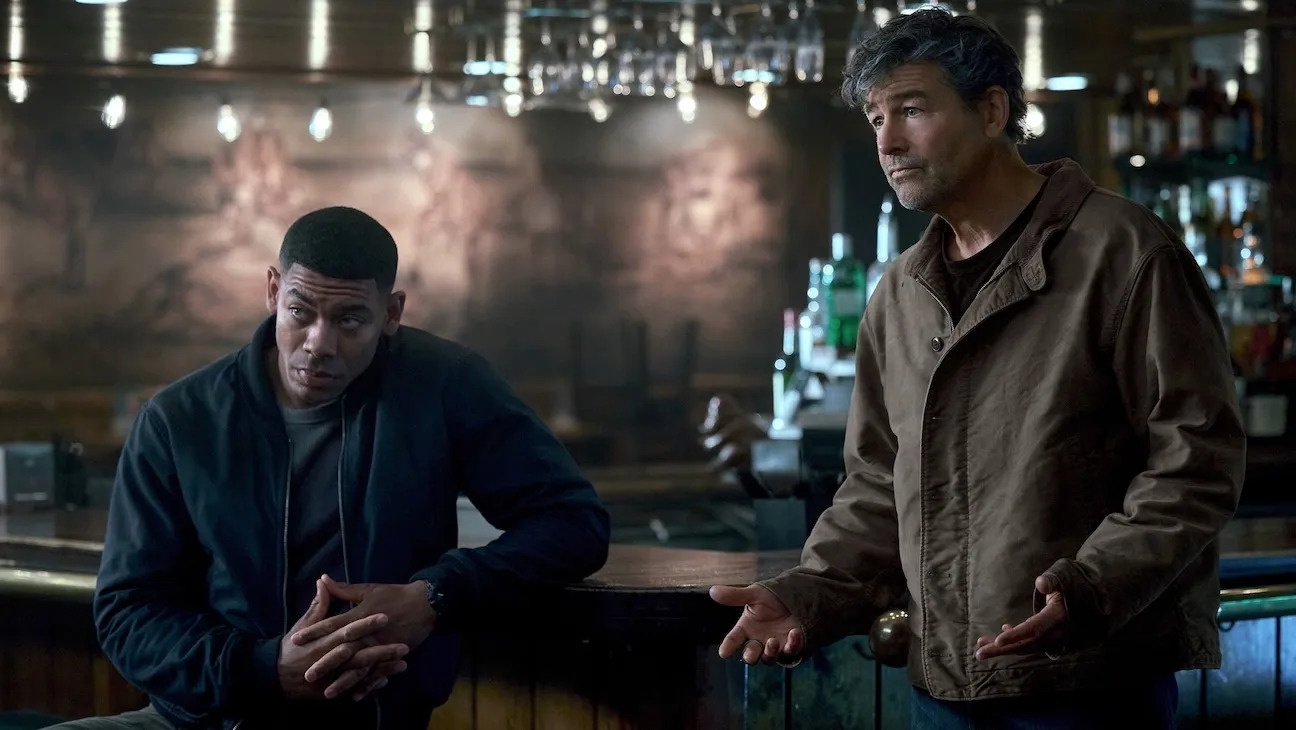
Aaron Pierre as John Stewart and Kyle Chandler as Hal Jordan in Lanterns – HBO, DC Studios
Race and politics aren’t foreign additions to John Stewart. But that doesn’t make every race-centered rewrite faithful to the character.
The original John was a confident, self-made man who earned the Guardians’ respect. “OutKast” changes him into the product of a lifelong conditioning program created to correct what the episode portrays as an unjust racial outcome between his father and Hal Jordan.
Critics aren’t objecting merely because John discusses race. They’re objecting because the writers replaced his agency with a predetermined destiny built around racial grievance and parental control.
The Change Was Deliberate
TheWrap’s interview confirms that the new origin was created specifically for the series.
Baden Kelly described John’s existing family background as relatively thin and said the writers wanted to ask, “What does it mean to be a Black man and get that ring when other characters canonically had it?”
“We really started discussing how much more a Black superhero has to do to be accepted in that world,” she explained.
Baden Kelly compared John’s childhood conditioning to the early training of Tiger Woods, Serena and Venus Williams, and Jalen Brunson.
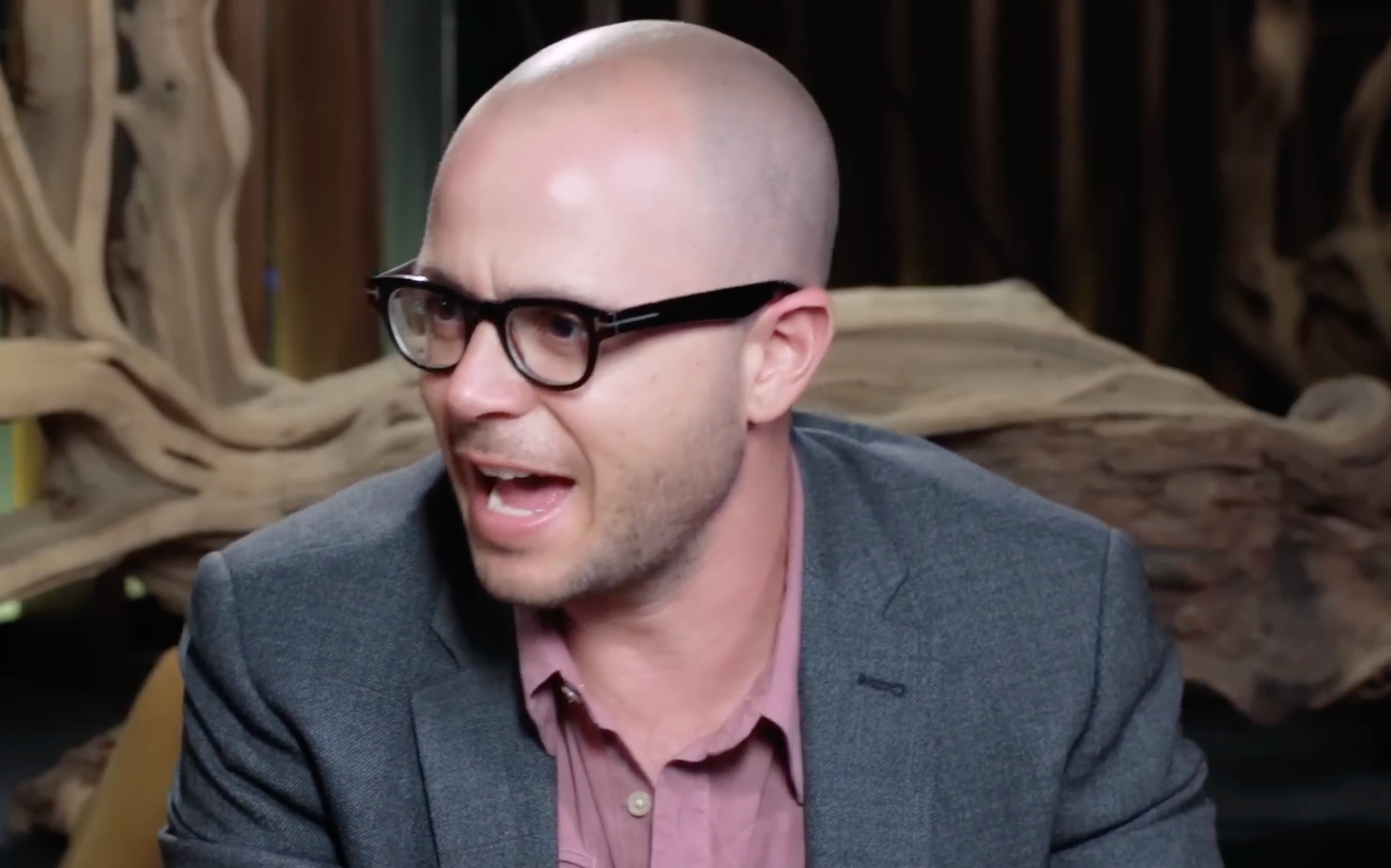
Damin Lindelof in an interview – YouTube, The Verge
READ: Jay Leno Took 50% Pay Cut to Keep Staff Employed on The Tonight Show
Co-creator Damon Lindelof offered his own explanation of the writers’ approach to the source material.
“When you’re playing around with the canon, you have to treat it like you’re handling plutonium,” Lindelof said. “But at the same time, there’s kind of no fun and creativity and originality in that.”
There’s the problem.
Established mythology is treated as an obstacle to the writers’ creativity. The character must be taken apart and rebuilt so the adaptation can say something the writers consider more relevant.
Adding to the mythology is one thing. Replacing the reason John Stewart becomes Green Lantern is another.
Awards Don’t Pay The Bills
Baden Kelly’s defense depends upon the awards received by Watchmen.
The Television Academy records 26 Emmy nominations and 11 wins for the HBO series, including Outstanding Limited Series. It was unquestionably an awards-season success.
But Emmys don’t keep streaming services afloat or prove that a series turned a profit, created a sustainable franchise, generated merchandise sales, or produced characters and moments that remained important to the public.

Kyle Chandler as Hal Jordan in the Lanterns trailer – YouTube @HBO
More than six years later, HBO’s version of Watchmen has produced no second season, no television spinoff, and no continuing screen franchise. The show is now invoked primarily through awards retrospectives and as a defense whenever another Lindelof-associated adaptation antagonizes fans.
Awards can decorate a production. They can’t manufacture audience loyalty.
A trophy doesn’t make viewers subscribe to HBO Max. It doesn’t sell a ticket to the next DC movie, nor does it guarantee that audiences will follow a character from television to theaters.
If “a million people hate” Lanterns, pointing toward Watchmen’s Emmy shelf will not make those people care about John Stewart’s next appearance.
DC Studios Needs Customers, Not Just Critics
Aaron Pierre’s John Stewart is not supposed to disappear after Lanterns.
TheWrap reported that Pierre is expected to carry the character into the DCU film Man of Tomorrow. That makes the reaction to this version of John a larger business concern for DC Studios.
The company needs viewers to accept him as a central hero in its connected universe. That requires more than critical reviews and industry awards. It requires goodwill, investment, enthusiasm, and trust from the audience.

The Green Lantern Corps working together – YouTube, Comics Explained
Writers shouldn’t treat widespread rejection as a badge of artistic courage. Sometimes controversy is evidence that creators challenged an audience in a meaningful way. Sometimes it means they misunderstood what people valued about a character. John Stewart didn’t need to be reconstructed to become culturally relevant. He already had more than five decades of history as an architect, Marine, Justice League member, and Green Lantern Corps leader.
His courage belonged to him.
By turning that courage into the product of childhood conditioning, Lanterns didn’t finally explain why John Stewart was special. It stripped away one of the most important reasons he already was.
Awards can’t repair that mistake, and dismissing the audience won’t build the DCU.
How do you feel about Lanterns episode 3? Sound off and let us know!
UP NEXT: Howard Stern Signs Big Deal With Warner Bros. After Decimating Staff With Layoffs
