



It’s becoming harder and harder to recognize Disney’s own stories once they’ve gone through the corporate filter. The Princess and the Frog gave audiences a tale about a “princess” named Tiana set in the heart of New Orleans, steeped in music, culture, and yes — voodoo. It was a story about dreams, transformation, and the dangers of making deals with dark powers.
But according to leaked Disney Character Foundation Materials for in-park performers shared by the X account @cynical_disney, almost every one of those themes has been rewritten, sanitized, or outright erased.
BREAKING: files from Disney’s costuming department have been leaked regarding PATF/TBA. Some highlights include restrictions on Facilier’s movie costume, Tiana not allowed to refer to her time as a frog, censorship of any mentions of voodoo/hoodoo and more! View the Tiana Files👇
— Cynical Disney (@cynical_disney) September 22, 2025
The internal documents make it clear: Disney wants to take away the very culture and storyline that made The Princess and the Frog stand out in the first place. Any Voodoo elements are stripped away, the Tiana frog storyline is minimized, any mention of fan-favorite attraction Splash Mountain are outlawed, and new identity-focused talking points have been bolted on in their place.
Voodoo Vanishes from the Bayou
The leaks show that cast members are explicitly forbidden from using the words “voodoo” or “hoodoo.” Instead, they’re told to call Dr. Facilier’s powers “parlor tricks,” “incantations,” or “spells.” This is, according to the leaks, done to “avoid demonizing voodoo.”
[8/11] pic.twitter.com/s2C9C9o3bZ
— Cynical Disney (@cynical_disney) September 22, 2025
Even Mama Odie, the eccentric swamp-dwelling mentor, is stripped of any reference to cultural practices. Performer notes state: “Do not discuss Mama Odie’s use of Voodoo or Hoodoo.” This matches up with a recent change in the way Mama Odie is described through official Disney channels. Instead of being associated with voodoo, she’s now described as a “bayou fairy godmother.”
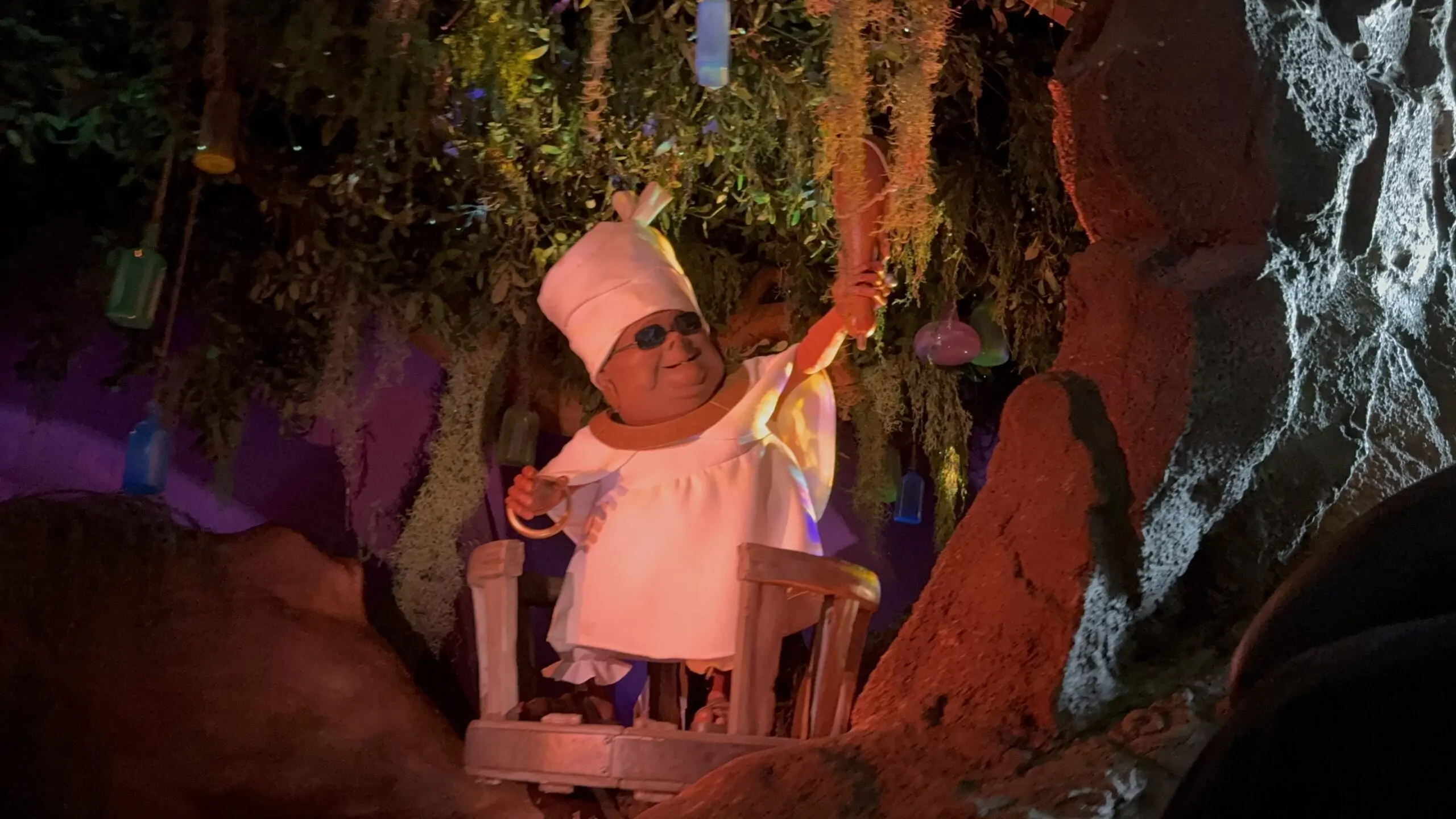
The Mama Odie animatronic in Tiana’s Bayou Adventure in Walt Disney World – Photo Credit: M. Montanaro
That means one of the most unique aspects of the original story — the spiritual traditions of New Orleans — is reduced to cheap card tricks and smoke effects. The culture that gave The Princess and the Frog its edge is gone. Without voodoo, Dr. Facilier becomes less of a sinister figure and more of a sideshow magician.
Disney didn’t just water this down; they boiled it away.
A Frog-Free Princess?
Just as startling is the ban on discussing Tiana’s time as a frog. Yes, the entire plot of The Princess and the Frog — the movie where audiences met her in the first place — is off limits.
According to the leaked guidelines:
“To many communities, it’s disheartening to see a character of color, especially a titular character, transformed with their faces and features obscured, hiding the diversity and authenticity of the character’s journey. Facilier used Naveen’s desire for ‘green,’ or money, to turn him into a frog, and the magic used eventually transforms Tiana, as well. Although Tiana came to enjoy her time in the bayou and fell in love with Naveen while they were amphibians, she limits how much she discusses her time as a frog, preferring to focus on the life she shares with Naveen as humans. If a Guest mentions the pair’s time while transformed, Tiana may share a playful comment about her adventure as a frog before redirecting the conversation to focus on the bayou, her friendship with Louis, or Mama Odie’s magic.”
Let’s pause here. Tiana’s whole arc — the sacrifices she makes, the lessons she learns, and the love she finds — all happen during her time as a frog. That’s the story. Imagine telling Ariel not to talk about being a mermaid, or Elsa not to mention ice powers. Yet when it comes to Tiana, the frog storyline is suddenly off-limits.
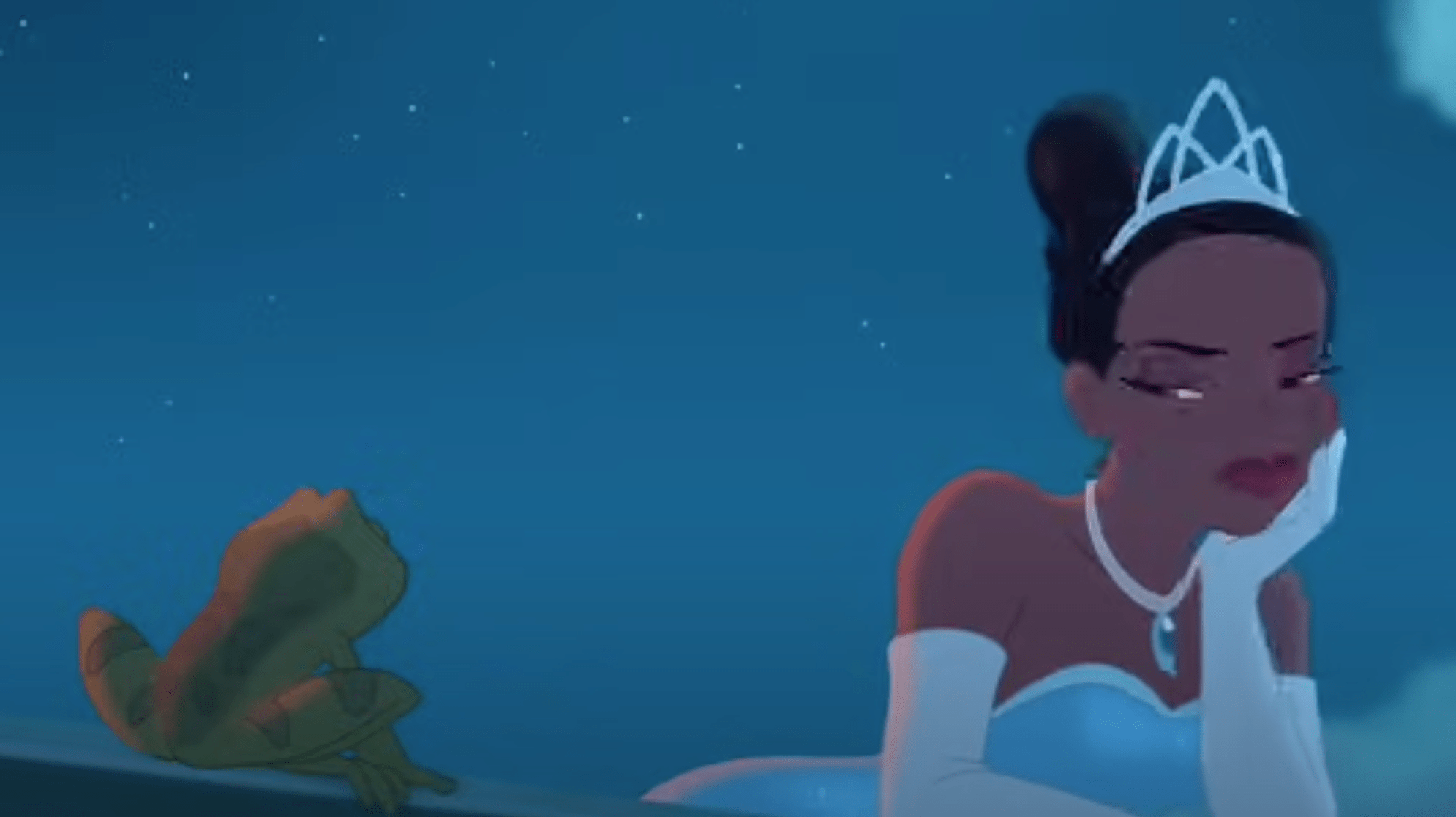
Princess Tiana and Naveen in The Princess and The Frog – YouTube, Walt Disney Animation Studios
If a guest asks about it, cast members are instructed to redirect her human experiences. In other words, the single most defining part of her movie is being erased from in-park storytelling.
What Guests Are Supposed to Hear
So what does Disney want guests to talk about instead? The leaked scripts show a heavy push toward real-world racial and cultural talking points.
[9/11] pic.twitter.com/ijH2r2LyPS
— Cynical Disney (@cynical_disney) September 22, 2025
Some of the pre-written guest questions Disney preps performers for include:
- “How does it feel to be the first African-American Disney Princess?”
- “How does it feel to be the first mixed-race Disney couple?”
- “How are you celebrating Juneteenth or Black History Month?”
That’s right — while Tiana can’t talk about her voodoo encounters or her transformation into a frog, she’s suddenly scripted to deliver corporate-approved soundbites about Juneteenth. Even Dr. Facilier, of all characters, is given prepared lines for Black History Month and Juneteenth greetings.
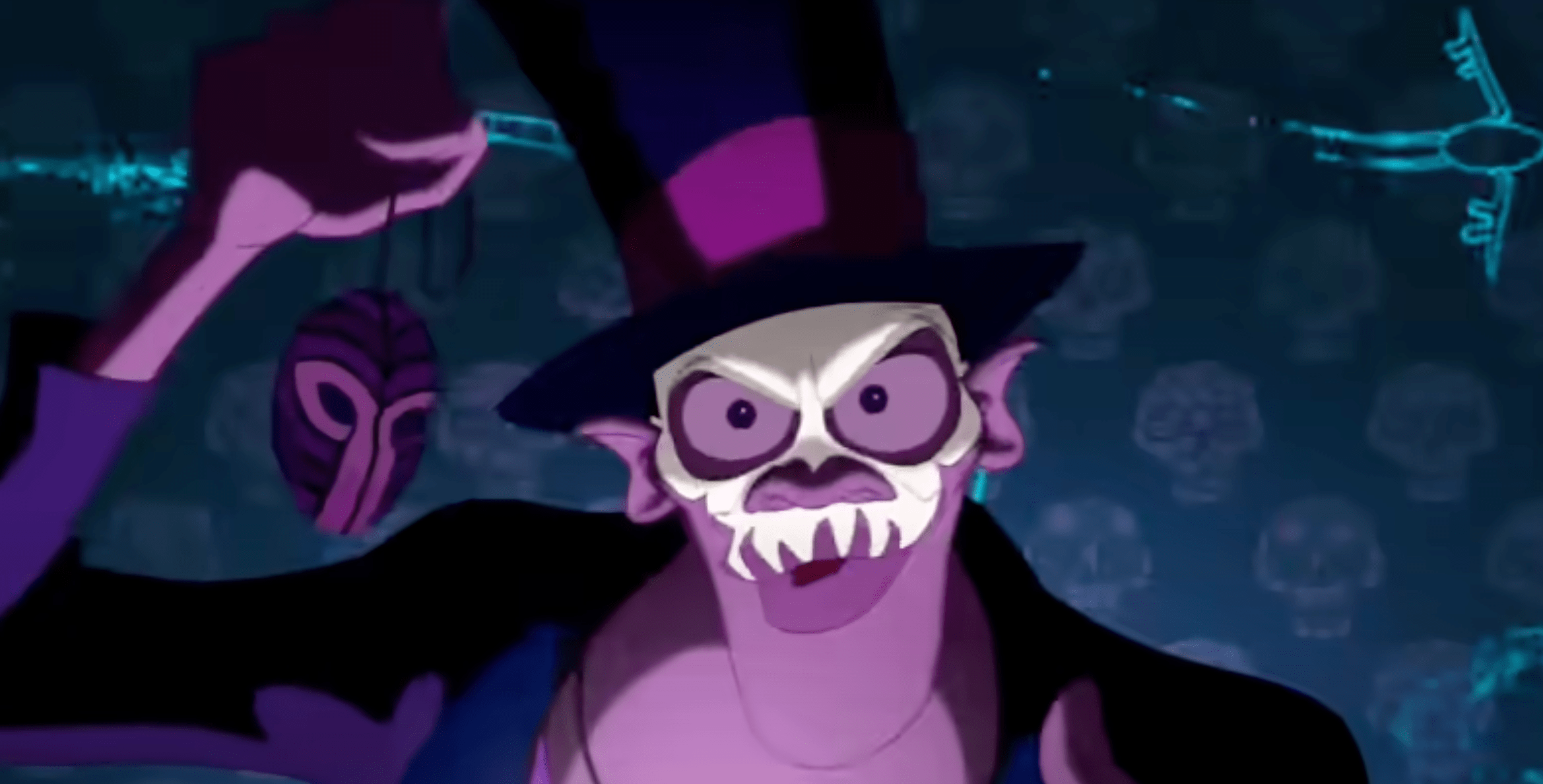
Dr. Facilier depicted in The Princess and The Frog – Disney+
This isn’t The Princess and the Frog. It’s Disney turning its characters into spokespeople for identity politics.
What’s Off-Limits for Tiana Besides Voodoo and Frogs?
The list of banned topics for Tiana and company goes well beyond voodoo and the frog storyline.
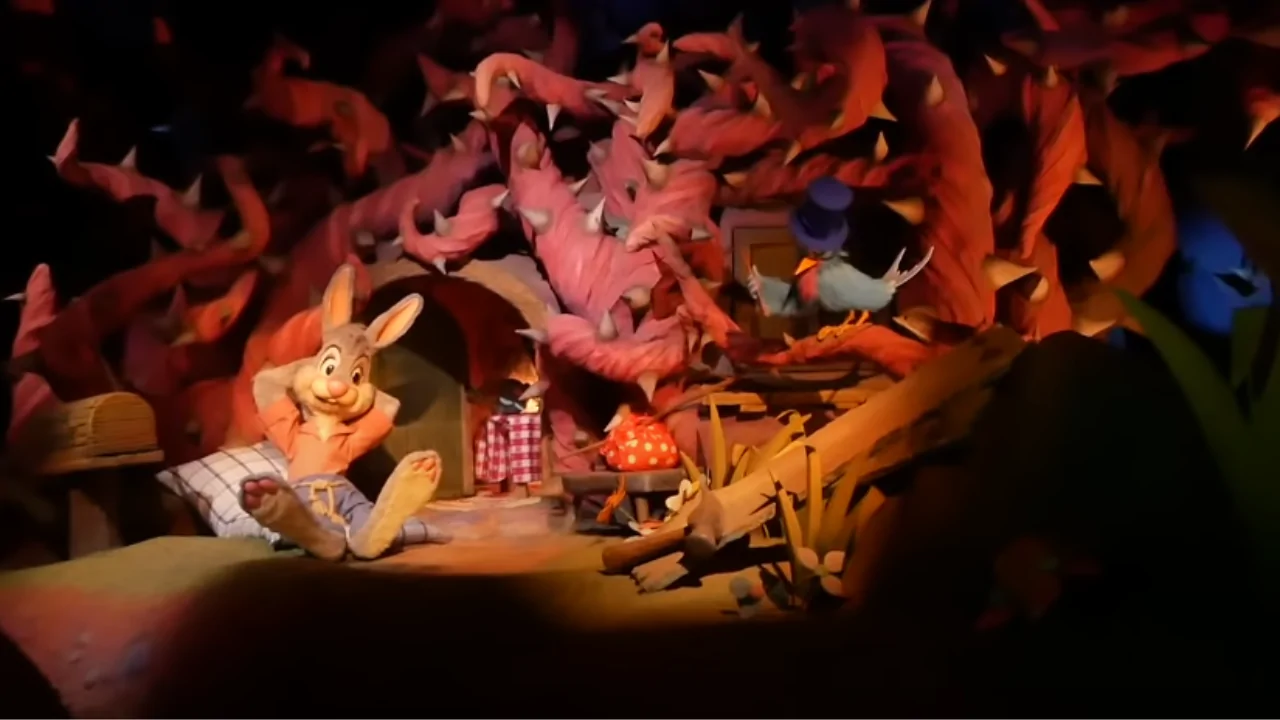
An image of Splash Mountain at Tokyo Disneyland via WDW News Today YouTube
According to the notes, performers are not to mention:
- Splash Mountain — even though Tiana’s Bayou Adventure was built directly on top of it.
- Ray’s death — one of the most emotional scenes in the entire movie.
- Wealth or poverty — despite this being central to Tiana’s ambition to open her own restaurant.
- Real historical events — no mentions of Hurricane Katrina, the 1920s, or any specific period.
Basically, if it connects Tiana to real cultural struggles or emotional moments from her movie, it’s off the table. But if it checks a modern identity box? That’s front and center.
A Manufactured Disney Character
The leaked Disney Character Foundation Materials make one thing abundantly clear: Disney no longer trusts its own stories. Instead of letting Tiana be the hardworking dreamer who learns about love and resilience through her time as a frog, she’s been recast as a sanitized mascot with scripted lines about modern race-related holidays.

A Tiana animatronic figure in Tiana’s Bayou Adventure in Walt Disney World – Photo Credit: M. Montanaro
The cultural backbone of Tiana and the film — New Orleans voodoo traditions — is gone. The emotional backbone of the film — Tiana’s time as a frog and Ray’s sacrifice — is gone. What’s left is a corporate checklist.
It’s a bait-and-switch for fans who wanted to see The Princess and the Frog honored with the same authenticity as Cinderella, Ariel, or Belle. Instead, the film’s voodoo roots are erased, Tiana’s frog journey is silenced, and the result is a hollowed-out character who exists only to repeat what the company deems safe and politically correct.
The Bottom Line
Disney has once again shown that when faced with the choice between respecting culture and storytelling or enforcing corporate messaging, the story loses every time.
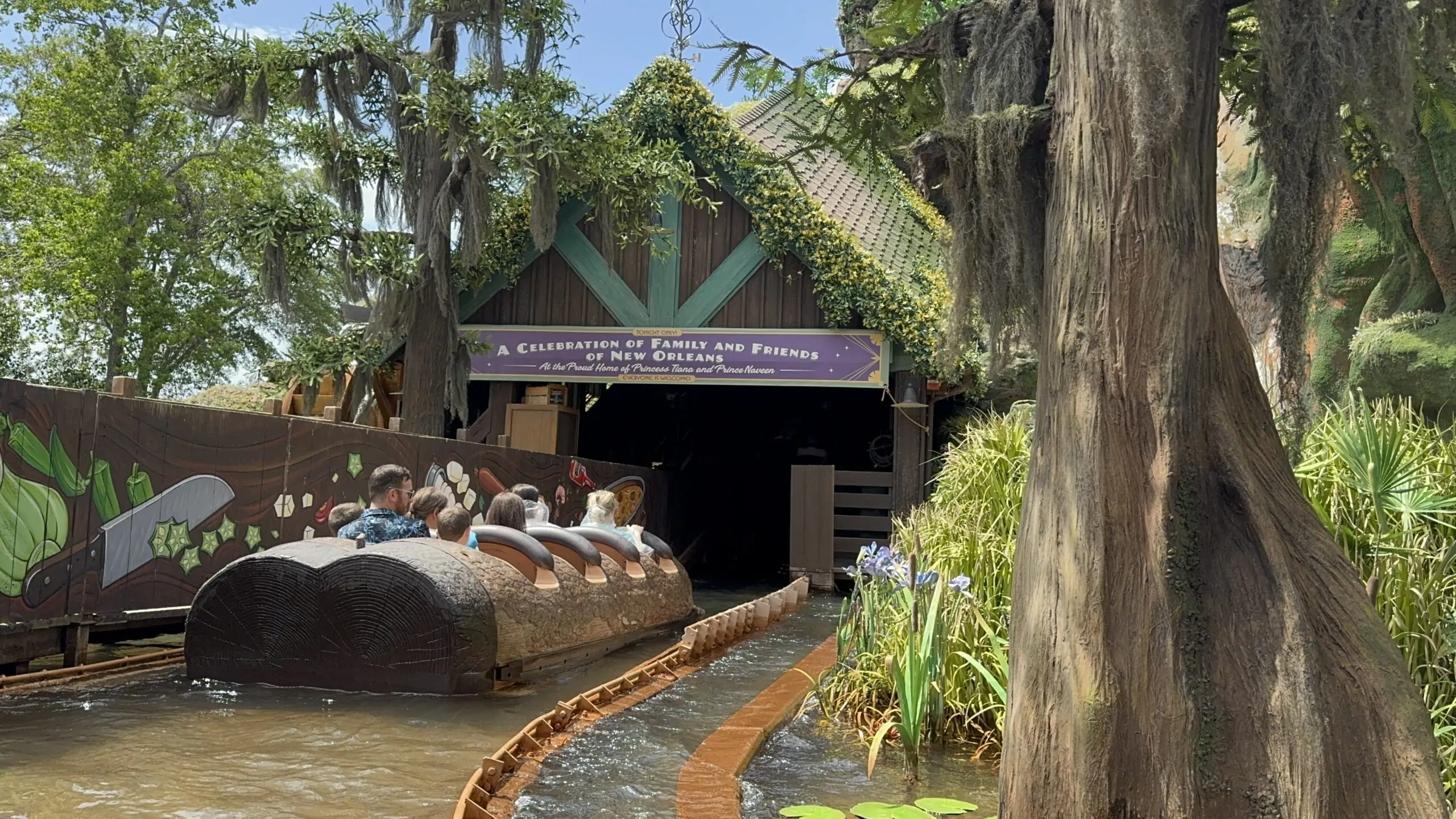
The exterior of Tiana’s Bayou Adventure in Walt Disney World – Photo Credit: M. Montanaro
Tiana’s Bayou Adventure was supposed to be a love letter to New Orleans and to the groundbreaking princess who inspired a generation. But these leaks show it’s anything but. Fans aren’t meeting the real Tiana or the real Facilier. They’re meeting Disney’s rewritten versions — stripped of story, stripped of culture, and stripped of authenticity.
For a company that constantly preaches about celebrating diversity, it’s remarkable how quickly Disney erases the very cultural elements that made Tiana’s story worth telling.
Are you surprised that Disney has forbidden Tiana to discuss voodoo? Sound off in the comments and let us know!
