

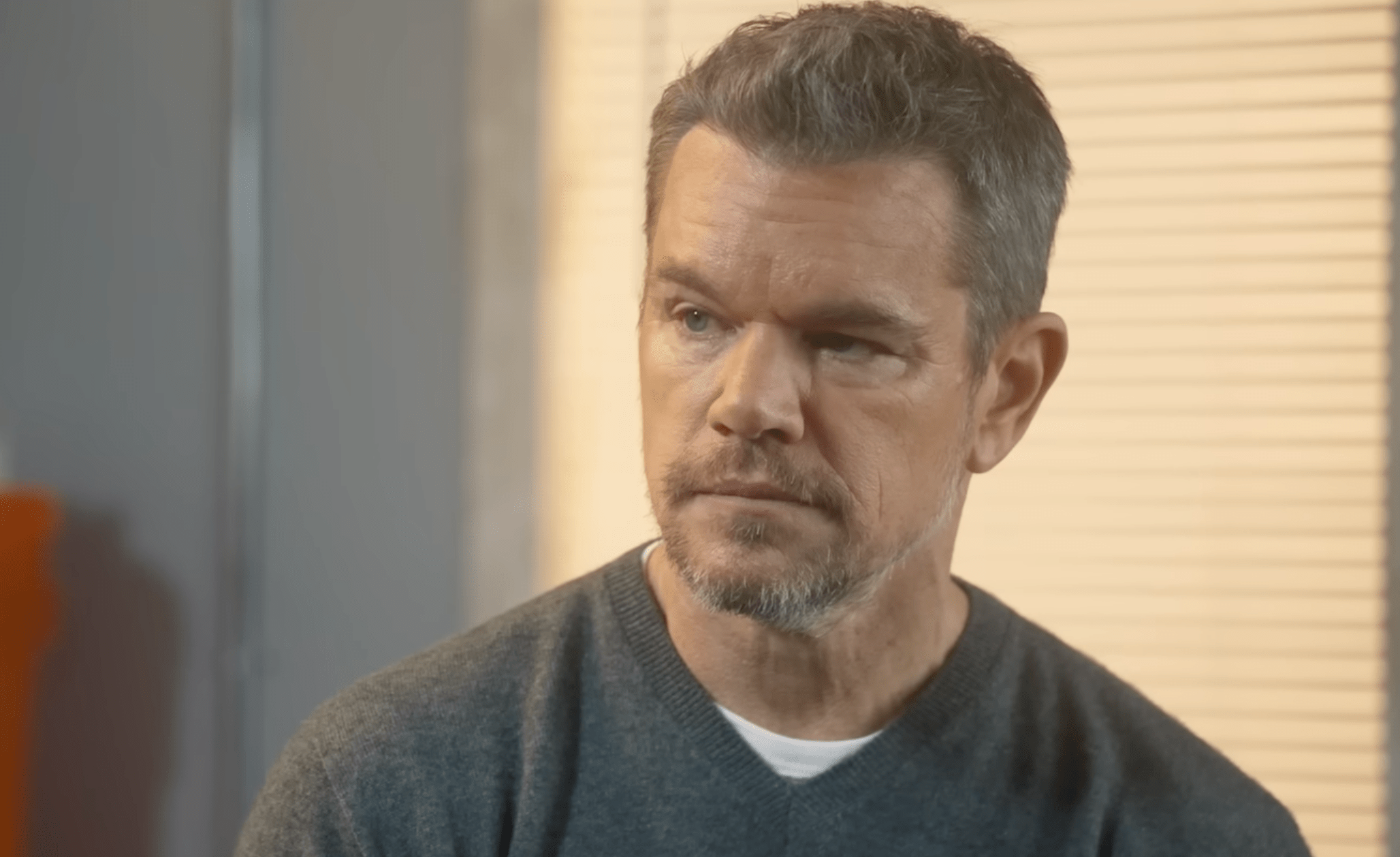
For years now, audiences have sensed something was off about Netflix’s original movies. They look expensive, they feature major stars, and yet many of them feel strangely hollow—over-explained, oddly paced, and forgettable almost the moment the credits roll. Now, thanks to Matt Damon, we finally have confirmation of what’s driving that creative shift in Netflix movies.
Appearing alongside Ben Affleck on The Joe Rogan Experience, Damon offered a remarkably candid explanation for how Netflix approaches movie production in the streaming era—and why so many Netflix films feel like they’re talking at the audience instead of trusting them to follow along.
At the heart of the issue? Netflix assumes viewers aren’t really watching.
Netflix Movies Aren’t Designed for Theaters — Or Full Attention
Damon explained that the traditional structure of action filmmaking has been fundamentally altered to suit Netflix’s at-home, second-screen audience.
READ: Lucasfilm Denies Report That Dave Filoni Hates Andor
“The standard way to make an action movie that we learned was, you usually have three set pieces. One in the first act, one in the second, one in the third,” Damon explained. “You spend most of your money on that one in the third act. That’s your finale. And now they’re like, ‘Can we get a big one in the first five minutes? We want people to stay. And it wouldn’t be terrible if you reiterated the plot three or four times in the dialogue because people are on their phones while they’re watching.’”
It’s a stunning admission—and one that instantly reframes years of complaints from audiences who felt Netflix movies were overly expository, aggressively front-loaded, and strangely repetitive.

REBEL MOON: (L-R) Sofia Boutella as Kora and Djimon Hounsou as Titus in Rebel Moon. Cr. Clay Enos/Netflix © 2023
This isn’t accidental. It’s by design.
Netflix isn’t optimizing for immersion or storytelling discipline. It’s optimizing for retention—keeping viewers from clicking away in the first five minutes, even if that means sacrificing narrative subtlety or pacing.
Repetition Over Storytelling
The most revealing part of Damon’s comments isn’t just the emphasis on early spectacle. It’s the deliberate choice to repeat plot points multiple times through dialogue.
In other words, Netflix wants movies that can be followed even if you’re half-watching while scrolling social media.
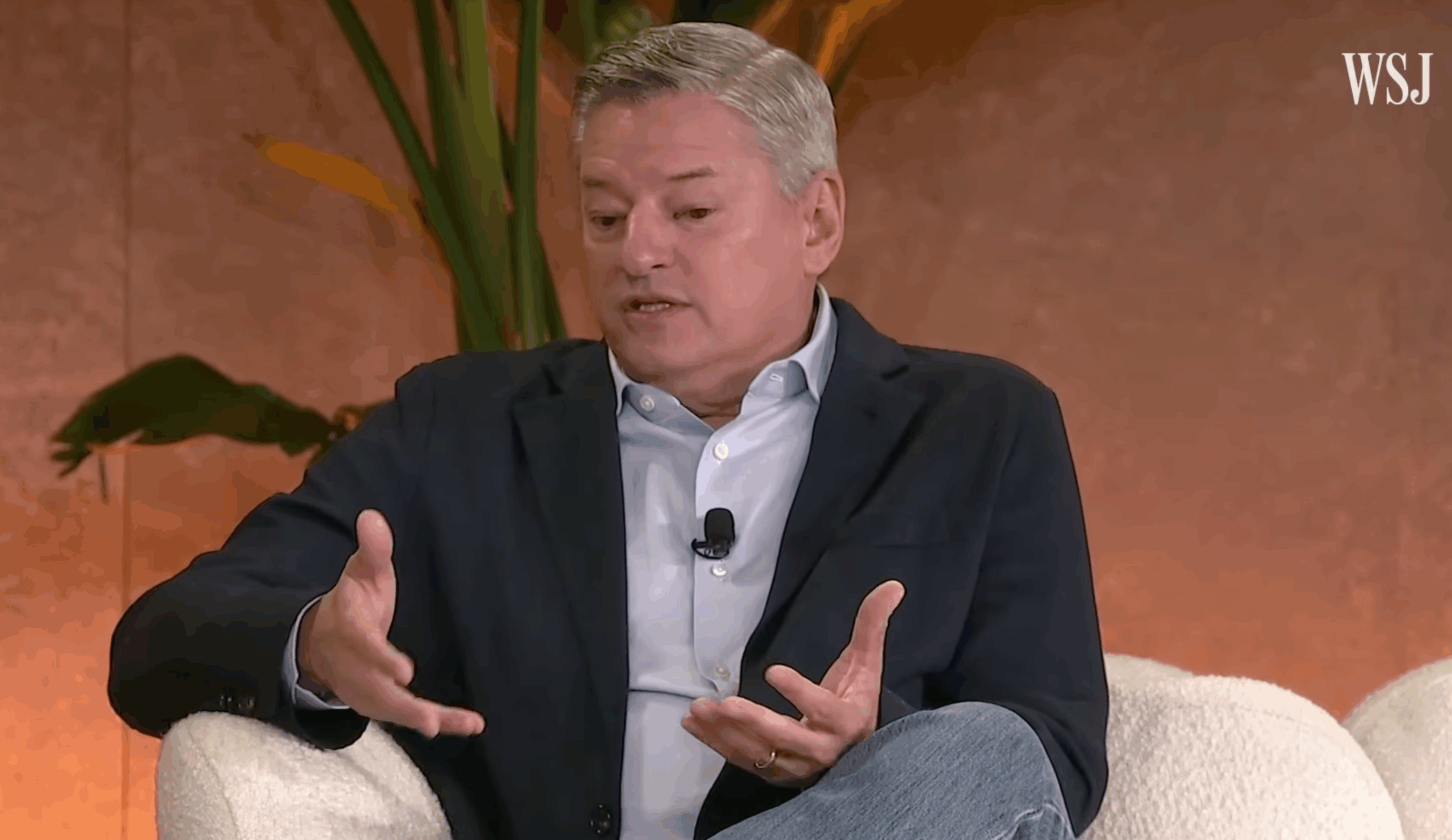
Netflix Co-CEO Ted Sarandos – YouTube, WSJ News
READ: David Ellison Mounts European Pressure Campaign as Warner Bros. Deal Faces Growing Global Resistance
That explains why so many Netflix originals feel like they’re constantly reminding the audience what’s happening, who characters are, and why events matter—often within minutes of having already explained it.
This is more about accommodating distraction than helping confused viewers.
And that approach has consequences.
Movies built around constant reiteration inevitably flatten character arcs, drain tension, and remove the need for visual storytelling. If everything is explained aloud—again and again—then silence, implication, and subtlety become liabilities rather than strengths.
Ben Affleck Points to the Exception That Proves the Rule
Affleck was quick to note that Netflix’s formula isn’t the only way to succeed on the platform. He pointed to the limited series Adolescence as proof that audiences can still engage deeply when creators trust them.
“But then you look at ‘Adolescence,’ and it didn’t do any of that s**t,” Affleck said. “And it’s f***ing great. And it’s dark too. It’s tragic and intense. [It’s about] this guy who finds out his kid is accused of murder. There are long shots of the back of their heads. They get in the car, nobody says anything.”
Damon himself acknowledged that projects like Adolescence are “the exception,” while Affleck argued that they demonstrate Netflix’s assumptions about audience attention aren’t universally true.
In other words: the problem isn’t the audience. It’s the model.
What This Could Mean for Warner Bros.
If the Netflix acquisition of Warner Bros. goes through, Matt Damon’s comments offer a sobering preview of what that future might look like creatively.
Warner Bros. has long been defined by filmmaker-driven storytelling and theatrical ambition—from prestige dramas to carefully structured blockbuster franchises. Even in recent years, despite corporate turbulence, the studio has still operated under the assumption that movies are meant to reward attention, not compete with distraction.
A Netflix acquisition would fundamentally challenge that philosophy.
A graphic showing the Netflix and Warner Bros. Logos – Netflix
If Netflix’s internal mandate is to front-load spectacle, repeat exposition, and assume audiences are only half-watching, then Warner Bros.’ vast library of IP could be reshaped to fit that same algorithmic mold. Legacy franchises could be retooled to prioritize immediate engagement over long-form storytelling. Dialogue-heavy repetition could replace visual nuance. Climactic finales might give way to constant “hooks” designed to prevent viewers from clicking away.
That shift wouldn’t just affect new projects—it could redefine how Warner Bros. develops films altogether. Directors accustomed to trusting silence, pacing, and audience intelligence could find themselves constrained by data-driven notes focused on retention metrics rather than narrative coherence.
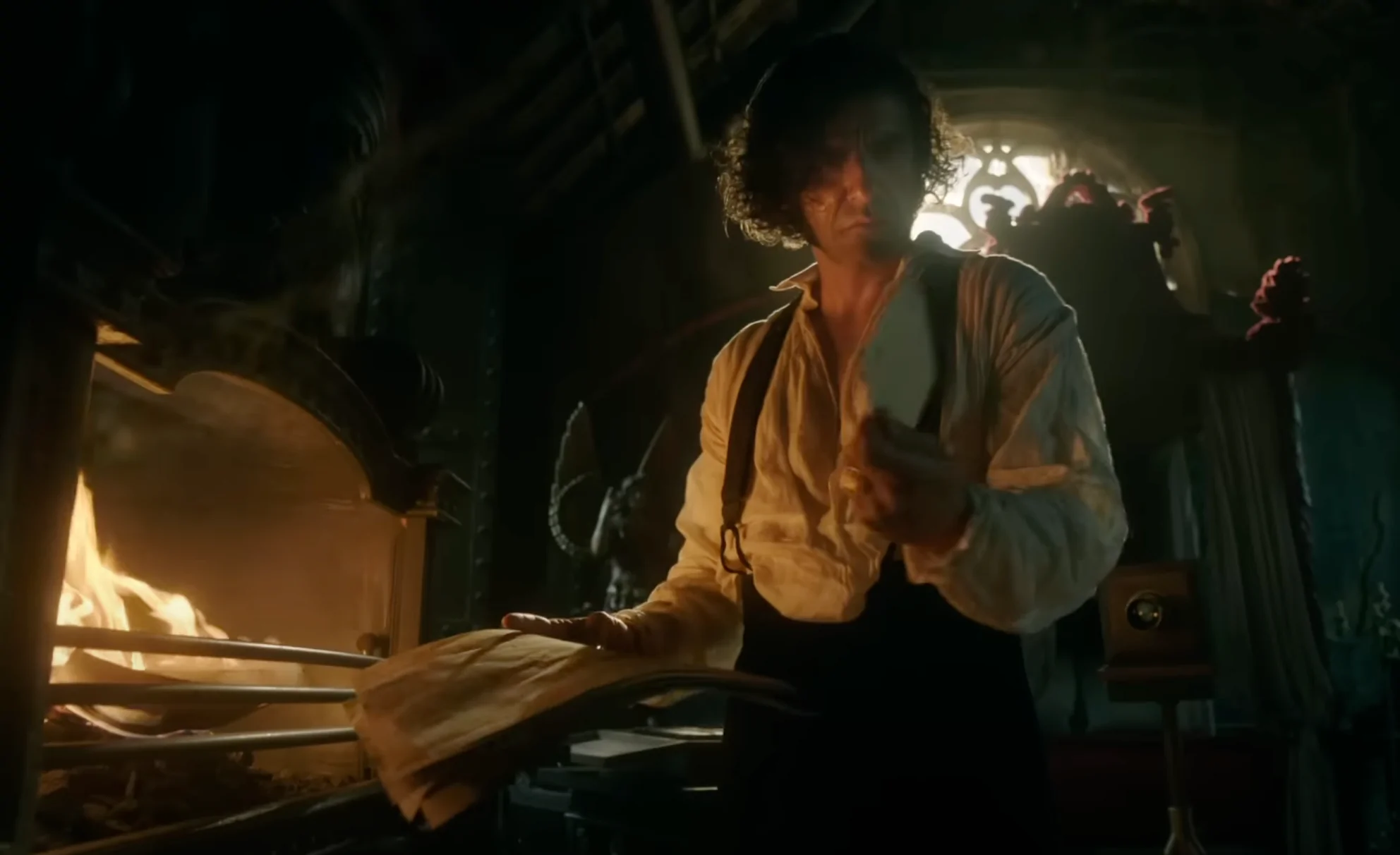
A screenshot from the trailer to Frankenstein on Netflix – YouTube, Netflix
In short, a Netflix-owned Warner Bros. might still look like a major studio on paper, but function more like a content pipeline—optimized for second-screen viewing rather than cinematic impact.
If Matt Damon is right about how Netflix designs its movies, then a potential acquisition wouldn’t just be a business deal. It would represent a philosophical turning point—one where one of Hollywood’s most storied studios fully abandons the assumption that audiences are actually watching.
Why Netflix Movies Feel Disposable
When movies are designed around distracted viewing habits, they inevitably become disposable content rather than lasting works.
There’s no need to rewatch something that already explained itself four times. No reason to linger on performances or imagery when the dialogue spells everything out. And no incentive to discuss or analyze stories that never asked the audience to engage in the first place.
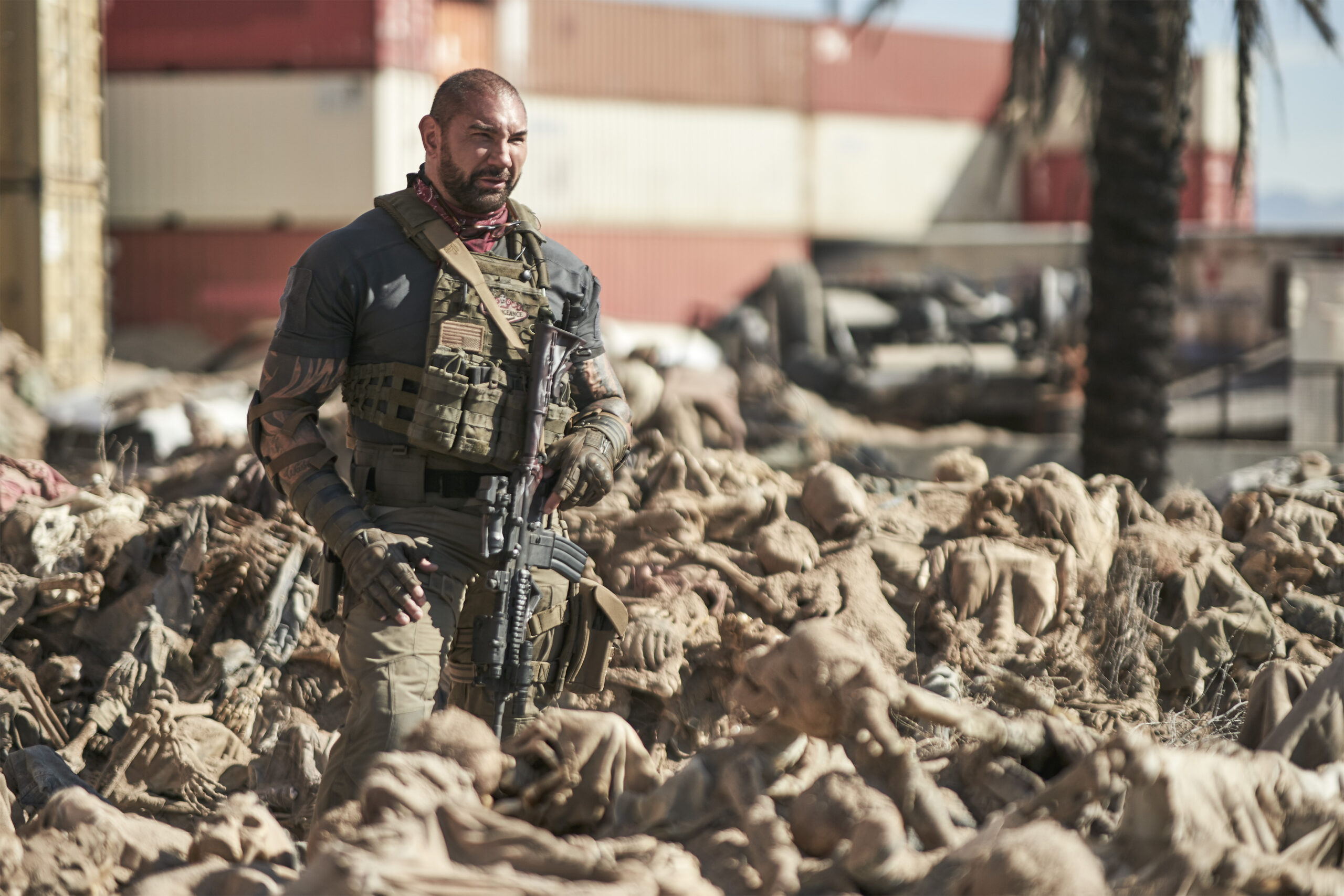
ARMY OF THE DEAD (Pictured) DAVE BAUTISTA as SCOTT WARD in ARMY OF THE DEAD. Cr. CLAY ENOS/NETFLIX © 2021
Damon’s comments don’t come off as bitter or accusatory—but they are revealing. Netflix isn’t chasing cinematic excellence. It’s chasing engagement metrics, autoplay retention, and algorithmic success.
And once you know that, the creative choices suddenly make sense.
The repetition. The early explosions. The lack of breathing room.
It’s all there to keep eyes on the screen—even if minds wander elsewhere.
The Bigger Picture
What makes Damon’s remarks especially notable is that they’re coming from a filmmaker who has spent decades working in theatrical cinema, where storytelling discipline mattered because audiences were locked into the experience.
Netflix has flipped that assumption entirely. Attention is no longer guaranteed—so stories are simplified, reiterated, and front-loaded to compensate.
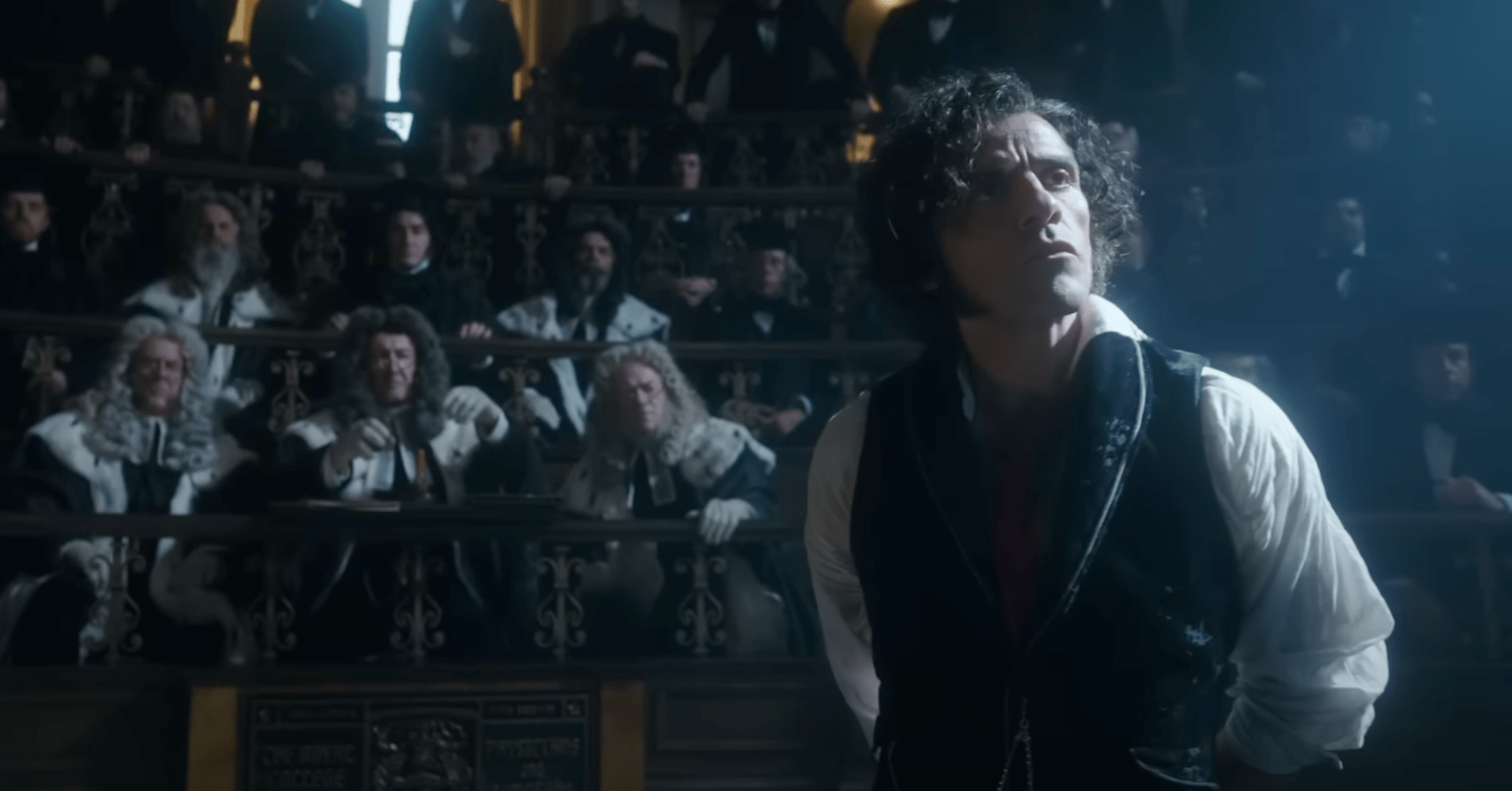
A screenshot from the trailer to Frankenstein on Netflix – YouTube, Netflix
Whether that approach is sustainable in the long term is another question entirely.
But one thing is now clear: when viewers complain that Netflix movies feel dumbed down, repetitive, or forgettable, it isn’t paranoia.
Are you surprised by what Matt Damon said about Netflix movies? Sound off in the comments and let us know!

Finally someone on the inside says what we have suspected for awhile, especially us with home theaters, as the dynamics of audio mixing has gone to shit, especially over the last 5-8 years or so it has gotten bad..
The fact they also changed the narrative structure is mind blowing though, but something i have also noticed which is probably why i do not like very many direct to streaming films..
One thing i don’t get, is why does retention matter?
If they already got your monthly payment, why does it matter wether people are tuned into a program longer instead of finding something else on the platform they want to watch,or even switch platforms, they still got your money..
Unless of course it is a tool to drive investment “see how many peolple tune in to our shit for this long” please give us money kinda deal, then it makes sense, sort of!
The sacrificing of storytelling for the sake of users that has the attention span of gnats are so short sighted and the antithesis of filmmaking as a way to tell stories..
Unfortunately, future consumers and gen z are used to watching everything on their phones, laptop or tablet, and if NF gets WB, it is over for physical i fear as well as commercial cinemas to some extent..
I’d say retention matters because you want the viewer coming away with the feeling that they got their moneys worth consuming your product. “I’ve switched of 10 Netflix movies after 5min” is another feeling entierly then “man I watched 5 2h movies for only x$ this month!”, even if you having watched anything is just an illusion in the end.