


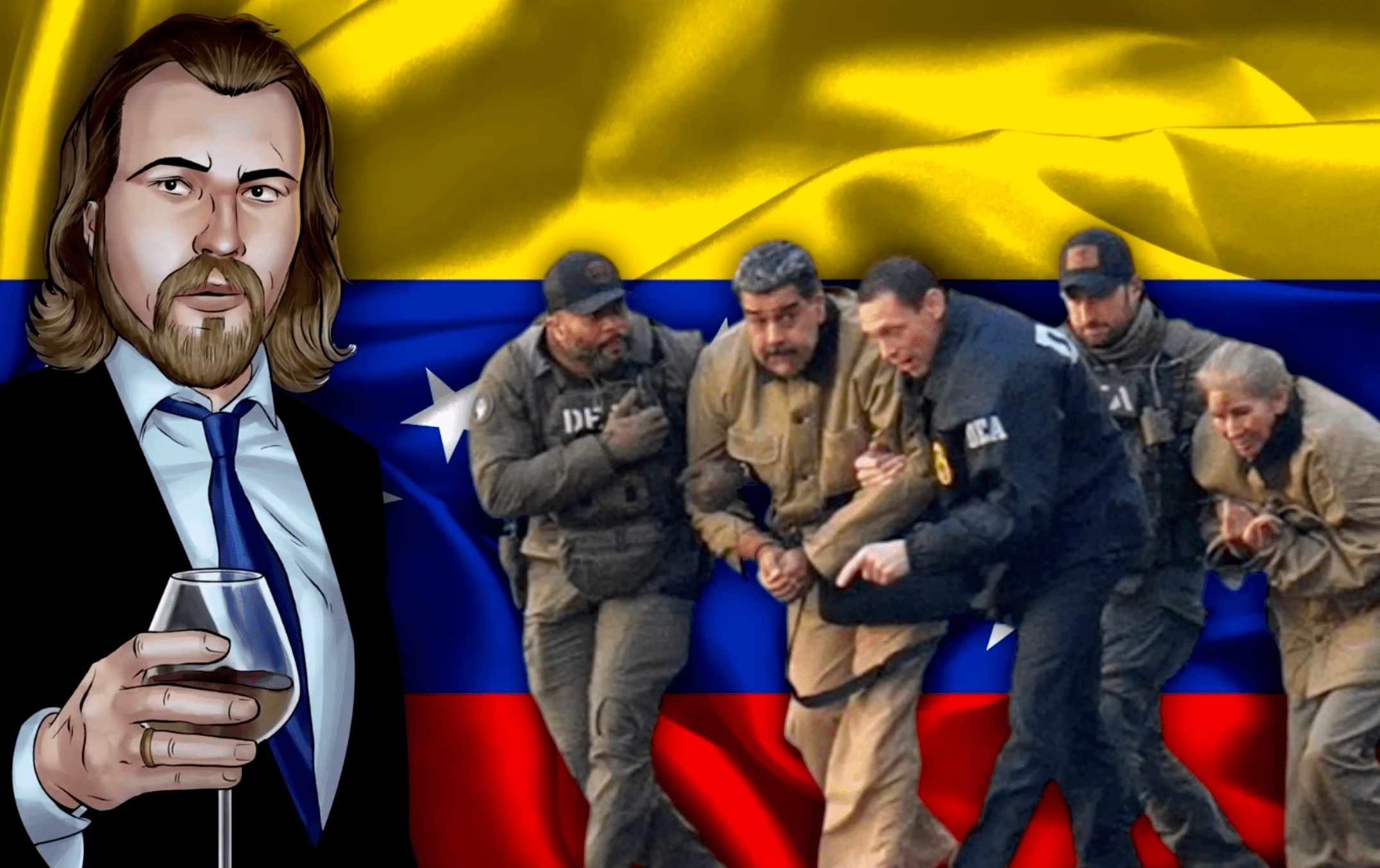
The YouTube channel Midnight’s Edge recently called out Hollywood Trade coverage of the ongoing issues in Venezuela, providing context the mainstream media conveniently left out.
The unfolding situation in Venezuela following President Trump’s dramatic operation to remove Nicolás Maduro has been treated by the Hollywood trades as little more than a political spectacle. The Hollywood Reporter and Deadline rushed out surface-level writeups, heavy on framing and light on substance, offering readers little more than a reaffirmation of whatever opinions they already held. What was almost entirely missing was context—historical, economic, and geopolitical context that explains why this moment matters.
That’s precisely the gap Midnight’s Edge set out to fill.
In a rare departure from entertainment-only commentary, Andre of Midnight’s Edge delivered a detailed breakdown of the Venezuela situation that did what the trades and much of the mainstream press declined to do: treat the event as a serious geopolitical development with long-term global implications.
The quality and scope of the analysis stand in stark contrast to the shallow coverage audiences were otherwise given .
The Problem With Trade Coverage
Andre’s criticism of the Hollywood trades isn’t simply that they covered the Venezuela operation — it’s that they covered it without explaining anything that actually matters.
In his view, outlets like The Hollywood Reporter and Deadline treated the situation as political spectacle rather than a geopolitical event, producing what he bluntly describes as coverage that is “extremely shallow, and void of any kind of actual analysis.” The result, he argues, is that readers come away no more informed than when they started, except with their preexisting assumptions reinforced.
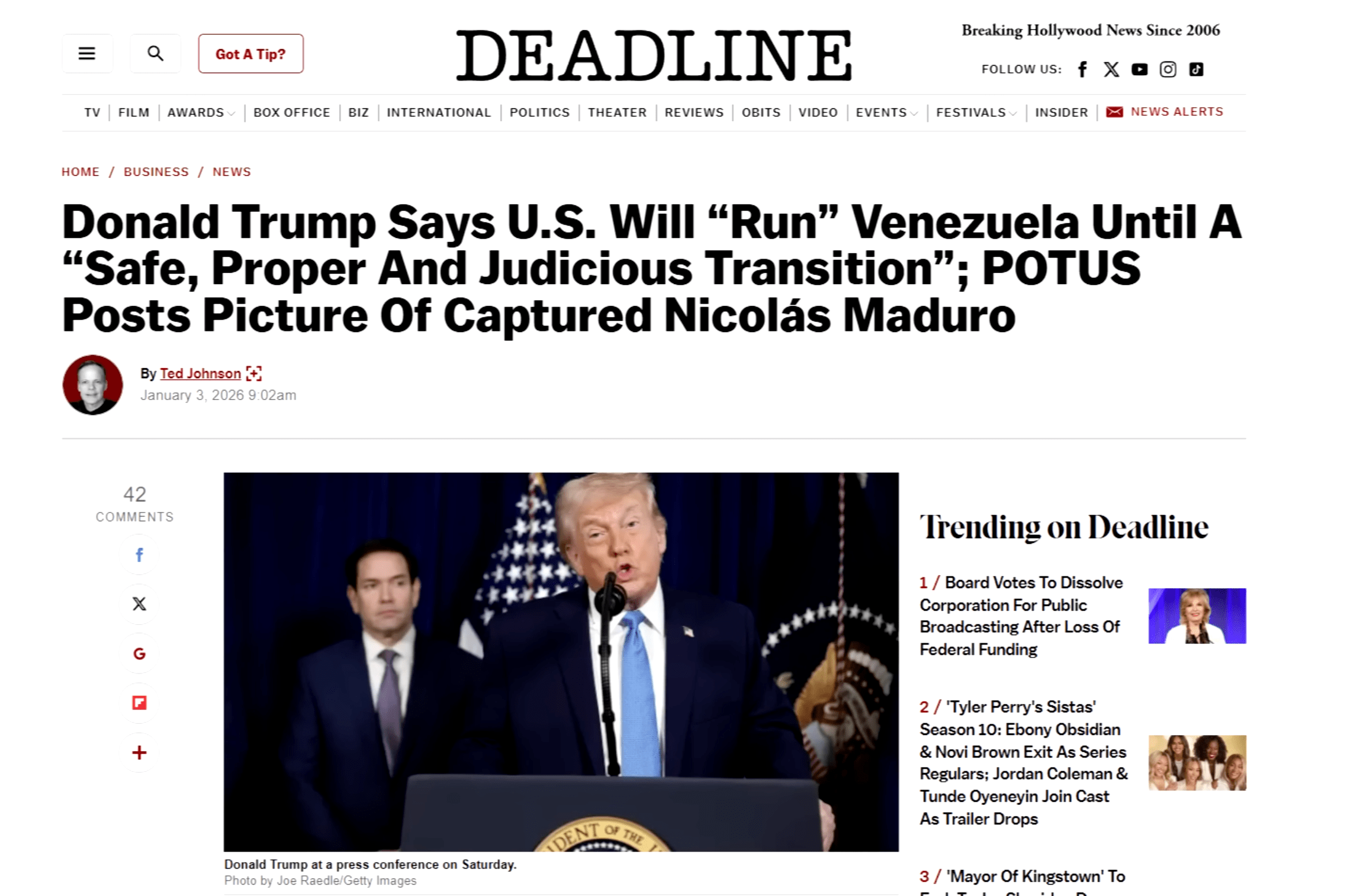
A headline from Deadline about Trump’s operation in Venezuela – YouTube, Midnight’s Edge
To illustrate the point, Andre uses a deliberately provocative example.
“After Mark Ruffalo has read everything the Hollywood trade has published about this, he’ll be as uninformed as he ever was, but would still presume to tell you what to think,” Andre said.
He extends that criticism beyond entertainment media, adding that “most other coverage, including from actual news outlets, hasn’t been much better.” That failure is what prompted Midnight’s Edge to temporarily step outside entertainment commentary and address the story head-on.

Mark Ruffalo speaking at the 2017 San Diego Comic Con International, for “Thor: Ragnarok” Photo Credit: Gage Skidmore from Peoria, AZ, United States of America, CC BY-SA 2.0 <https://creativecommons.org/licenses/by-sa/2.0>, via Wikimedia Commons
As Andre explains, he paused regular coverage specifically to provide “what the trades and purported real news outlets have failed to do, namely some wider context into the likely real reasons why the Trump administration went to this step… and above all, the petrodollar, and with it America’s position on the world stage.”
That framing is critical, because it establishes that the video is not about partisan cheerleading — it’s about mechanism, incentives, and consequences.
Rebuilding the Context the Media Skipped
Andre begins by grounding the discussion in Venezuela’s modern history — something almost entirely absent from trade coverage.
He describes Venezuela as “a nation blessed with the world’s largest proven oil reserves—an estimated 303 billion barrels,” noting that it should have been among the wealthiest nations on Earth. Instead, under decades of authoritarian mismanagement, it became a textbook example of economic collapse.
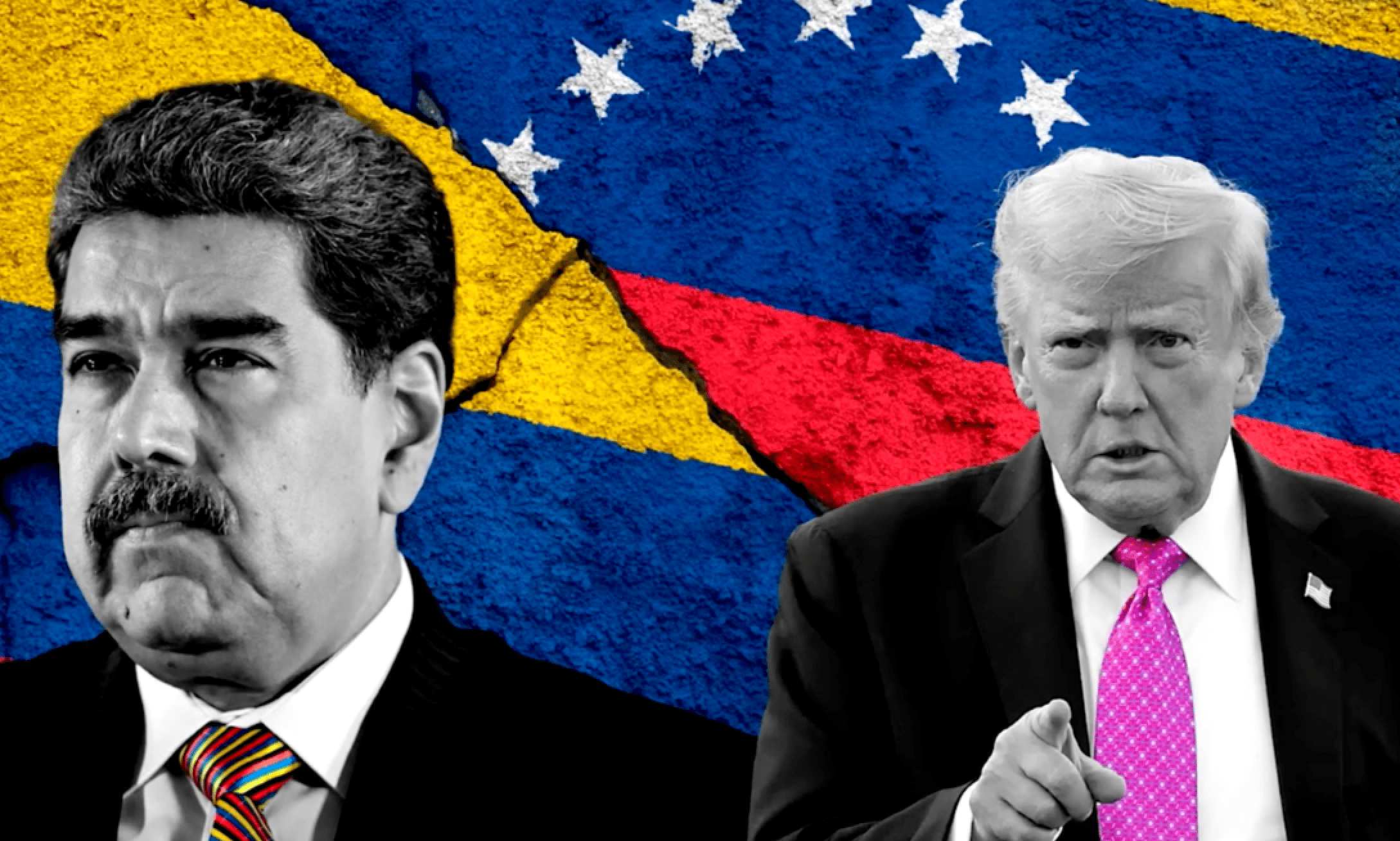
An image of Trump and Maduro from a Midnight’s Edge video – YouTube, Midnight’s Edge
Andre walks through how oil nationalization, price controls, and the gutting of private enterprise hollowed out agriculture and manufacturing. When oil prices collapsed in 2014–2015, the entire system imploded. He explicitly calls Venezuela “a real life case study of the Dutch disease,” outlining how hyperinflation, shortages, and mass unemployment followed.
This background matters because, as Andre argues implicitly, without it the public is left reacting to slogans like “seizing oil” or “rebuilding production” without understanding why Venezuela was structurally vulnerable in the first place.
Another Dictator Bites the Dust
From there, Andre turns to the operation itself and the justification offered by the Trump administration.
He notes that the official framing — narcoterrorism, drug trafficking, and democratic erosion — may contain elements of truth, but he’s clear-eyed about the limits of that explanation. As he puts it, “this isn’t about nationbuilding, and no one believes that either,” even if nationbuilding ends up being the outcome.
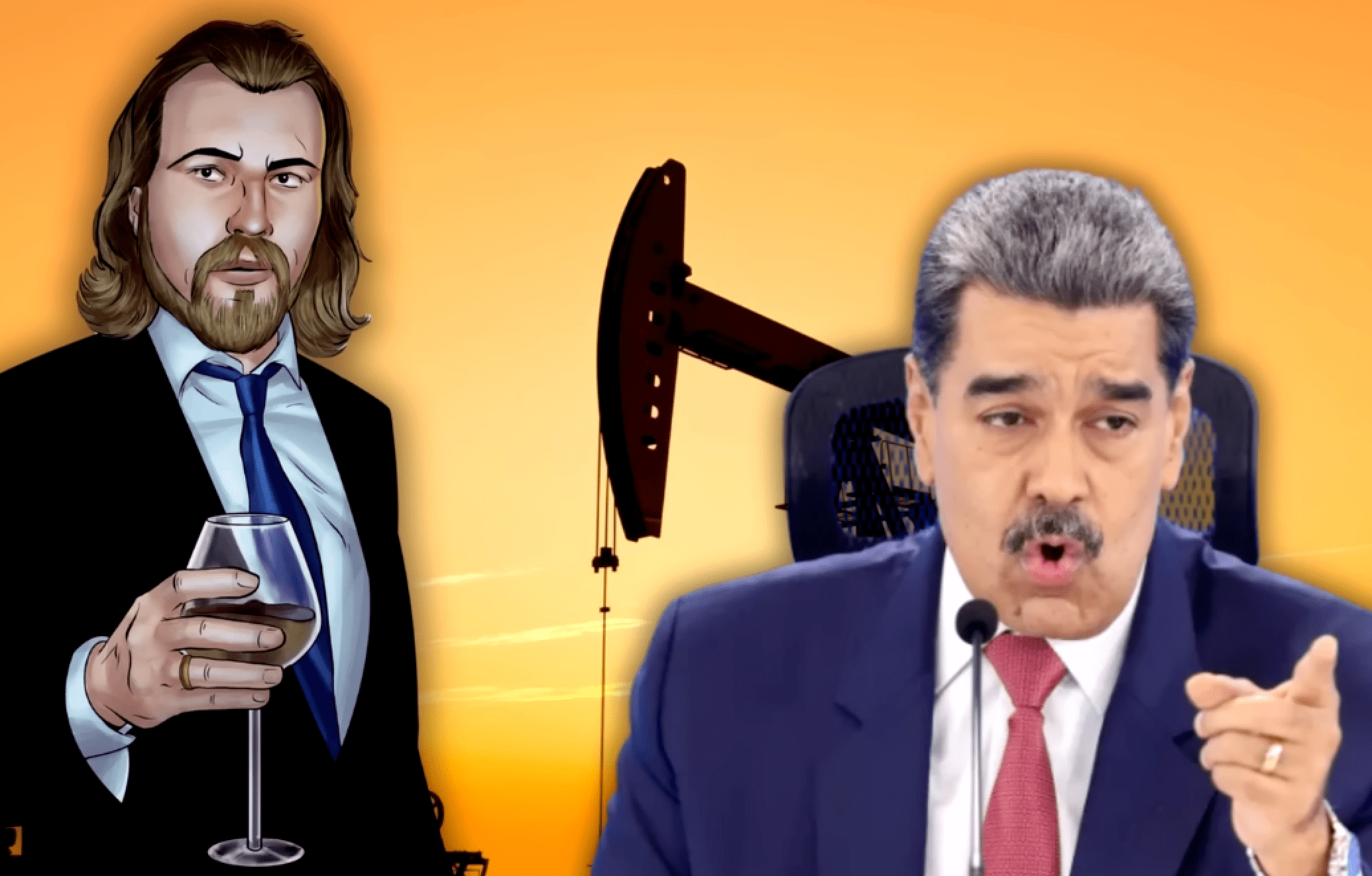
An image from a Midnight’s Edge video on Maduro and Venezuela – YouTube, Midnight’s Edge
Andre highlights Trump’s unusually blunt rhetoric surrounding oil, including references to reclaiming assets and involving American companies in rebuilding Venezuela’s energy sector. Rather than treating that as a gaffe, Andre interprets it as a rare case of a politician saying the quiet part out loud.
But oil infrastructure alone, he argues, is not the real prize.
The All-Mighty Petrodollar
This is where Andre’s analysis sharply diverges from mainstream coverage.
He argues that the true significance of Venezuela has little to do with drills or refineries and everything to do with global financial power. As Andre states directly, “it wasn’t nukes or the American armed forces that made America the most power nation in history, it was the petrodollar.”
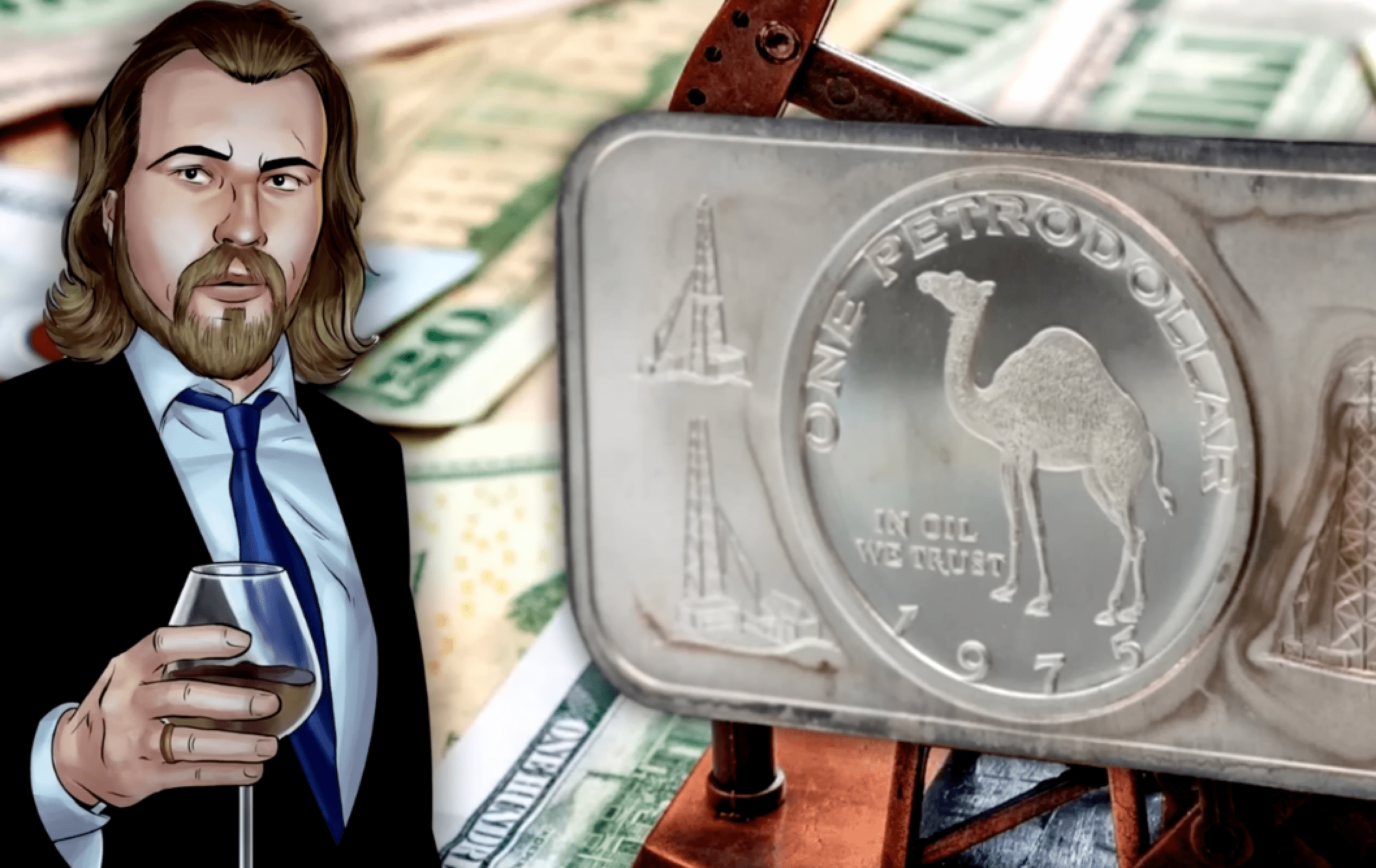
A depiction of Andre from Midnight’s Edge and a Petro Dollar – YouTube, Midnight’s Edge
Andre lays out the origins of the petrodollar system, how dollar-denominated oil trade created permanent global demand for U.S. currency, and how that system underwrites American economic and geopolitical leverage. In his framing, military strength follows financial dominance — not the other way around.
This context reframes Venezuela’s importance entirely.
Emerging Threats and Why Venezuela Mattered
Andre explains that Venezuela’s move away from dollar-based oil sales beginning in 2017–2018 — coupled with integration into China’s CIPS system and an application to join BRICS — represented a symbolic but dangerous challenge to dollar hegemony.
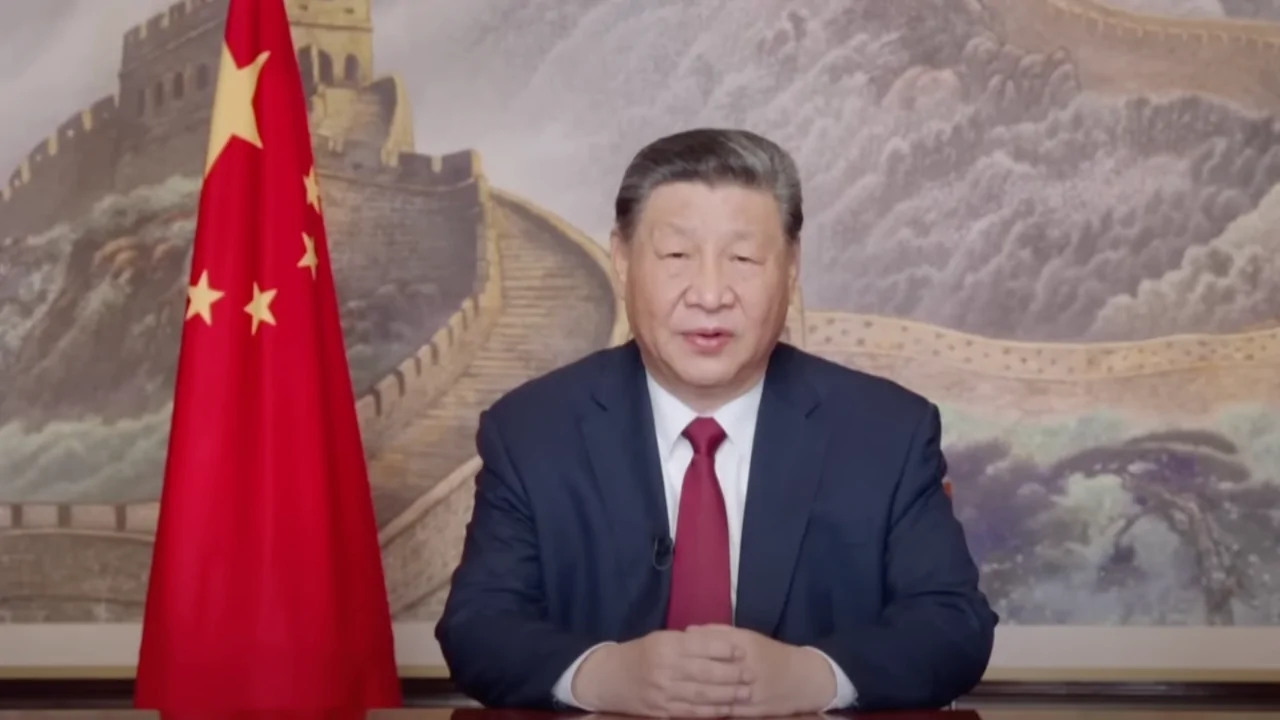
President Xi Jinping of China issues a New Year’s Address – YouTube, South China Morning Post
On its own, Venezuela’s collapsing infrastructure limited the immediate threat. But Andre places that move alongside Saudi Arabia’s growing openness to non-dollar trade under the Biden administration, arguing that together they signaled a world slowly drifting away from U.S. financial dominance.
That, he argues, was the trajectory — until Trump returned to office.
The Saudis Get Back in Line — and the Final Piece Falls
Andre points out that after Trump’s return, Saudi Arabia reversed course, recommitted to dollar-based trade, and announced massive reinvestment into the U.S. economy. In his view, this neutralized the largest threat to the petrodollar.
That left Venezuela as the remaining pressure point.

U.S. President Donald Trump sits for an interview with ABC News – YouTube, ABC News
With Maduro removed and Venezuela’s oil industry effectively back under U.S. influence, Andre argues that even China now faces a choice: continue receiving Venezuelan oil by operating within the dollar-based system, or lose access entirely.
From that perspective, the Venezuela operation isn’t a regional power play — it’s a financial checkmate.
What Could Go Wrong?
Importantly, Andre does not present the situation as risk-free.
He openly acknowledges the possibility of insurgency, political backlash, policy reversal under future administrations, and deteriorating alliances with Europe. He also flags Russia as a wildcard, noting that increased oil output could undercut Moscow’s war financing — with unpredictable consequences.
The point, Andre emphasizes, is not certainty but clarity.
Why This Coverage Matters
Andre closes by asking viewers whether they learned something from the analysis that mainstream coverage failed to provide.
That question underscores the entire video — and why it resonated. While the trades delivered framing and reaction, Midnight’s Edge delivered mechanism, context, and cause-and-effect reasoning.
A depiction of Andre from Midnight’s Edge – YouTube, Midnight’s Edge
And that difference is exactly why independent analysis and new media voices like this continues to fill the gaps legacy media leaves behind.
Did you learn something from the Midnight’s Edge Venezuela video? Sound off in the comments and let us know!
UP NEXT: RUMOR: HBO Considering MCU Actress to Play a Female Voldemort in Upcoming Harry Potter TV Series
