


The aftershocks of Netflix’s stepping away from the bidding war for Warner Bros. Discovery (WBD) are beginning to ripple through Wall Street. On Friday, Netflix stock saw a drop of around 10% despite posting results that slightly exceeded expectations during its Thursday Q1 earnings call.
At first glance, the numbers suggested stability. Yet investor reaction reveals uncertainty about where the company goes next.
What’s Driving the Drop?
The reasons for the Netflix stock drop are multifaceted.
The streaming giant projected softer-than-expected growth for the second quarter, which may signal slowing momentum. At the same time, Netflix is maintaining its full-year forecast even after implementing price increases, raising questions about how much those hikes will translate into sustained revenue growth. Uncertainty around these factors can contribute to investor hesitation.

One Piece Season 2 – Netflix
READ: Disney Brings ‘Star Wars’ Original Trilogy Characters to Galaxy’s Edge—Fans Roast Costumes and Wigs
Adding to the tension is a lack of clear direction around Netflix’s evolving strategy. As the entertainment industry moves toward consolidation—through mergers that expand content libraries, distribution power, and global reach—Netflix remains largely independent. So far, it has relied on its existing infrastructure and content engine to drive growth. While that independence has long been a strength, the recent stock drop suggests some investors are beginning to question whether it could become a limitation.
The company’s decision to exit negotiations for a potential acquisition of WBD was initially interpreted by some as financial discipline. Some could argue it stood in sharp contrast to David Ellison’s win-at-all-costs measures at Paramount-Skydance in securing the final bid.. Yet returning to a traditional model in an evolving media landscape carries with it potential isolation in an industry that’s getting bigger and more interconnected.
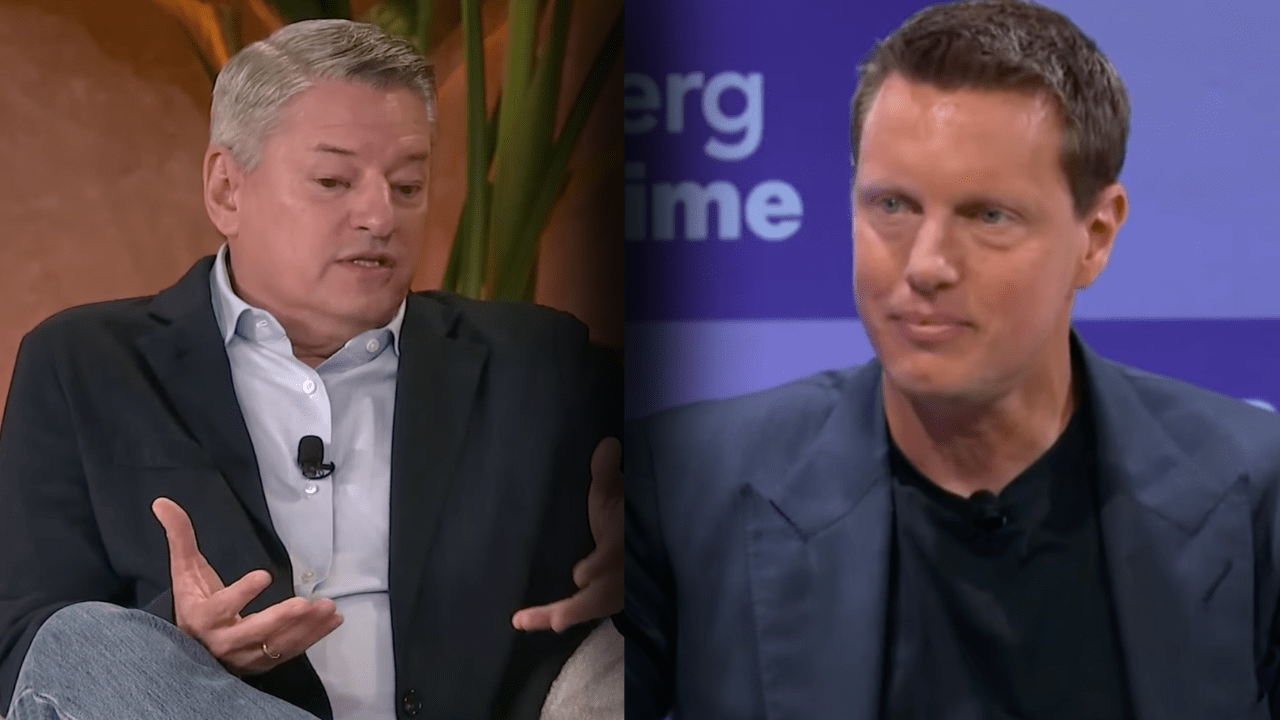
Ted Sarandos of Netflix and David Ellison of Paramount – Photo Credit: YouTube, WSJ News; YouTube, Bloomberg Podcasts
READ: PlayStation Spider-Man Face Actor Deletes Post Implying ‘Spider-Man 3’ Performance Capture
There has also been a shift in how Netflix communicates its performance.
The company has moved away from regularly reporting subscriber numbers—once its most closely watched metric. While this aligns with a broader emphasis on revenue and engagement, it removes a familiar benchmark that investors have long used to gauge growth. In its place is a less transparent narrative that may require greater trust in management’s long-term vision.
Leadership Transition and Market Perception
Another factor for the Netflix stock drop is a shift in leadership.
During the earnings call, it was announced that Netflix co-founder Reed Hastings will not stand for re-election to the board of directors. After decades of influence, his departure marks a transition point for the company. While Netflix’s current leadership team remains experienced, any change at the top can invite additional scrutiny—especially at a time when strategic clarity is already under discussion.

Reed Hastings interview – Invest Like the Best, YouTube
READ: Project Hail Mary Won’t Be on Streaming Anytime Soon
None of this suggests that Netflix is in immediate trouble. The company remains financially strong, globally dominant, and deeply embedded in the streaming ecosystem. But the story around Netflix may be shifting. It’s no longer just about whether it can grow—it’s about how.
For Wall Street, that distinction matters. Strong earnings can support confidence in the short term, but long-term valuation depends on a clear and compelling path forward. Right now, that path appears less defined than it once did—and until Netflix offers a clearer vision of what comes next, market uncertainty may continue to shape its trajectory.
Do you think Netflix’s walking away from WBD hurt its stock? Let us know in the comments!
