


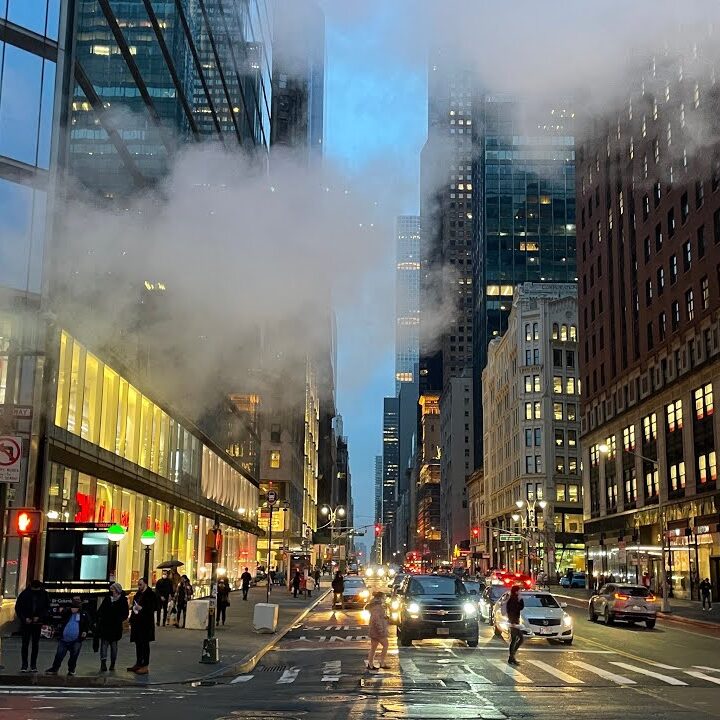
It was almost difficult to watch Dick Clark’s Rockin’ New Year’s Eve this year on ABC. New York City was a shell of itself as it deals with a new pandemic variant. Gone were the throngs of people, and instead we watched a drunk couple makeout with masks on as they drunkenly proposed to one another. Switching to CBS, a raucous crowd partied as if there were no pandemic in Nashville, Tennessee. I don’t care for country music, so it wasn’t my cup of tea — but it certainly looked more fun. Perhaps it is more deadly or dangerous, so I can’t subscribe to it as the best way to go about living, but there it was and it looked normal again. The same was true if you clicked to NBC and watched Miley Cryus nearly lose her top in Miami, Florida. Even if the entertainment was awful on all three channels, two of them were having fun in places that were supposed to be ravaged at this point in the pandemic. For right or wrong, flipping through those channels on New Year’s Eve was a reminder that the cultural, political, and medical responses to the pandemic have been vastly different depending on where you live in the United States. Never has living in different states meant living so differently. The United States has become like different nations depending on where you’re currently located.
You may have heard of the “blue state exodus”. It’s a term that refers to a movement away from states of a particular political persuasion and towards states of a different variety. It’s been going on for a few years now, but during the pandemic, it’s really taken off. I don’t have a horse in the race politically, but this phenomenon does have a real impact on tourism and travel, one that is going to be felt for many years to come. I also don’t like the term “blue state exodus” because not all the top states are leaning in the “blue category”. That said, let’s take a look at the top eight states people are moving to:
- Florida
- Texas
- Arizona
- North Carolina
- South Carolina
- Tennessee
- Georgia
- Idaho
Now the top eight states people are leaving:
- California
- New York
- Illinois
- Massachussettes
- Louisiana
- New Jersey
- Maryland
- Minnesota
Honorable Mention goes to Washington D.C. which is not a state, but still would land in seventh place… given that it’s just a single city, that’s impressive.
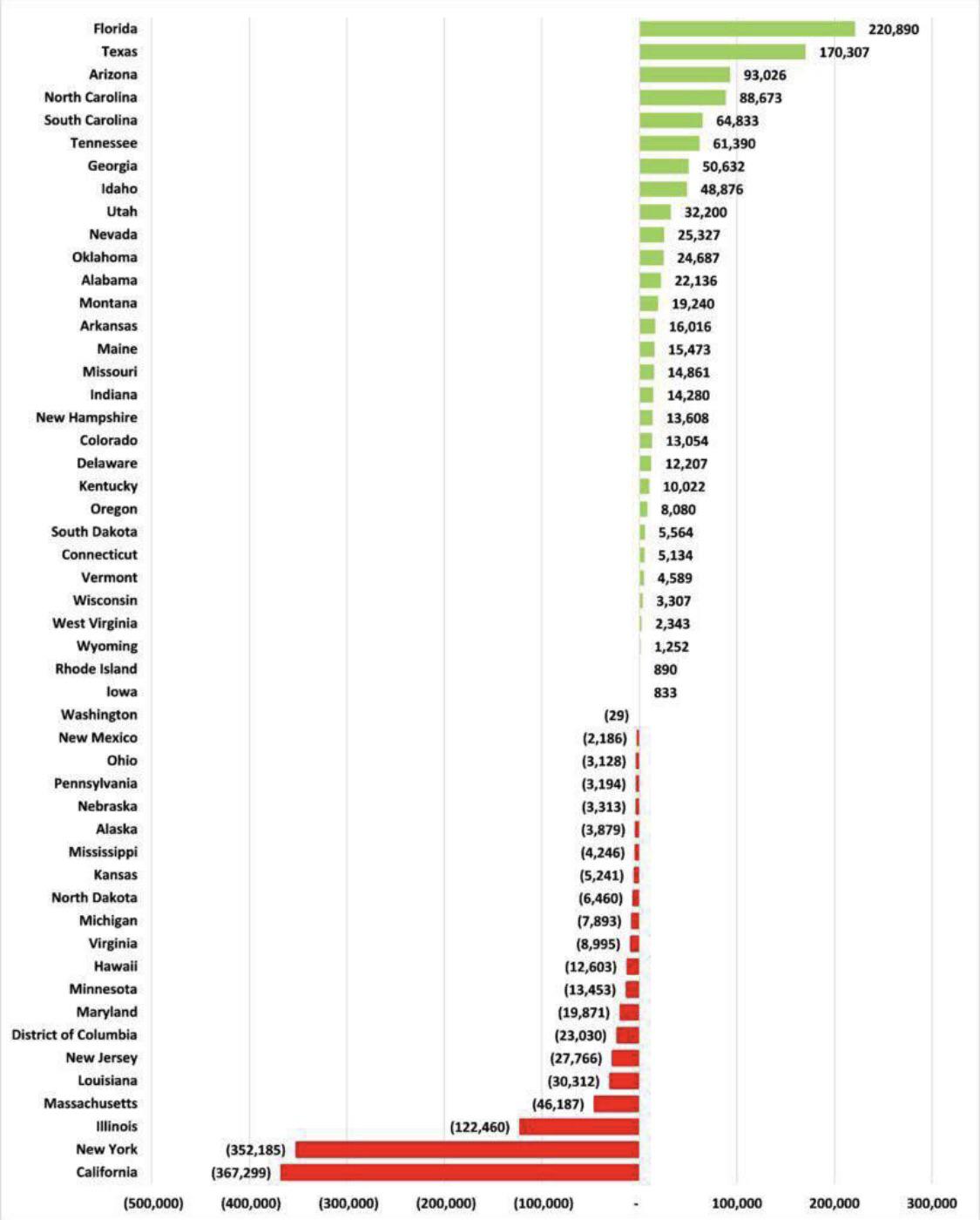
For our topic today, the movement of such large numbers, especially in New York, is creating a huge crunch on business trying to stay open. You can imagine that if you’ve lost more than 300,000 people in the last year, it can put a serious damper on finding employees to staff hotels, tourist attractions, museums, and more. Worse, many of the people able to move are in families of some degree of affluence… thus how they are capable of selling and buying assets to leave.
This may be why we’re starting to see articles in mainstream news attempting to paint a rosy picture for NYC trying to lure tourists back to the city. There’s a real perception out there, and there are plenty of videos to back up those perceptions. But let’s see what is being said, specifically in this article from December 28th on Forbes:
Having seen many online stories about New York being a ghost town and having boarded up shops and a crime rise, you may be slightly concerned about what to expect. However, very little has changed when you visit the main tourist attractions. The streets are as bustling as ever, with attractions happy to welcome tourists back.
The author, Michele Robson, clearly has a point she wants to make. New York is fine! The main areas are totally normal. Except they’re not. Everyone knows they’re not, except for the gullible few readers this article is aimed at convincing. In case you’re wondering, here’s a more-than-hour-long video showing what New York City is like nowadays… tell me if this looks like a bustling city:
Oh, but the article continues to spin how lovely things are going in New York…
One of the main differences from pre-Covid is the outdoor dining. It’s not like in the UK where there are a few tables and chairs on a pavement in London and specific areas. In New York, almost every restaurant has a formal outdoor dining “structure,” which is now permanent. So if you want to dine outside, it is advisable to book in advance. You don’t need a vaccine certificate for outdoors.
Ah, yes, who doesn’t look forward to eating outside in near-freezing temperatures?
Is it therefore any wonder that New York hotels have hit full-desperation pricing to draw in customers? There’s no better way to discover just how badly New York is doing than to look at how cheaply you can stay in the city that never sleeps. With occupancy soaring, you can literally get a four-star hotel in Manhattan for around $100 currently. That is so unheard of that it seems unbelievable to type. We’re talking about what was once some of the highest-priced real estate in the entire world… and you can stay here for about a hundred bucks. The Stewart Hotel across from Penn Station is currently priced at $91 for crying out loud!
Booking.com Results for Manhattan
Meanwhile, check out Miami from this week. You’ll need to skip ahead to about the fifteen minute mark where the host arrives at the market area:
Beyond the temperature, the difference is astounding. And do you want to know the difference in hotel prices? For Miami, you’re looking at about a $250 per night if you want a four-star hotel… and those prices are going up to $500 per night easily depending on where you stay. There’s nothing that speaks louder than just googling “New York City hotels” and “Miami hotels” and then comparing for yourself. Now maybe Florida and these other states with huge influxes of travel are doing everything wrong… maybe everyone there is going to be sick and overrun their hospitals. I don’t know. But all I can say is that when it comes to tourism and travel, NYC is hurting badly, and that seems very sad for a place known as the world’s capitol.
I’ll be very happy when we can, one day, put all of this behind us. I just worry that some of our great cities may not be the same when we do.
