



Nintendo has explained why Metroid Prime 4: Beyond did not adopt a fully open-world design, citing core franchise mechanics and long development constraints. The information comes from an interview with Famitsu, a Japanese video game magazine.
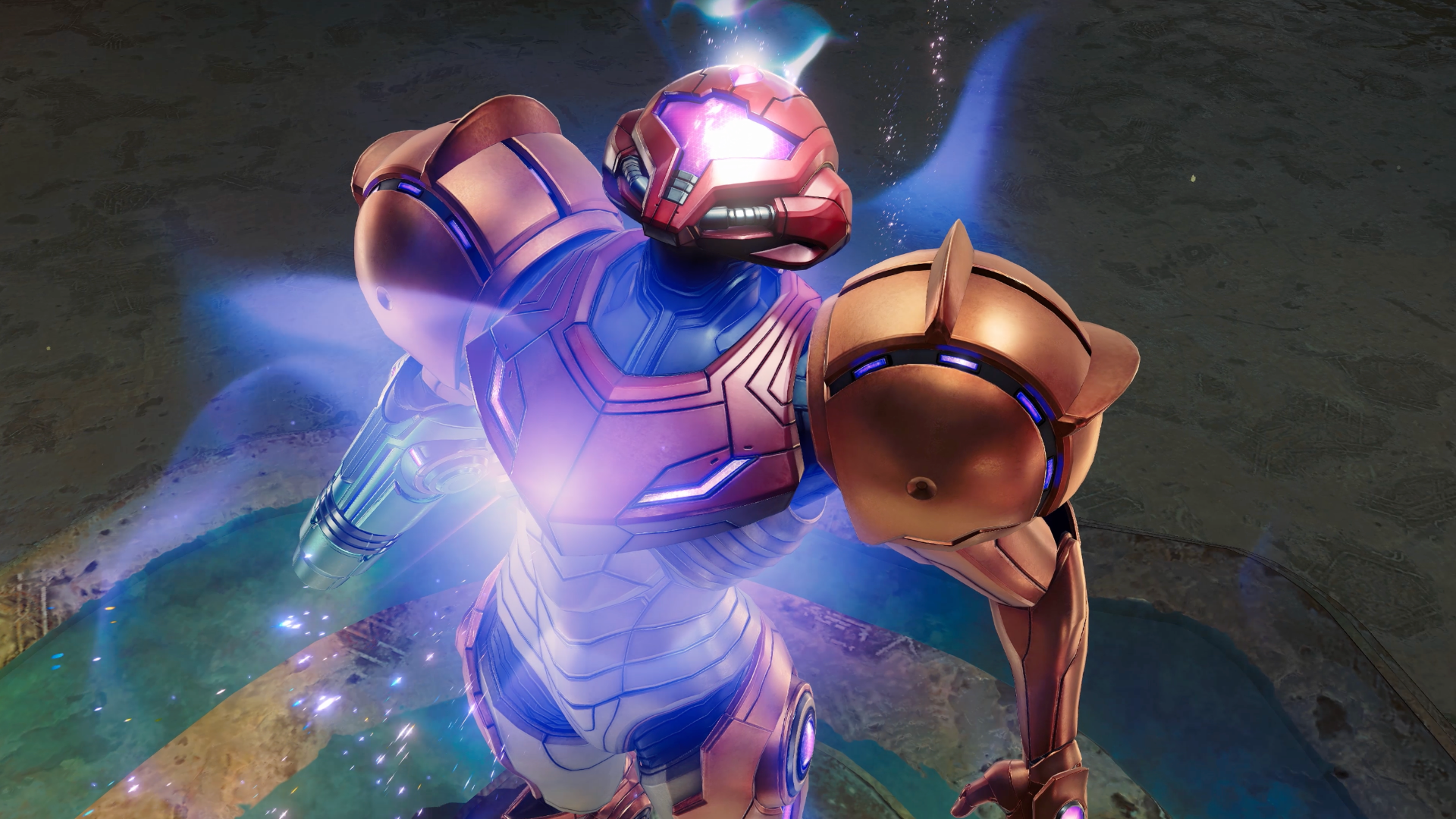
Samus in Nintendo’s Metroid Prime 4 – Nintendo
Nintendo staff and Retro Studios discussed how the game’s structure evolved over time and why the final design emphasizes a large exploration hub rather than open world freedom.
The Development of Metroid Prime 4
Metroid Prime 4: Beyond was originally announced in 2017 but underwent a major reboot in 2019 when Retro Studios took over development. Nintendo and Retro Studios acknowledged that prolonged development influenced many design choices, including world structure.
In remarks to Famitsu, developers said that early public interest in a more open world was partly inspired by The Legend of Zelda: Breath of the Wild. Online commentary in the early stages of development suggested fans wanted a fully open Metroid game. However, Nintendo argued that Metroid’s core progression mechanic — unlocking abilities to expand accessible areas — conflicts with typical open world freedom, where players can roam widely from the start.
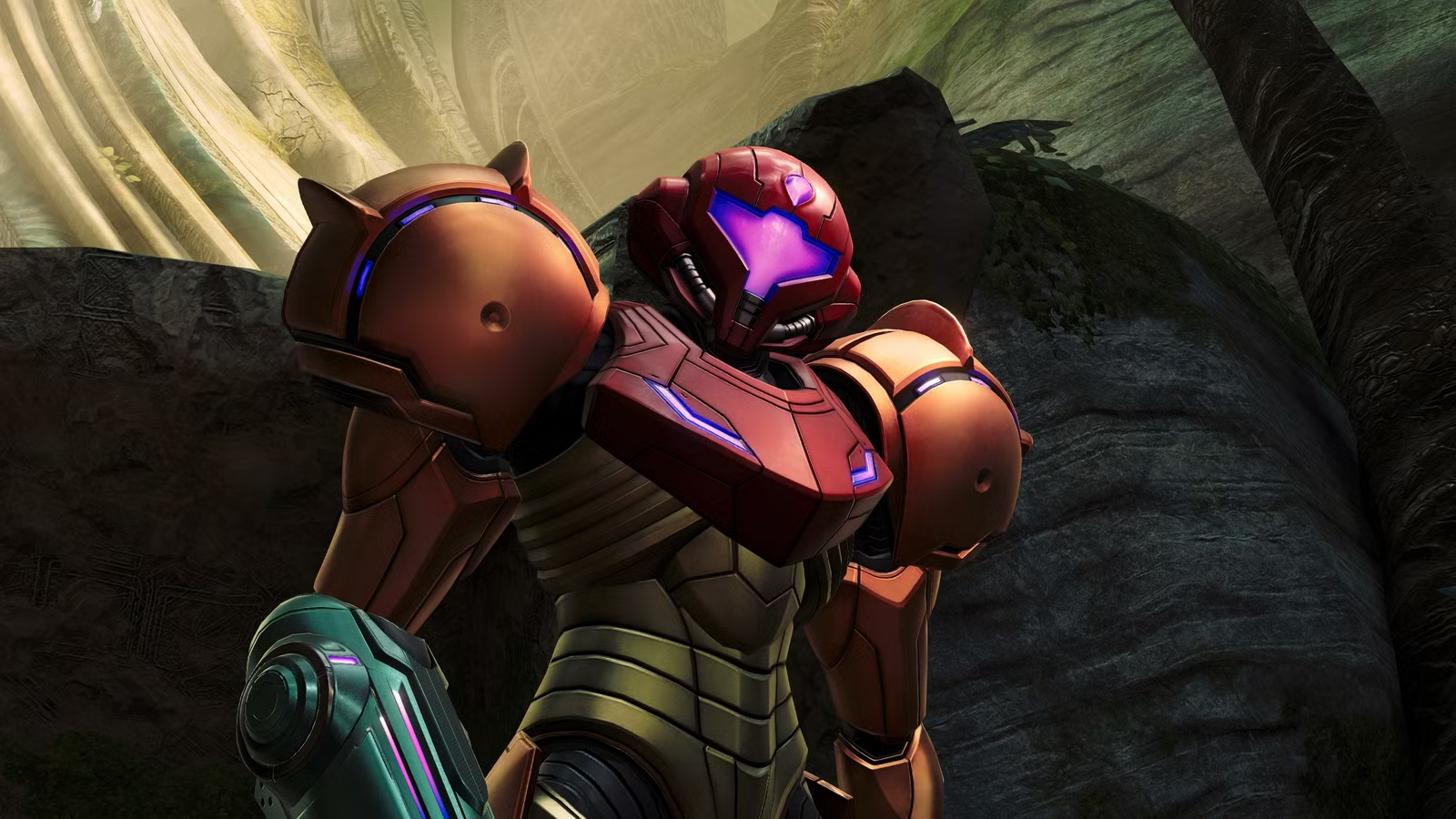
Samus stands tall in Metroid Prime 4
To balance exploration and series identity, the team built a central, freely navigable hub area that connects to other regions. Designers also introduced a vehicle segment intended to ease exploration tension and add pacing variety. According to Nintendo, this hub provides a degree of openness without becoming a conventional open world.
Nintendo further noted that the game’s long development allowed broader trends in player expectations to shift. By the time Beyond neared completion, perceptions of open-world games had changed, but a second redesign to chase those trends was deemed infeasible because the project had already been restarted once. Nintendo said it chose to continue with its original vision rather than revisit foundational world design.
Based on a new interview in Famitsu, it sounds like Retro Studios had to make the best of a bad situation with Metroid Prime 4.
They were given a vision to work with that wasn’t really their own and yet they still made one of the best looking games on Switch or Switch 2:
“At… pic.twitter.com/d1qJu0O9IQ
— Stealth (@Stealth40k) December 25, 2025
The interview also touched on how other genre trends affected design thinking. Nintendo acknowledged that shooter and action games evolved toward faster pacing during the extended development period. However, the team intentionally did not incorporate those shifts into Metroid Prime 4, arguing that doing so could disrupt the careful tempo of an adventure-oriented experience.
Metroid Prime 4’s Final Design
Metroid Prime 4: Beyond was released on December 4, 2025, on both Nintendo Switch and Nintendo Switch 2. While it retains elements of traditional Metroid progression, critics and analysts have noted that the hub area differentiates the game’s structure from classic linear levels and more rigid formats. Some have loved the new format, while others find it did not quite pull off the new style for the series.
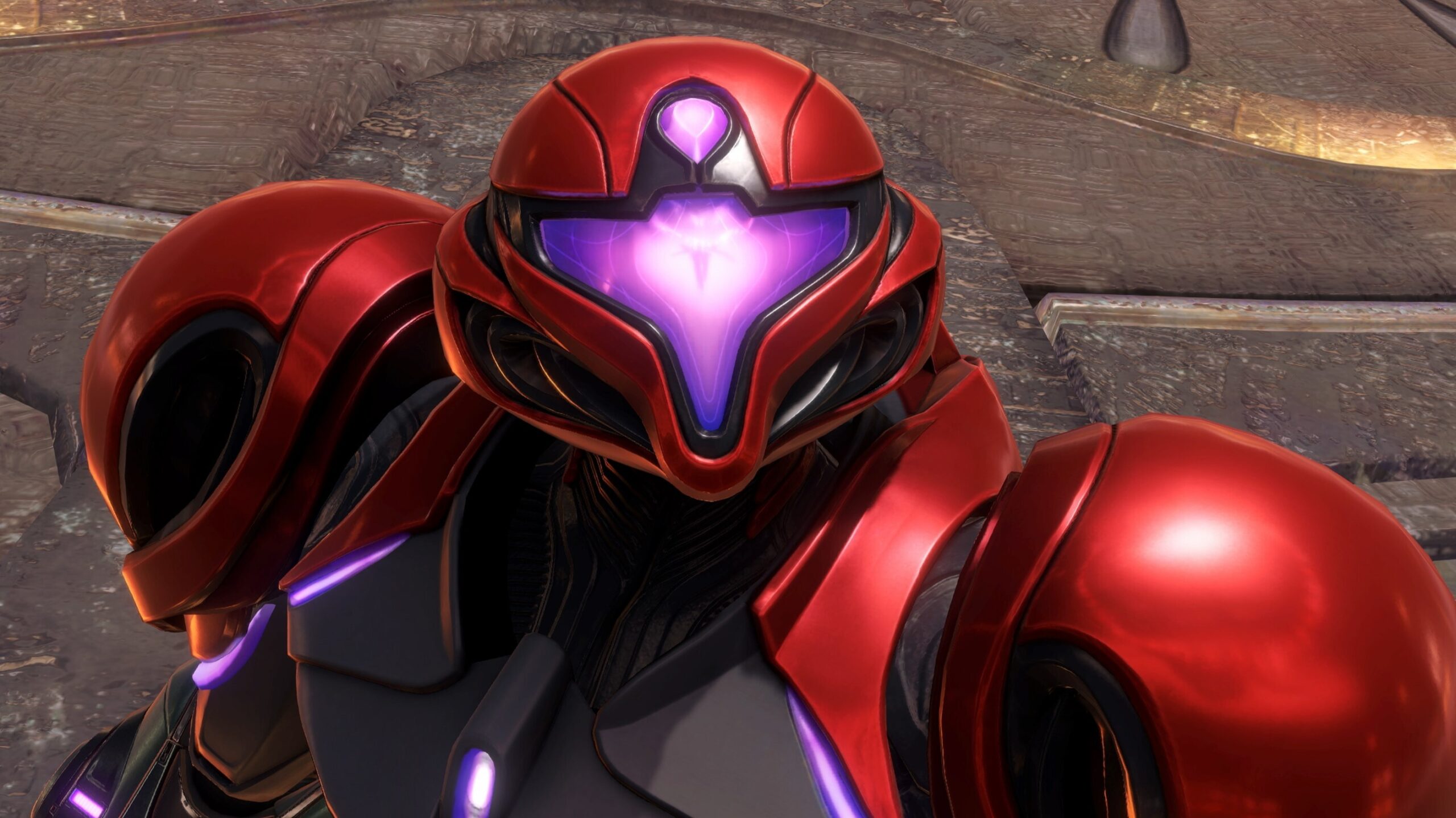
Samus in Metroid Prime 4 – Nintendo
In reviewing the design direction, industry observers have described the central hub as large and distinct from typical level sequences. Some analysts view the design as a compromise between traditional Metroidvania progression and more open exploration formats, while others see it as an attempt to retain franchise identity amid broader market expectations.
What did you think of Nintendo’s newest Metroid game and its not-quite open world format? Let us know your thoughts in the comments below.
