


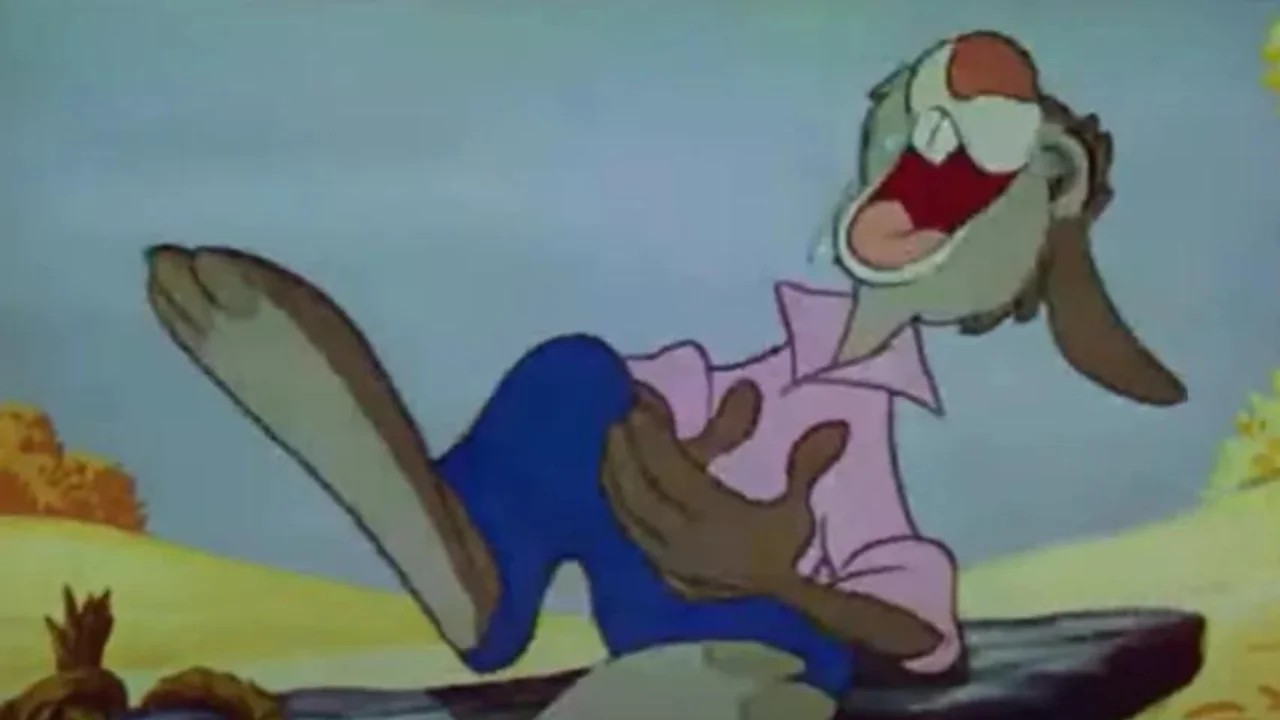
In the summer of 2025, an online grassroots campaign has gained traction on social media platforms urging film enthusiasts, Disney fans, and cultural preservationists to nominate Walt Disney’s 1946 film Song of the South for inclusion in the National Film Registry.
Led primarily by cartoonist and conservative commentator Ed McCray, the movement emphasizes the film’s historical, artistic, and cultural significance while pushing back against what proponents call censorship by modern Disney. With the nomination deadline set for August 15, 2025, the campaign has sparked debates about preservation, racial representation, and the role of controversial art in American history.
Background on Song of the South
Released in 1946, Song of the South is a hybrid live-action and animated film based on the Uncle Remus stories by Joel Chandler Harris, which draw from African American folktales.

Br’er Fox and Br’er Rabbit in Song of the South (1946), Walt Disney Productions
The movie follows a young boy who learns life lessons from Uncle Remus (played by James Baskett) through animated tales featuring characters like Br’er Rabbit, Br’er Fox, and Br’er Bear. It was a technical milestone for Disney, blending live-action footage with animation in innovative ways, and it introduced the Oscar-winning song “Zip-a-Dee-Doo-Dah.”
However, the film has long been criticized for perpetuating stereotypes and idealizing post-Civil War plantation life. Upon release, it faced boycotts from groups like the NAACP, and Disney has not re-released it in the U.S. since 1986. The company has since “vaulted” the film, removing references to it from theme parks (e.g., retheming Splash Mountain). Critics argue it glorifies a painful era of American history.
Many defenders contend that the film’s alleged prejudice is overstated or misinterpreted, viewing it as a product of its time rather than intentional hate. They argue for preservation to avoid censorship and to contextualize history.
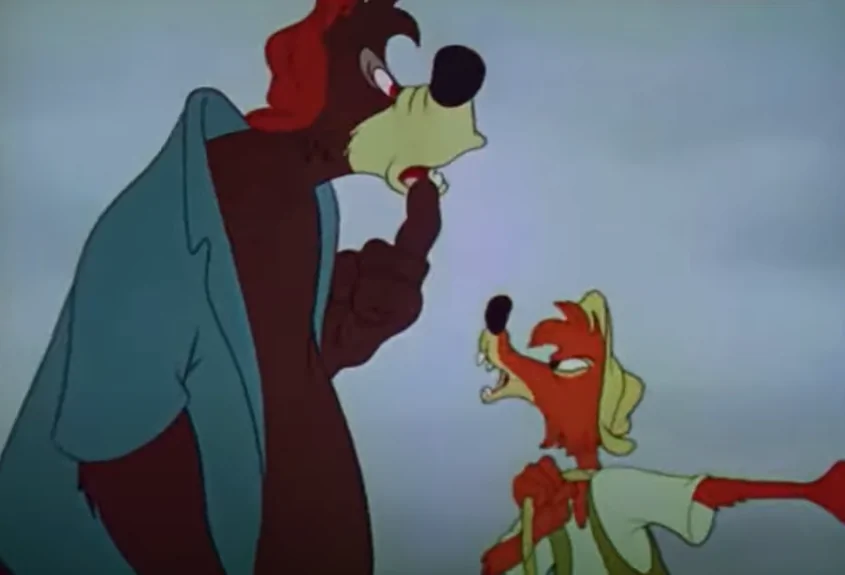
Br’er Bear and Br’er Fox in Song of the South (1946), Walt Disney Productions
The story is set during Reconstruction (post-1865), not slavery, with Uncle Remus as a free sharecropper, not an enslaved person. Defenders like those on songofthesouth.net note this distinction, arguing the film shows interracial harmony and Uncle Remus as a mentor who outsmarts White characters subtly.
YouTube personality La Reina Creole has been one of the loudest voices pushing back against that narrative. Last year she sat down with That Park Place to explain why she feels the film isn’t “problematic” at all.

Splash Mountain is a ride in Disneyland based on the movie Song of the South. Photo Credit: Cd637 at English Wikipedia, CC BY-SA 3.0 <https://creativecommons.org/licenses/by-sa/3.0>, via Wikimedia Commons
“The time period (of the film) is after slavery, known as Reconstruction,” she explained. “In this time period, enslaved Black people, along with Black people who were never slaves, poor White people, and White planter class people had to re-learn how to live together in society under new rules.”
She went on to detail how, during Reconstruction, there were many Black and White sharecroppers working on plantations. In Song of the South there’s even a White family of sharecroppers shown.
“According to my Jim Crow south-raised grandparents, it wasn’t uncommon for both poor Black and White people to live together in relative peace,” she said. “The speech patterns in Song of The South are the same speech patterns my grandparents spoke in. Many people of that day had just a grade school education and it showed in their speech, regardless of race.”
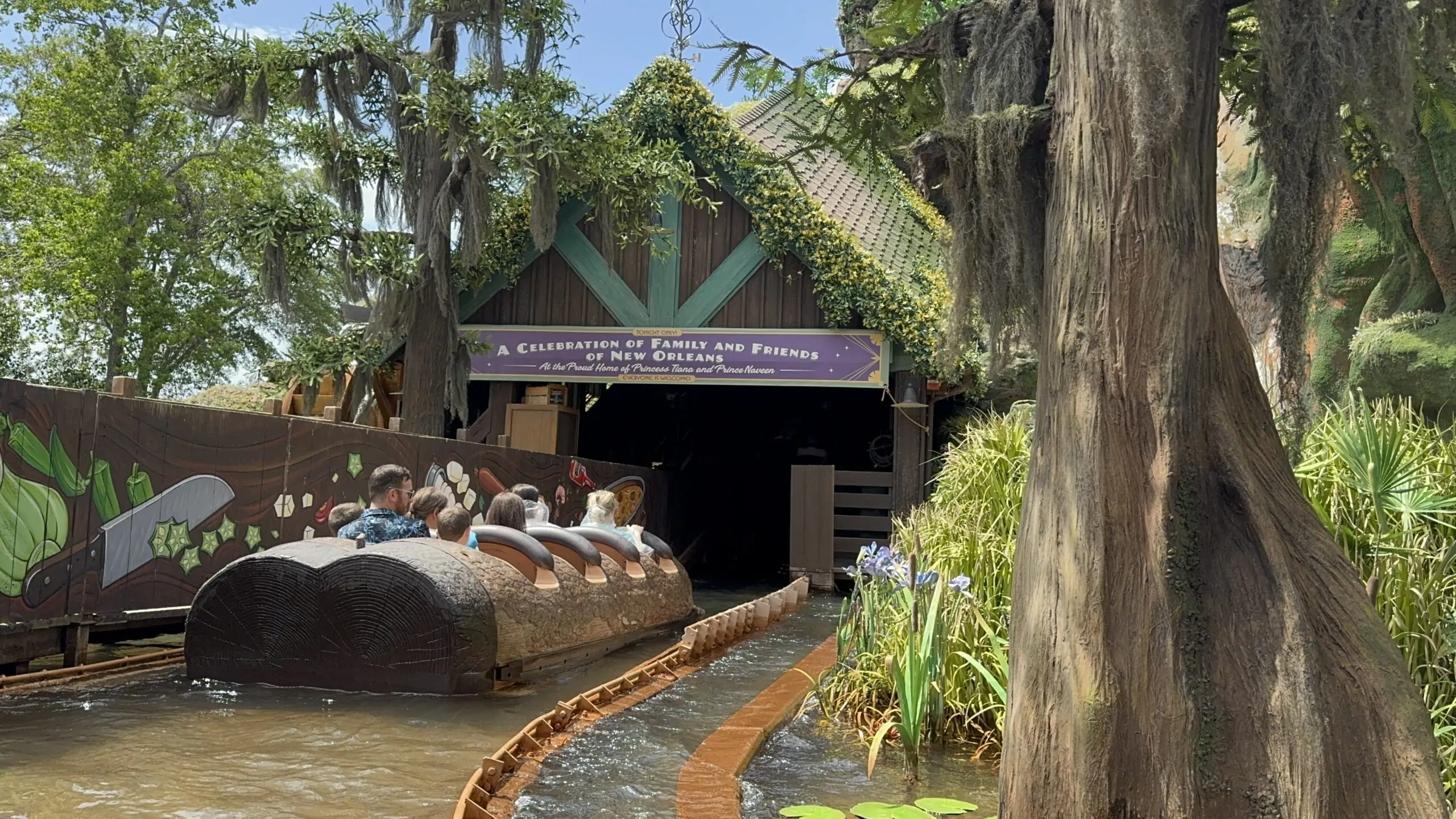
The exterior of Tiana’s Bayou Adventure in Walt Disney World – Photo Credit: M. Montanaro
She then went on to defend the relationship between Uncle Remus and the plantation owners in the film.
“What some call ‘subservient’ in this film is actually the preservation of an existing relationship that did not just end because slavery ended,” La Reina said, referencing how many have incorrectly criticized the film for its portrayal of “happy slaves.”
Despite this, Song of the South remains a touchstone in Disney lore, influencing attractions and merchandise for decades. Its absence from official channels has only fueled underground interest, with bootleg copies circulating online.
The Rise of the Nomination Movement
The current push to nominate Song of the South for the National Film Registry—a list maintained by the Library of Congress to preserve films of “cultural, historic, or aesthetic significance”—began gaining visibility in May 2025 with McCray’s viral X thread.
This thread is about how to nominate the purged 1946 film Walt Disney’s Song of the South to the National Film Registry. The deadline is Aug 15. The form is in the next comment. You need reasons why it should be on the Registry & this thread will give you several. pic.twitter.com/LLXBPqbWF4
— Ed McCray (@Real_Ed_McCray) May 25, 2025
McCray, who describes himself as a “Christian, conservative cartoonist targeted by the left,” has been a vocal advocate for “freeing Uncle Remus” and “rediscovering Walt Disney” through hashtags. His thread provides step-by-step instructions for nomination via the Library of Congress’s online form and outlines reasons for inclusion.
The movement isn’t new; efforts to nominate the film date back at least to 2011, with individuals repeatedly submitting it without success. In 2022, songofthesouth.net encouraged nominations, noting the August 15th deadline. A Change.org petition launched in 2023 calls for its preservation to ensure “diverse perspectives are represented within our cultural record while respecting freedom of expression.”

A Tiana animatronic figure in Tiana’s Bayou Adventure in Walt Disney World – Photo Credit: M. Montanaro
Ebony Showcase, a group focused on African American theater history, has also supported nomination efforts.
In 2025, McCray’s campaign has amplified these calls, tying them to broader cultural wars. He frequently reposts his thread, tagging influencers like actor James Woods and podcasters, framing the nomination as a stand against the Disney company’s supposed censorship and a way to honor Walt Disney’s legacy.
There is no better way to celebrate the 70’s anniversary of Disneyland than by nominating Walt Disney’s Song of the South to the National Film Registry. This not only honors Walt but all of the talented people who made this historic film. The info is in this thread. https://t.co/8RAMPbW8pQ
— Ed McCray (@Real_Ed_McCray) July 17, 2025
Supporters, including culture writer Kat Rosenfield, have praised the effort as a “huge win” against censorship, highlighting the film’s artistic and historical value.
Excellent thread on Song of the South and its significance both artistically and historically. There’s a powerful push right now to not just censor this film but purge it from the American memory; getting it preserved in the registry would be a huge win and I hope it happens https://t.co/pN2aT7YLe8
— Kat Rosenfield (@katrosenfield) May 28, 2025
The campaign has seen endorsements from Disney fans and conservatives, with many noting that even outspoken progressives like Whoopi Goldberg advocated for the film’s release despite controversy back in 2017.
Newly Minted Disney Legend Whoopi Goldberg Wants Controversial Film ‘Song of the South’ Releasedhttps://t.co/cp9HXS43K6 pic.twitter.com/EvYYZYUR4w
— The DIS (@TheDIS) July 17, 2017
Imagineer Tony Baxter has also noted its box office success in 1980s re-releases and collaboration with the NAACP on related projects like Splash Mountain.
Tony Baxter explaining Song of the South did better when it was rereleased in the 80s in movie theaters than when it originally came out “it was very very successful”
Also talks working with the NAACP on Splash Mountain.
Bringing Nick Stewart back for Br’er Bear’s voice. pic.twitter.com/3vPhRVs6HW
— Showcase of Wishes (@ShowcaseWishes) August 2, 2023
Advocates argue that Song of the South meets the Registry’s criteria for cultural, historic, or aesthetic importance.
Key reasons from McCray’s thread and supporters include:
- Milestones in Black Representation in Hollywood: James Baskett became the first Black actor to win an Academy Award (an honorary Oscar for his “heart-warming” portrayal of Uncle Remus) and the first signed to a seven-year Disney contract. Hattie McDaniel, the first Black woman to win an Oscar (for Gone with the Wind), appears in the film. Nick Stewart (voice of Br’er Bear) used his earnings to found a theater for Black actors performing classics.
- Artistic and Technical Achievements: It pioneered extensive blending of live-action and animation, with Baskett’s performance enabling seamless interactions. Animators like Ken Anderson called it their favorite project. “Zip-a-Dee-Doo-Dah” even won an Oscar and became Disney’s most covered song, recorded by legends like Louis Armstrong and Bing Crosby.
- Walt Disney’s Personal Legacy: Disney featured excerpts from Song of the South in his 1950s TV specials and considered it a favorite. It was integral to Disney parks and characters until recent purges.
- Anti-Censorship Stance: Proponents claim excluding it erases history and silences diverse voices, especially given its success and influence. McCray argues it’s a “pro-fatherhood film that transcends race,” purged due to modern sensitivities.
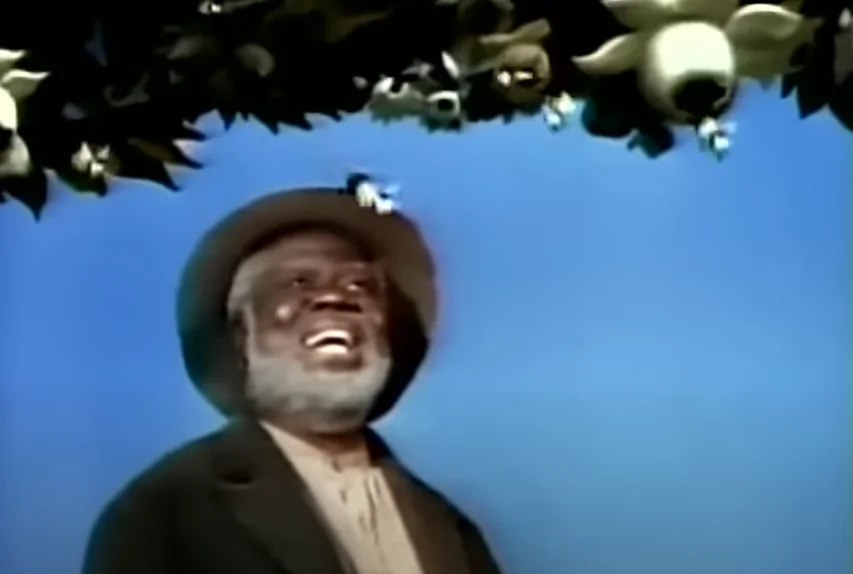
James Baskett as Uncle Remus in Song of the South (1946), Walt Disney Productions
The Registry has included controversial films before, like the infinitely more offensive Birth of a Nation (1915), for their historical impact, setting a precedent for preservation without endorsement.
Current Status and How to Participate
As of July 21, 2025, the movement continues with McCray’s persistent posts, including reminders tied to events like Father’s Day and political commentary. Nominations are open via the Library of Congress form.
Selections are announced in December, with 25 films added annually from public suggestions and board review.
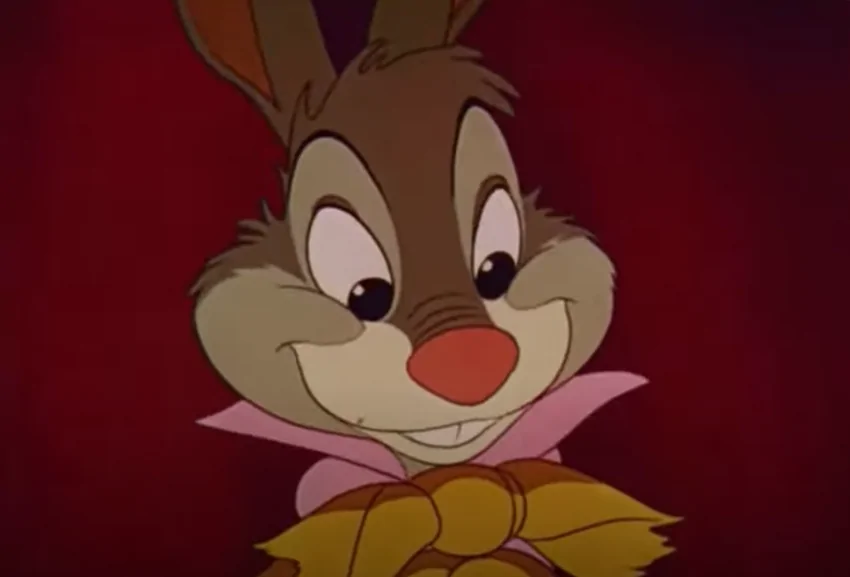
Br’er Rabbit in Song of the South (1946), Walt Disney Productions
Whether Song of the South joins classics like The Wizard of Oz or remains vaulted, the campaign highlights ongoing tensions between preservation and progress in America’s cinematic heritage. Proponents see it as a victory for free expression; detractors, as a step backward.
As McCray puts it, “We can really make a difference.”
How do you feel about Song of the South? Sound off in the comments and let us know!
UP NEXT: Domain Registrations Offer Clues to the Name of Upcoming Abu Dhabi Disney Theme Park
