



Mark “Grummz” Kern says he spent six months using AI to rip Unreal Engine out from under his long-running project Em-8ER and replace it with a custom, AI-first engine of his own. He is now claiming that his team is developing 93 times faster than it ever did on Unreal — and that studios no longer need to license an expensive commercial engine to ship a game.
The announcement landed on September 11, 2026 in a demo video that Kern later said became the most-viewed post in the project’s history, climbing past 2.9 million views within two days.
This game is entirely “vibe” coded.
I spent 6 months using AI to replace Unreal Engine from under our game Em-8ER.
Now we’re developing 93x faster than we ever did before with Unreal. Because our engine is developed to be 100% AI first instead of tacked on.
It is not a toy… pic.twitter.com/SCIBlza1qv
— Grummz (@Grummz) September 11, 2026
Kern is a former Blizzard developer. He joined the company in 1997 as an associate producer on StarCraft, produced StarCraft 64 and Diablo II, and was team lead on the original World of Warcraft. After leaving Blizzard in 2005 he co-founded Red 5 Studios and served as CEO during the making of the free-to-play sci-fi shooter Firefall.
Em-8ER is his spiritual successor to Firefall: a crowdfunded “mech vs. kaiju” planetary wargame that has been in public development for years. The new engine is meant to power that game first, then go out to other developers.
“Vibe Coded,” But Not Overnight…
Kern framed the work in the language of the current AI-coding wave:
“This game is entirely ‘vibe’ coded. I spent 6 months using AI to replace Unreal Engine from under our game Em-8ER.”
He was careful to separate the project from one-shot chatbot demos. “It is not a toy one shotted overnight, it is a production ready engine,” he wrote. “I made a big bet that this was the future and now I’m very confident it is. You don’t need to license an expensive game engine anymore.”
The name is Kun-Zhi, which Kern says is Tibetan for “ground of all” — the ground the world springs from. The team had first called it Kaiju Engine, then changed the name after discovering another engine already using that title.
Technically, he describes Kun-Zhi as a ground-up engine written mostly in C (with some Elixir) on Vulkan, not a fork of Unreal and not a full recreation of Unreal’s feature list. “There is no Unreal,” he posted in replies. “Yes, we don’t rebuild all of Unreal, just the parts our game needs. Less bloat that way too.”
2.9M views on our Kun-Zhi engine demo for our game.
The interest has never been higher, this is our most engaged and viewed post on the project. Thank you!
Reminder that backers will get early access to the engine to use it for their own AI-forward games. Sign up now at 50%… https://t.co/1nQFUhjPJi
— Grummz (@Grummz) September 13, 2026
What He Says 93x Actually Means:
The headline number is development speed, not a frame-rate bake-off against Unreal.
In the September post, Kern said the team is “developing 93x faster than we ever did before with Unreal” because the engine was “developed to be 100% AI first instead of tacked on.” That is the same multiplier he used a month earlier, when the engine still had the Kaiju name. Then he defined it more tightly: two orders of magnitude faster by lines of code and features, with fewer bugs and much faster iteration.
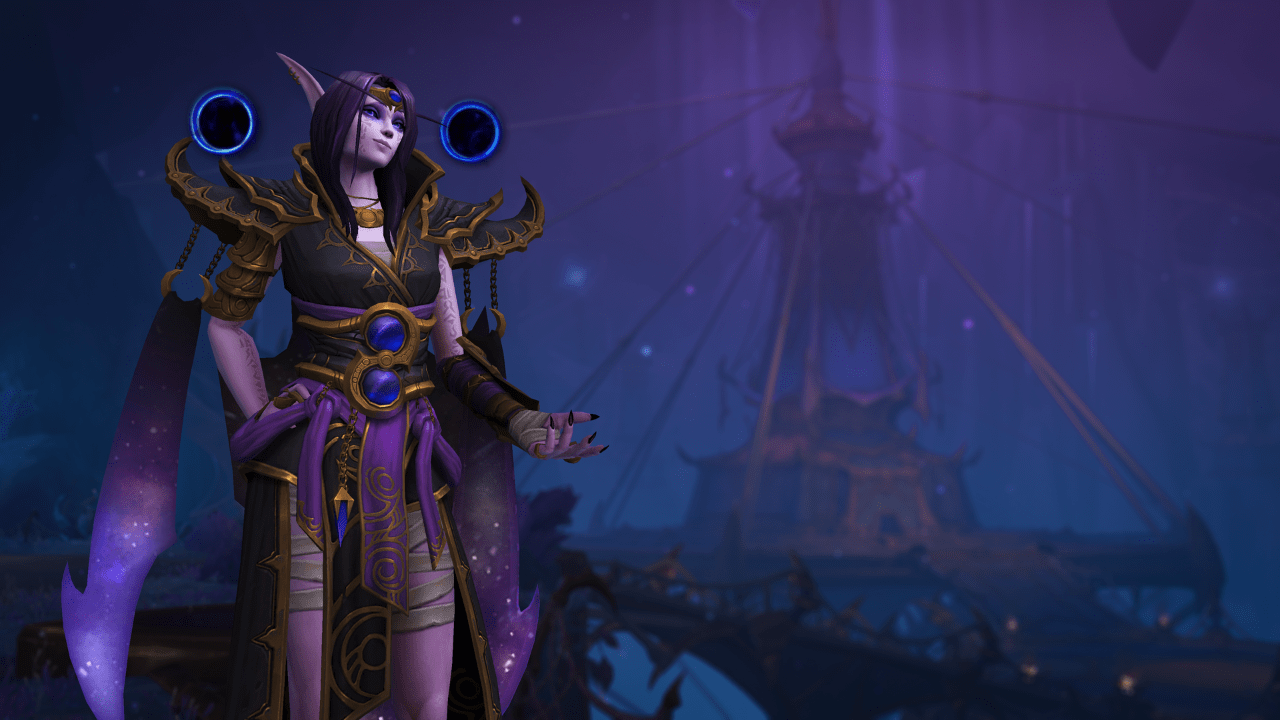
A screenshot from World of Warcraft: The War Within Alpha (2024), Blizzard
The earlier post also listed the operational numbers behind that claim:
- Unreal build times of about 30 minutes versus 36 seconds on the new engine
- Feature work in days instead of months
- The original Firefall engine taking 2–3 years and more than $5 million (adjusted) to build
- The new engine written in about five months for “a couple grand”
- Current performance around 140 fps, with 200–300 fps projected after optimization
What the September Demo Showed
The feature list attached to the viral video is more game-facing than the August renderer dump:
- Advanced character animation
- World collision meshes
- An AI-assisted Blender animation exporter and workflow
- Character outfits and outfit swapping
- Physics-driven character effects
- Fully networked client/server player capsules
- Pilotable vehicles
- And, listed last and without ceremony, “Waifus”
August’s technical stack still sits underneath that: meshlet PBR rendering, visibility-buffer / Forward+ clustered lighting, id Tech 5–style megatexture streaming, a planetary-scale renderer, procedural planets with plate simulation, Ozz for animation, Jolt for physics, and a companion Blender plugin for AI-directed asset export. Kern has said the coding was a tag-team of Grok, Codex, and Claude. Later reporting on the project also mentioned Astra in the rotation, and that developers still have to know architecture and data structures… the AI does the drudge work, the design calls stay with the human.
Why He Thinks “AI-first” is The Point
The argument is not only “AI wrote the engine.” It is that an engine designed for AI agents is a different product from Unreal with Copilot bolted on.
Unreal is a huge, human-oriented toolkit: long compile times, deep subsystem coupling, and a license that has become expensive for anyone who actually ships. Kern’s pitch is that a smaller, purpose-built C/Vulkan engine with an AI-shaped workflow, exporters, code structure, and iteration loop all assuming a model in the loop, removes that tax. Features arrive in days. Builds finish in under a minute. You only keep the systems the game needs.

Screenshot of Black Wing from World of Warcraft Classic (2020), Blizzard Entertainment
That is also why he keeps saying the result is production-ready rather than a weekend prototype. The six-month timeline is the proof of concept he wants people to notice: not that a chatbot can emit a spinning cube, but that a small team can replace the commercial middle layer under a networked 3D game and keep shipping animation, vehicles, collision, and multiplayer on top.
Public Release, Backers, and Partners
Kun-Zhi is not staying in-house. Kern said the engine will be released to the public, backers first, so other people can build “AI-forward” games on it. After a quiet closed-building stretch, public backing reopened with a 50% sale on game backer packs and a monthly patron tier. He listed Razer and AMD as current partners and said corporate sponsorships were available. “How To” write-ups on AI coding and games were promised to follow the demo.
Two days later he was still pointing people at that sale. “The interest has never been higher,” he wrote. “Backers will get early access to the engine to use it for their own AI-forward games.”
Whether Kun-Zhi becomes a real alternative to Unreal will be decided when other people get the tools and try to ship something that is not Em-8ER. Until then, the posts are a clear statement of intent from someone who has shipped StarCraft, Diablo II, and vanilla WoW: the next engine on his desk was not licensed. It was generated.
