


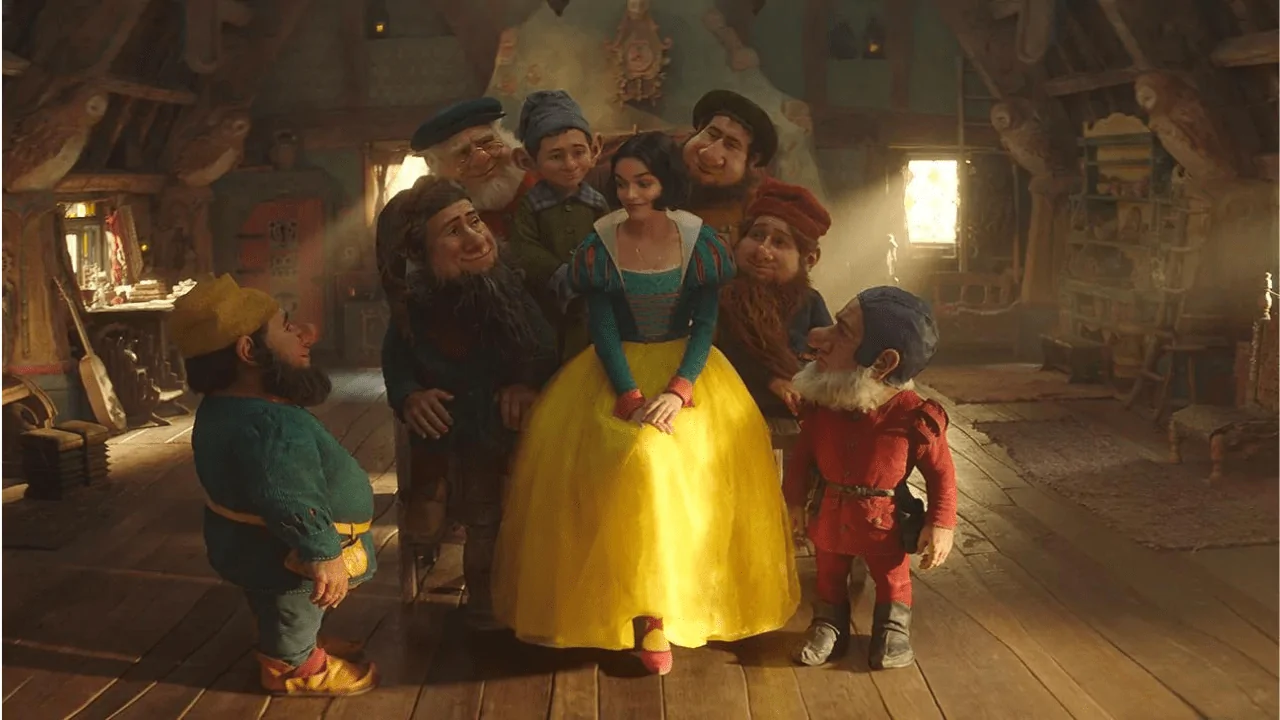
Trigger warnings have increasingly become commonplace, often serving as tools to help audiences avoid distressing or unsettling content. Some view these as necessary, but the current political climate might be such that we could safely assume the majority of people are over being told what might “trigger” them in a movie. “Grow up and go watch Schindler’s List,” they could say. However, in the case of Disney’s recent adaptation of Snow White, the warnings provided to viewers have arguably crossed from helpful caution for the mentally fragile and into outright spoilers, detracting from the viewing experience by revealing critical plot points ahead of time.
And before you say, “Snow White has been around since the 30’s… everyone knows what happens”… just remember that Rachel Zegler, star of Snow White, told us all that this was a modern retelling.

The like to dislike ratio on the latest Snow White trailer as of February 17, 2025 – YouTube, Disney
Disney’s latest “reimagining” is the 1937 classic Snow White, starring Rachel Zegler in the titular role, and it has already garnered controversy for various reasons, almost all of them Zegler. However, an unexpected source of contention is now emerging: the film’s overly detailed warnings from the British Board of Film Classification (BBFC).
Among the listed cautions, viewers are explicitly warned about “ominous trees,” a character threatening “to shove something up another’s backside,” and a woman being “deliberately poisoned.” Such descriptions, ostensibly meant to protect sensitive viewers, instead strip away narrative suspense, diminishing the emotional and storytelling impact intended by filmmakers. What should be tense, surprising, or impactful moments now become anticipated scenes, significantly diluting their dramatic effect.
Film storytelling thrives on uncertainty and surprise. Audiences find joy and engagement precisely because they don’t know exactly what will happen next. The journey through a story’s plot is fundamentally tied to the experience of discovery. By contrast, explicitly describing plot elements like poisoning or threats between characters in advance removes this vital component, effectively undermining the narrative’s purpose.
These clowns slapped trigger warnings on Snow White… for poison apples and scary trees.
How do these people survive real life? 🤦♂️ pic.twitter.com/7e55Phsau0
— Clown World ™ 🤡 (@ClownWorld_) March 19, 2025
Consider the poisoning warning: Snow White’s deliberate poisoning is central to the original narrative and presumably also key in the adaptation. Knowing this in advance converts a dramatic climax into a mundane inevitability. Instead of a shocking or emotionally resonant scene, viewers are primed for this moment, robbing them of genuine reactions and the suspenseful atmosphere filmmakers carefully craft. Guesses about how Disney might handle this aspect of the story are completely out the window if you already know it’s just going to do what the original did. Go figure, eh?
Additionally, the bizarre inclusion of “ominous trees” further exemplifies how overly specific warnings verge into needless narrative spoilers. Atmosphere creation is a critical cinematic element, and the presence of ominous imagery such as unsettling trees is a classic storytelling device meant to evoke feelings organically. Alerting viewers beforehand unnecessarily pre-empts natural emotional reactions, dulling the intended effect.
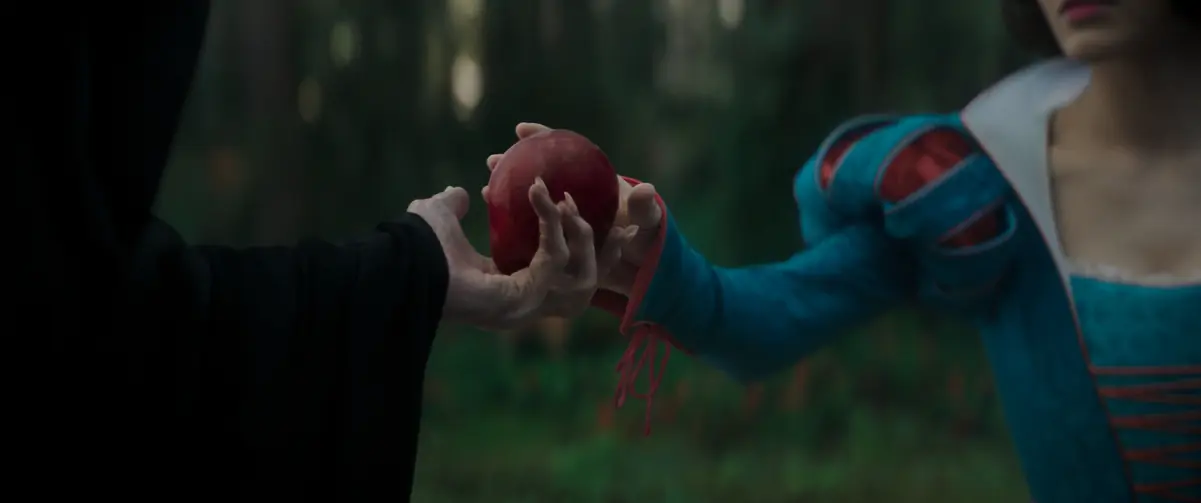
(L-R): Gal Gadot as the Evil Queen and Rachel Zegler as Snow White in Disney’s live-action SNOW WHITE. Photo courtesy of Disney. © 2024 Disney Enterprises Inc. All Rights Reserved.
This trend towards detailed warnings can also set a precedent that impacts future film experiences negatively. If every unsettling or mildly contentious scene necessitates explicit advance disclosure, films may find themselves constrained creatively. Directors and screenwriters may hesitate to incorporate innovative storytelling devices or intense dramatic scenes for fear that they will lose their impact when described as mere cautionary bullet points. Good luck with that when even the foliage can be “ominous” and triggering.
Of course, the original intent behind content warnings is commendable—offering sensitivity toward diverse audience needs and avoiding undue emotional harm. You wouldn’t want a war veteran walking into a movie that features an unexpected scene that could cause an immediate and severe flashback. Yet, there must be a balance between viewer protection and artistic integrity.
Generalized warnings such as “intense scenes” or “moments of peril” sufficiently inform viewers without directly spoiling the story. Detailed descriptions, however, overreach, infringing on the delicate craft of storytelling. Once again, something that could have been a net positive if used in extreme moderation has been taken into a metastasized, malignant place of tremendous overreach. It’s empathy run amok to the point it’s mucking up even being able to go see a movie. Nanny State, they name is Britain.
Ultimately, the audience experience hinges on the preservation of suspense, surprise, and genuine emotional response. Disney’s Snow White adaptation exemplifies precisely how overly explicit warnings threaten to unravel these elements, transforming anticipation into mere predictability. Going forward, it would be wiser for content regulators and filmmakers alike to reconsider the level of detail provided in trigger warnings, prioritizing preserving the integrity and excitement of storytelling itself.
