


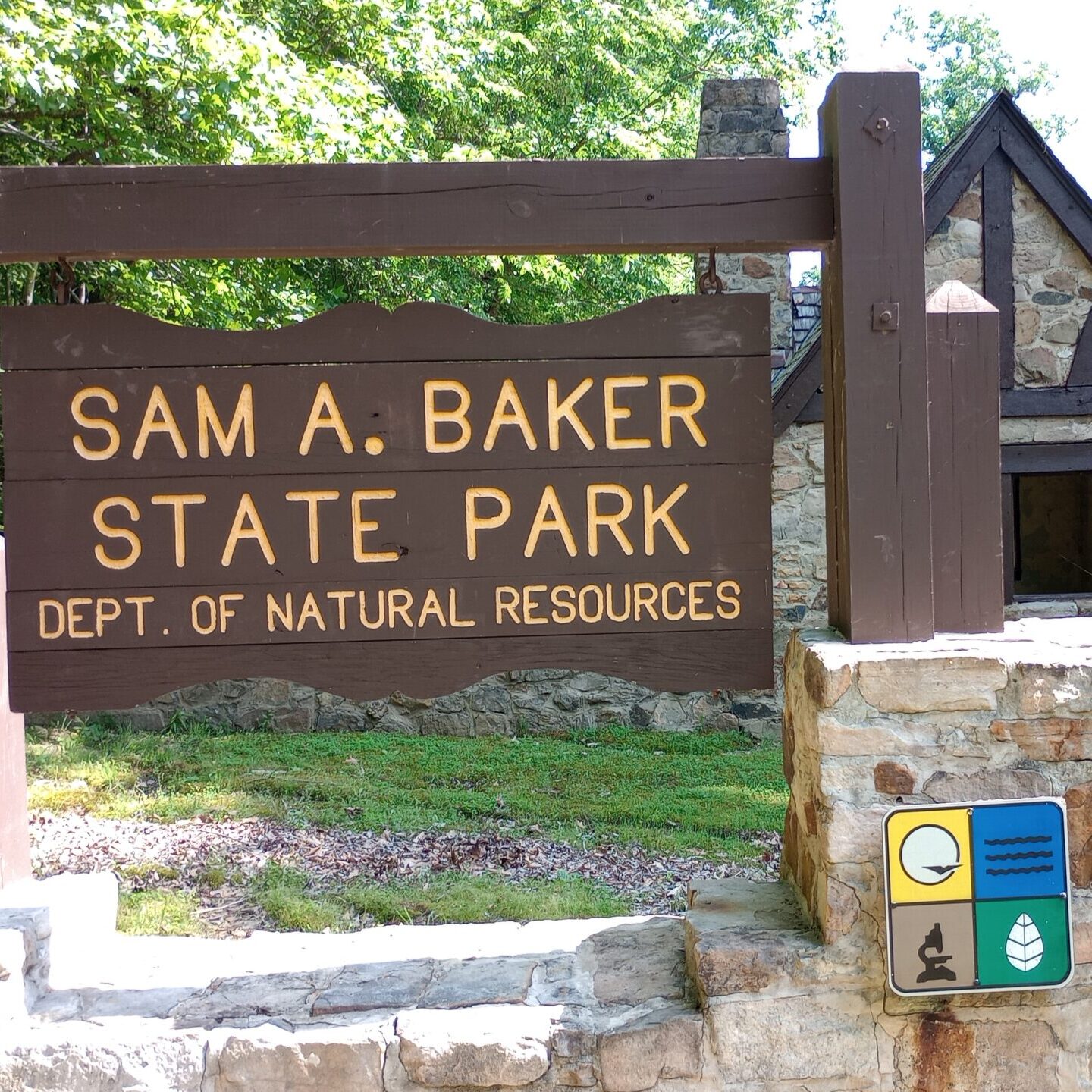
The Continental United States is visited by millions of international tourists each year seeking recreation in wilderness settings exemplifying a unique American outdoor experience, hungry for something like Sam A. Baker State Park in peak season during perfect weather on Memorial Day Weekend.
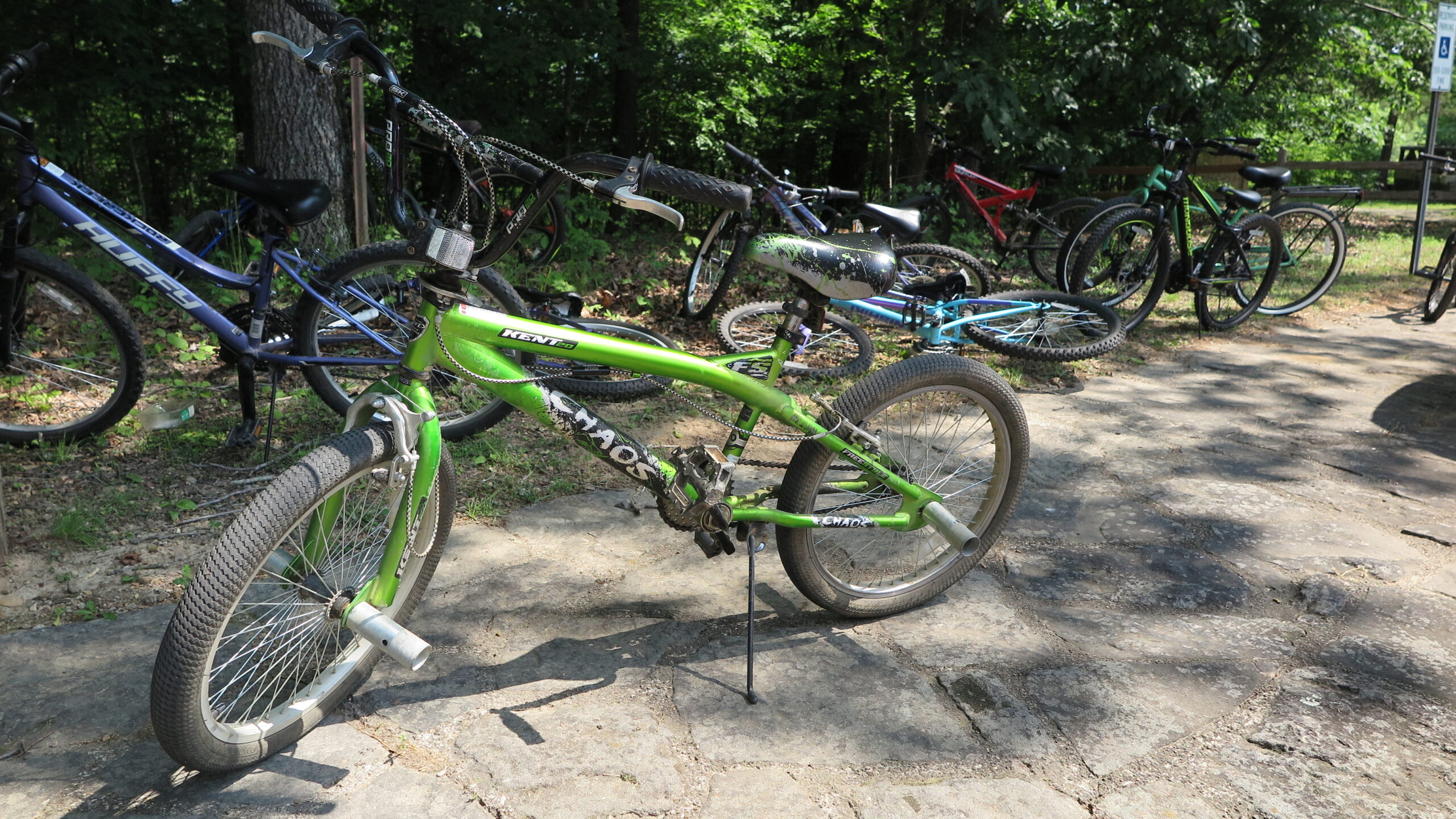
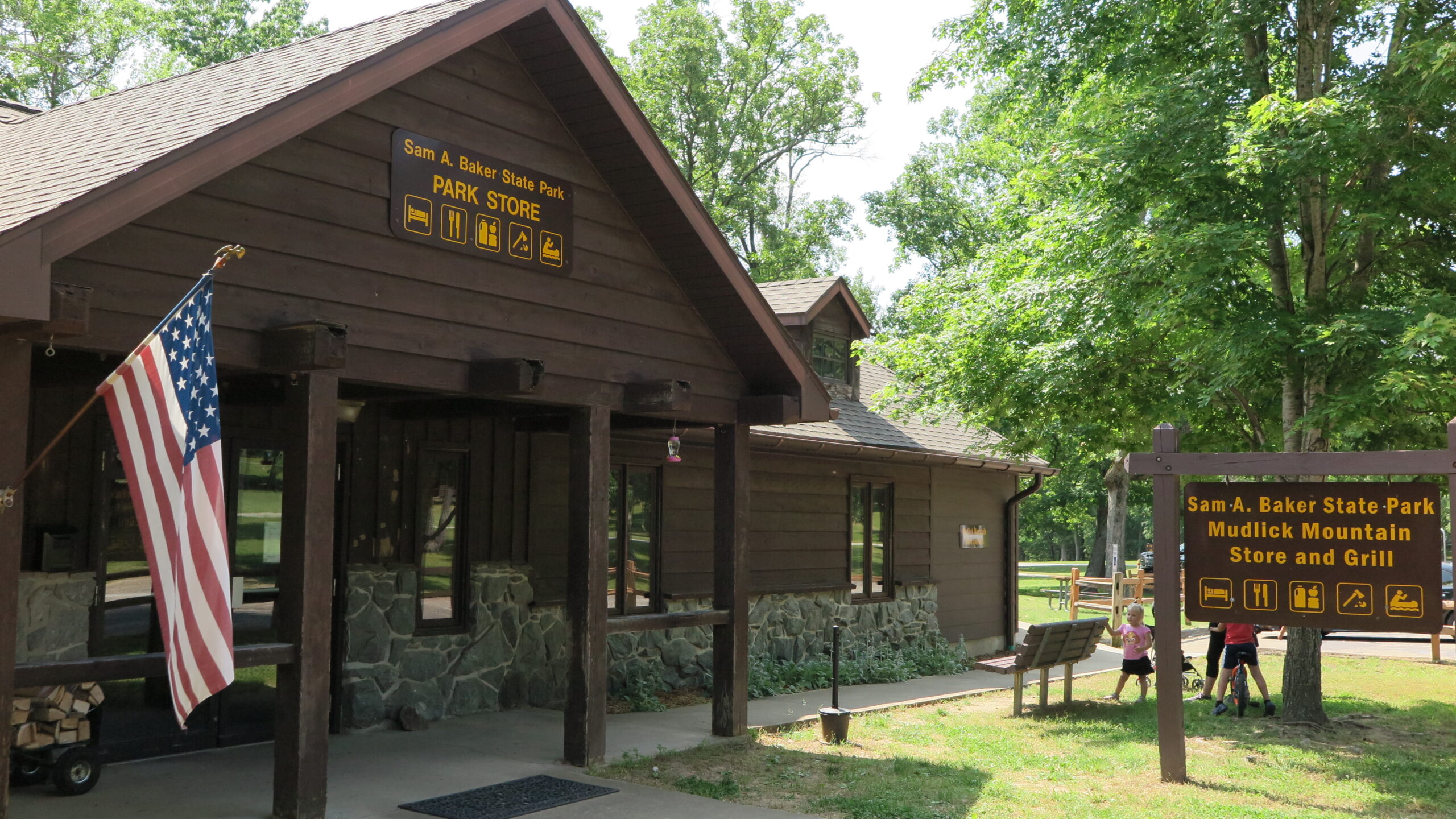
By mid-morning Sunday, the nearly 6,000 acre park located near Piedmont, Missouri was bustling with holiday activities as my hiking companion and I arrived at our trailhead parking lot populated by abandoned bicycles with a busy Big Creek swimming hole heard in the distance. Bright sunlight penetrated campsites with smoking grills and lounging guests in dark shadows of Shortleaf pines. Large groups of families on bikes smiling and waving at passers-by peddled down a shady concrete path. Kayaks of all colors were prepared on trailers, while curious guests browsed through the spacious park store. Naturalists were giving classes on wildlife and things like knot tying. This is the authentic America travelers desire, discovering deep relaxation in natural beauty the enchanting Ozarks provides.
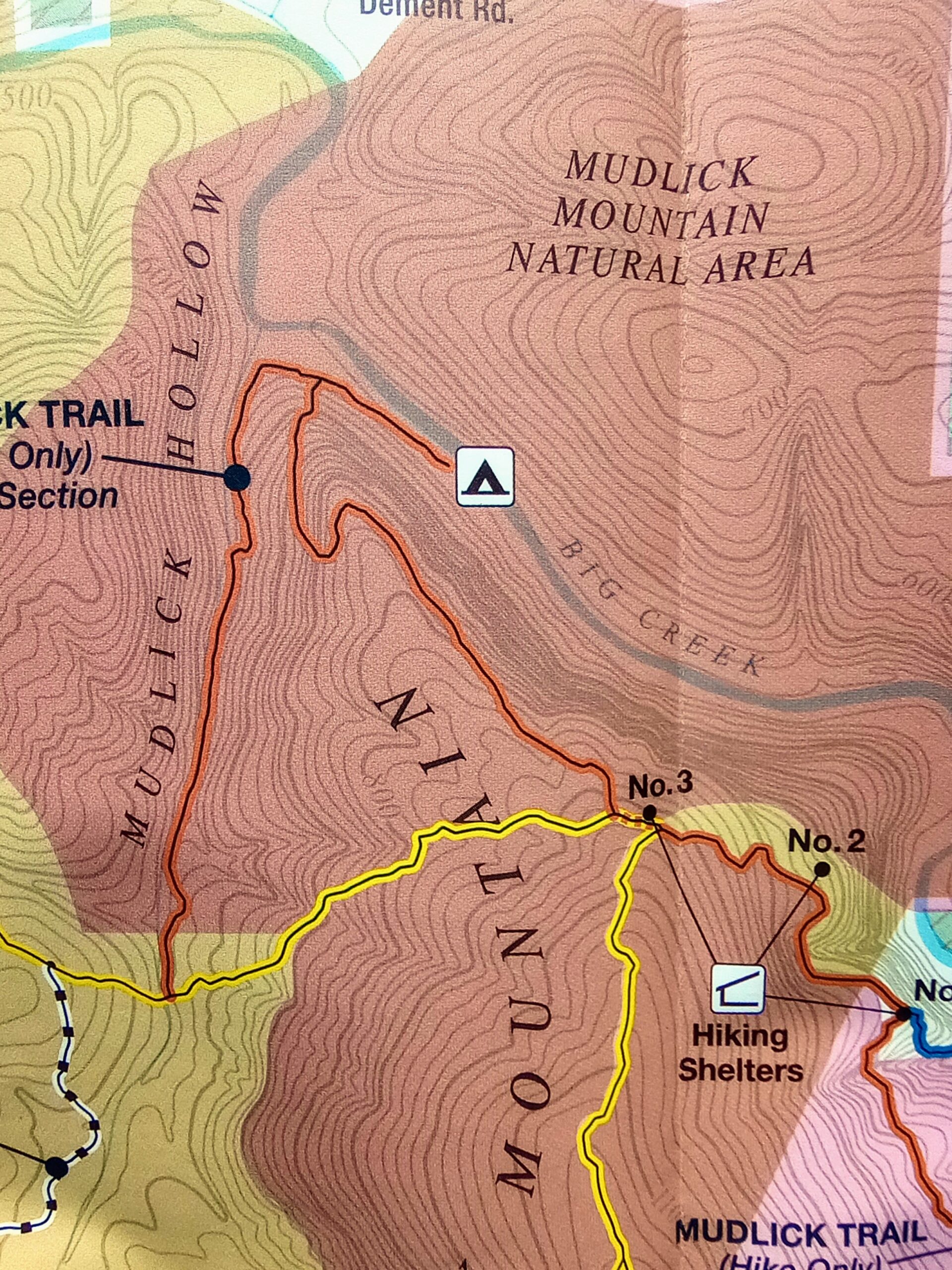
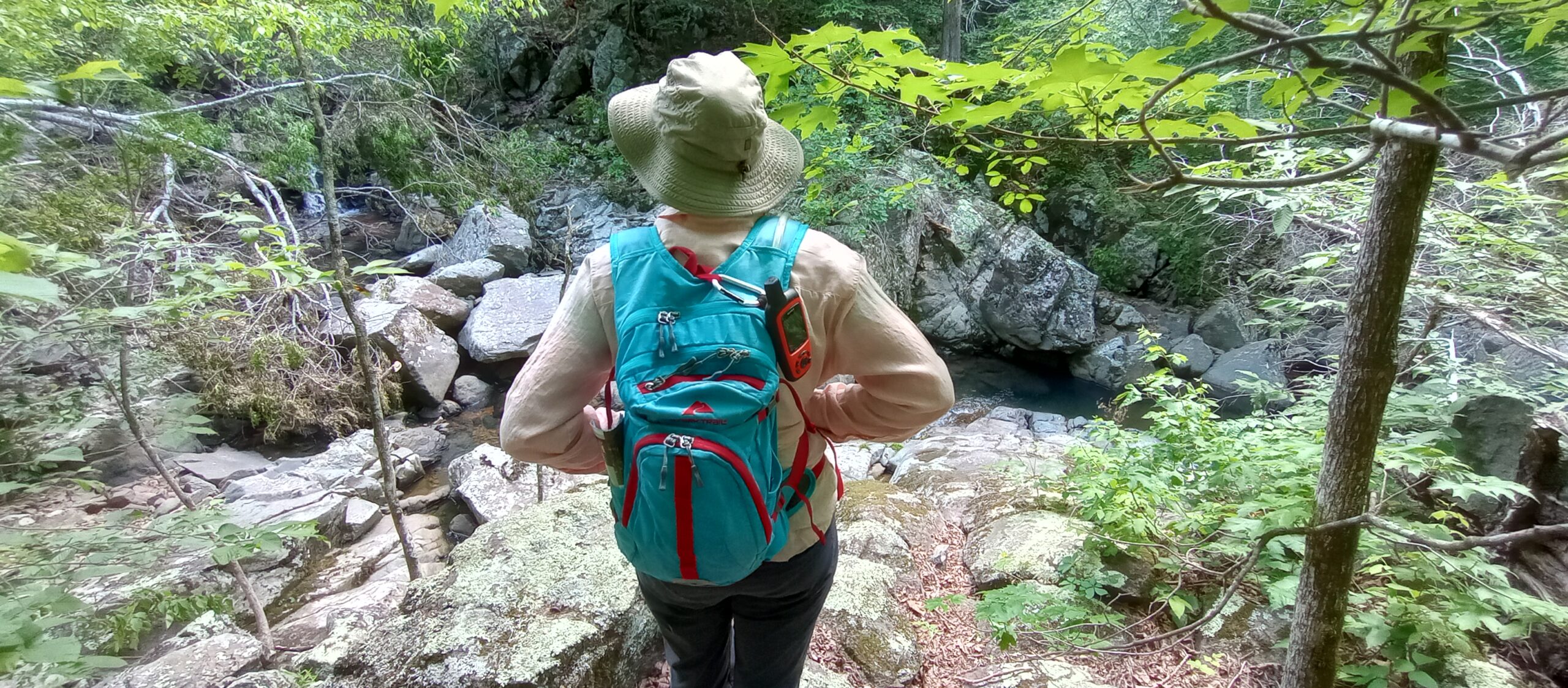
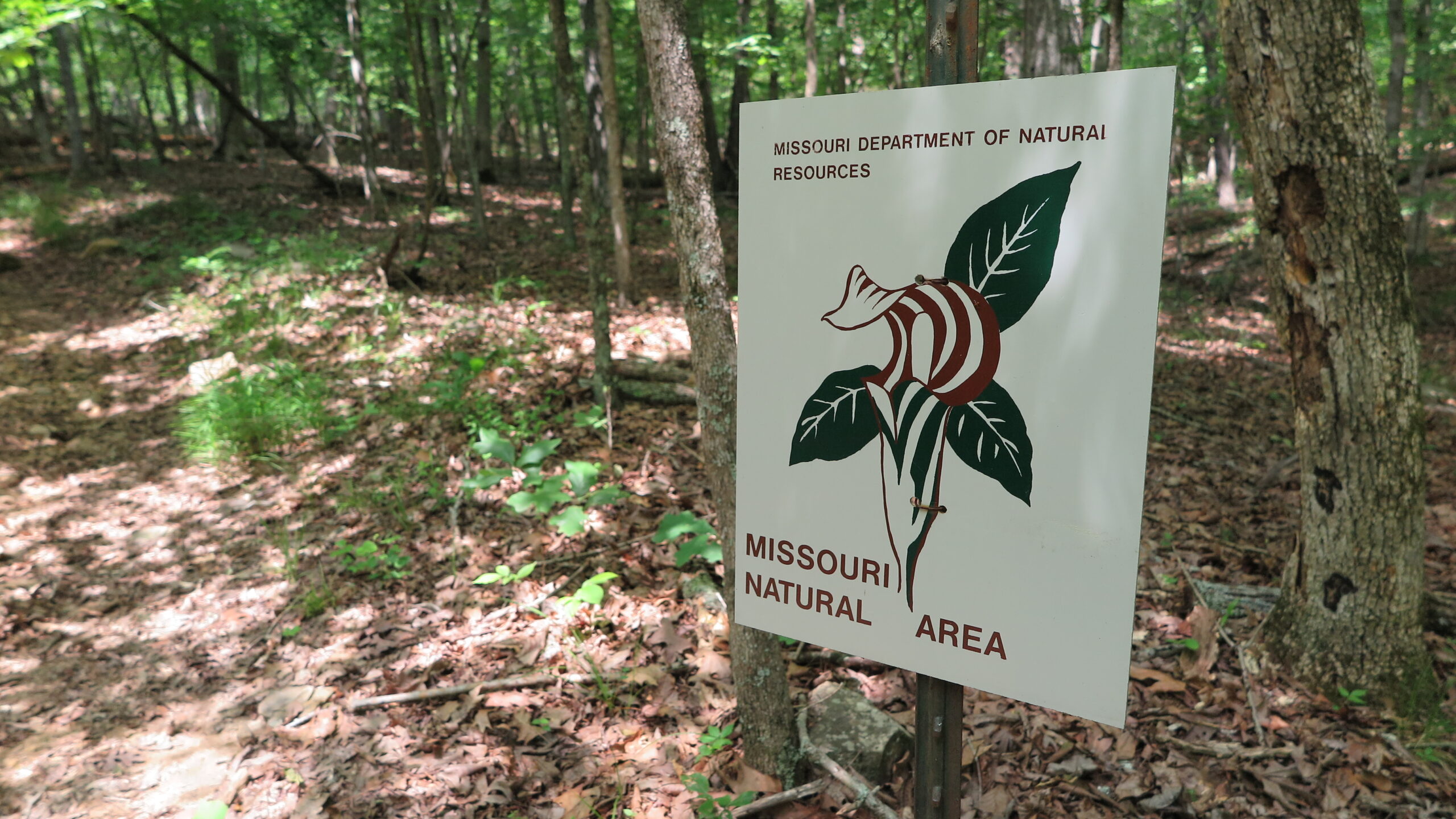
The many ways to explore and enjoy Sam A. Baker State Park is almost unlimited, but we chose an old-fashioned pursuit:hiking up and down Mudlick Mountain into a backcountry largely unchanged since the region’s early pioneer days to an isolated, rugged gorge called Mudlick Hollow. The Mudlick Trail begins at the nearly 100 year-old Civilian Conservation Corps built dining lodge constructed of native wood and stone, part of the nationally registered Sam A. Baker Historic District along with other structures like the 18 rustic cabins, visitor center, and 3 traditional hiking shelters complete with internal fireplaces for trail overnights in the Mudlick Mountain Wild and Natural Area; one of the largest wilderness preserves in the vast Missouri State Park system.
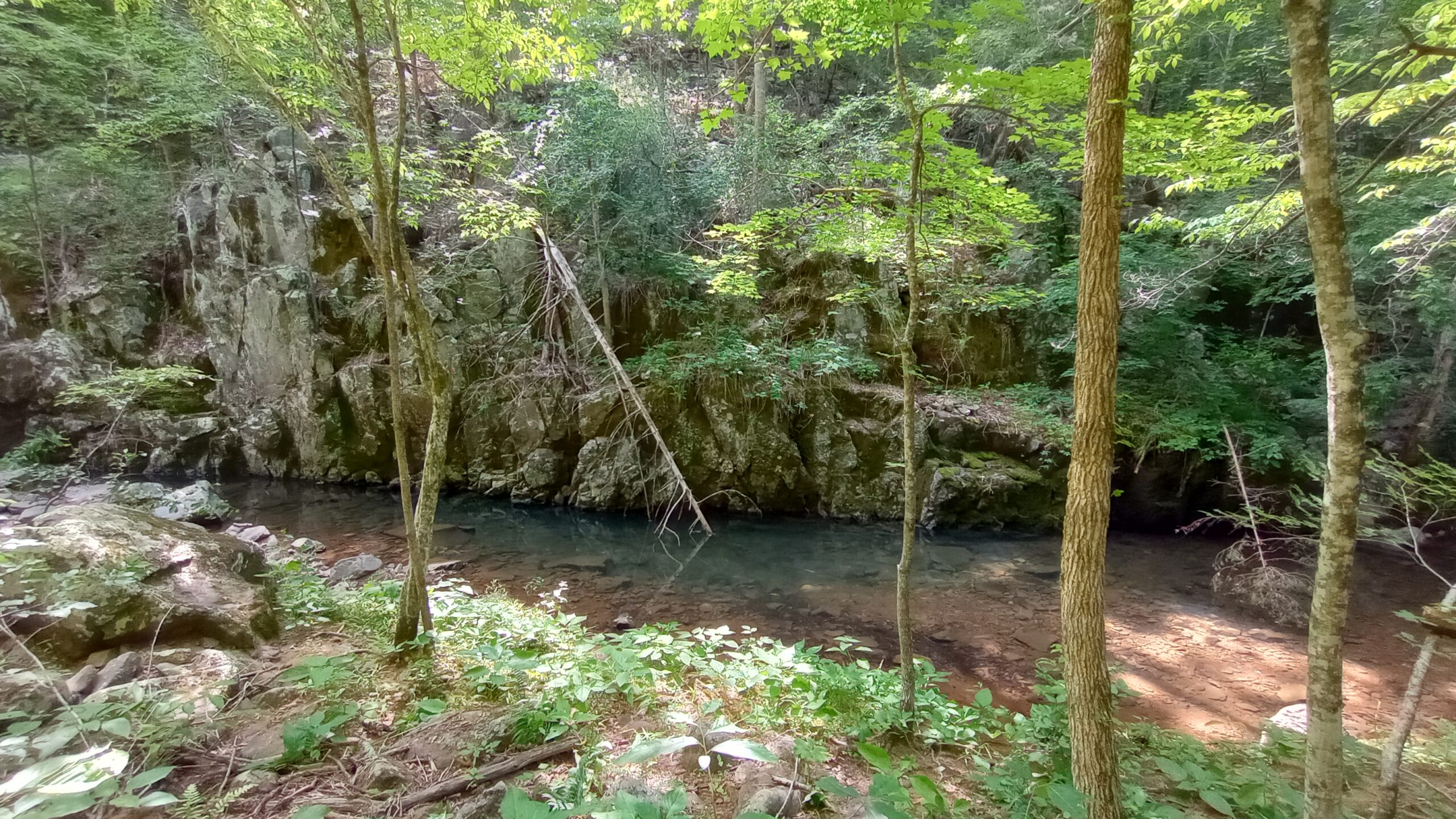
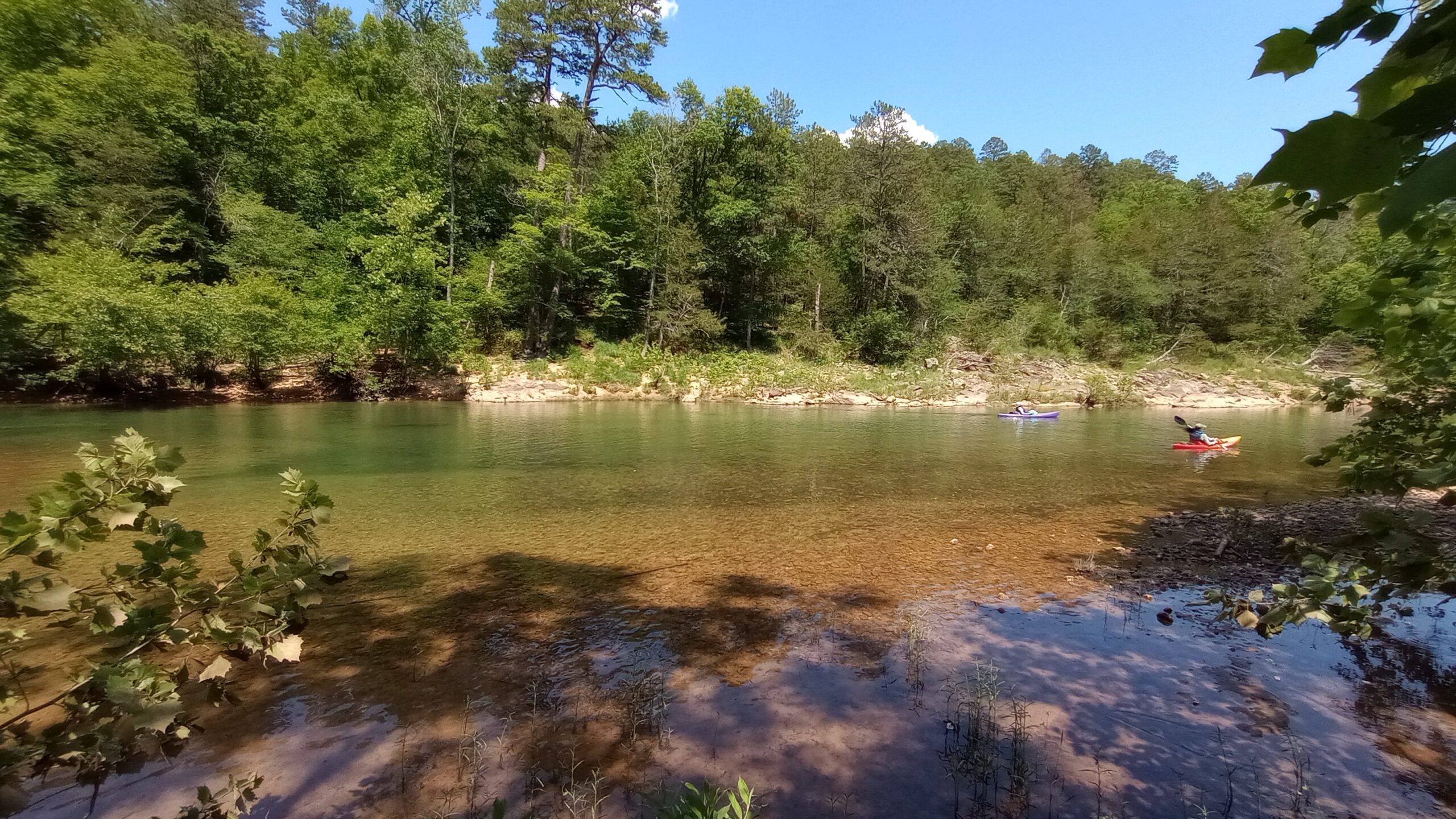
Equipped with a physical copy of a detailed trail map and dedicated GPS device, we started up rocky terrain reminiscent of Southern Appalachia towards the hiking backpack shelters overlooking Big Creek and the popular swimming hole below, part of an exclusive geologic feature to this area known as a “shut-in”. Millions of years of rain and water flowing over igneous rhyolite, and in this case dellenite bedrock, forms a stream area with high walls on at least three sides as these mountain waterways leave the upper country, rapidly descending into the drainage of lush river bottomlands full of cane, grasses, and native wildflowers in bloom. The largest and most popular example of this natural Ozark phenomenon can be found at nearby Johnson’s Shut-In State Park outside Ironton, Missouri.
Mudlick Mountain’s impressive rock exposures and steep, fractured outcroppings covered in moss and lichens are some of the oldest geologic features found in
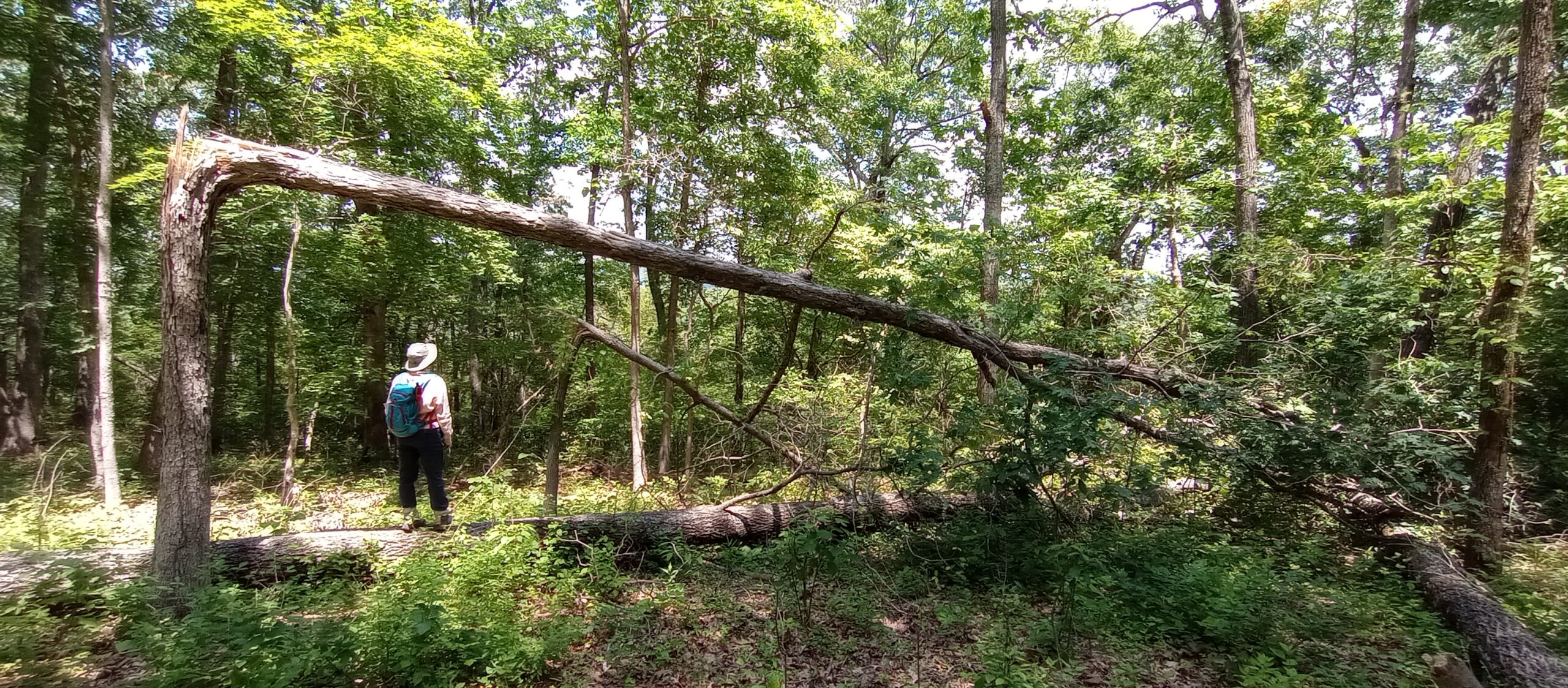
North America, making footing on the rough trail in places more difficult than hiking large parts of the Smokies or the Rockies. Several miles up onto the northern shoulder of Mudlick Mountain into the Wild and Natural area, the woods are thin, exposed to severe weather and natural fire for millennia; the forest has a distinct, harder-edged quality. Trees are seen twisted into unrecognizable shapes, found completely downed with roots exposed, or just plain snapped in half ten feet up their trunk from the tornadic winds that rip through the higher elevations of the Ozarks each year.
I have been sequestered inside a tent at Campground 1 along the scenic St. Francis River during a torrential July rainstorm lasting fourteen straight hours with lightning strikes dozens of feet away. In this rough landscape, once committing to a sparsely populated backcountry with overgrown areas of faint trails and impassable sections of downed trees complicating navigation, visitors must remain aware and be prepared for almost anything. Mudlick Mountain’s ancient past beginning almost a billion years ago in a massive ring of explosive volcanoes that created the surrounding St. Francois Mountains makes certain areas on the shoulders and summit repetitive, difficult to read, and ultimately unpredictable to even someone familiar with similar destinations in Missouri.
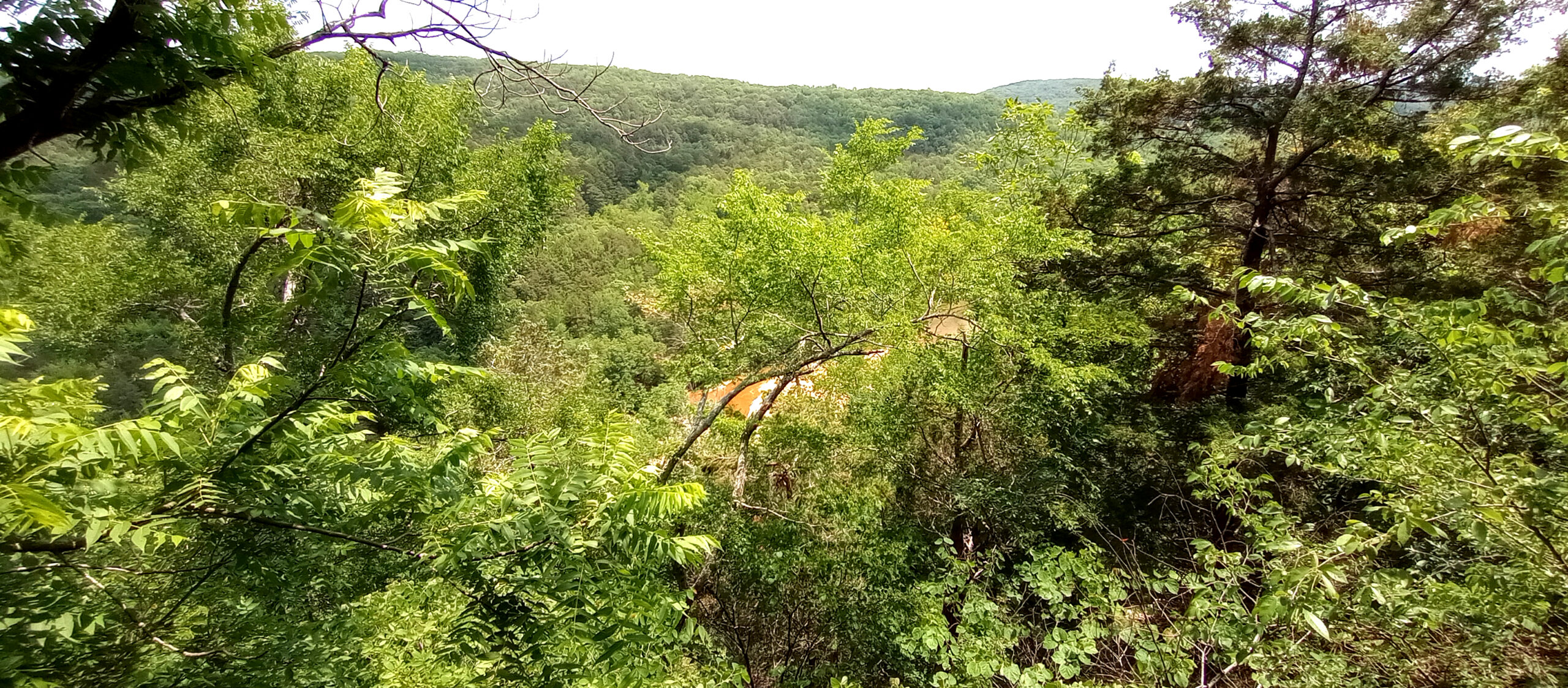
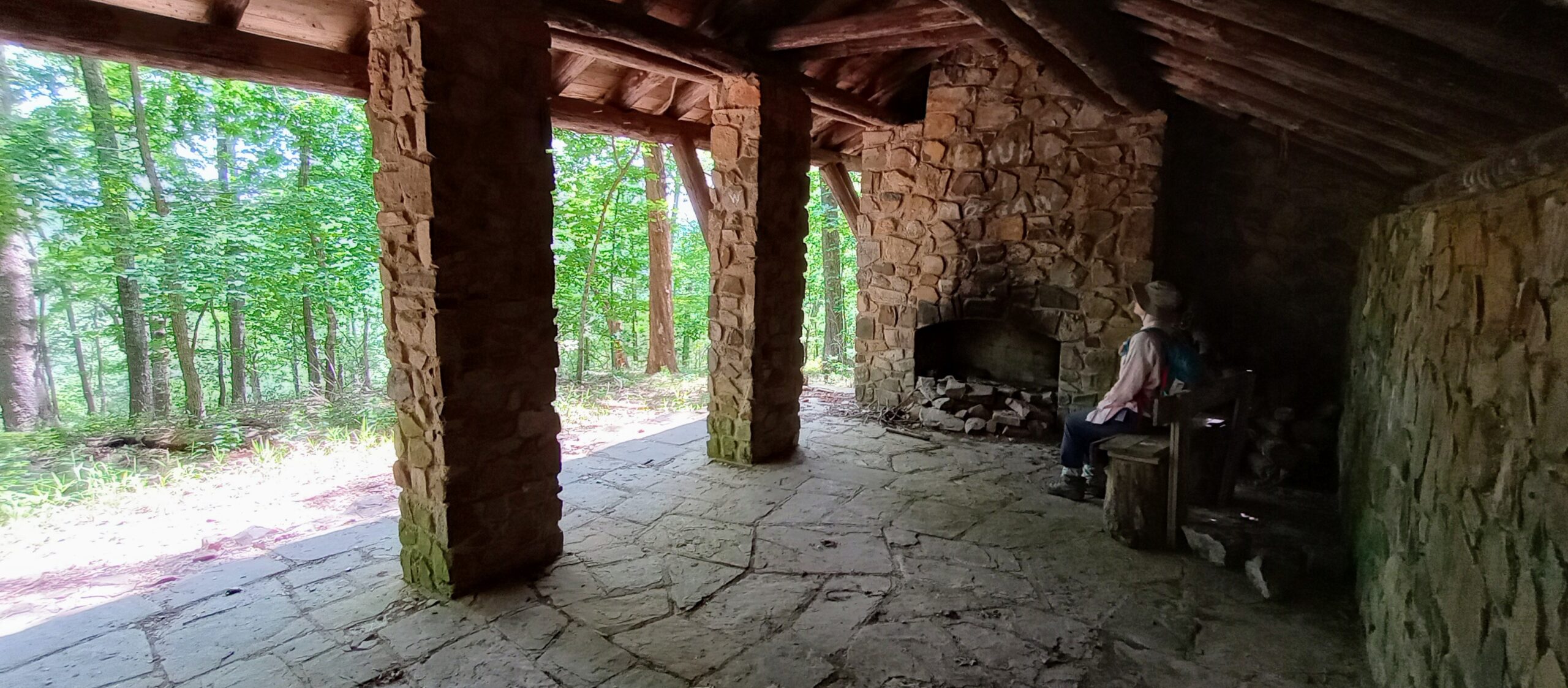
Near the historic stone C.C.C. backpack shelters overlooking Big Creek below, the woods are mixed with oak, hickory, black gum, and native pine. A huge Pileated woodpecker screeched as it flew past us in a streak of red, black and white. A fragrant breeze blew through the canopy above as the sound of birds chirping filled the sun-dappled dry woodlands. As if on cue, it was at Hiking Shelter 2 where we saw a bright blue Indigo bunting, a stunning migratory bird from South America at the northern limit of its expansive range, landing for a moment in a Shortleaf pine nearby.
As all of these factors and random things fall into place during one’s trip to a park in its prime, the true magic of the visit and memories lasting a lifetime begin to form, successfully molding a permanent experience from an inspired plan, shapeless thought, daydream, or spur of the moment drive. A startled White-tailed deer suddenly dove into a farkleberry thicket. It was around this point I began muttering to myself how beautiful the day was sporadically for the next few hours.
Descending into Mudlick Hollow past old growth oak and pine, the steep slope became forty plus degrees. The trail switchbacks in serpentine fashion as the footbed of small boulders to hop and slide across presents a challenge. Here up against the backside of the mountain, the trail traverses large open areas of talus slope rockslides. A turtle sat motionless directly on the trail listening to something in the far distance, head pointing towards the echoing sounds of New Country reverberating off the canyon of Big Creek from a floater’s raft slowly drifting by below.
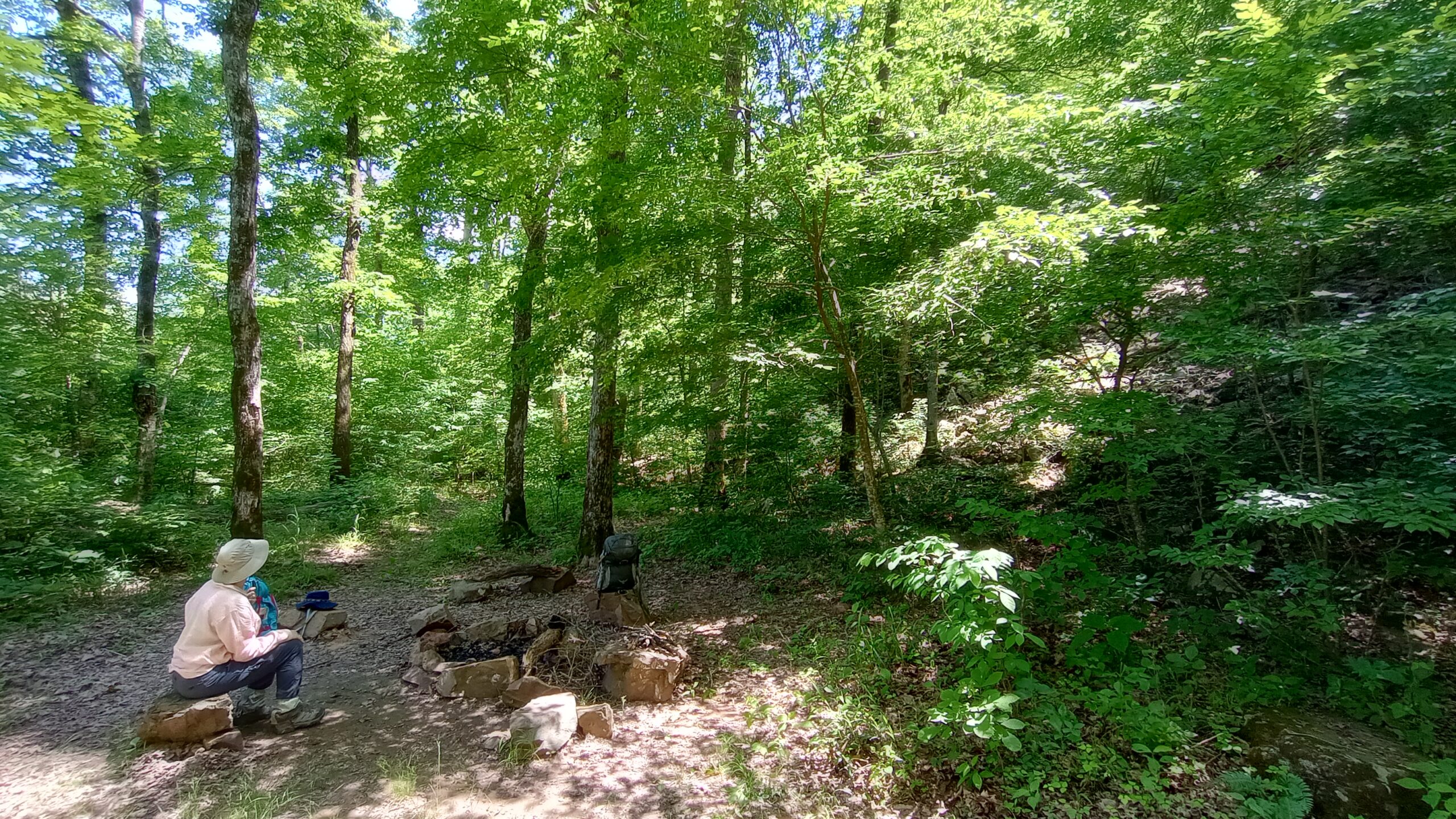
Deep in the bottomland up against the Big Creek Shut-Ins, we turned to the right (east) at the intersection with the primitive campground spur trail making way down a completely overgrown drainage for over the next quarter mile. We were wading through a classic Ozark riparian zone full of grasses, sedges, river cane, downed trees, thorn bushes, vines as thick as your wrist, juvenile canopy trees and other smaller shade tolerant varieties like Flowering dogwood and Sassafras . (The park has been notified of the approach to the backcountry campsite needing special attention, promising to address it soon.)
Once we arrived at the secluded campsite, it was obvious how the special location offered much sought serenity and privacy. Perhaps, one of America’s best designated primitive overnight areas within park boundaries complete with easy access to water nearby. The rare yellowwood tree found in isolated pockets of the
American Southeast grows here in the dense lowland forest. This is the place where dark skies at night are perfect for stargazing on clear evenings, where you will see every heavenly body possible in its purest form, while crickets and frogs sing you gently to sleep on a sandy shoreline nestled next to the talus slope base of prehistoric Mudlick Mountain.
After lunch at the primitive campsite along Big Creek, we plunged headlong into Mudlick Hollow’s overgrown, rugged canyon featuring its own primordial Mudlick Hollow Shut-Ins; a descending series of cascading waterfalls and reflective pools in between sections of impassable highwall formations and treacherous talus rockslides running for almost a mile. After visiting high alpine lakes at 12,000 feet in the Rockies, hiking upper regions of the Olympic Peninsula in the Cascade Mountains of the Pacific Northwest, and photographing waterfalls in places like the Great Smoky Mountains, I can tell you Mudlick Creek’s water clarity and quality in Mudlick Hollow is on par with those other remote areas. It probably today would still make the perfect moonshine.
Several snakes in the igneous gorge, including one docile Timber rattlesnake, sunning themselves directly on the trail slowed our progress. Navigating the rough terrain was demanding, climbing over boulders, sliding across talus slope rockslides, scrambling over and ducking under downed full size hardwood trees blocking the faint path every 100 yards or so. This is the most scenic part of all of Sam A. Baker, and by far the most dangerous to be visited in only the best possible weather conditions.
We seasoned Ozark hikers momentarily lost the marked trail several times, taking major effort to safely remain on course. If any point a visitor finds themselves in the middle of Mudlick Hollow during bad weather, even an experienced outdoorsman or woman will be faced with compromised visibility, a chance to lose the main path for an unsanctioned game trail leading nowhere, and verglas-like conditions of slippery biofilm covered rock in every direction for over a mile. Places of extreme beauty and introspection also demand serious respect. Please, plan carefully, be prepared, and remain attentive in wilderness settings.
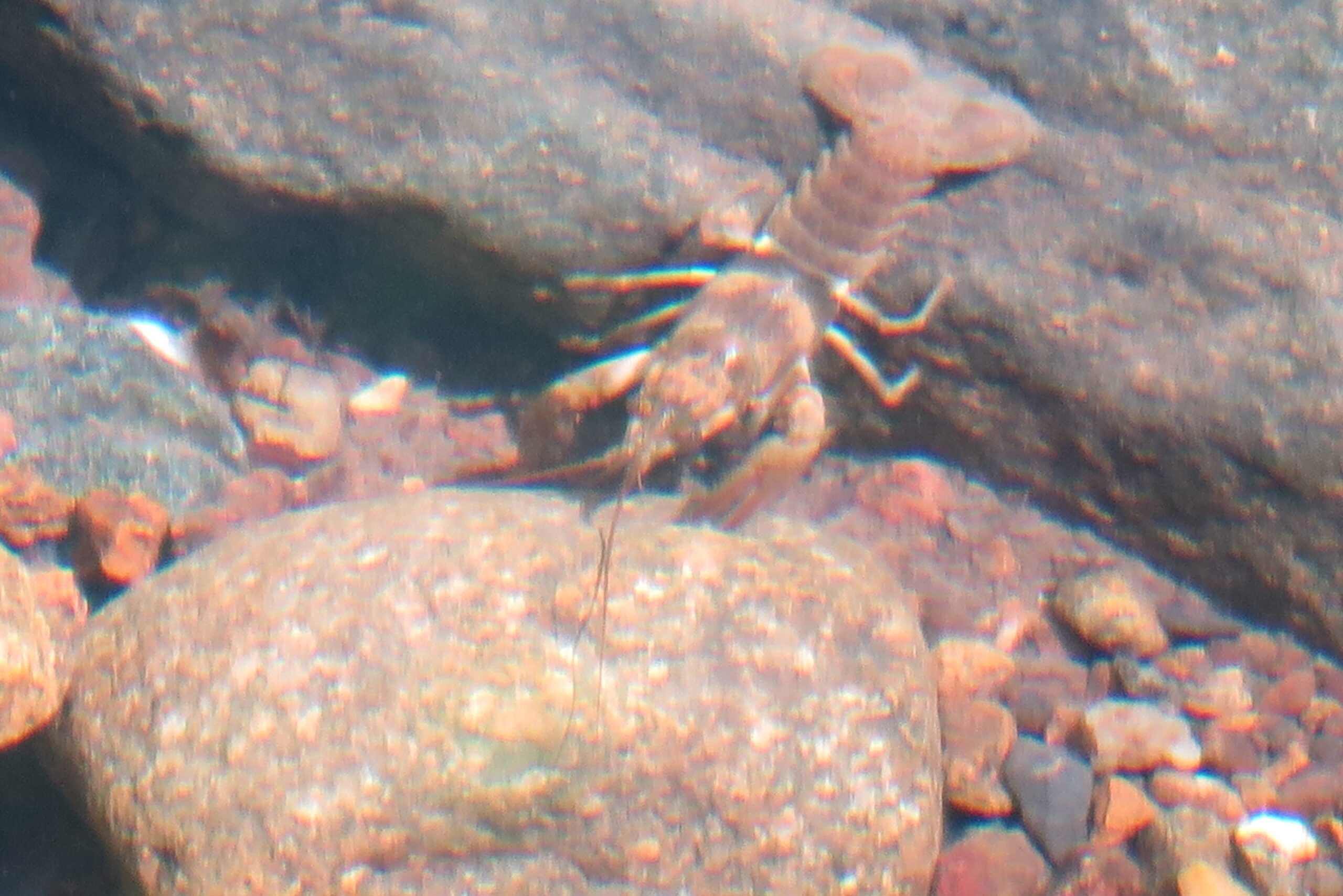
Lost in a tranquil moment standing on a high rock ledge overlooking Mudlick Hollow Shut-In gazing through a deep, crystal clear pool of water, I caught a glimpse of a Big Creek Crayfish resting on the stream bottom. This aquatic invertebrate is only found in the western end of the St. Francis River Basin, parts of just three Missouri counties, along Big Creek and nowhere else in the world.
Returning after 6 hours on the trail and 11.2 miles later, swimming visitors still lined the sandy shores and wide gravel bars of Big Creek chatting in the dusky orange sunlight. A group of kids played basketball on the full court across from the lodge laughing and cavorting in sheer Sam A. Baker ecstasy. With just a few ticks removed and a quick change of clothes, we were back in the car heading down a scenic country road bound for a different state park on the way home to view a fiery sunset atop Taum Sauk Mountain after another perfect Memorial Day Weekend in the Ozarks.
Matt Ankney is an outdoor photographer and wilderness guide: https://twitter.com/Ozark_Matt
