



Leslye Headland, the showrunner of The Acolyte, explained that Sol forgiving Osha for ending his life was a form of sexism and reinforced the patriarchy.

(L-R): Amandla Stenberg , set PA Taylor Young, director Leslye Headland and director of photography Chris Teague on the set of Lucasfilm’s THE ACOLYTE, exclusively on Disney+. ©.
In the final episode, Sol confirms to Mae and Qimir that he killed Mother Aniseya. Osha overhears the conversation and then confronts him. However, Sol makes it clear that what he did was the right thing to do and that he did not inform the Jedi because he was trying to protect Osha and she would have been sent away because she was too old to train and would have never been allowed to become a Jedi.
He goes on tell her that he did everything because he loved her. However, the word “love” is cut off and Osha begins to use the Force to choke him. As he’s being choked, Sol then tells her, “It’s okay.” Osha then kills him.

Master Sol (Lee Jung-jae) in Lucasfilm’s THE ACOLYTE, season one, exclusively on Disney+. ©2024 Lucasfilm Ltd. & TM. All Rights Reserved.
In an interview with Collider, Maggie Lovitt asked Headland, “What’s so interesting about that moment, where Osha kills Sol, is how much is conveyed even while he’s choking on his words. Also, and maybe this was my impression of it, but my first thought was, ‘He doesn’t even give her the agency to make this choice herself because he’s accepting his fate.’ It just adds so much more insult to injury. You can’t even let her get a satisfactory kill because you’re like, ‘It’s okay.’ It’s so good!”
Headland responded, “We also knew that it was always going to be the betrayal of the father, and I knew we had to juxtapose Luke’s forgiveness and Vader’s redemption. We’re like, ‘This is a story about the Sith, so that’s not gonna happen.'”
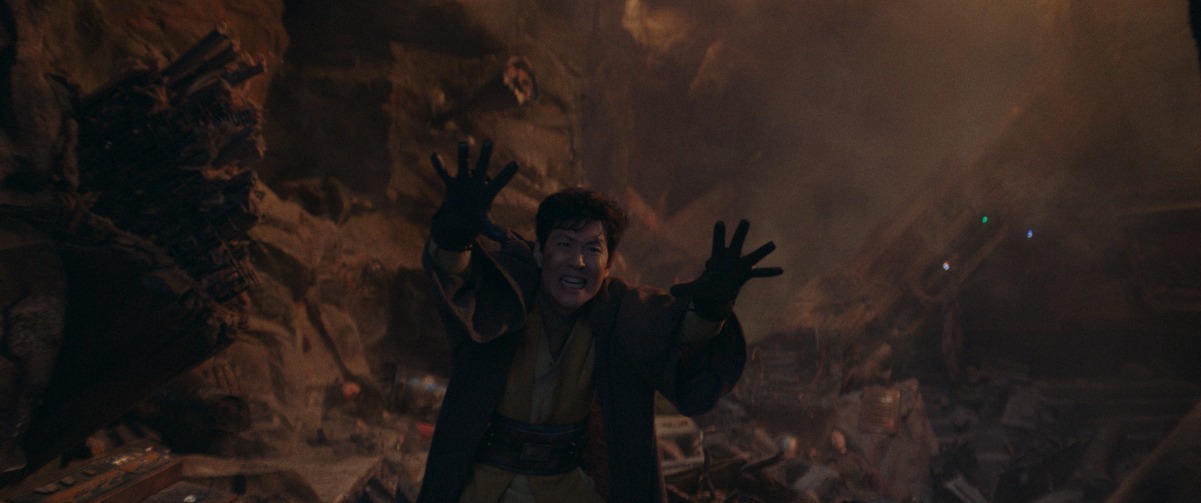
Sol (Lee Jung-jae) in Lucasfilm’s THE ACOLYTE, season one, exclusively on Disney+. ©2024 Lucasfilm Ltd. & TM. All Rights Reserved.
She then affirmed Lovitt’s comment, “You’re absolutely right. There’s this thing that’s called benign sexism, and part of it is this paternal protectionism — it seems like this good thing, but like you said, there’s this, ‘I have to protect you from everything. I have to make sure you’re okay. I have to tell you what track to get on, and then once you’re on that track, I need to support you.’”
“Ultimately, what happens is — again, this is a father-daughter relationship — as women evolve in their lives and develop their own personalities separate from their fathers, at some point, they have to reject that protectionism,” she asserted.
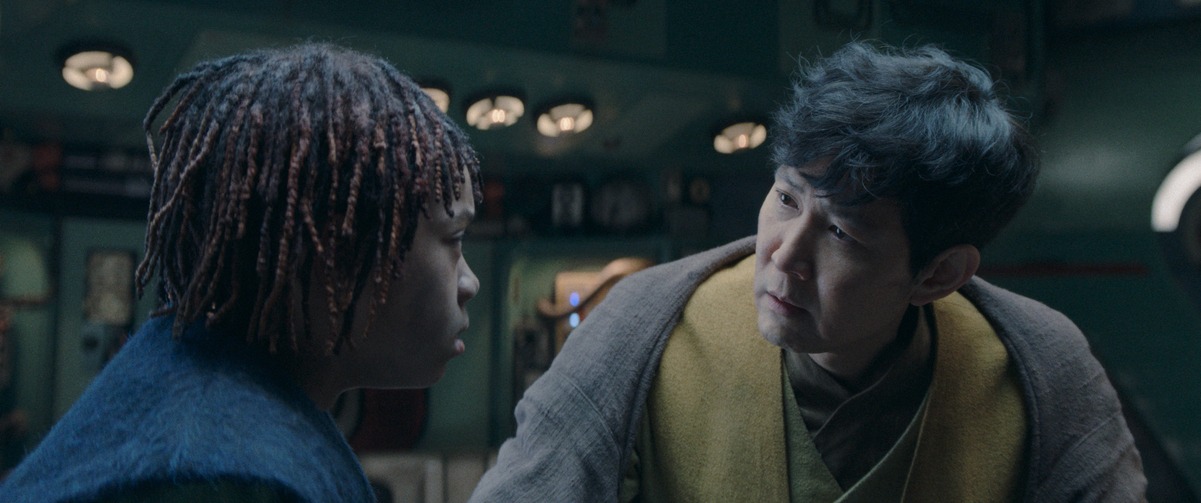
(L-R): Little Osha (Lauren Brady) and Sol (Lee Jung-jae) in Lucasfilm’s THE ACOLYTE, season one, exclusively on Disney+. ©2024 Lucasfilm Ltd. & TM. All Rights Reserved.
Headland continued, “Again, I’m so proud of it. I have so many favorite moments in the show. I have, like, 100, and I’m happy to go through all of them right now. One of my favorite moments is when he says, ‘I did everything because I love–’ He’s going to say, ‘I love you,’ and not only is that a level of attachment that an unbalanced Jedi would have — he very clearly is losing it in the last half of the season — but that’s also the justification for that kind of behavior between the father and the daughter.”
“The daughter has to surpass him in some way,” she explained. “She cannot stay a little girl or an adolescent or young adult. She has to, at some point, say, ‘I reject what you have told me I need to do to make you proud, to follow in your footsteps.’ She has to do that.”
Headland concluded, “I do think when he says, ‘It’s okay,’ I think you’re right. He is imposing on her agency at that point. But I do think, in a weird way, she needed it. She needed his acceptance. Not his approval, but his acceptance of his fate, I think, is what gives her that energy to do the final fist clench.”

Osha Aniseya (Amandla Stenberg) in Lucasfilm’s THE ACOLYTE, season one, exclusively on Disney+. ©2024 Lucasfilm Ltd. & TM. All Rights Reserved.
Headland appears to be confirming that the entire show is about her own personal experiences rather than any kind of universal experience between fathers and daughters.
She’s actually affirmed this in the past. In an interview with The New York Times, Headland stated, “I have a very strained relationship with my youngest sister, and I feel like one of the reasons it is strained is that we both see each other as the bad guy.”
“And if I was going to tell a story about bad guys, it seemed to me that the place to start should be a familial relationship where one person is adamantly convinced of her correctness and the other person is also adamantly convinced of her correctness,” she continued. “We don’t speak. I think this will be a surprise to her.”
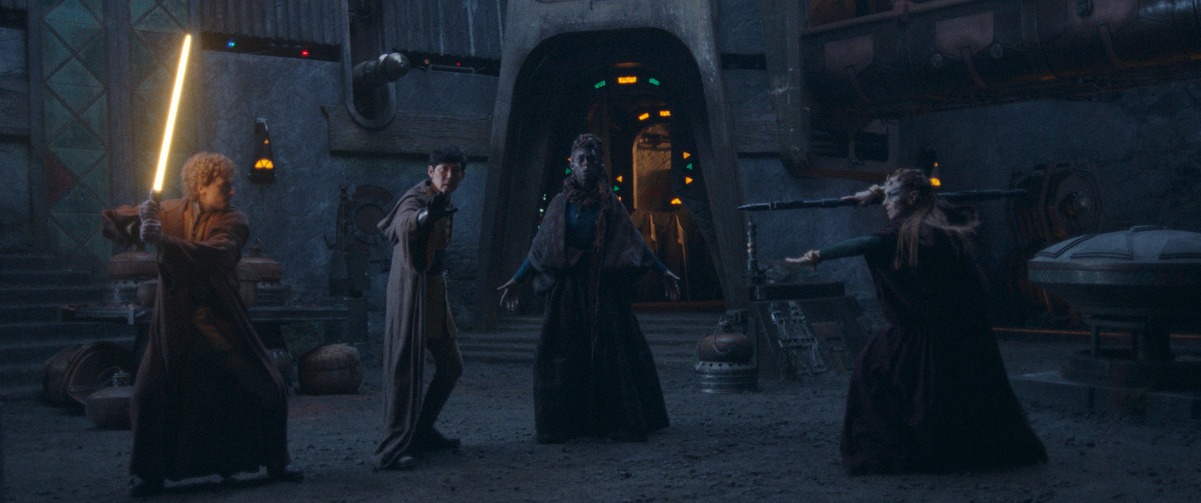
(L-R): Torbin (Dean-Charles Chapman), Sol (Lee Jung-jae), Mother Aniseya (Jodie Turner-Smith) and Koril (Margarita Levieva) in Lucasfilm’s THE ACOLYTE, season one, exclusively on Disney+. ©2024 Lucasfilm Ltd. & TM. All Rights Reserved.
Interestingly, later in the Collider interview, Headland provided more evidence to this theory. Lovitt commented, “I think that’s what makes villains so compelling because there is that little piece of every writer in the villains, kind of pushing an idea that they have harbored within them. The villain is a great proxy for getting those feelings out.”
Headland responded, “Absolutely. I very rarely put myself into the protagonist because I think the protagonist has to be the protagonist. They might have a sprinkling of me, certainly Osha and Mae, the family conflict, the switching of sides, being really certain that you know one thing, the betrayal of the father, the rejection of the fraternal protectionism, and saying, ‘I am now my own person.’ That stuff I definitely relate with, but The Stranger is my shadow self, for sure.”

LONDON, ENGLAND – APRIL 07: Leslye Headland onstage during the Acolyte studio panel at the Star Wars Celebration 2023 in London at ExCel on April 07, 2023 in London, England. (Photo by Kate Green/Getty Images for Disney)
In a previous interview with Collider, Headland also revealed that Qimir is an avatar for her.
Headland was asked, “Aside from the obvious allusions to other ships, are there any other enemies-to-lovers dynamics that informed the decisions you were making as you were playing with these two characters?”
She replied, “There are so many, but I am going to say no because I was really working from muscle memory. I didn’t want it to quote something else. I wanted to just click into the kind of stuff that I wrote when I was in high school. I love these characters. Nobody wants to ship these characters more than I do. I love them so much. I love The Stranger. There’s always a character that’s an avatar for me that I really, really love. In Russian Doll, it was Charlie [Barnett’s] character, Alan.”
“The Stranger is obviously a badass, but I just mean much more than his character. I’m not going around doing fantastic lightsaber battles and murdering people and being an all-around badass, but I would say that what he talks about in this episode and what he talked about in [Episode] 5 is something I really dug down,” she shared. ” Then Osha’s inner conflict fits with his ideology, and yet they’re on opposite ends of the spectrum just like she and her sister started at the beginning of the show. I wanted to stay true to my characters. I tried my best to just stick to the tropes and the stuff that I loved and tried not to think about, especially [with] the classics. I think it would have been a little too quotes-around-it if that were the case.”

The Stranger (Manny Jacinto) in Lucasfilm’s THE ACOLYTE, season one, exclusively on Disney+. ©2024 Lucasfilm Ltd. & TM. All Rights Reserved.
What do you make of Headland’s comments?
